
Review · BUDAPEST
Born Under The Red Star – Communist tour with Coffee in a Retro Bar
Budapest’s Communist past is not tucked away in one museum. It is written across the streets, squares, monuments, and buildings you pass every day. This three-hour walk connects those places, from the Soviet memorial near the city center to the 1956 revolution memorial and the Hungarian Parliament.
I like the small-group size, capped at 15 people, and the way the walk links political history with ordinary city life. I also like the retro bar stop, where you get a classic soda, coffee, or tea instead of another quick photo stop.
The main drawback is that the tour is mostly outdoors and moves at a steady pace. You do not get extended visits inside the House of Terror, St. Stephen’s Basilica, or Parliament, and tickets for the paid attractions are not included.
Key points to know before booking
- See Budapest’s Communist story in the streets: The route uses memorials, public squares, and major landmarks to explain how Hungary moved through fascism, Soviet control, and the 1956 uprising.
- Start near the Opera House: The meeting point is the Hungarian State Opera at Andrássy út 22, a central location close to public transportation.
- Stop for a retro soda: A Communist-themed bar provides a classic soda, with coffee and tea also included.
- Expect a compact group: The maximum is 15 people, though the group may be smaller. One booking had only two participants with the guide Ferenc.
- Finish at Liberty Square: The ending point makes it easy to continue toward the Parliament area or explore central Pest on your own.
- Plan for outdoor walking: The tour requires good weather and lasts about three hours, with roughly 15 minutes listed at several major stops.
Why this Communist history walk feels different
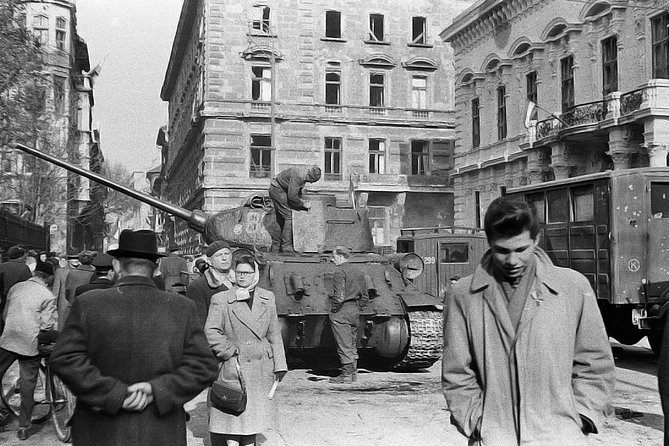
Many Budapest walks concentrate on grand architecture, food, or the city’s imperial past. This one asks a sharper question: how did the 20th century change the people and places of Budapest?
That question gives the route its purpose. You are not simply looking at a statue and hearing its name. You are moving between symbols that often disagree with one another. A Soviet memorial may stand near a memorial to Hungarian victims. A national monument can carry different meanings for different generations. The guide’s commentary is important because these places rarely explain themselves.
I like this approach for a first or second day in Budapest. It gives you a framework for understanding the city before you explore it alone. The maps and extra recommendations also help you turn the tour into a starting point rather than a three-hour island in your schedule.
The tone should suit you if you want political context without spending an entire day in a museum. The tour is also useful if you have already seen the Parliament and the Basilica but want to understand their place in modern Hungarian life.
A few more coffee tours around Budapest worth a look
- Santo Domingo Small Group Walking Tour: Beer and Specialty Coffee
★ 5.0 · 55 reviews - Shared Yoga and Coffee Experience On The Trolley Pub
★ 5.0 · 4 reviews
From the Opera House to the Soviet memorial
The walk begins at the Hungarian State Opera on Andrássy út. This is a convenient meeting point in central Budapest, and the location is easy to reach by public transportation.
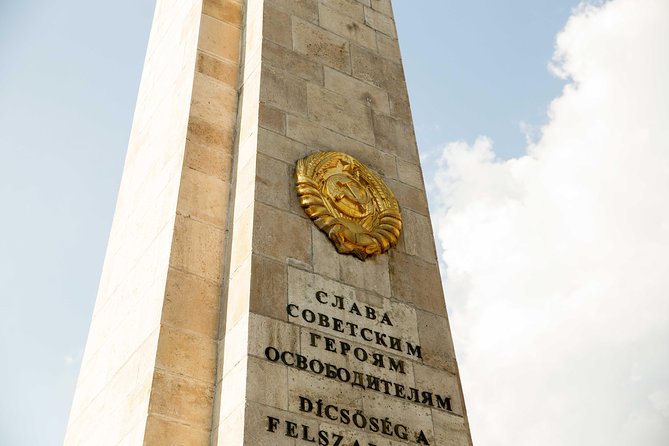
From there, the tour heads toward a white obelisk in a landscaped park. The Soviet Heroic Memorial commemorates Russian military personnel who served during the Second World War. Admission is free, and the stop lasts about 15 minutes.
This is a good early stop because it introduces one of the tour’s central tensions. Soviet soldiers are connected with the defeat of Nazi Germany, but the Soviet presence in Hungary later became tied to political control. A short explanation can make that contrast much clearer than a lone monument ever could.
Do not expect a long ceremony or a museum visit here. You will spend a limited amount of time outside, listening to the guide and looking at the memorial in its setting. If you want detailed military history, you will need another source. If you want to understand why Soviet symbols remain a sensitive subject in Budapest, this is a useful beginning.
The House of Terror and the limits of a 15-minute stop
The next major point is the House of Terror Museum at Andrássy út 60. The building is associated with both the fascist and Communist regimes in 20th-century Hungary. It also serves as a memorial to people detained, interrogated, tortured, or killed there.
The tour includes an exterior visit, but not museum admission. The listed time is about 15 minutes, so you should think of this as an introduction rather than a full museum experience.
I consider this one of the most valuable stops for setting the mood of the tour. The building gives political history a physical address. It helps you understand that the story is not only about laws, leaders, or flags. It is also about the places where power was enforced against individuals.
The limitation is clear. Fifteen minutes is not enough to visit the exhibitions properly, and the admission ticket is not included. If the House of Terror is important to you, schedule a separate visit, ideally at a time when you can move through it without rushing. The walking tour can provide context before or after that visit, but it does not replace the museum.
St. Stephen’s Basilica adds a national and religious layer
St. Stephen’s Basilica brings a different side of Budapest into the route. This Roman Catholic basilica is named for Stephen, Hungary’s first king, and its reliquary contains his right hand. Before 1920, it was the sixth-largest church building in Hungary.
The basilica is not a Communist monument, and that is precisely why it belongs in the wider story. The building points to Hungary’s older national and religious identity, which helps you compare the traditions promoted by the state with the traditions that existed before Communist rule.
The stop is listed at about 15 minutes. Admission is not included, so you should not assume that the tour covers an interior visit or any paid access. The guide can help you place the basilica within Budapest’s central district, but you may want to return independently if you want more time inside.
I like the contrast here. After hearing about state power and political repression, you get a reminder that Budapest’s identity is older and broader than any one government. It also gives the route some visual variety, so the walk does not become a string of similar memorials.
Same place, a different way to drink it:
- Grand Segway Tour of Budapest – Private Tour with Coffee Stop
★ 5.0 · 163 reviews - Budapest: City Bike Tour with Coffee Stop
★ 5.0 · 37 reviews - Castle District tour with Matthias Church Ticket & Cake & Coffee
★ 5.0 · 31 reviews - Castle District tour with Matthias Church Ticket & Cake & Coffee
★ 5.0 · 22 reviews
Liberty Square brings the arguments into one place
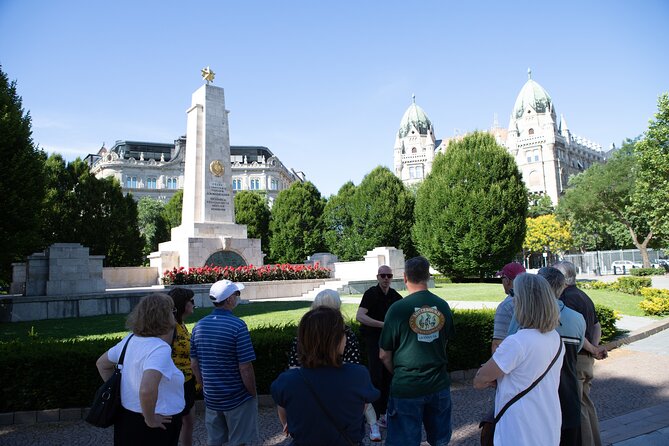
Liberty Square, or Szabadság tér, is one of the most revealing stops. The square sits in the Lipótváros neighborhood and contains two controversial memorials. One commemorates Jewish victims of the Holocaust, while another remembers Soviet soldiers who died liberating Budapest from the Nazis in 1945.
The square also sits near the United States Embassy and the historicist headquarters of the Hungarian National Bank. That mix of memorials, diplomatic buildings, and financial power makes the square feel like a condensed lesson in modern Hungary.
Here, the guide’s interpretation matters more than a simple list of dates. The memorials reflect competing memories, and the subject can be emotionally difficult. You should expect a serious discussion rather than a light sightseeing stop.
The visit is free and lasts about 15 minutes. That is enough to identify the main monuments and understand their relationship, but not enough to study every inscription or debate the politics in detail. If you are interested in public memory, keep the square on your own walking list after the tour.
The 1956 memorial explains Hungary’s resistance
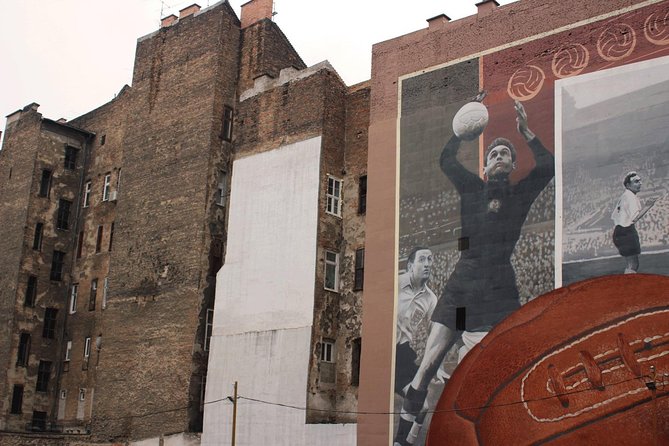
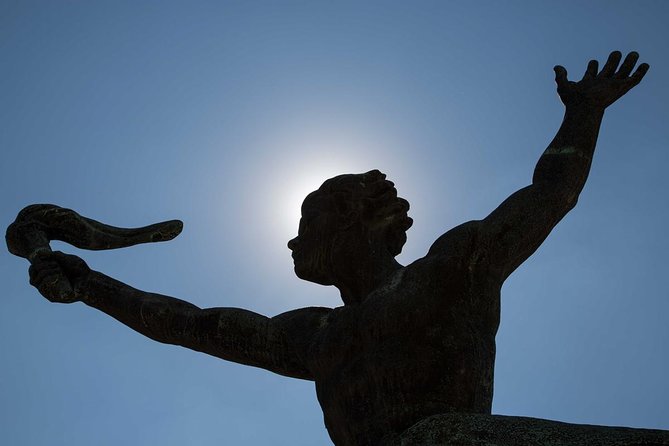
The memorial to the 1956 Hungarian Revolution and War of Independence commemorates the people who fought against the Communist regime. The uprising was a major attempt to challenge Soviet control, and its defeat left a lasting mark on Hungarian identity.
This stop gives the tour a clear human focus. Instead of discussing only governments and monuments, you are asked to consider the people who risked their lives in opposition to the system around them.
The memorial is free to visit, and the scheduled stop lasts about 15 minutes. You may find that the short visit works well here because the guide can explain the basic significance without turning the walk into a long lecture. If you want a more detailed account of the uprising, you would need a separate museum or reading plan.
I especially like the way this point changes the rhythm of the tour. The earlier stops introduce occupation, repression, and competing symbols. The 1956 memorial shows a direct act of resistance and gives the story a strong emotional center.
Parliament provides the grand final view
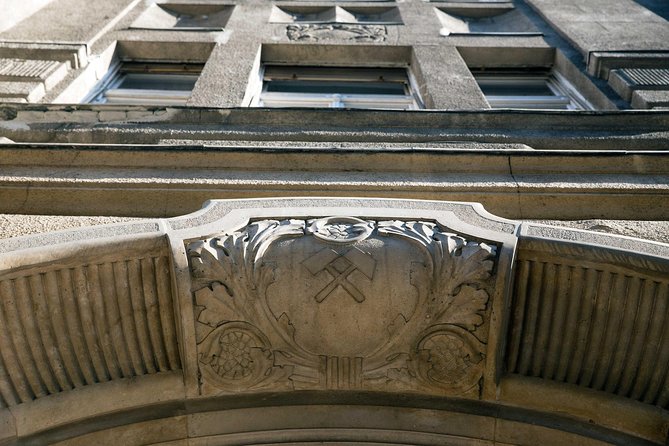
The Hungarian Parliament Building is the route’s most famous landmark. Known in Hungarian as Országház, or House of the Country, it is the seat of the National Assembly and one of Budapest’s defining buildings.
The tour includes a stop of about 15 minutes, but Parliament admission is not included. You should expect to see and discuss the building from the outside rather than take a full interior tour.
That works well for this experience because Parliament is more than a postcard subject. It represents the country’s political life, and its location helps connect the walk’s earlier discussions to the present-day institutions of Hungary.
You may want to schedule a separate Parliament visit if you are interested in the interior. The walking tour gives you useful context and a good chance to take in the exterior, but a short stop cannot cover the building’s full design, rooms, or national role.
The walk ends at Liberty Square. That is a practical finish in central Pest, with plenty of options for continuing your day. You can revisit the square, walk toward the Danube, or use the guide’s recommendations to plan another stop.
The retro bar stop is part of the value
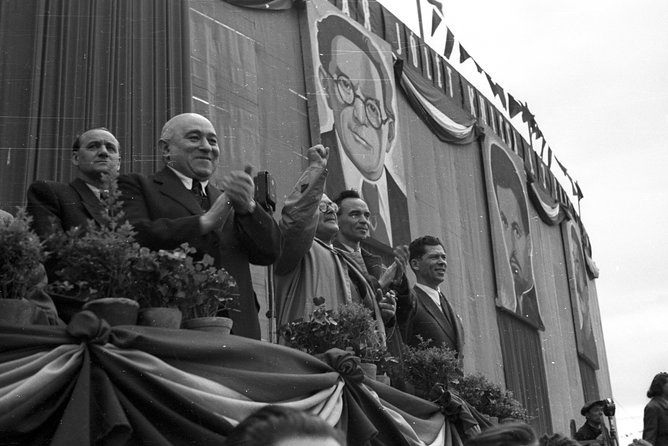
The included drink is not an afterthought. A classic soda in a bar decorated around Communist themes gives you a break from the pavement and a chance to discuss the tour in a more relaxed setting.
Coffee and tea are also included. Food is not included, and other drinks or snacks should not be assumed to be covered. The exact bar details are not specified, so you should treat the stop as a short cultural pause rather than plan your whole meal around it.
This kind of stop adds something a monument cannot. You get a sense of how the period is remembered and presented in everyday surroundings, with the guide available to explain the setting. It also breaks up the serious material. Three hours of political history can feel heavy, and a drink in a themed bar gives the group a natural pause.
Do not book this tour solely for the soda. Book it because the drink supports the larger idea of the walk: history is found not only in official memorials but also in ordinary public spaces and objects.
Guide quality and group size matter here
The guide is central to the experience. The route includes places with complicated meanings, and a weak explanation would leave you with disconnected monuments. One guide named in the tour’s feedback is Ferenc, who led a particularly small group of two people and helped connect Budapest’s political and social history across the walk.
A group of up to 15 people is small enough for a more personal feel than a large city tour. It is also large enough that you should not expect a private discussion at every stop. The actual group may be smaller, but that is not guaranteed.
The tour is offered in English. Children must be accompanied by an adult, and service animals are allowed. Most people can take part, but you should be comfortable walking outdoors for roughly three hours and dealing with changing weather.
The experience is weather dependent. If poor weather forces a cancellation, you are offered another date or a full refund. You can cancel for a full refund up to 24 hours before the start time, but changes or cancellations inside that window are not accepted.
Is $90.31 a fair price?
At $90.31 per person, this is not the cheapest way to see central Budapest. You are paying for a guided interpretation of several politically important places, a small-group format, maps, recommendations, and the included drinks.
The value depends on how you use the tour. If you would otherwise walk past the Soviet memorial, Liberty Square, and the 1956 memorial without understanding them, the guide adds real value. The experience can also save you time by showing how the sites connect rather than leaving you to research each one separately.
The price is harder to justify if you mainly want interior visits. House of Terror, St. Stephen’s Basilica, and Parliament do not include admission, and the listed stops are short. You will need to pay separately and return on your own if those buildings are your main goal.
Group discounts may be available, which could make the cost more appealing for couples, families, or friends booking together. I would compare the tour with the price of the individual museums you plan to visit, but remember that the central product here is the guide’s commentary, not entrance tickets.
Who should book this walk?
I would recommend it to you if you want a clear introduction to Hungary’s 20th-century political story and prefer learning outdoors rather than spending several hours in a museum. It suits first-time visitors who want their sightseeing to have context, as well as repeat visitors who have already seen Budapest’s famous buildings.
It is also a good match if you like smaller groups, direct access to a guide, and practical recommendations for the rest of your trip. The fact that one booking became a two-person walk shows that a very personal experience is possible, though you should not count on having the guide to yourself.
I would hesitate if your priority is a full interior tour of Parliament or the House of Terror. I would also think twice if rain would spoil your day, since the route is weather dependent and spends much of its time outside.
Should you book Born Under The Red Star?
Book this tour if you want to understand why Budapest’s monuments can carry several meanings at once. The strongest parts are the guide’s political context, the small maximum group size, the 1956 memorial, Liberty Square, and the unusual retro bar stop.
Skip it if you want a fast highlights tour with extensive indoor access. For the right visitor, the $90.31 price buys more than a walk between landmarks. It gives you a working map of Budapest’s modern identity, along with useful ideas for exploring the city after the tour ends.
FAQ
How long does the Communist tour last?
The tour lasts approximately three hours.
Where does the tour begin?
It begins at the Hungarian State Opera, Budapest, Andrássy út 22, 1061 Hungary.
Where does the tour end?
The tour ends at Liberty Square, or Szabadság tér, in Budapest.
Is the tour offered in English?
Yes. The experience is offered in English.
What drinks are included?
A classic soda in a Communist-themed bar is included. Coffee and tea are also included.
Are museum and landmark admission tickets included?
No. Admission is not included for the House of Terror Museum, St. Stephen’s Basilica, or the Hungarian Parliament Building. The other listed memorial stops are free.
How many people can join the tour?
The group has a maximum of 15 participants. Children must be accompanied by an adult, and service animals are allowed.
Just added around Budapest
- Private Budapest Walking Tour with Cake & Coffee★ 5.0 · 8 reviews
- Legacy of Sissi Royal Palace of Godollo Tour with Cake and Coffee★ 4.5 · 7 reviews
- Budapest Urban Treats – Cake and Coffee House Tour★ 5.0 · 3 reviews
- Budapest Urban Walk – Budapest City Tour with Cake & Coffee★ 5.0 · 9 reviews
- Guilty pleasures – A Budapest Dessert & Coffee House Tour★ 5.0 · 4 reviews
- Castle District tour with Matthias Church Ticket & Cake & Coffee★ 5.0 · 4 reviews
- Budapest Urban Feast – Food Tour with Wine Tasting & Coffee House★ 4.5 · 3 reviews
- Castle District tour with Matthias Church Ticket & Cake & Coffee★ 5.0 · 3 reviews
Budapest Coffee Tours, compared.

Castle District tour with Matthias Church Ticket & Cake & Coffee
Read our review →Castle District tour with Matthias Church Ticket & Cake & Coffee
Read our review →
Buda Castle Walking Tour with Matthias church entry, Cake&Coffee
Read our review →
Budapest Urban Walk – Budapest City Tour with Cake & Coffee
Read our review →
Private Budapest Walking Tour with Cake & Coffee
Read our review →
Legacy of Sissi Royal Palace of Godollo Tour with Cake and Coffee
Read our review →Browse the lists this tour appears in