
Review · USA
San Diego Balboa Park Highlights Small Group Tour with Coffee
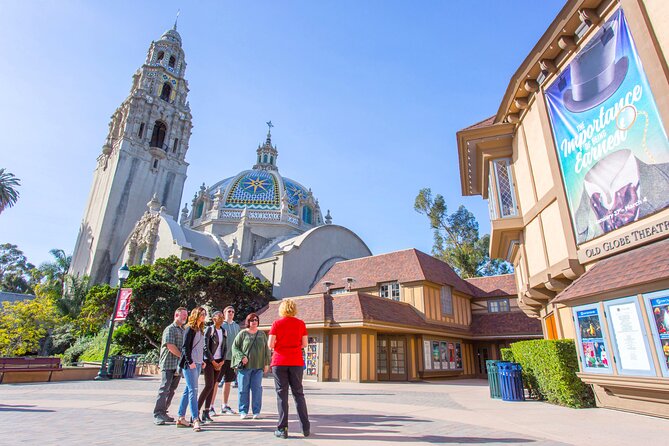
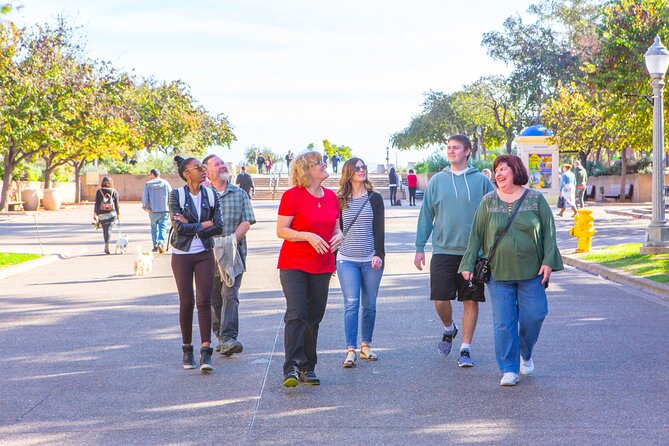
Balboa Park is much more than a pretty patch of green. It is a huge cultural campus filled with ornate buildings, gardens, theaters, museums, and stories that are easy to miss when you wander alone. This two-hour walk gives you a clear route through the park, with guide Jennifer often adding humor, local knowledge, and useful ideas for what to see next.
I like the manageable pace, with time to stop, look up, and ask questions instead of rushing from one landmark to the next. I also like the coffee-cart break, especially since you can choose your own drink and support a local business. The main drawback is parking: it is paid, and finding a space can take time, so arriving early matters.
Key points to know before you book
- A strong first look at Balboa Park: You cover the major central sights without trying to enter every museum or attraction.
- Stories beyond the postcard view: The walk connects the park to the 1915 and 1935 expositions, San Diego’s Navy ties, and the city’s early development.
- Coffee included: You receive one beverage of your choice at a local coffee cart, often Daniel’s.
- Small-group format: The maximum group size is 15, though some departures may be much smaller.
- Useful for planning a second visit: You get an exclusive park resource list with suggestions for museums, gardens, food, and other activities.
- A walking tour, not a museum tour: Admission to the stops is free, but the tour does not include entry to Balboa Park museums or other ticketed attractions.
Why this two-hour Balboa Park walk works
The best thing about this tour is its sense of direction. Balboa Park can feel confusing on a first visit because its grand buildings, gardens, cultural centers, and paths spread across a wide area. You can easily spend an hour circling the same few blocks, or miss an architectural detail hiding above eye level.
This route gives you the broad picture first. You walk through the park’s central historic areas, hear why the buildings look the way they do, and finish with enough information to plan your own return. That matters because Balboa Park is not a one-stop attraction. It is a place where you can spend several separate visits, each focused on a different museum, garden, performance, or collection.
The tour is conducted in English and uses a mobile ticket. It lasts about two hours and has a maximum of 15 people. The walking is described as a comfortable stroll, but you should still wear good walking shoes. You will be outdoors for most of the experience, with short stops at each major sight.
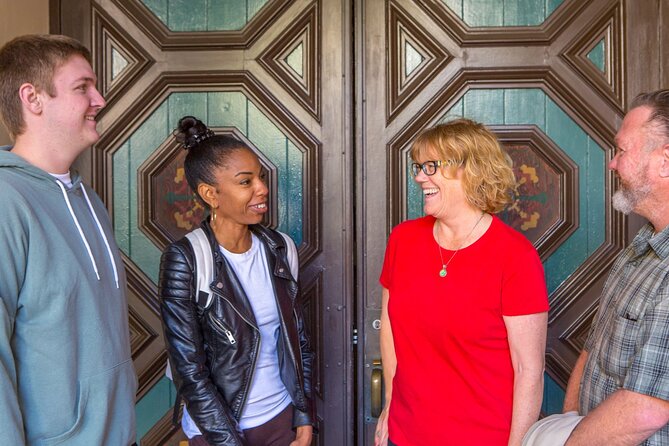
Guide Jennifer is praised for making history easy to follow and for adjusting the experience to the group’s interests. Her style, based on the information available, combines architecture, plants, local stories, and practical advice. That mix is especially useful if you do not want a dry lecture or a simple photo walk.
A few more coffee tours around the USA worth a look
- Big Island Highlights: Coffee, Volcano, Black Sands & Waterfall
★ 5.0 · 1,054 reviews - Seattle Coffee Tour: Capitol Hill Cafes, Tastings & Local Stories
★ 5.0 · 489 reviews - Award Winning Farm Tour: Coffee, Chocolate and Unique Gifts
★ 5.0 · 484 reviews
Cabrillo Bridge gives you the first big view
The walk begins near 698 El Prado and quickly brings you into the world of Balboa Park. One early highlight is Cabrillo Bridge, where you pause for views toward downtown, the San Diego Zoo, and the historic highway below.
This is a short stop, only about five minutes, but it helps you understand the park’s setting. From the bridge, the park feels connected to the city rather than isolated from it. Your guide can also help you place the main areas of the park before you continue into the central buildings.
The bridge is a good example of the tour’s overall approach: short stops, clear context, and enough time to take a photograph without turning the whole morning into a photography session.
The California Tower explains San Diego’s grand ambitions
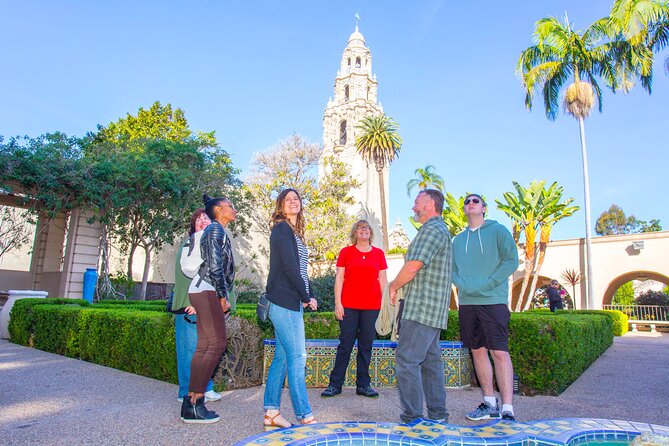
The California Tower is one of the park’s most recognizable landmarks. Built for the 1915 Panama California Exposition, it rises nearly 200 feet and carries images connected to San Diego’s founding and identity.
You see the tower from three different viewpoints. That may sound like a small detail, but it is useful here because the building changes as you move around it. The ornate facade is easy to admire at a distance, while closer views reveal architectural details that are less obvious in a quick pass.
The tower also introduces one of the tour’s strongest themes: Balboa Park was shaped by international exhibitions. These events were not just temporary fairs. They helped San Diego present itself as an important city and left behind buildings, gardens, and public spaces that still define the city today.
Alcazar Garden brings a Seville touch to the park
Alcazar Garden was first developed for the 1915 exposition and later redesigned for the 1935 exposition, drawing inspiration from the Alcazar Gardens in Seville, Spain.
This is a short, pleasant pause among the formal architecture. The garden gives you a change of pace from towers and exhibition buildings, and it helps show how the park’s design borrows from Spanish and Mediterranean traditions.
If you enjoy gardens, this is a useful orientation point rather than a complete garden visit. Five minutes is enough to hear the story and take in the setting, but you may want to return later with more time.
Same place, a different way to drink it:
- Big Island: Volcanoes, Waterfalls, & Coffee Farm Day-Trip
★ 4.9 · 414 reviews - Small-Group Big Island Tour: Hawaii Volcanoes National Park and Kona Coffee Farm
★ 5.0 · 343 reviews - Kona Shore Excursion: Sea Turtles, Historic Kona & Coffee
★ 4.5 · 324 reviews - Seattle Coffee Crawl-Small Group Tour
★ 5.0 · 240 reviews
The Old Globe connects exposition history with live theater
The Old Globe Theatre complex contains three theaters and dates to the 1935 California Pacific International Exposition. The buildings are still tied to the city’s performing arts scene, so this stop connects past and present in a practical way.
Your guide also explains how to get tickets when productions are running. That advice can be valuable if you want an evening activity after the walking tour. The stop itself is brief, so do not expect a theater visit or backstage access. Think of it as a useful introduction to one of Balboa Park’s major cultural institutions.
Plaza de Panama is your planning center

Plaza de Panama sits among cultural organizations and places to eat. It is one of the most useful points on the route because it helps you decide what to do after the tour ends.
The guide provides details for further exploration, including ideas connected to the park’s many museums and organizations. Since the tour does not include museum admission, this is where the resource list becomes especially helpful. You can learn which areas deserve a return visit instead of trying to squeeze everything into two hours.
The walk ends at 1350 El Prado, so the starting and ending points are different. Keep that in mind when planning your parking, public transportation, or next stop.
The Botanical Building and Lily Pond slow the pace
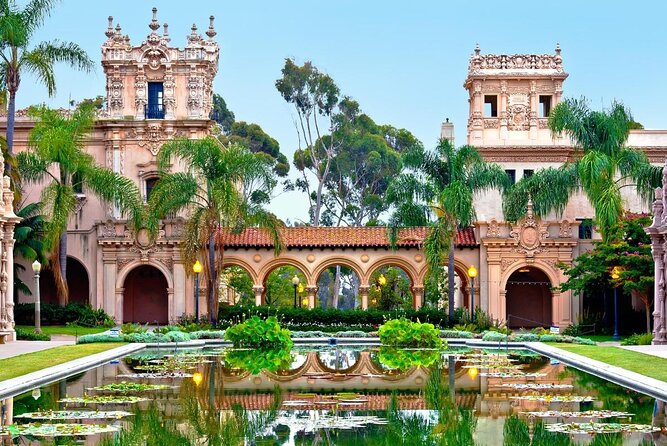
The Botanical Building was built for the 1915 exposition and was one of only four buildings intended to remain after the event. In front of it, the Lily Pond offers a quiet view with koi and other wildlife.
This is one of the more relaxed sections of the walk. The building and pond give you a good chance to pause after the denser architectural stops. The guide can also explain why the structure mattered when it was built and how it fits into the park’s larger exhibition story.
The stop lasts about ten minutes, which is longer than several others. That extra time makes sense here because the pond rewards a slower look, and the setting is among the most photogenic parts of central Balboa Park.
Spanish Village Art Center adds color and working artists
Spanish Village Art Center was built for the 1935 California Pacific International Exposition. Its collection of colorful cottages now holds 37 studios and many more artists.
This is not simply another historic building stop. You have a chance to look around the village and see a working arts space. It gives the tour a more current feel after so much discussion of expositions and early San Diego.
This is also where the beverage break fits naturally. One drink at a local coffee cart is included, and the tour information identifies Daniel’s as a local partner. You can choose a beverage, take a short rest, and continue with a better sense of the park’s everyday character.
The coffee is a modest inclusion, but it adds real value to a walking tour. You are not stopping at a generic chain, and the break gives you time to recharge without extending the tour into a full meal stop.
The Moreton Bay Fig Tree shows the park’s age
The Moreton Bay Fig Tree was planted for the 1915 exposition and has grown into a major park landmark. A newer viewing platform lets you get closer to the tree and appreciate its size.
This stop helps you see Balboa Park as a place that has changed over more than a century. The buildings may receive most of the attention, but mature trees and gardens are just as important to the park’s character.
The stop is short, around five minutes. You will get the story and a close view, but anyone who enjoys plants may want to return later and spend more time in the park’s gardens.
Bea Evenson Fountain and Casa del Prado reveal small surprises
The Bea Evenson Fountain is named for the founder of the Committee of One Hundred. It attracts children, dogs, and birds, giving the route a more relaxed public-space moment.
The fountain also has a surprising feature activated by the Fleet Center next door. This is the kind of small detail that can pass unnoticed when you explore on your own, and it adds a little playfulness to the walk.
Next comes Casa del Prado, home to cultural and botanical organizations. The building also helps explain how the park’s elaborate architectural style was created quickly and affordably. That is a useful correction to the idea that every grand facade required endless construction time and unlimited funds.
These stops are brief, but together they show how the park works as both a historic site and an active public gathering place.
El Prado finishes the central historic story
El Prado was the main area of the 1915 exposition, and its ornate buildings form the visual heart of Balboa Park. The final stop focuses on the architecture and some unexpected construction details.
This is where earlier pieces of the walk come together. You have already seen the tower, bridge, gardens, theaters, pond, and exhibition buildings. Now you can better understand how they form one planned setting rather than a random collection of attractions.
The route ends nearby at 1350 El Prado. From there, you can use the resource list to decide what deserves more time. The tour gives you an overview, not a replacement for visiting the museums, gardens, or performances themselves.
What you get for $60
The price is $60 per person. That is fair if you value a guide, a clear route, local context, and help planning the rest of your time in the park. Every stop has free admission, so you are paying for the guided interpretation rather than entry tickets.
The value is strongest for a first visit, a short stay in San Diego, or anyone who feels overwhelmed by Balboa Park’s size. It is also useful if you have visited the San Diego Zoo before but never explored the rest of the park. You can cover a lot of ground without spending your limited time figuring out where to go.
The value is weaker if you prefer wandering alone, reading signs, and setting your own pace. You will not enter every museum, and the two-hour schedule means some stops are introductions rather than lengthy visits.
A particularly good outcome is the possibility of a very small group. The advertised maximum is 15 people, but some departures may have only one booking, creating a private-tour feel at the standard price. That cannot be guaranteed, but it is a pleasant possibility.
Practical details that affect your day
Plan to arrive early. Paid parking is now in effect at Balboa Park, and finding a space can take longer than expected. One party arrived nearly 20 minutes late after struggling to park, which forced the route to be shortened so they could return to their car before the meter expired.
If parking is important to you, contact the provider in advance for current costs and options. Public transportation is nearby, and the tour ends at a different address from the starting point, so using transit may be simpler than driving.
Wear comfortable shoes and bring a phone for the mobile ticket. Most people can take part, and service animals are allowed. If you need an audio system, let the provider know ahead of time.
The tour is offered in English. One beverage is included, but guide gratuity is not. Free cancellation is available if you cancel at least 24 hours before the start time. Changes or cancellations made later are not accepted for a refund.
Who should choose this Balboa Park experience
I would choose this tour for a first-time visitor who wants a clear introduction without committing to a full day of museums. It also suits couples, families, and mixed-age groups because the pace includes regular stops and the route combines architecture, gardens, history, art, and a drink break.
It can work well for a wide age range. One family group included people from age 11 to 90 and found the route manageable, though every participant should be comfortable with a two-hour outdoor walk.
History and architecture fans will get the most from the exposition stories and building details. Garden lovers will appreciate the Lily Pond, Alcazar Garden, and Moreton Bay Fig Tree, though the tour only gives you a short look at each.
Should you book it?
Book this Balboa Park walking tour if you want orientation, stories, and a sensible route more than museum entry. The guide’s explanations help turn a collection of beautiful buildings into a readable story about San Diego, the Navy, the expositions, and the city’s cultural life.
Skip it if you already know the park well and prefer a self-guided visit. For most first visits, though, $60 buys a useful introduction, a local beverage, and a practical plan for returning to the parts that catch your interest.
FAQ
How long is the Balboa Park Highlights Small Group Tour?
The tour lasts approximately two hours.
Where does the tour begin?
The starting point is 698 El Prado, San Diego, California 92103.
Where does the tour end?
The tour ends at 1350 El Prado, San Diego, California 92101.
How many people can join the tour?
The maximum group size is 15 people.
Is a drink included?
Yes. One beverage of your choice at a local coffee cart is included.
Are museum admission fees included?
No. The listed stops have free admission, but the experience does not include admission to Balboa Park museums or other ticketed attractions.
Is parking available at Balboa Park?
Paid parking is in effect. You should allow extra time to find a space and contact the provider for current cost and location information.
Can I cancel for a full refund?
Yes, if you cancel at least 24 hours before the experience start time. Cancellations or changes made less than 24 hours in advance are not accepted for a refund.
Just added around the USA
- Roasted in Seattle Bean to Cup Coffee Tour★ 5.0 · 5 reviews
- Roasted in Seattle: Bean to Cup Coffee Tour★ 5.0 · 15 reviews
- Roast Your Own Coffee★ 5.0 · 2 reviews
- Coffee Roasters of Portland Eastside Walking Tour★ 5.0 · 7 reviews
- Kona Coffee Tasting: A Farm to Cup Experience★ 5.0 · 5 reviews
- Turkish Coffee Fortune Reading★ 5.0 · 15 reviews
- Historic Grounds: A Music City History and Coffee Morning Tour★ 5.0 · 19 reviews
- The Little Havana Walking Tour: A Taste of Cuba in Miami★ 4.5 · 2 reviews
USA Coffee Tours, compared.
Seattle Coffee Tour: Capitol Hill Cafes, Tastings & Local Stories
Read our review →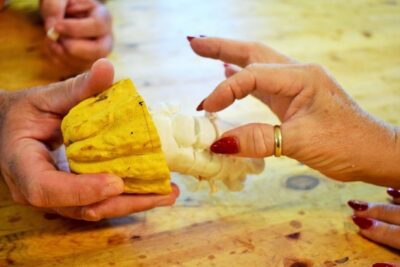
Award Winning Farm Tour: Coffee, Chocolate and Unique Gifts
Read our review →
Kona Shore Excursion: Sea Turtles, Historic Kona & Coffee
Read our review →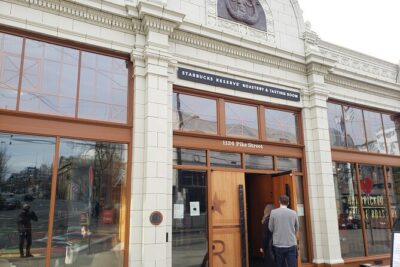

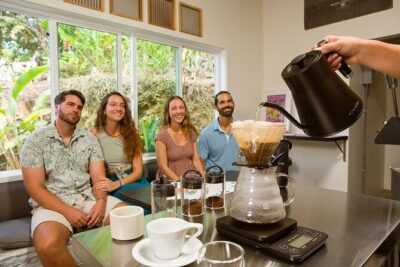

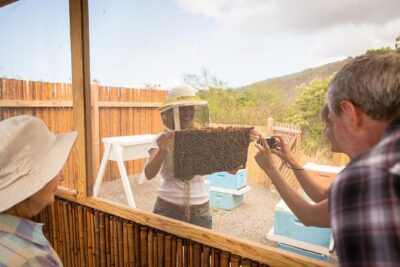
Kona Tour: Bee Farm, Kona Coffee, and National Historical Parks
Read our review →Browse the lists this tour appears in