
Review · USA
Historic Grounds: A Music City History and Coffee Morning Tour
Nashville makes the most sense on foot, especially before Broadway gets loud. This 1-hour-45-minute morning walk links the Ryman Auditorium, Tootsies Orchid Lounge, Printer’s Alley, Riverfront Park, and other downtown sights, with coffee at Assembly Food Hall to finish. It gives you a useful first look at the city’s music story without taking up half a day.
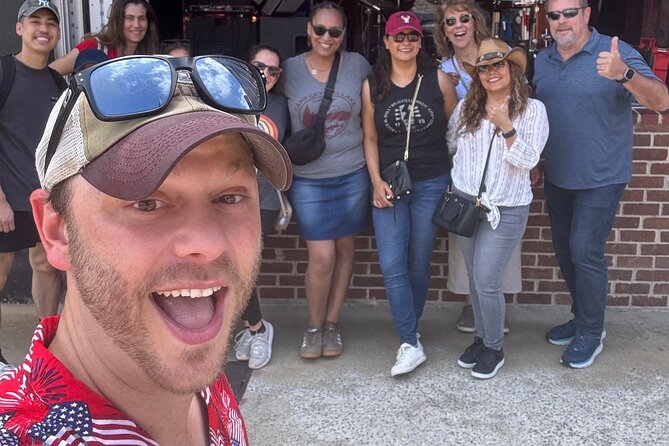
I like two things here. The early timing lets you see downtown in a calmer mood, before the honky-tonks fill with crowds. I also like the small-group format, advertised for no more than 12 people, which gives you a better chance to hear a guide such as Paul or Cody and ask questions. The main drawback is simple: this is a walking tour with plenty of standing, so it may not suit you if mobility is limited.
Key points at a glance
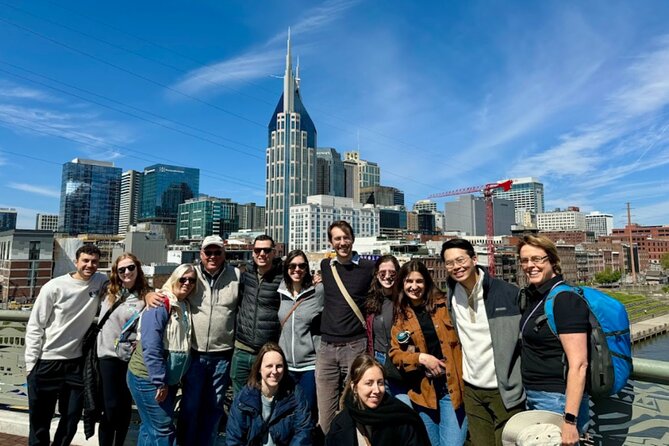
- The Ryman Auditorium anchors the tour: You get close to Nashville’s best-known music venue and hear why it is called the Mother Church of Country Music.
- Coffee is part of the plan: The final 25 minutes at Assembly Food Hall include coffee, making the early start easier.
- The route covers several sides of downtown: Music venues, church architecture, a historic alley, the riverfront, and major event spaces all appear.
- Local guides add practical advice: Paul and Cody are named as guides who explain music, political, and architectural history and offer suggestions for spending time in Nashville.
- The tour runs early: The stated start time is 9:00 a.m., while one tour account refers to an 8:30 a.m. start, so check your confirmation carefully.
- The price is reasonable for a short introduction: At $44.99 per person, you are paying for a guided orientation, a small group, and included coffee, not a full museum day.
Why an early walk works well in Nashville
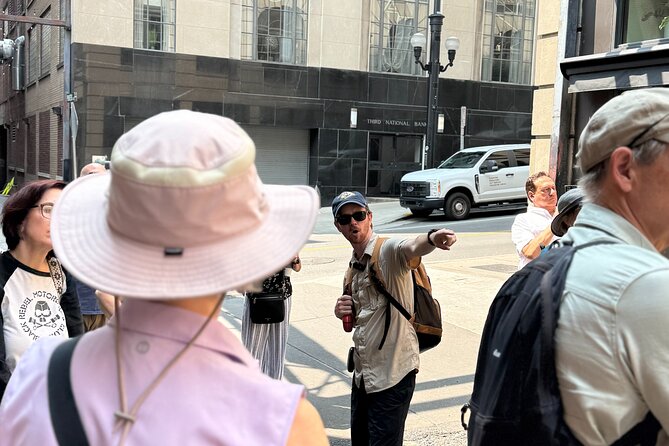
Nashville’s downtown changes character quickly. In the morning, Broadway and the surrounding streets are easier to navigate, and you can study the buildings without the full crush of evening crowds. By the time the walk ends, live music may already be starting in restaurants and bars along Broadway.
That timing is one of the strongest reasons to book this experience. You get your bearings before spending later hours at honky-tonks, museums, restaurants, or concerts. The route also gives you a useful sense of distance. Downtown Nashville is compact, but the music sights are spread across several blocks, and a guided walk helps connect them.
The tour begins at the Grand Lodge of Tennessee Free and Accepted Masons, at 100 7th Avenue North. It ends back at the same meeting point. Since the activity uses a mobile ticket and starts in central downtown, you will want to arrive ready to walk rather than treating this as a ride between attractions.
The published duration is about 1 hour and 45 minutes. That is long enough for a meaningful introduction but short enough to fit around other plans. I would schedule it for your first morning in Nashville, not your last. The guide’s recommendations about places to visit and places to skip can help shape the rest of your stay.
More Heritage Tours in the USA:
- Kona Shore Excursion: Sea Turtles, Historic Kona & Coffee
★ 4.5 · 324 reviews - Kona Tour: Bee Farm, Kona Coffee, and National Historical Parks
★ 4.5 · 78 reviews - Savannah History plus Coffee and Chocolate Walking Tour
★ 5.0 · 28 reviews
The Ryman Auditorium and Nashville’s musical roots
The Ryman is the emotional center of the route. Its red brick exterior dates to 1892, and the building’s look is more churchlike than many modern concert halls. That is fitting. The venue began as a religious gathering place and later became closely tied to the Grand Ole Opry and Nashville’s country music identity.
Inside, the wooden pews, stained glass windows, and careful acoustics create a very different feeling from the neon bars on Broadway. The contrast matters. Nashville’s music culture is not only about late-night drinking and loud guitar solos. It also grew in formal halls, churches, radio studios, and small rooms where performers built loyal audiences.
The tour description presents the Ryman as an interior stop, but the exact amount of time inside is not specified. If seeing the full auditorium is especially important to you, ask the operator what access is included on your date. At $44.99, the value comes mainly from the guided route and interpretation, so do not assume this replaces a dedicated Ryman visit if you want a longer self-guided look.
I like beginning here because it gives the rest of the morning some context. When you later pass neon signs and honky-tonks, you understand that the city’s music story has several layers. The Ryman is a place to pause and listen, not simply take a quick photograph.
Tootsies and the working honky-tonk tradition
From the Ryman, the route heads toward Tootsies Orchid Lounge. Its purple exterior is hard to miss, and its location near Broadway puts you right in the middle of Nashville’s famous bar district.
Tootsies has operated as a country music gathering place since the 1960s. The walls carry signed photographs and music memorabilia, and the venue is associated with performers such as Willie Nelson and Patsy Cline. The important point for you is that Tootsies helps explain how Nashville’s music industry worked at street level. Artists could play, meet people, build a following, and become part of the city’s daily music circuit.
The stop is also a reminder that Nashville’s best-known places are working venues, not just preserved monuments. Depending on the morning, you may find the atmosphere quieter than it is at night. That is not a flaw. The early hour gives you a clearer look at the room and its decorations without the full evening rush.
The route description indicates an interior visit, but it does not give a guaranteed performance schedule or a set amount of time inside. You should treat this as a historical and atmospheric stop, not as a promised concert.
First Presbyterian Church and the city’s architectural side
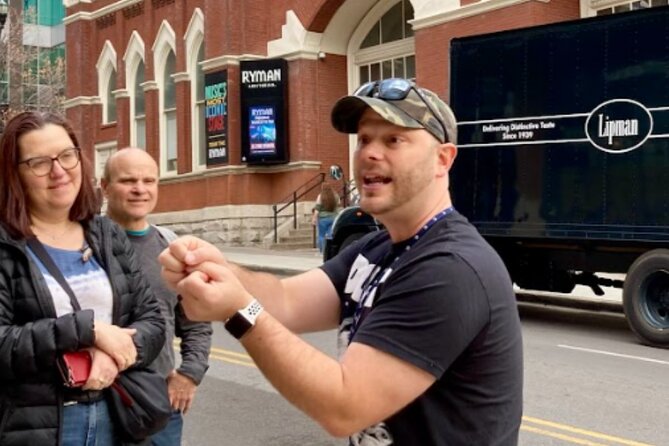
First Presbyterian Church adds a needed change of pace. After the music venues, you get a look at downtown Nashville’s religious and civic architecture.
The church is noted for pointed arches, detailed stonework, and tall spires. Even if you are mainly visiting Nashville for music, this stop helps explain the older city around the entertainment district. Downtown is not one giant stage set. It includes places built for worship, government, business, publishing, sports, and live performance.
The tour focuses on the exterior details and the building’s place in Nashville’s past. It is a brief stop, but it gives the morning some balance. I appreciate that because a good city walk should show more than its most obvious attraction. You get a sense of how Nashville looked and functioned before Broadway became such a major visitor draw.
Do not expect a long church tour or a formal religious program. The supplied details emphasize the facade and architectural character. If you prefer music-only sightseeing, this may be the least essential stop, but it is useful for anyone who likes buildings and local history.
A few more coffee tours around the USA worth a look
- Vida Mia Morning Coffee Cruise
★ 5.0 · 110 reviews - Coffee Crawl & VIP Morning in Pike Place Market
★ 5.0 · 75 reviews - Hilton Head Morning Kayaking & Coffee Guided Tour
★ 4.5 · 39 reviews - Grand Haven Morning Guided Bike & Coffee Tour – 3 Hours
★ 5.0 · 22 reviews
Printer’s Alley, from newspapers to nightlife

Printer’s Alley is one of the more distinctive parts of the walk. The passage began as a center for newspapers and printing in the 19th century. Today, it is lined with entertainment venues, bars, clubs, restaurants, old signs, and murals.
The alley shows how Nashville reuses its older spaces. Printing businesses gave way to nightlife, but the narrow streets and historic buildings remain part of the city’s visual character. The route lets you see a less polished side of downtown than the major Broadway frontage.
You may hear music coming from venues along the alley, though the tour does not promise a specific performance. The best reason to visit in the morning is to notice the architecture and signs before the nightlife takes over. If you return later, you will recognize the route and understand why the alley feels different after dark.
This is also a good stop for photographs. Just keep in mind that the experience is a walking introduction, not a nightlife crawl. You will not be given a full evening to visit each club.
Riverfront Park and the Cumberland River
The route then reaches Riverfront Park, where downtown opens toward the Cumberland River. The park provides a short break from the tight streets and colorful signs.
From the riverfront, you can look across toward Nissan Stadium. The view connects Nashville’s music identity with its sports and event business. The city hosts far more than country performances, and the stadium is a clear reminder of that broader role.
I like this part because it changes the rhythm of the morning. You have been looking at brick walls, church facades, and bar entrances. Here, you get open air, a river view, and a wider sense of the city. The stop may be brief, but it helps you understand downtown’s shape.
There is no promise of a long park visit or a special river activity. Think of Riverfront Park as a scenic pause and a viewpoint, not the main attraction. It is also another reason to wear comfortable shoes, since the route involves repeated walking and standing.
Broadway, neon, and the modern music district
Broadway is the loudest and most instantly recognizable section of the tour. Neon signs point toward Tootsies, Robert’s Western World, The Stage, and other honky-tonks. Music spills from the venues, and crowds gather along the street.
In the morning, Broadway may feel more manageable than it does later in the day. You can identify the major venues and decide which ones you want to revisit. The guide can also help you place the honky-tonks within Nashville’s larger music story, rather than leaving you to choose based only on the biggest sign.
The route does not promise entry into every bar or a particular musical act. That is worth understanding before you book. This is a guided walk through the district, with stops and context. If your main goal is hours of live music, you will need to plan a separate evening.
Still, Broadway is valuable because it shows the city’s current energy. The Ryman represents an older concert tradition. Broadway shows how Nashville turns music into an everyday public experience, with performers working in multiple venues and visitors moving from one room to the next.
Nissan Arena and Nashville’s event economy
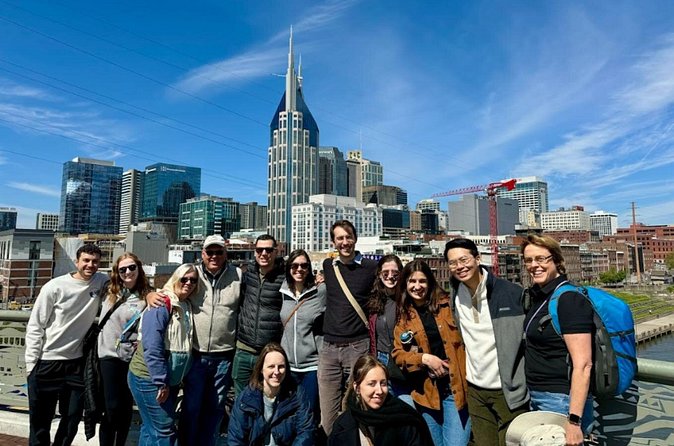
The tour also passes the modern Nissan Arena, described as a major venue for concerts, sports events, and other entertainment. The sleek building creates a sharp contrast with the Ryman’s 19th-century brick and wood.
The stop is mainly a look at the exterior and the role of large venues in downtown life. It gives you another piece of the city’s identity: Nashville is both an old music center and a modern events city. The contrast between historic halls and large-scale arenas is one of the more useful themes of the walk.
The supplied details use the name Nissan Arena, while the route also identifies Nissan Stadium across the river. Since venue names can be confusing, pay attention to the guide’s explanation on the day. The important value here is the connection between architecture, entertainment, sports, and the way downtown has developed.
Coffee at Assembly Food Hall
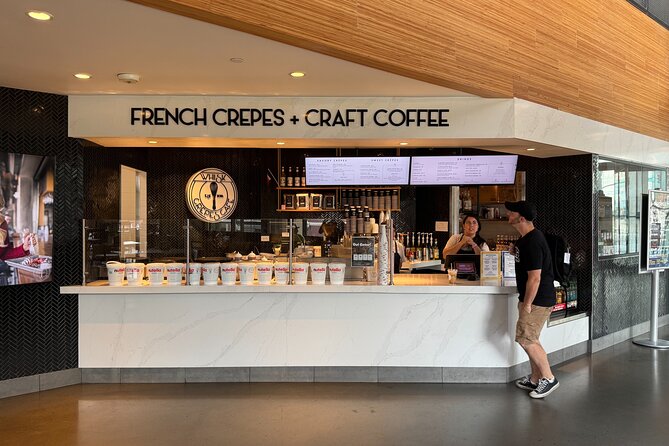
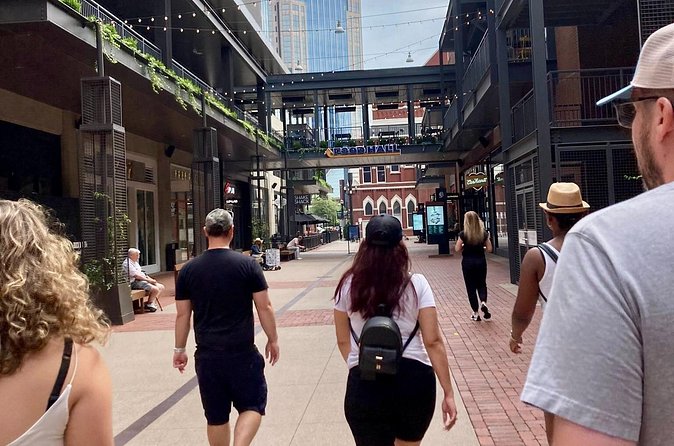
The final stop is Assembly Food Hall, where 25 minutes are set aside and coffee is included. This is more than a small extra. An early walking tour is easier when you know a drink and a pause are built into the schedule.
The coffee stop also creates a natural end to the route. You can ask the guide last questions, compare notes on the neighborhoods you have seen, and decide where to go next. Assembly Food Hall gives you a practical place to continue on your own, though the supplied details do not promise a full meal or specify a particular coffee vendor.
Do not book this as a coffee tasting. The coffee is a pleasant part of a history walk, not the central subject. Its value is convenience and timing. You begin early, walk through several downtown districts, and finish with a chance to sit or slow down.
Price, group size, and what you receive
The price is $44.99 per person. For a 1-hour-45-minute guided walk, that is not the cheapest way to see downtown, but the price is reasonable if you value local interpretation and a structured route. Coffee is included, and the advertised group maximum of 12 should make it easier to hear the guide than on a large coach tour.
You are paying for more than directions between landmarks. A good guide can explain how the Ryman, honky-tonks, churches, printing district, riverfront, and arenas fit into one city story. Paul is described as energetic and strong on music and local history. Cody is described as combining music, political, and architectural history. The guide you receive may vary, but the experience depends heavily on that person’s storytelling.
The tour is offered in English and uses a mobile ticket. Confirmation arrives at booking. It is near public transportation, and most people can take part, but the repeated walking and standing deserve attention. Wear supportive shoes and avoid bringing a schedule that requires you to rush straight into another activity.
Free cancellation is available up to 24 hours before the start time for a full refund. Within 24 hours, the payment is not refunded, and changes are not accepted. The activity also requires a minimum number of participants, so a cancellation by the operator can result in another date, another experience, or a full refund.
Who should book this Nashville walk
I would choose this tour for a first morning in Nashville, especially if you want history before nightlife. It suits you if you enjoy music stories, buildings, city geography, and a guide who can offer practical suggestions for the rest of your visit.
It is also a good fit for solo visitors and couples who prefer a small group to a large bus. The route gives you several recognizable sights in less than two hours, leaving most of the day free.
I would look elsewhere if you want a full Ryman Auditorium tour, a guaranteed live performance, or a seated experience with minimal walking. The coffee is useful, but this is not primarily a food tour. And if you have mobility concerns, contact the operator before booking because the route includes substantial walking and standing.
Should you book it?
Book it if you want a compact, early introduction to Nashville that connects the Ryman’s old concert tradition with Broadway’s working honky-tonks. The strongest reasons are the timing, the small advertised group size, the range of downtown sights, and the chance to get practical local guidance from a guide such as Paul or Cody.
Skip it if your plans already include detailed visits to every listed attraction or if you want the freedom to spend long periods inside each venue. For most first-time visitors who want to understand downtown before the crowds arrive, $44.99 is a fair price for a focused walk, a useful orientation, and coffee at the end.
FAQ
Where does the tour start?
It starts at the Grand Lodge of Tennessee Free and Accepted Masons, 100 7th Avenue North, Nashville, Tennessee 37203.
Where does the tour end?
The activity ends back at the meeting point.
What time does the tour start?
The stated start time is 9:00 a.m. One description of the experience refers to an 8:30 a.m. start, so check your booking confirmation for the exact time on your date.
How long does the tour last?
The tour lasts approximately 1 hour and 45 minutes.
Is coffee included?
Yes. The tour includes 25 minutes at Assembly Food Hall, and coffee is included.
How much does the tour cost?
The listed price is $44.99 per person.
What language is the tour offered in?
The tour is offered in English.
How many people can join the tour?
The advertised maximum is 12 participants.
Can I cancel for a full refund?
Yes. You can cancel at least 24 hours before the start time for a full refund. Cancellations or changes made within 24 hours are not refunded or accepted.
Just added around the USA
- Roasted in Seattle Bean to Cup Coffee Tour★ 5.0 · 5 reviews
- Roasted in Seattle: Bean to Cup Coffee Tour★ 5.0 · 15 reviews
- Roast Your Own Coffee★ 5.0 · 2 reviews
- Coffee Roasters of Portland Eastside Walking Tour★ 5.0 · 7 reviews
- Kona Coffee Tasting: A Farm to Cup Experience★ 5.0 · 5 reviews
- Turkish Coffee Fortune Reading★ 5.0 · 15 reviews
- The Little Havana Walking Tour: A Taste of Cuba in Miami★ 4.5 · 2 reviews
- Grand Haven Morning Guided Bike & Coffee Tour – 3 Hours★ 5.0 · 22 reviews
City Tours, compared.

Fun & Easy Vietnamese Coffee Workshop in Hồ Chí Minh City
Read our review →
Vietnamese Coffee & Culture Exploration in Hồ Chí Minh City
Read our review →
Decadent Vietnamese “Egg Coffee” Workshop in Hồ Chí Minh City
Read our review →


Coffee Workshop in Ho Chi Minh City: Discover the art of coffee
Read our review →
Browse the lists this tour appears in