
Review · PEREIRA
Explore the Coffee Process_From Tree to Cup & Fun by Jeep
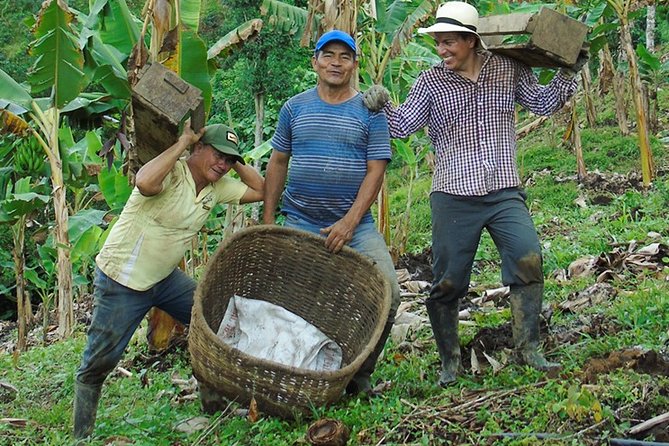
The most interesting part of this Pereira outing is that coffee is only the beginning. Arvey and Elizabeth show you the full path from coffee tree to finished cup, then place you in the brewing seat so you can prepare Colombian coffee yourself. Along the way, you see composting, vermiculture, fruit trees, birds, farm animals, and the practical side of sustainable agriculture.
I like the traditional Jeep ride into the Andean hills, and I like the unusually personal format, with a maximum of 10 people. The main consideration is time: four hours gives you a useful introduction, but not a leisurely farm day. You will also be outdoors on a working farm, so insects and uneven ground are part of the deal.
Key points to know before booking
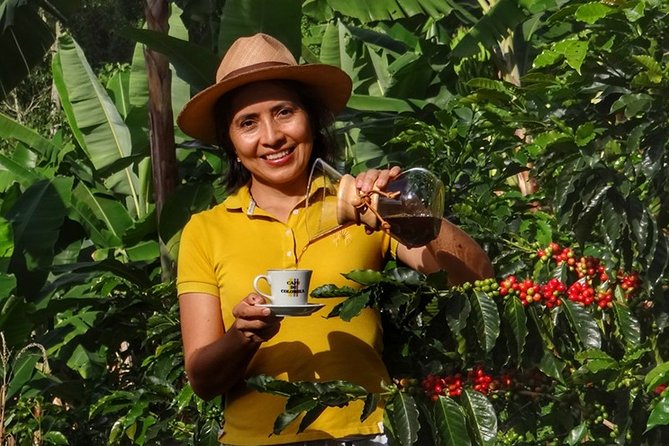
- Coffee from tree to cup: Follow planting, harvesting, fermentation, washing, drying, roasting, and brewing.
- Arvey and Elizabeth host the visit: Their farm is also their home and long-term sustainable agriculture project.
- A real coffee-country ride: Hotel pickup in a traditional Jeep turns the journey into part of the outing.
- More than coffee: See bananas, cocoa, avocados, citrus, guava, papaya, mango, guanabana, compost, vermiculture, birds, chickens, ducks, and dogs.
- Hands-on tasting: Prepare coffee with Elizabeth and compare different preparation methods and coffee processes.
- Small and practical: The group is limited to 10, snacks and drinks are included, and cancellation is free up to 24 hours ahead.
Riding a traditional Jeep from Pereira into the Andes
The tour begins with hotel pickup in Pereira, using the traditional Jeep that has become an icon of Colombian coffee culture. This is not just a transfer in a regular vehicle. The ride takes you away from the city and up into the Andean countryside, giving the outing a strong sense of place before you even reach the farm.
The drive to the property takes roughly 40 minutes, based on the described route from Pereira. The road is part of the fun, though anyone who gets carsick should keep that mountain journey in mind. You are not driving yourself, which makes the trip easier and lets you watch the scenery and listen as Arvey explains the region, coffee growing, and the story of the farm.
The farm was started by Arvey, formerly an accountant, and Elizabeth, formerly an engineer. Their change of direction matters because this is not presented as a factory-style coffee attraction. You are visiting a working family project shaped around farming, conservation, and daily life in the Colombian countryside.
The tour has also received major recognition, including the 2022 National Tourism Awards and the WTM Latin American Responsible Tourism Awards in Brazil in 2023. Awards do not replace a good visit, but here they help explain the focus on sustainability and community-based tourism.
A few more coffee tours around Colombia worth a look
- Medellin: Coffee Tour with Transport, Snacks and Tastings
★ 4.7 · 1,357 reviews - Medellín Coffee Farm Tour with Trolley and Cable Car Ride
★ 4.9 · 277 reviews - Coffee Tour at the Finca del Café
★ 5.0 · 213 reviews
Walking among coffee, fruit, and useful farm plants
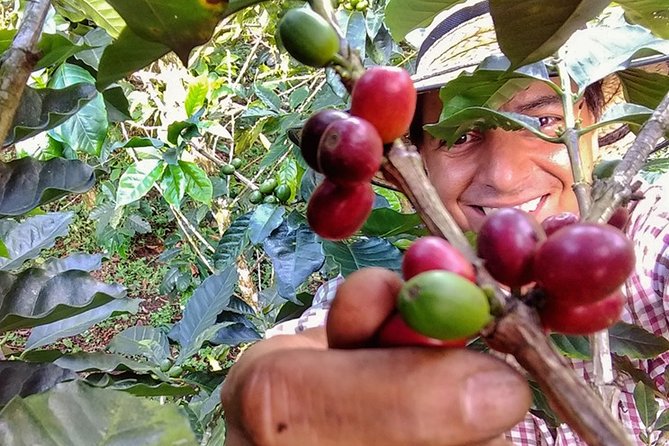
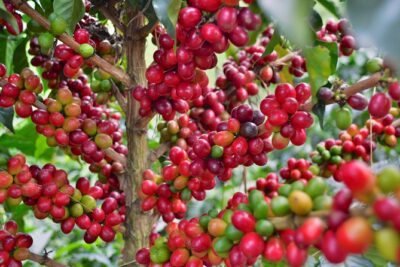
Once you arrive, the tour moves into the farm itself. Arvey leads you through the coffee plantation and explains the plant’s life cycle, from growing and picking the coffee cherries to the steps that prepare them for roasting.
You also see how coffee fits into a wider farm system. The property grows bananas and plantains along with cocoa, avocado, orange, lemon, tangerine, guava, papaya, mango, and guanabana. Other plants have practical roles beyond producing food. Cotton can help attract birds that use it for nests, while some trees provide habitat for iguanas. Certain plants are grown for medicinal use.
This part makes the visit useful even if you are not a serious coffee drinker. You learn how a small farm uses different crops, trees, and animals together instead of treating coffee as an isolated product. Depending on the season, you might see or taste fruit directly from the plant.
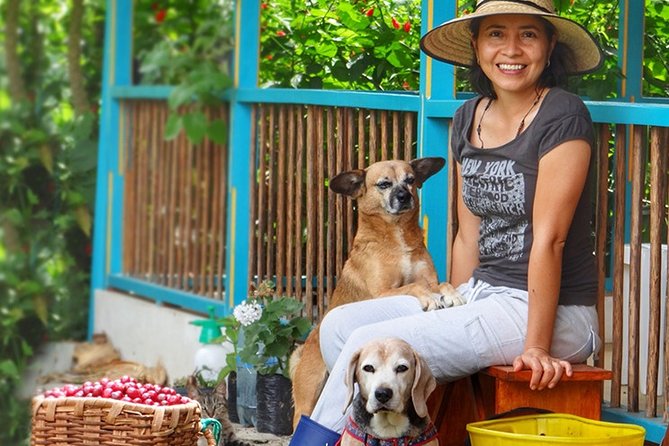
The farm is also home to dogs, cats, chickens, ducks, and roosters. The animals add a relaxed, domestic quality to the visit, but remember that this is still a working farm, not a polished garden attraction. You may encounter insects, mud, or rougher paths. Mosquito repellent is a smart addition to your day bag.
The farm trails and demonstrations are described as accessible for people with disabilities, including wheelchair and blind access in much of the property. Since this is a rural site, it is wise to confirm your individual mobility needs when booking, especially if you require access to every part of the grounds.
Making your first cup soon after arrival
One of the clever details of this tour is that the coffee lesson becomes hands-on early. After arriving, you make your first cup with Elizabeth’s guidance rather than waiting until the end for a standard tasting.
That first cup gives the rest of the visit a clear purpose. As you walk among the plants and learn about harvesting, you already know that the cherries will eventually become something you can smell, taste, and prepare. Elizabeth explains brewing methods in a friendly, practical way, with an emphasis on techniques you can repeat at home.
You may compare coffee prepared in different ways, and the tour includes more than one cup. The experience described in the supplied material includes two additional preparations near the end, along with an explanation of the roasting curve. The point is not to turn you into a professional barista. It is to show you how small changes in roasting and preparation affect the final drink.
That makes this a good choice for people who enjoy understanding how food is made. You do not need to know coffee vocabulary in advance. The lesson begins with the plant and gradually moves toward flavor, technique, and quality.
Understanding fermentation, washing, and three coffee styles
The strongest educational section follows the beans after they are picked. Arvey explains how the coffee is processed, including fermentation, washing, and drying. You learn about three styles identified on the farm: washed, honey, and natural.
These names describe different ways of handling the coffee fruit after harvesting. The important point for you is that the same basic crop can produce different flavors depending on what happens between picking and roasting. The farm uses this process to show why coffee is not simply a bean pulled from a tree and ground into a drink.
Quality control is part of the lesson too. You see that good coffee depends on many linked steps, including the condition of the fruit, processing, drying, and roasting. This is where the tour goes beyond a quick plantation walk. It explains the work behind the flavor in your cup.
Elizabeth then takes over for the roasting and brewing side. The roasting curve may sound technical, but the lesson connects it to a simple question: how do you get the best result from these beans? You can ask questions, taste the coffee, and see the relationship between farm decisions and the final drink.
A refreshing drink and snacks are included. The food described on the tour has included lemonade made from farm-grown lemons, patacones, and empanadas. The exact snack can vary, but you can count on coffee or tea and light refreshments being part of the package.
Same place, a different way to drink it:
- Medellin: Coffee Tour and Wellness Spa
★ 4.8 · 209 reviews - Salento: Private Cocora Valley, Salento & Coffee Farm Tour
★ 4.9 · 202 reviews - Medellin: Coffee Tour with Hotel Transfers and Meals
★ 4.9 · 186 reviews - Medellin: Horseback Riding Coffee Farm Tour with Coffee Spa
★ 4.8 · 151 reviews
Compost, vermiculture, and the farm’s wider purpose
The sustainability work is not a quick speech added to a coffee stop. You visit the place where organic waste is composted, see vermiculture, and look at the nursery. These details show how the farm handles resources after the main crop has been harvested.
Vermiculture uses worms to help process organic material into a useful soil amendment. Composting and nursery work also show how a small farm can reduce waste and support future planting. You are not simply told that the farm is responsible. You are shown some of the systems that make the claim meaningful.
Arvey and Elizabeth describe themselves as neo-peasants, a term that reflects their move into rural life and agriculture. Their approach combines professional backgrounds with hands-on farming. That personal story gives the sustainability message some weight, because it is tied to the way they live and work every day.
The farm’s birdlife is another appealing part of the visit. The number of bird species seen on the property has grown greatly since the farm began, reaching an estimated 120 types. You are not promised a formal birdwatching tour, but the mix of crops, trees, and water sources creates plenty to notice as you walk.
If you enjoy nature, give yourself time to pause. The coffee instruction is the main subject, but the birds, fruit, trees, and animals help explain why this farm feels different from a simple production demonstration.
A small group with real access to the hosts
The group limit is 10 people, and that number matters. Coffee processing involves questions, tasting, and demonstrations. With a smaller group, you have a better chance to hear the explanation clearly and get direct help when preparing your coffee.
Arvey handles much of the farm and production story, while Elizabeth guides the brewing and roasting work. Their roles make the visit feel like a conversation between two people who share the project rather than a scripted performance delivered by a rotating guide.
That personal format is one of the tour’s greatest strengths. You are seeing their farm, their animals, their crops, and their working methods. You also get a more honest sense of what sustainable farming requires: constant care, varied crops, patience, and attention to small details.
The tradeoff is that the outing may feel less polished than a large commercial plantation. That is a benefit if you want direct contact with a family-run project. It may be less suitable if you expect a museum-like presentation, a large gift shop, or a highly choreographed attraction.
What the $115 price includes
At $115 per person, this is not the cheapest coffee stop in the Pereira area. The price includes private transportation, hotel pickup and drop-off, entrance, guiding, coffee or tea, and snacks. You are also paying for a four-hour program with a small group rather than a quick tasting at a café.
I think the value is strongest for visitors who would otherwise need to arrange transportation into the hills. The Jeep ride removes that task, and the guide-led visit gives you a clear explanation of farming, processing, sustainability, and brewing in one outing.
The value is also tied to the hands-on format. You do not just look at coffee plants and drink a sample. You follow the process, compare preparations, and make coffee under Elizabeth’s direction. If you care about supporting small-scale sustainable agriculture, that adds meaning to the price.
It is less compelling for someone who wants only a quick cup or a scenic drive. Four hours is a fair commitment, and much of the time is spent learning and walking around the property. You should book it because you want the full farm story, not simply because coffee is available at the end.
Transportation from other cities costs an additional $25. The listed tour price covers the stated Pereira service, so check the pickup location carefully if you are staying outside the area.
Who will enjoy this farm visit most
I would choose this outing for coffee drinkers who want to understand what they are tasting. It also suits people interested in Colombian rural life, organic farming, fruit trees, birdlife, and small family businesses.
You do not need to be a coffee expert. In fact, beginners may get the most from the step-by-step approach. The tour starts with familiar ideas, such as a plant producing fruit, then explains the less obvious work of fermentation, drying, roasting, and brewing.
Families and mixed-interest groups may also find enough variety here. One person can focus on coffee, while another watches birds, meets the animals, or learns about compost and tropical fruit. The smaller group and accessible trails add to its flexibility.
I would think twice if you dislike outdoor conditions, insects, mountain roads, or a slower educational visit. This is a farm in the Andes, not an indoor tasting room. Bring practical clothing, mosquito repellent, and shoes suited to rural paths.
Booking advice and the final call
The tour is often reserved well in advance, with an average booking point of about 42 days before the outing. That suggests planning ahead, especially if your Pereira schedule is tight. Confirmation is provided at booking, and free cancellation is available up to 24 hours before the start time.
The experience has a perfect 5 rating from 28 reviews and is recommended by 100 percent of customers. The most consistent praise centers on the hosts, the personal attention, the complete coffee process, and the farm’s sustainability work. Those are also the elements that make this more than a standard plantation visit.
I would book it if you want to meet the people behind the crop and leave with a better understanding of how Colombian coffee reaches your cup. I would skip it only if your priority is a short, highly commercial attraction or a city-based tasting. For an authentic coffee-country outing from Pereira, the combination of Jeep transport, hands-on brewing, fruit-filled farm, and direct time with Arvey and Elizabeth makes the price reasonable.
FAQ
How long does the coffee farm tour last?
The tour lasts approximately four hours.
Where does the tour take place?
The experience is based in Pereira and includes a visit to a coffee farm in the Andes.
Is hotel pickup and drop-off included?
Yes. Private transportation with hotel pickup and drop-off is included for the stated tour service.
How many people can join the tour?
The group is limited to a maximum of 10 travelers.
What is included in the price?
The price includes coffee or tea, snacks, private transportation, entrance, and a guide.
What is the cancellation policy?
You can cancel for a full refund if you do so at least 24 hours before the experience starts. Changes or cancellations made less than 24 hours ahead are not accepted for a refund.
Just added around Colombia
- Best Coffee Tour from Medellin with Lunch and Transportation★ 5.0 · 24 reviews
- Private Tour to Coffee Farm (farm of your choice)★ 5.0 · 2 reviews
- Medellin: Coffee Farm Tour & Spa with Overnight Glamping★ 4.5 · 3 reviews
- Most complete COFFEE TOUR at local family farm★ 5.0 · 2 reviews
- Minca: Hidden Waterfall + Coffee and Cocoa Workshop★ 4.9 · 6 reviews
- Medellin: Coffee and fruit tour★ 4.9 · 12 reviews
- Medellin: Glamping Spa and coffee tour Experience★ 3.7 · 3 reviews
- From Medellin: Day Trip to a Jardin Coffee Plantation★ 4.5 · 16 reviews
Pereira Coffee Tours, compared.
Full-Day Private Coffee Tour in Cocora Valley and Salento
Read our review →
Salento and Cócora Tour plus Coffee Farm from Pereira or Armenia
Read our review →
Browse the lists this tour appears in