
Review · BIG ISLAND
Hala Tree Coffee Farm Tour
Hala Tree Coffee turns a morning cup into a small farm lesson. In about an hour, you see coffee cherries on the tree, learn how they become roasted beans, and taste three coffees while looking out toward the ocean. The setting feels personal rather than polished for mass tourism.
I like the $10 price, which makes this one of the Big Island’s easiest agricultural stops to fit into a day. I also like the tasting choice: you select three coffees instead of simply receiving a fixed sample flight.
The main consideration is scale. This is a working little farm, not a large plantation attraction, and the walk into the coffee trees is short. If you want a long orchard hike or a full meal, this tour may feel too brief.
Key points to know before you book
- Three coffees of your choice: The tasting is a highlight, and you get to compare different varieties or roast styles.
- A short, useful farm lesson: You follow coffee from flower and cherry to processing, roasting, and brewing.
- Small groups of up to 12: The pace is relaxed, and there is room to ask questions.
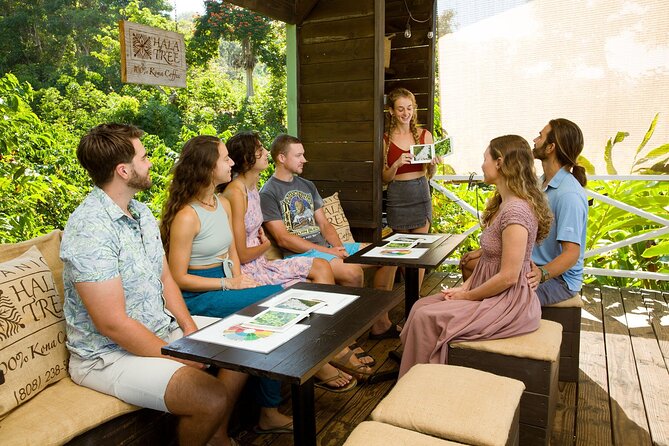
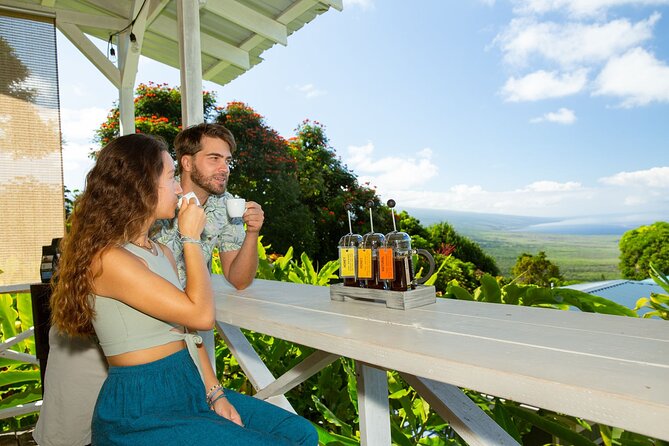
- Ocean views from the tasting area: The shaded wood deck and sofa seating make the final tasting feel unhurried.
- A modest working farm: You see real production, but only walk about 50 steps into the trees and back.
- Easy to fit into a Kona day: The tour lasts about one hour and returns to the starting point.
A small Kona farm with a personal feel
Hala Tree Coffee sits at 82-5966 Mamalahoa Highway in Captain Cook, south of Kailua-Kona. The farm is known for producing 100% Kona Coffee and handling several parts of the process in one place. That matters because you are not only looking at coffee trees. You are learning how the crop is picked, processed, roasted, and prepared.
The operation feels small and hands-on. The centerpiece is a large Hala tree, and the farm setting has a simple, shaded character rather than the feel of a formal visitor center. Friendly dogs may greet you, adding to the homey atmosphere.
Finding the entrance takes some attention. The farm is down a church driveway and is not heavily marked from the highway, so use Google Maps and allow a little time to spot the turn. This is a practical detail worth knowing before you set out, especially if you are driving on a tight schedule.
The group limit is 12 people. That is large enough to have a bit of company but small enough for questions. Guides named Sabrina, Margaret, Danelle, Kat, and others have led the tour, and the strongest part of the experience is the clear, friendly way the coffee process is explained.
More Coffee Farm Tours in the USA
- Award Winning Farm Tour: Coffee, Chocolate and Unique Gifts
★ 5.0 · 484 reviews - Big Island: Volcanoes, Waterfalls, & Coffee Farm Day-Trip
★ 4.9 · 414 reviews - Small-Group Big Island Tour: Hawaii Volcanoes National Park and Kona Coffee Farm
★ 5.0 · 343 reviews
Walking among the trees and coffee cherries
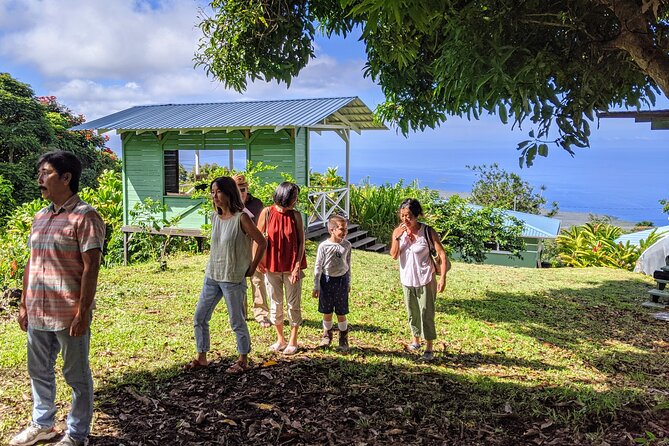
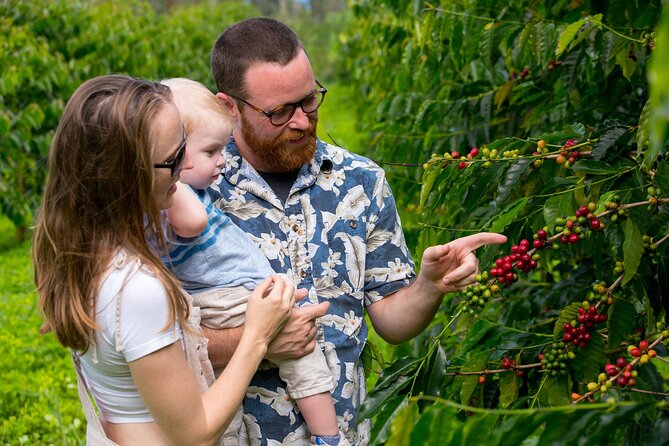
The tour begins with a guided look at the coffee orchard. You see the fruit in its natural form, which may surprise you if you have only encountered coffee as beans or ground powder. At harvest, coffee looks like a small red cherry. The bean is inside the fruit, and the steps between picking and brewing are more involved than most people expect.
The guide explains the coffee plant, the growing cycle, harvesting, and the work involved in producing Kona coffee. One useful detail shared during the tour is that the crop can take about 267 days from bloom to harvest. The coffee is hand-picked, and the farm may have seven or eight harvests in a year.
That information gives the orchard walk some purpose. You are not simply looking at rows of trees. You begin to understand why Kona coffee costs more than ordinary supermarket coffee and why careful picking matters.
The walk itself is very short. One description puts it at roughly 50 steps into the coffee plants and back. For most people, that is an advantage: you get the basic farm setting without spending half a day in the sun. If you want a serious agricultural hike, you may find the outdoor portion limited.
The ground can be rocky or uneven. One guide adapted the talk for a person who could not manage the hill, giving the explanation from beneath a guava tree. That suggests a helpful, flexible approach, but the tour is not described as fully accessible. If you have mobility concerns, contact Hala Tree Coffee before booking.
From red cherry to roasted Kona bean
The strongest educational part is the explanation of what happens after harvest. You learn how the fruit is processed to reveal the coffee bean, then how drying, preparation, roasting, and brewing affect the final cup.
The guide also explains how different flavors can come from the same basic coffee bean without adding flavoring. Roast level, processing choices, and preparation all play a role. This is useful even if you already drink specialty coffee, because it connects the technical details to what you taste later.
The farm is involved in the full chain, from growing and harvesting through processing and roasting. That gives the lesson a direct connection to the place. You are looking at the trees, then hearing how those particular cherries move through production.
The tour may also let you touch, peel, and taste the sweet fruit around the coffee bean. That small hands-on moment helps make the process memorable. Coffee suddenly becomes a fruit crop, not just something that arrives in a bag.
The guides are not presented as formal coffee scientists, and one account notes that a guide openly admitted when she did not know an answer. I see that as a positive. You get a genuine farm explanation from people connected to the operation, rather than a rehearsed performance that pretends to cover everything.
The three-cup tasting on the shaded deck
The tasting is where the short tour pays off. You choose three coffees, then sit on a shaded wood deck or sofa area with views toward the ocean. The pace is relaxed, and you have time to compare the cups rather than swallow a quick sample and move on.
The tasting helps you notice differences among coffees. You might compare a lighter and darker roast, different varieties, or cups with different flavor profiles. The exact choices depend on what is available, but the important point is that you choose from the selection instead of receiving only one standard sample.
This is also a good setting for questions. You can connect what you learned about processing and roasting with what you taste in the cup. Even someone who is not deeply interested in coffee can follow the simple logic: the tree, the fruit, the processing, and the roast all shape the drink.
The coffee is the clear star, but tea may also be available during the seated portion. People who do not enjoy coffee can still follow the farm lesson and take part in the relaxed end of the visit. One family found the experience enjoyable even for a non-coffee drinker, which makes this a better choice for mixed-interest groups than a tasting alone.
I would set your expectations correctly. This is a pleasant flight tasting, not a full café meal or a long professional cupping session. The value comes from pairing the cups with the farm explanation and the view.
Same place, a different way to drink it:
- Big Island Highlights: Coffee, Volcano, Black Sands & Waterfall
★ 5.0 · 1,054 reviews - Seattle Coffee Tour: Capitol Hill Cafes, Tastings & Local Stories
★ 5.0 · 489 reviews - Kona Shore Excursion: Sea Turtles, Historic Kona & Coffee
★ 4.5 · 324 reviews - Seattle Coffee Crawl-Small Group Tour
★ 5.0 · 240 reviews
Why the $10 price is such good value
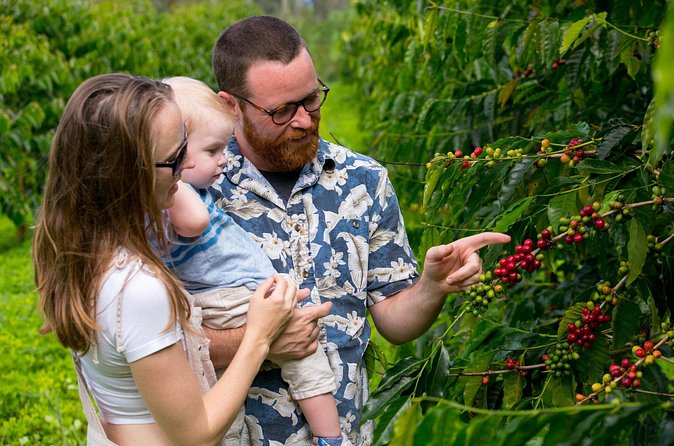
At $10 per person, Hala Tree Coffee offers an unusually inexpensive way to learn about a signature Big Island product. The admission includes the roughly one-hour visit and coffee tasting. You are paying for access to a working farm, a guide’s time, and several samples, not just a retail-shop pour.
The price also makes the tour easy to combine with other South Kona stops. You do not need to surrender an entire morning, and you can decide on the day’s other activities without building everything around a long plantation visit.
I would still judge the value by your interests. If you are curious about local farming, the price is excellent. If you only want to buy a bag of coffee and leave, the lesson may feel unnecessary. If you expect a large estate with extensive grounds, machinery, and a lengthy walk, the small scale may disappoint.
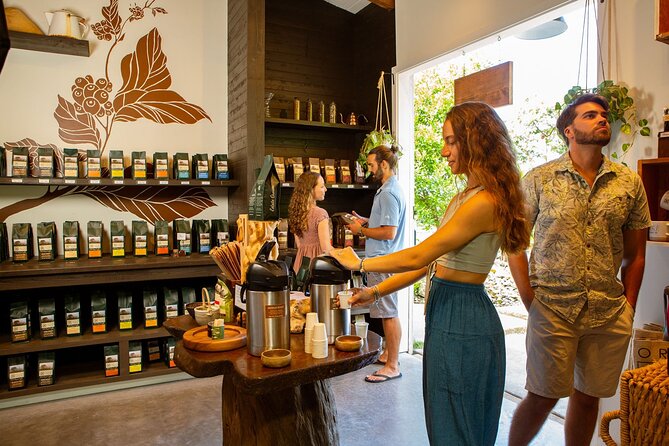
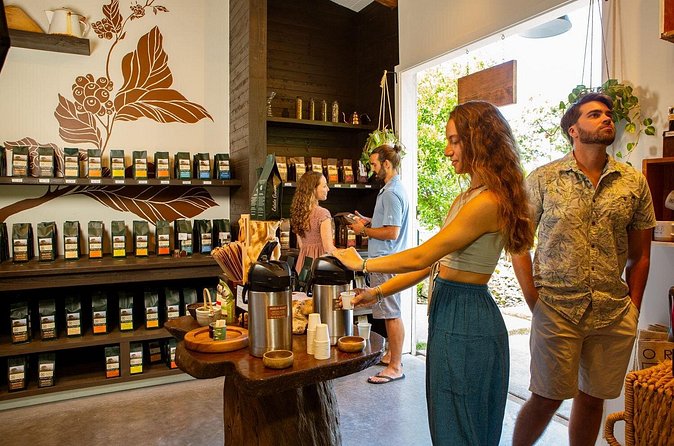
The shop side is useful too. Coffee and other coffee or tea products are available, so you can take home a favorite from the tasting. Choosing after sampling is better than guessing from a label.
Timing, transport, and finding the farm
Plan on about one hour at the farm. The activity begins and ends at 82-5966 Mamalahoa Highway, Captain Cook, Hawaii 96704. A mobile ticket is accepted, and booking confirmation is provided at the time of purchase.
The location is roughly 25 minutes south of Kona by rideshare, according to one account. The bigger issue is the return trip: fewer rideshare drivers may be available in Captain Cook. If you are not driving, think about your ride home before arriving. A rental car gives you more freedom, but I would still use navigation because the entrance is down a church driveway and not clearly marked from the highway.
The compact schedule works well before lunch or between South Kona stops. The tour does not appear designed for people rushing in and out at the last second, so arrive with enough time to locate the driveway and park.
The small group limit helps keep the timing flexible. You are not being moved through a large crowd, and the guide can spend more time answering questions. That personal pace is one of the farm’s main strengths.
Who will enjoy Hala Tree Coffee most
I would recommend this tour to coffee drinkers who want to understand Kona coffee beyond the name on the bag. The explanations about the growing cycle, hand-picking, processing, and roasting make the tasting more meaningful.
It also suits couples and families who want a low-cost activity with a local connection. The orchard walk is brief, the seated tasting is comfortable, and the guides keep the tone friendly. You do not need to be a coffee expert to enjoy it.
This is a good fit for:
- Coffee fans who want to compare three cups
- People interested in Hawaiian farming
- Families looking for a short educational stop
- Couples who like scenic, quiet tastings
- Cruise passengers arranging a South Kona outing
- Visitors with only an hour to spare
I would be more cautious if you want extensive walking, a large plantation, or a polished attraction with many exhibits. The farm is small, and its charm comes from that simplicity.
A useful choice for a quieter Big Island morning
Hala Tree Coffee offers a direct look at one of Hawaii’s best-known crops without asking for much time or money. You see the red fruit on the trees, learn how hand-picking and processing shape the final drink, and finish with three coffees in a scenic sitting area.
I especially like the balance between information and ease. You learn enough to understand the work behind Kona coffee, but the visit never becomes a technical lecture. Guides such as Sabrina, Margaret, Danelle, and Kat have been praised for making the process clear and friendly, and the small group size supports that personal feel.
The short orchard walk is the one real limitation. You may spend more time listening and tasting than walking among the trees. For me, that is a fair trade at $10, particularly if you want a compact South Kona stop rather than a full plantation day.
Should you book this coffee farm tour?
Book Hala Tree Coffee if you want an affordable, personal introduction to Kona coffee with a three-cup tasting and ocean views. It is especially worthwhile when you value local production, direct explanations, and a relaxed hour over a large attraction.
Skip it if you need a long farm hike or a full-scale visitor complex. Otherwise, this is an easy recommendation: use navigation to find the driveway, plan your return ride if you are using rideshare, and leave room in your bag for coffee to take home.
FAQ
How long does the Hala Tree Coffee Farm Tour last?
The tour lasts approximately one hour and ends back at the meeting point.
Where does the tour begin?
The meeting point is 82-5966 Mamalahoa Highway, Captain Cook, Hawaii 96704, USA.
How much does the tour cost?
The listed price is $10 per person.
Is coffee tasting included?
Yes. The experience includes a tasting, and the coffee flight allows you to choose three coffees.
How many people can join the tour?
The maximum group size is 12 people.
Can I cancel for a full refund?
Yes. You can cancel at least 24 hours before the start time for a full refund. Cancellations or changes made within 24 hours are not refunded or accepted.
Just added around the USA
- Roasted in Seattle Bean to Cup Coffee Tour★ 5.0 · 5 reviews
- Roasted in Seattle: Bean to Cup Coffee Tour★ 5.0 · 15 reviews
- Roast Your Own Coffee★ 5.0 · 2 reviews
- Coffee Roasters of Portland Eastside Walking Tour★ 5.0 · 7 reviews
- Kona Coffee Tasting: A Farm to Cup Experience★ 5.0 · 5 reviews
- Turkish Coffee Fortune Reading★ 5.0 · 15 reviews
- Historic Grounds: A Music City History and Coffee Morning Tour★ 5.0 · 19 reviews
- The Little Havana Walking Tour: A Taste of Cuba in Miami★ 4.5 · 2 reviews
Coffee Farm Tours, compared.
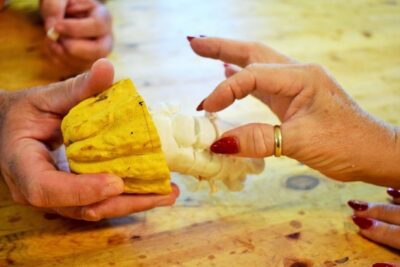
Award Winning Farm Tour: Coffee, Chocolate and Unique Gifts
Read our review →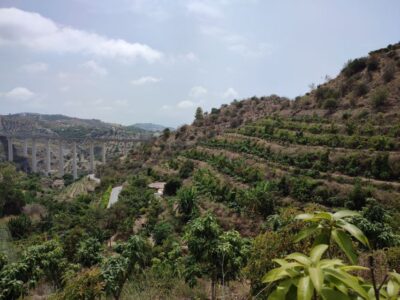
La Herradura Coffee Farm: tour in Europe’s only plantation
Read our review →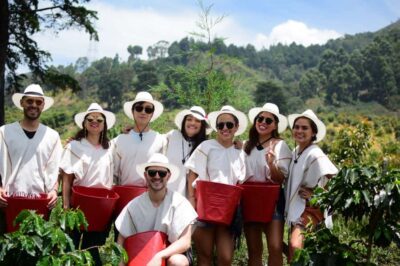
Medellín Coffee Farm Tour with Trolley and Cable Car Ride
Read our review →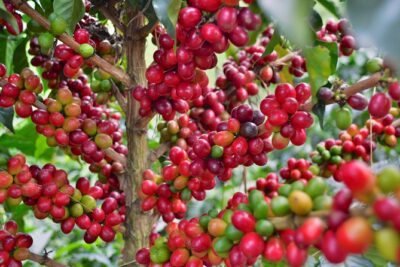

Private Cocora Valley, Salento & Coffee Farm Tour
Read our review →
Liamuiga Natural Farm Tour – St.Kitts’ Coffee Farm
Read our review →
Horseback Riding Coffee Farm Tour with Coffee Spa
Read our review →Browse the lists this tour appears in