
Review · ROME
Rome Pantheon: Award Winning Gelato Tiramisu & Espresso Food Tour
Rome’s sweetest education begins with coffee. This small-group walk near the Pantheon shows you how Romans drink espresso, why coffee granita with whipped cream deserves your attention, and how to tell real artisan gelato from a brightly colored tourist trap. Guides such as Giulia, Lisa, Fede, Valeria, and Ilaria are praised for bringing both food and Roman streets to life.
I like the small maximum of 10 people, which gives your guide room to explain things and answer questions. I also like the practical payoff: you leave with a better eye for gelato, coffee, and tiramisu, plus restaurant tips and a cookbook. The main drawback is value. At $78.61, this is not a cheap snack stop, especially if you already know Rome’s best cafés.
Key points to know before booking
- Coffee comes first: Taste espresso at historic Tazza d’Oro and Sant’Eustachio, plus Roman coffee granita with whipped cream.
- The gelato lesson is practical: You learn how Italian gelato differs from ice cream and how to spot better-quality flavors.
- The route links food with landmarks: The walk begins at Piazza della Minerva and passes the Pantheon and Piazza Navona.
- You get more than sweets: A moka coffee demonstration explains the home coffee maker used across Italy.
- The group stays small: No more than 10 people can join, and some departures may feel almost private.
- Save room before arriving: The tastings include coffee, granita, gelato, moka coffee, and tiramisu.
A dessert tour with a Roman point of view
This is not a general Rome sightseeing walk with a token pastry at the end. The focus is narrow and useful: coffee, gelato, and tiramisu. That makes it a good choice if you want to understand a few everyday Italian foods rather than collect a long list of monuments.
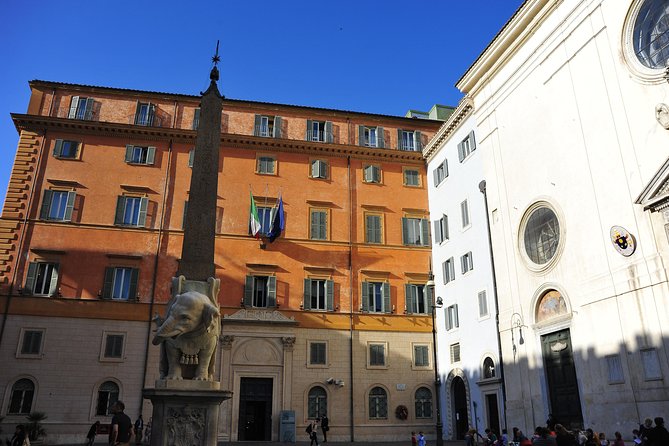
The route lasts about 2 hours and 15 minutes. You meet at the elephant and obelisk in Piazza della Minerva, right beside the Pantheon area, and finish at Piazza della Rotonda. Since the start and finish are both in central Rome, you can continue sightseeing afterward without arranging transport.
I would book this early in your stay, ideally during your first afternoon or second day. The food is enjoyable on its own, but the real value comes later, when you use the guide’s advice to choose gelato and coffee for the rest of your visit. Several people have even returned to the cafés after the tour to buy coffee or repeat a favorite treat.
More Food and Drink Tours in Italy:
- Rome: Espresso, Gelato and Tiramisù Tasting Tour
★ 4.9 · 74 reviews - Lucca: Morning Food Tour with Snacks and Coffee
★ 4.9 · 72 reviews - Trastevere Breakfast to Lunch Food Tour: Coffee, Maritozzi & Wine
★ 5.0 · 14 reviews
Piazza della Minerva and the start near the Pantheon
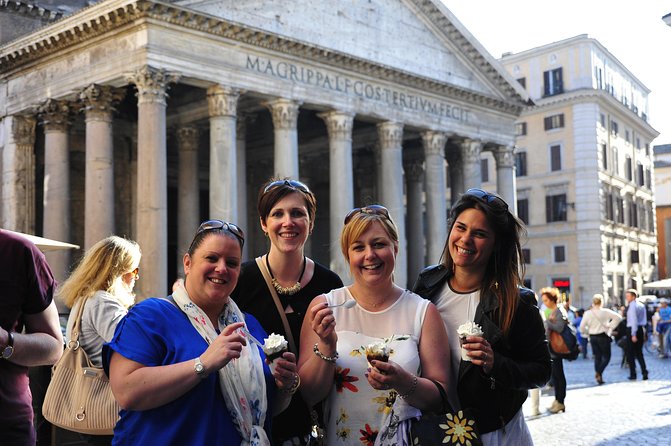
Your guide meets you by Bernini’s elephant monument in Piazza della Minerva. It is a compact but memorable meeting point, and the nearby Pantheon gives you an immediate sense of Rome’s layered city center.
The opening walk is part orientation, part Roman art lesson. You are not simply moving from one shop to another. Your guide can point out the setting around the stops and explain details about the neighborhoods and landmarks along the way. The listed stop here lasts about 10 minutes, so do not expect a long monument visit. The focus remains food.
Arrive 10 minutes before departure. This matters in central Rome, where a short wrong turn can turn into a late arrival. One person missed the experience after underestimating the time needed to get from the airport to the hotel and then to the meeting point. If this is your first day in Rome, allow plenty of extra time.
Tazza d’Oro and the frozen coffee surprise
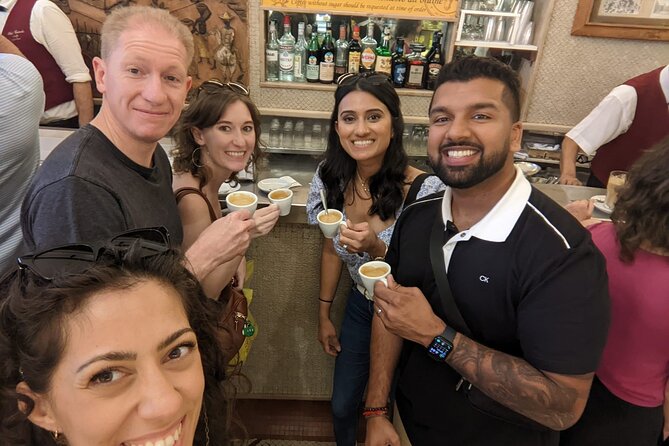
The first major food stop is La Casa del Caffè Tazza d’Oro, a historic café that opened in 1946. The setting is traditional Roman coffee culture: order, taste, watch, and keep moving. The visit is listed at about 15 minutes, so this is a focused tasting rather than a long café break.
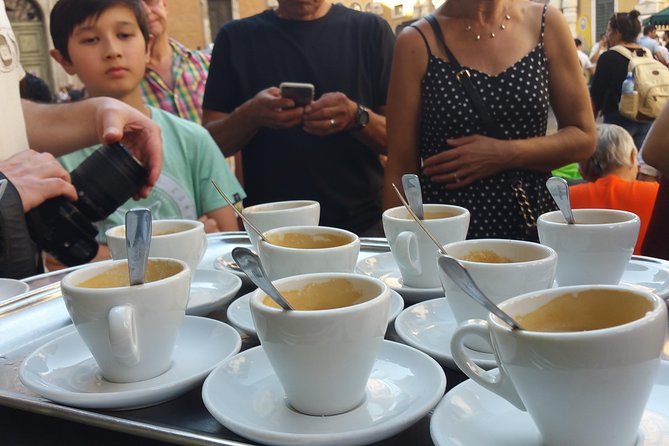
You taste espresso and learn how roasting affects the cup. The guide explains what separates the coffee served in famous Roman cafés from ordinary coffee, giving you a little context before you drink it. Decaffeinated and other options are available for the espresso tasting.
The most distinctive item here is granita di caffè con panna. It is a frozen, crumbly coffee preparation topped with whipped cream. If you do not normally drink coffee, do not dismiss this stop. One non-coffee drinker described the granita as the best frozen coffee they had tried, and it is clearly one of the more memorable parts of the menu.
The café can be crowded and offers limited room to linger. That is part of the experience, but it may not suit you if you want a quiet, seated coffee tasting. The skip-the-line arrangement at Sant’Eustachio is included, but the stops still work at the pace of active central cafés.
Sant’Eustachio and the art of espresso
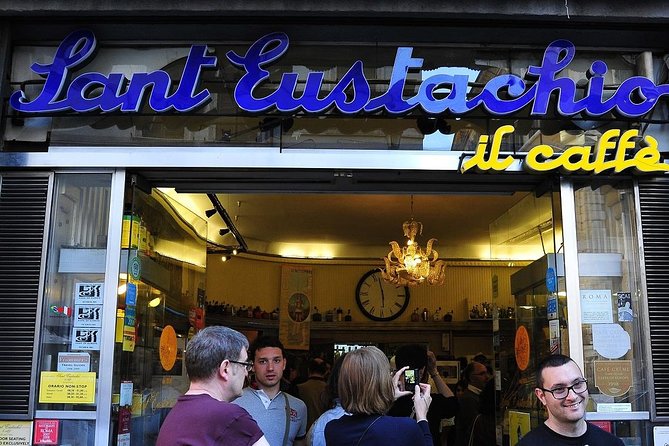
The route continues to Sant’Eustachio Il Caffè, one of Rome’s best-known coffee names. Here, the guide keeps the lesson practical. You taste the café’s 100 percent Arabica espresso and learn why preparation and roasting matter.
Do not expect a giant cup. Roman espresso is small, strong, and quick. The point is not to drink a large beverage but to notice the flavor, texture, and method. Your guide may also explain the local habit of taking coffee at the bar rather than settling in for a long meal.
This stop is especially useful for anyone who plans to return to Rome’s cafés independently. You get a basic vocabulary for ordering and a clearer idea of what you are tasting. The tour also takes some of the guesswork out of choosing a famous café. You can decide later if the coffee is worth returning for, rather than wandering in without context.
The practical limit is space. One person found the coffee section less comfortable because the cafés were cramped. That is a fair warning. This is a working café experience, not a polished tasting room.
More Food Tours in Italy:
- Rome: Private Espresso, Gelato and Tiramisu Food Tour
★ 5.0 · 3 reviews - Venice Delights: Coffee & Food Experience Walking Tour
★ 5.0 · 2 reviews - Vienna for Food Lovers: Cafés, Markets & Austrian Cuisine
★ 5.0 · 1,063 reviews - Early Morning My Son Sanctuary Trip w. Champa Food & Coffee
★ 5.0 · 629 reviews
Gelato and the difference between cold and good
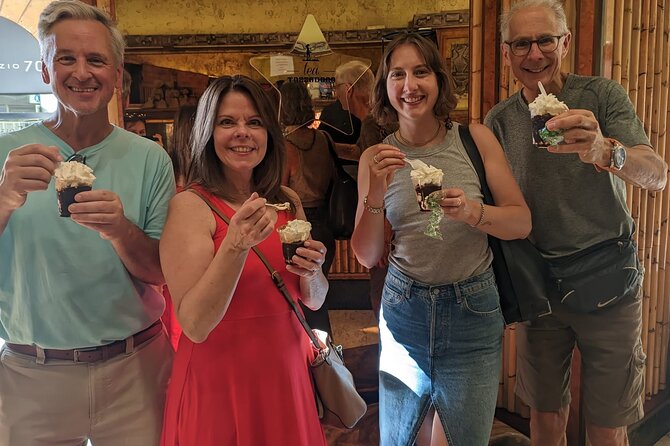
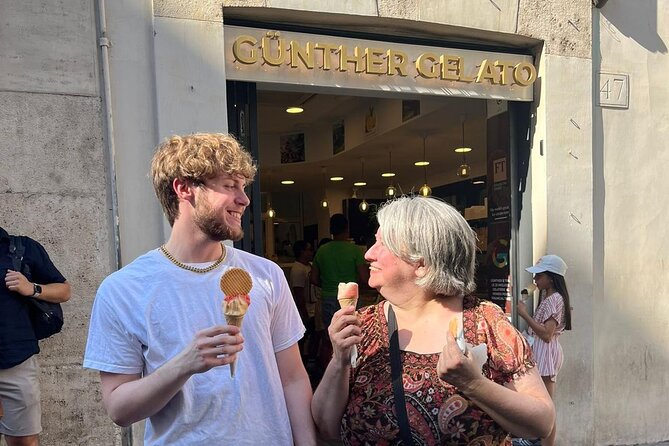
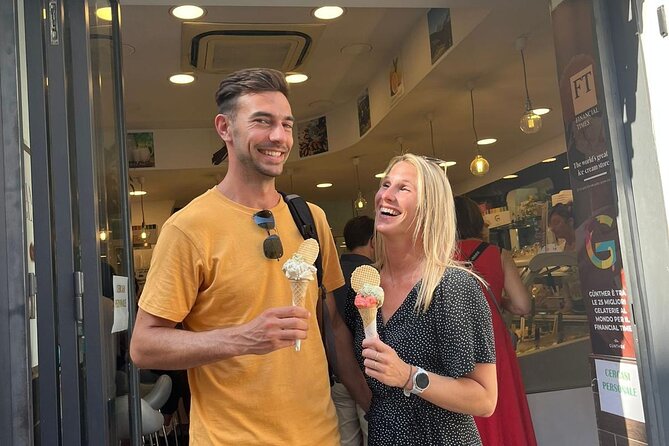
The gelato portion is likely the most useful stop for many people. You sample two flavors of artisan gelato, with the menu describing gelato made by a master chef. Some accounts describe tasting several flavors before choosing two in a cup or cone.
Your guide explains why gelato is not simply ice cream with an Italian label. You learn to look for signs of better production and to be cautious about artificial colors and poor texture. The exact technical lesson can vary with the guide, but the goal is clear: help you recognize natural, carefully made gelato during the rest of your time in Rome.
This is where the tour earns its keep for families. Children get an immediate treat, while adults receive a simple food lesson they can use again and again. Guides have been praised for keeping children involved, and the walking pace is described as comfortable rather than rushed.
The tasting is generous enough that you should not arrive after a heavy meal. You will have more coffee and sweets ahead. If you want a full lunch afterward, schedule one rather than assuming the tastings will replace it.
Bialetti at Largo Chigi and the moka lesson
At Largo Chigi, the tour shifts from café culture to the Italian home kitchen. A Bialetti moka coffee maker demonstration shows how moka coffee is prepared and how the familiar pot became part of daily Italian life.
This is an important contrast with espresso. Espresso is associated with the café machine and the quick bar visit. Moka coffee is the home method, prepared in a small stovetop pot. The guide demonstrates the process and explains how to use the maker in Italian style.
The stop lasts about 15 minutes and includes a welcome gift reserved for the group. You also receive a restaurant guide and cookbook as part of the experience. Those extras are modest, but they make the tour more useful after the final tasting.
I particularly like this stop because it adds context. Without it, the experience would be a pleasant parade of sugar and caffeine. The moka demonstration helps you see how coffee fits into ordinary Italian routines, not just famous cafés.
Via del Governo Vecchio and Roman tiramisu
The final food stop takes you to a popular tiramisu shop on Via del Governo Vecchio. The tasting is alcohol-free, which makes it suitable for people who avoid alcohol and for families.
Your guide explains where tiramisu comes from and what goes into a good version. You taste the dessert rather than taking a full cooking class, so the lesson stays short and accessible. It is a fitting final stop because the creamy dessert brings together the coffee theme and the sweet side of the tour.
The tiramisu portion is one of the most consistently praised parts of the experience, along with the gelato and espresso. You should still keep expectations measured. Taste preferences vary, and the tour gives you one selected shop rather than a comparison of several tiramisu recipes.
Afterward, you finish in central Rome at Piazza della Rotonda, near the Pantheon. You can walk to Piazza Navona, continue exploring, or use the guide’s recommendations to plan dinner.
What guides add to the walk
The guides are a major part of the experience. Names associated with departures include Giulia, Lisa, Fede, Lily, Valeria, Daniela, Ilaria, Sylvia, Giorgia, and James. You should not assume a particular person will lead your date, but the guiding style described across the experience is friendly, energetic, and personal.
The strongest guides do more than list facts about coffee and dessert. They connect the tastings to Roman habits and point out details in the streets between stops. Valeria, Ilaria, Fede, and Lisa receive especially warm praise for making the experience feel personal, while Giorgia is noted for leading a very small group through two cafés, gelato stops, and tiramisu.
A small group makes a real difference here. With a maximum of 10 people, you can ask how to order coffee, what to look for in a gelateria, or where to eat later. On quieter dates, the group may be only two or three people, creating something close to a private walk. That is luck rather than a guaranteed feature, but it is a pleasant possibility.
English is the offered language. Strong communication matters because the food lessons are part of what you are paying for, not just the tastings.
Is $78.61 a fair price?
At $78.61 per person, this tour costs more than buying an espresso, gelato, and tiramisu on your own. You could certainly eat the same categories of food for less if you already know where to go and can compare menus yourself.
The price makes more sense if you value guidance, skip-the-line access at Sant’Eustachio, the moka demonstration, the small group, and the route between central landmarks. You are paying for several tastings plus a short food lesson and local recommendations. The included restaurant guide and cookbook add some lasting use.
I would call it a fair but not automatic purchase. Coffee and dessert lovers will get more from it than people who see food as a minor part of sightseeing. If you are traveling with children, the educational side and generous tastings can make the cost worthwhile. If you are on a tight budget, spend your money on individual treats and use the tour’s route as inspiration instead.
The tour is also a useful introduction for repeat visitors. Even people who have been to Rome several times found it helped them locate better coffee and gelato than they had found alone.
Practical details that affect your day
The tour operates in all weather, so dress for the forecast. Good walking shoes are a smart choice, though the route is a central city walk rather than a demanding hike.
Hotel pickup and drop-off are not included. You make your own way to Piazza della Minerva and leave from Piazza della Rotonda. Both points are near public transportation, but no private transfer is provided.
Most people can take part, and service animals are allowed. Dairy-free requests may be possible in limited form, but the experience is not recommended for a fully dairy-free diet. Gluten-free options are available if requested in advance. Do not wait until the meeting point to raise dietary needs.
Free cancellation is available up to 24 hours before the local start time. Cancellations or changes made inside that window are not refunded or accepted.
Who should book this food walk?
I would choose this tour for a first or second day in Rome, especially if you want a pleasant way to get your bearings near the Pantheon. It suits coffee drinkers, dessert fans, families, and anyone who likes learning small food rules they can use later.
It is less suitable if you dislike walking, avoid dairy completely, or want a full meal rather than a series of tastings. It also may disappoint if you expect long seated visits at each café. The route moves through busy central shops, and the coffee stops can feel tight.
Should you book the Pantheon coffee and dessert tour?
Book it if you want more than sugar. The espresso, granita, gelato, moka coffee, and tiramisu are the obvious attractions, but the useful part is learning how to continue eating well after the tour ends.
At $78.61, I would not call it a bargain. Yet the small group, central route, skip-the-line coffee stop, food advice, and strong guides give it real value for the right person. If you love coffee and gelato, or want an easy family activity near the Pantheon, this is a sensible early-trip choice. If you are budget-minded and comfortable finding cafés on your own, buy the treats separately and save the money.
FAQ
How long does the Rome coffee and dessert tour last?
The experience lasts approximately 2 hours and 15 minutes.
How much does the tour cost?
The listed price is $78.61 per person.
Where does the tour begin?
It begins at the Elephant and Obelisk in Piazza della Minerva, near the Pantheon in central Rome.
Where does the tour finish?
The tour ends at the commemorative plaque for Pietro Mascagni in Piazza della Rotonda, 64.
What food and drinks are included?
The tastings include espresso, coffee granita with whipped cream, moka coffee, two flavors of artisan gelato, and alcohol-free tiramisu.
How many people can join?
The tour has a maximum of 10 participants.
Is the tour offered in English?
Yes. English is the listed tour language.
Are dietary options available?
Gluten-free options are available with advance notice. Some dairy-free customization may be possible, but the experience is not recommended for a fully dairy-free diet.
Can I cancel for a refund?
Yes. You can cancel at least 24 hours before the local start time for a full refund. Changes or cancellations made less than 24 hours before departure are not accepted or refunded.
Just added around Italy
- Venice Delights: Coffee & Food Experience Walking Tour★ 5.0 · 2 reviews
- Turin: Art Nouveau Walking Tour with Coffee★ 5.0 · 11 reviews
- Rome: Private Espresso, Gelato and Tiramisu Food Tour★ 5.0 · 3 reviews
- Trastevere Breakfast to Lunch Food Tour: Coffee, Maritozzi & Wine★ 5.0 · 14 reviews
- Private Gelato, Pastry and Espresso Walking tour★ 5.0 · 15 reviews
- Sunrise Kayak Tour with Snorkeling and Coffee Experience★ 5.0 · 22 reviews
- NAPLES Highlights Walking Tour + Veiled Christ Chapel and Original Espresso★ 5.0 · 2 reviews
- Milan Coffee & History Crawl with a Licensed Tour Guide★ 5.0 · 10 reviews
Food & Drink, compared.
Vienna for Food Lovers: Cafés, Markets & Austrian Cuisine
Read our review →
Buggy Ride Into the jungle with cave coffee & chocolate tasting
Read our review →
Da Nang Cooking Class with Coffee Tasting and Market Visit
Read our review →
Hungry in Vienna? A Food Lover’s Coffee & Market Walk
Read our review →
Private Walking Tour, Food Tasting and Bosnian Coffee in Sarajevo
Read our review →
Hanoi Michelin Star Walking Food Tour & Train Street
Read our review →Browse the lists this tour appears in