
Review · HANOI
Coffee, History, and Architecture of the French Quarter
Hanoi’s French Quarter is best understood on foot, and this tour gives you a pleasant way in. You’ll connect French colonial architecture with Vietnam’s modern history, then pause for coffee in an old villa rather than simply marching from landmark to landmark. I especially like the conversational format and the use of historical photos to make difficult events easier to grasp.
The other strong point is the food. You get Vietnamese coffee, often including egg coffee, and Trang Tien ice cream, two small treats that help the history stick. The main thing to consider is the weather: you’ll be outside for about two and a half hours, and the tour runs rain or shine.
Key points to know before you book
- Coffee starts the history lesson: Begin in a French villa with Vietnamese coffee or tea and an introduction to the country’s past.
- More than 15 sights: The route links St. Joseph’s Cathedral, the Opera House, Hoan Kiem Lake, the Metropole, Trang Tien Street, the Post Office, and other landmarks.
- Mina and Dung have led the walk: Mina is praised for clear English, humor, and detailed explanations, while Dung is noted for her energy and welcoming style.
- History is handled as a conversation: You can ask about French rule, the Vietnam War, architecture, food, pronunciation, and daily life in Hanoi.
- Ice cream is part of the experience: The stop at Trang Tien gives you a famous local snack and a place to sit and use the restroom.
- Good value at $31: Coffee, ice cream, a live English-speaking guide, and a focused walking route are included.
Why this French Quarter walk works
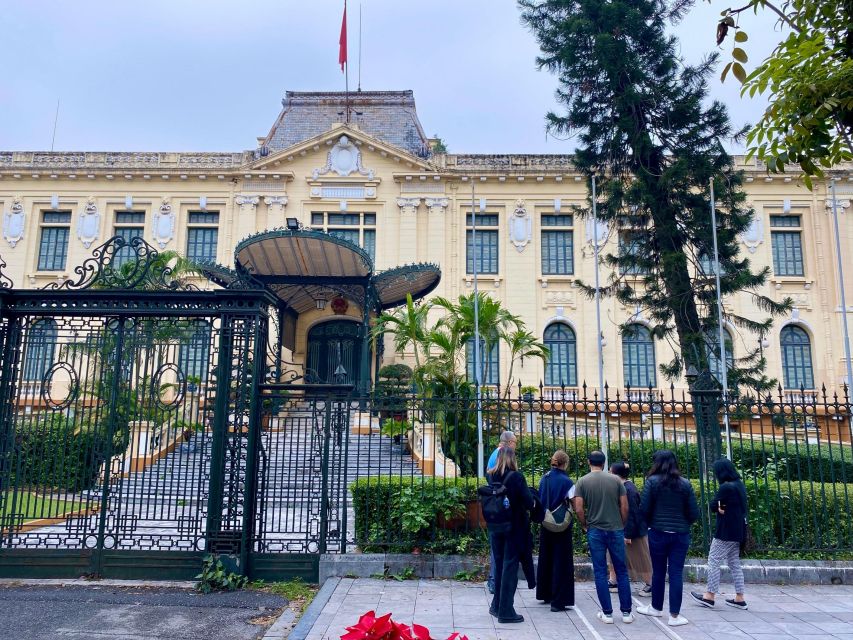
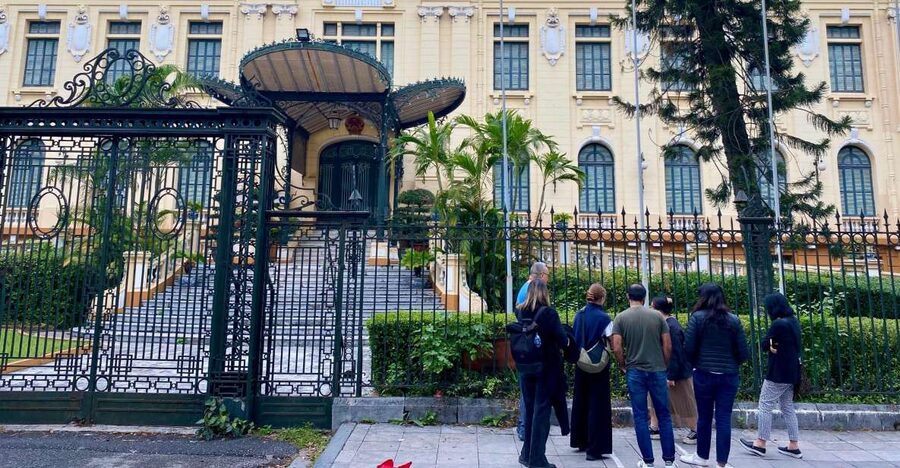
The southern part of central Hanoi feels different from the lanes of the Old Quarter. Streets are broader, buildings are more formal, and the architecture reflects the period when Hanoi was part of French Indochina. Yet this is not a tour that treats the area as a frozen European postcard.
That balance is the main reason I’d choose it. You’ll look at French buildings, but you’ll also hear how Vietnamese society changed under colonial rule, what was gained, what was lost, and how local culture continued on its own terms. The guide also covers the Vietnam War and the way modern Hanoi grew around these older structures.
This approach matters. Colonial architecture can be pretty, but pretty buildings alone tell only half the story. The best part of the walk is learning how those buildings fitted into power, education, commerce, religion, and everyday life.
The tour is led in English and has a relaxed, question-friendly tone. Mina is the guide most often named in the feedback, and she is praised for explaining complex history in clear sections, using photographs on her phone, and adding humor without turning the subject into a joke. Dung has also led the route and is described as enthusiastic and warm. Guide assignments can change, so you should not book on the assumption that one particular person is guaranteed.
More Heritage Tours in Hanoi:
- Hanoi: Make 6 Iconic Coffees in a Heritage Home with Locals
★ 5.0 · 32 reviews - Private Hà Nội Coffee History Tour
★ 5.0 · 6 reviews - Hanoi History Coffee Tour
★ 5.0 · 2 reviews
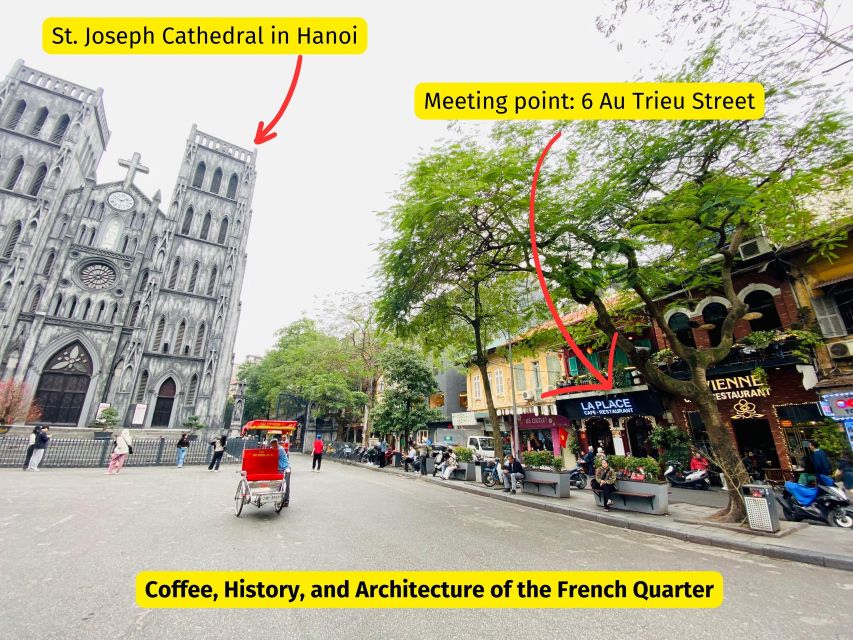
Starting beside St. Joseph’s Cathedral
Meet at 6 Au Trieu Street, directly beside St. Joseph’s Cathedral. This is a useful starting point because the cathedral immediately gives you a strong visual introduction to French influence in Hanoi.
The cathedral is one of the route’s main photo stops, but the guide’s explanation is more useful than a quick picture. You’ll hear about the French presence in the city and see how a religious building became part of Hanoi’s modern streetscape. The stop is planned as a short walk and guided visit, so do not expect a long interior tour or a formal church service experience.
Starting here also makes practical sense. If you are staying near central Hanoi, the location is easy to recognize, and the cathedral provides a clear landmark for the meeting point. Arrive a little early. The guide will be waiting at the stated address, but busy streets and unfamiliar addresses can slow you down.
Vietnamese coffee in an old French villa
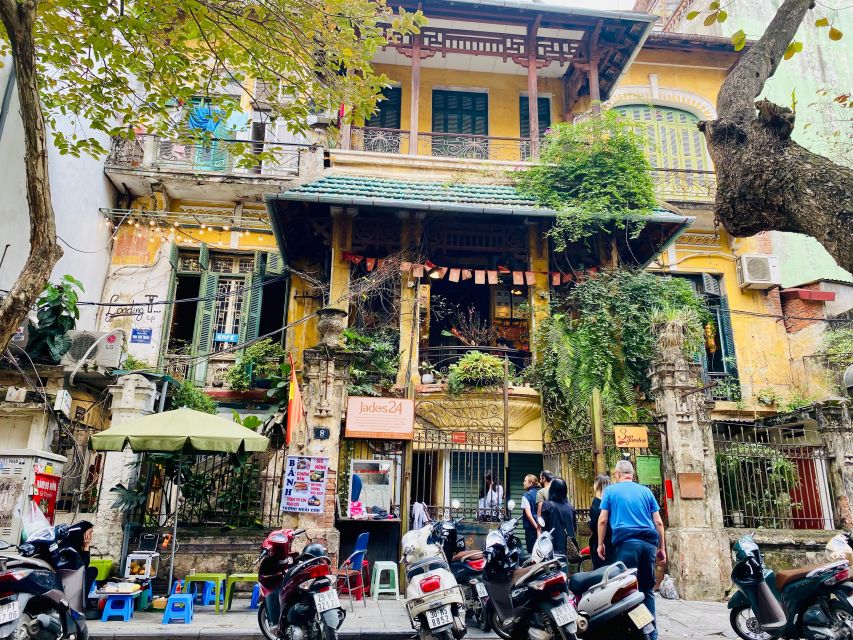
The coffee stop is the tour’s most distinctive feature. Instead of waiting until the end for a drink, you begin with coffee or tea in a local café set in an old French villa.
This is where the tour shifts from sightseeing to conversation. The guide gives a general introduction to Vietnamese history and explains the country’s relationship with coffee. Several people specifically enjoyed egg coffee, and the drink can be a highlight if you have not tried it before. Coconut coffee is also mentioned as part of the experience.
The villa setting adds something important. You are not only hearing about French-era architecture while standing outside a grand building. You are sitting inside an older space and seeing how this type of structure can still be used in ordinary city life.
The coffee break lasts about 30 minutes, giving you time to ask questions. Use it well. This is a good moment to tell the guide what interests you most, such as architecture, colonial politics, the war years, Vietnamese food, or present-day Hanoi. The walk is designed to respond to questions, not deliver a fixed speech with no pauses.
Coffee is included, but you should bring an open mind about the drink. Vietnamese coffee can be strong and sweet, and egg coffee has a creamy topping that may be unfamiliar. Tea is also available according to the activity details.
Walking through Hanoi’s French Quarter
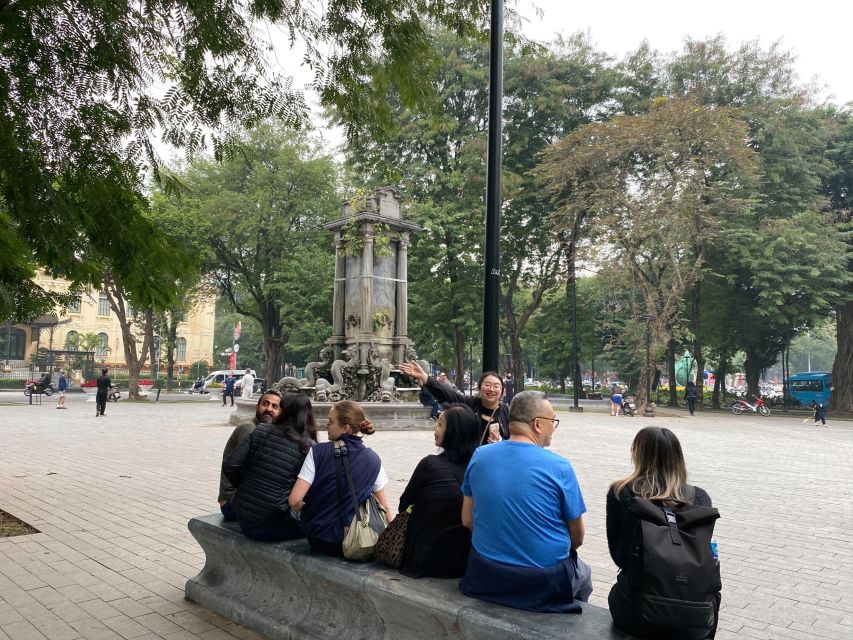
After coffee, the route moves through the French Quarter at a steady pace. The stated stops are generally planned for about 15 minutes each, although the actual timing can change with the group, traffic, weather, and questions.
You’ll see more than 15 important sights across the walk. Some are major public buildings, while others make more sense as part of the wider street plan. This is useful because the French Quarter is not one single monument. It is a collection of streets, institutions, hotels, religious buildings, shops, and public spaces.
The guide connects the buildings to the people who used them. You’ll learn about the effects of French rule on Vietnamese society, including the difficult parts of colonial control. The tone is described as relaxed and direct, with room for questions rather than a memorized lecture.
Bring your own questions. The guide can discuss Vietnamese history, architecture, food, local customs, and even pronunciation. One guide also offered suggestions for banh mi and hotpot restaurants, though food recommendations can vary by guide and are not the formal focus of the tour.
A few more coffee tours around Hanoi worth a look
- Hanoi Coffee Experience: 6 Brews, 9 Recipes & 3 Liquor Tastings
★ 5.0 · 2,945 reviews - Hanoi Coffee Workshop: Taste Salt, Coconut and Egg Coffee
★ 5.0 · 1,286 reviews - Hanoi: Salt Coffee Workshop Awake Your Senses With 6 Brews
★ 5.0 · 792 reviews - Hanoi: Master the Art of 4-6 Signature Vietnameses Coffees
★ 5.0 · 517 reviews
Hanoi Opera House and the French architectural showpiece
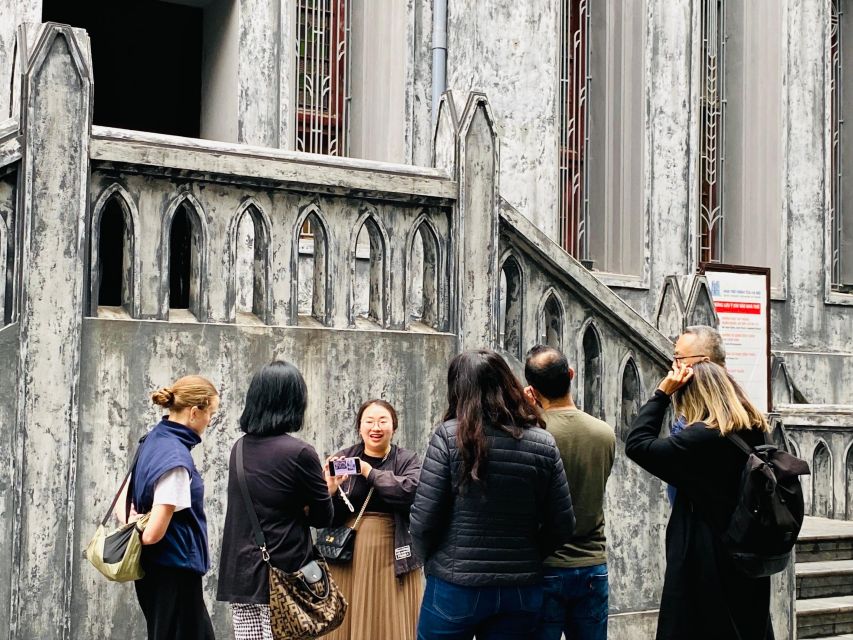
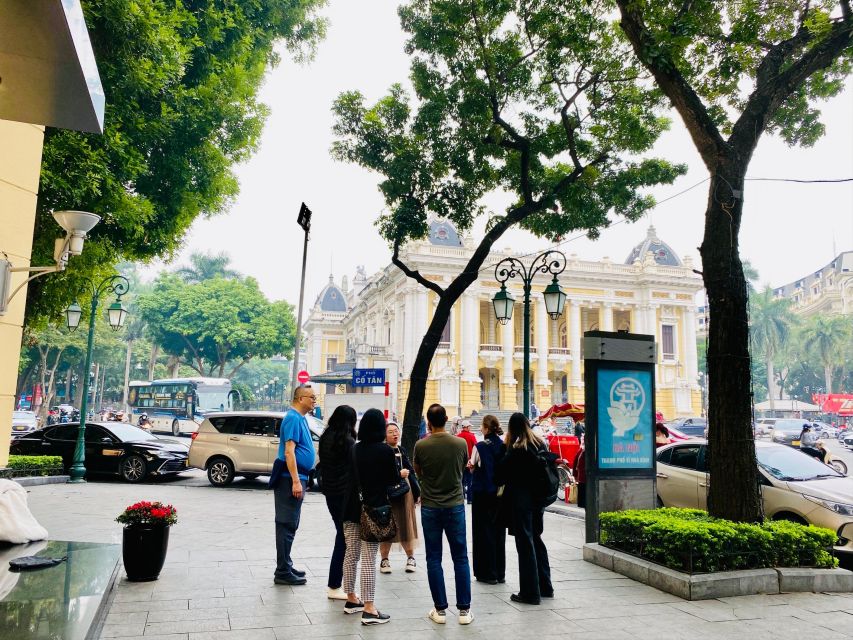
The Hanoi Opera House is one of the route’s visual anchors. Its scale and formal design make it easy to understand why architecture is central to this experience.
You’ll have a short guided stop here rather than a full performance or inside tour. That distinction matters. If you want to attend a concert or inspect the interior in detail, you’ll need a separate plan. On this walk, the Opera House serves as a place to discuss French design, public culture, and the role of grand buildings in a colonial capital.
The guide’s job is to put the façade in context. You are not simply being told that it looks European. You are encouraged to think about who commissioned such buildings, who had access to them, and how Vietnamese life continued around them.
This is also one of the better places to pause for photographs, but stay aware of traffic and the group. Hanoi’s streets require attention, even when you are focused on a handsome building.
Hoan Kiem Lake and the city around it
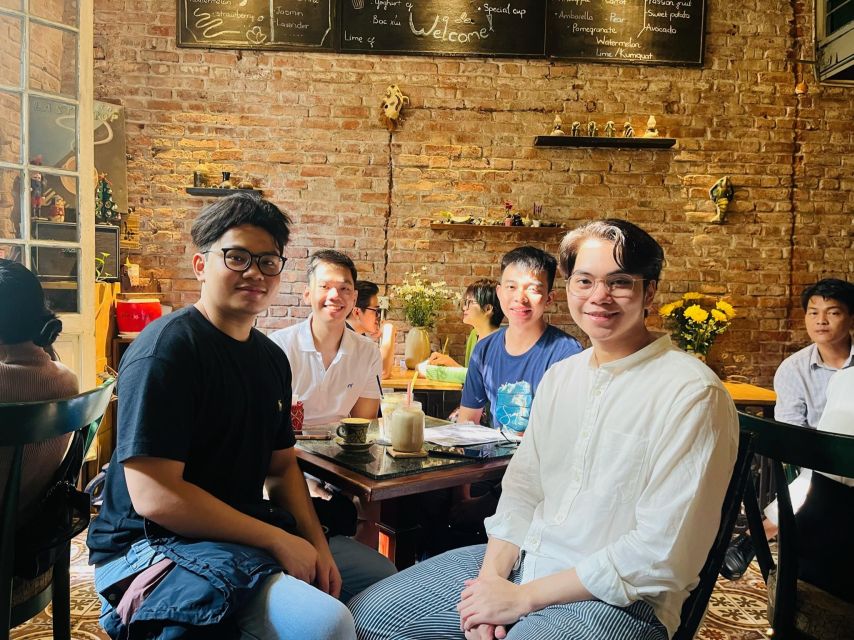
Hoan Kiem Lake provides a change of pace from the formal buildings. The water and open space give you a chance to reset your eyes after looking at façades and streets.
The stop lasts about 15 minutes and includes a guided explanation. The value here is not just the view. The lake helps show how central Hanoi works as a public space, where history, local routines, and city life meet.
You’ll also see nearby sites such as the Hanoi Post Office and Trang Tien Street during the wider route. The walk uses these places to explain how the French Quarter developed as part of a working city, not just as a group of heritage buildings.
If you are taking photographs, this is a good place to have your camera ready. Still, the tour is more about context than a long photo session. Keep moving with the group and listen for the small details you might miss alone.
The Metropole and the long shadow of modern history
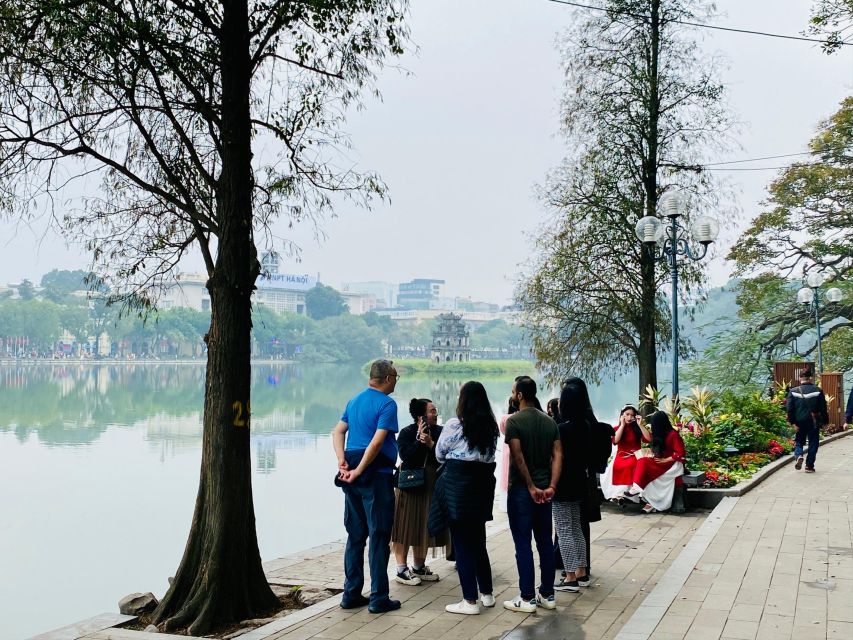
The Sofitel Legend Metropole Hanoi is another major stop. The hotel is strongly linked to the French colonial period and later to the international history of Hanoi.
You’ll hear about the building and its place in the city’s story, including the broader period surrounding the Vietnam War. The guide uses photos and explanations to connect past events with places you can see today. This visual aid is especially helpful for people who know little about Vietnamese history, because dates and political changes can otherwise blur together.
The tour does not turn the hotel into a simple luxury sight. Instead, it helps you consider the different worlds that existed within colonial Hanoi and how the city changed over time.
You will not be staying at the hotel or taking an extended private visit inside. Treat this as an exterior history stop, with the guide explaining why the location matters.
Trang Tien Street and the ice cream finish
Trang Tien brings the walking route back to food and everyday life. The area is connected with shopping, city movement, and one of Hanoi’s best-known ice cream parlors.
Trang Tien ice cream is included, and there is seating plus a restroom. After two hours of walking, this is a sensible ending. The snack is not just a bonus dessert. It gives you a taste of a familiar local institution and a chance to cool down.
The ice cream stop also keeps the tour from becoming too serious. Hanoi’s history includes war, colonial rule, political change, and social upheaval. Ending with a simple local treat makes the experience feel connected to present-day life rather than sealed inside a museum.
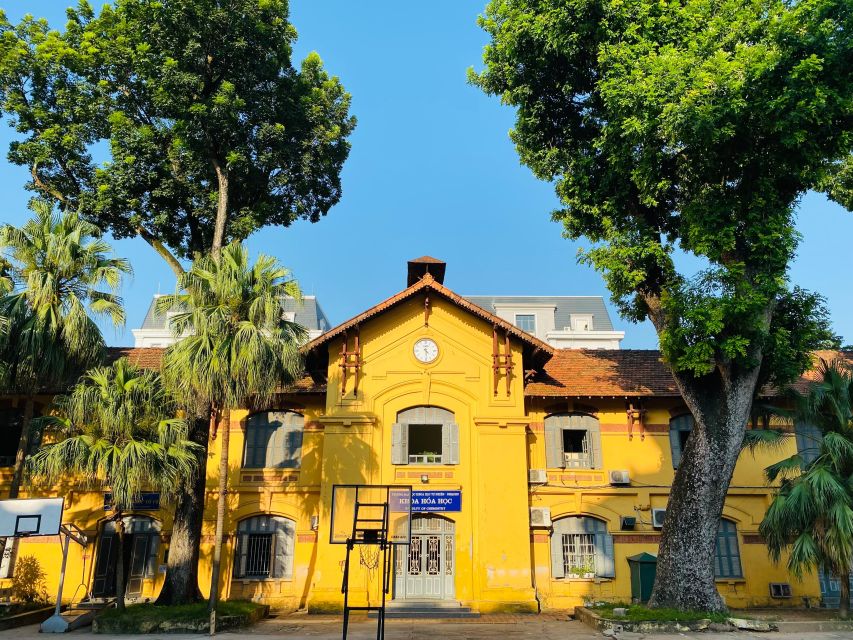
The stated route finishes at Hanoi University of Pharmacy, while the meeting information also says the activity ends back at the meeting point. Because those details do not fully match, confirm the exact end location when you book or meet your guide. Either way, plan your onward route with a little flexibility.
What $31 gets you
At $31 per person, this is a fair price for a two-and-a-half-hour guided walk if you want history explained rather than simply pointed out. The price includes the English-speaking guide, Vietnamese coffee or tea in the villa, and Trang Tien ice cream.
The value comes from the combination. A basic sightseeing walk may show you the Opera House and cathedral, but it may not explain how French control affected education, religion, city planning, and social life. A history talk indoors may provide facts but no sense of place. This experience joins the two.
The small-group feel is another advantage when available. One account describes a group made up of a couple and a family with two teenagers, which allowed easy discussion. Group size is not formally stated, so you should not assume every departure will be equally small. Still, the conversational design works best when the group is compact enough for questions.
Free cancellation up to 24 hours before the start and reserve-now, pay-later booking make the price easier to commit to. Those terms are useful if your Hanoi plans may shift.
Who should book this walk
I’d recommend it to first-time Hanoi visitors who want a clear introduction to the city’s modern history. It also suits repeat visitors who have seen the main buildings but want to understand how they fit together.
History fans will get the most from the tour, especially if they ask questions. Architecture lovers will appreciate the focus on villas, public buildings, churches, hotels, and street design. Food-minded visitors get two local tastes without giving up the history.
Families can also do well here. The walk is not built around long museum lectures, and the coffee and ice cream breaks help keep the pace varied. Teenagers may respond particularly well to the photographs and the guide’s conversational style.
This is less suitable if you want a fast checklist of attractions, a private vehicle, or a detailed interior visit to every landmark. It is also not ideal for anyone who dislikes walking in heat or light rain. Wear comfortable shoes, breathable clothing, a hat, and sunscreen. Since the tour operates in all weather, bring an umbrella or raincoat if the forecast looks poor.
Should you book the Coffee, History, and Architecture walk?
Book it if you want Hanoi explained through places you can see, with coffee and ice cream built into the lesson. The strongest reasons are the clear English, the friendly question-and-answer format, the French villa coffee stop, and the effort to show both the beauty and the hard realities of colonial rule.
At $31, it offers good value for a focused introduction to the French Quarter. Just check the weather, allow for a walking pace, and confirm the final meeting point because the end-location information is not perfectly consistent.
If you prefer a relaxed walk with a guide who can adapt to your questions, this is a smart first or second-day activity in Hanoi. If you want only photographs and no historical discussion, choose a shorter sightseeing route instead.
FAQ
How long does the French Quarter walking tour last?
The experience lasts about 2.5 hours. Starting times vary, so check availability when booking.
Where does the tour start?
The guide meets you at 6 Au Trieu Street, right beside St. Joseph’s Cathedral in Hanoi.
Where does the tour end?
The route information lists Hanoi University of Pharmacy as the finish, while the meeting information says the activity ends back at the meeting point. Confirm the exact end location with the guide.
Is coffee included?
Yes. You receive Vietnamese coffee or tea in a local café located in an old French villa. Egg coffee and coconut coffee are among the drinks associated with the experience.
Is Trang Tien ice cream included?
Yes. The tour includes ice cream at the famous Trang Tien ice cream parlor, which has seating and a restroom.
What language is the tour conducted in?
The live tour guide speaks English.
Just added around Hanoi
- Vietnamese Coffee 101 Workshop★ 5.0 · 11 reviews
- Private tour: Hanoi city tour-Van Phuc silk village with egg coffee, lunch★ 5.0 · 2 reviews
- Hanoi 2.5 hour Guided Sightseeing Cyclo Tour & Egg Coffee Class★ 5.0 · 16 reviews
- Taste of Vietnam’s Coffee Scene – A Guided Experience★ 5.0 · 2 reviews
- Hanoi daily egg coffee making course with local guide★ 5.0 · 17 reviews
- Private Hà Nội Coffee History Tour★ 5.0 · 6 reviews
- hidden gems cafe – learn making coconut and egg coffee★ 5.0 · 2 reviews
- 3 Dishes cooking + Egg Coffee bonus & Local Market Tour★ 5.0 · 14 reviews
Historical Tours, compared.

Kona Shore Excursion: Sea Turtles, Historic Kona & Coffee
Read our review →
Kona Tour: Bee Farm, Kona Coffee, and National Historical Parks
Read our review →
Trekking History and Indigenous Heritage in Minca + Cacao & Coffee + Waterfall
Read our review →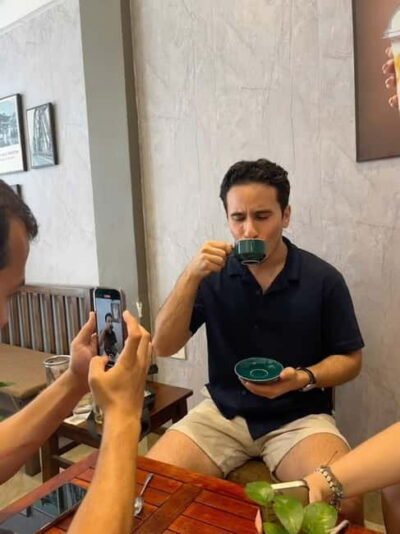
Make 6 Iconic Coffees in a Heritage Home with Locals
Read our review →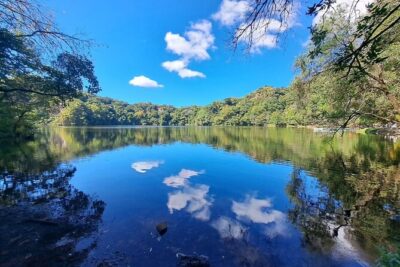
Colima Volcano Cultural Tour: Coffee Plantation, Hacienda and Comala Magic Town
Read our review →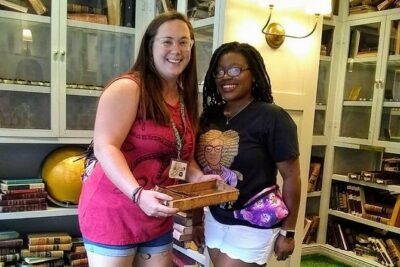
Savannah History plus Coffee and Chocolate Walking Tour
Read our review →
Ho Chi Minh Best Walking Tour: Food, Coffee & History
Read our review →Browse the lists this tour appears in