
Review · VIENNA
Vienna for Food Lovers: Cafés, Markets & Austrian Cuisine
Vienna’s best food lesson may happen far from the grand palaces. This six-hour walk-and-ride tour takes you from Graben and St. Stephen’s Cathedral to neighborhood markets, family-run bakeries, a traditional coffeehouse, and a sausage stand. You get a city tour, a public-transport lesson, and enough food to make dinner plans seem foolish.
I like the small-group format, capped at 16 people and often run with fewer. I also like the way the tour moves beyond central Vienna. Guides such as Christoph, Maria, Patrick, and Wolfgang have been praised for mixing local history with clear food explanations. The main caution is simple: this is a serious eating day, and pastry comes early.
Key points at a glance
- A full six-hour meal in motion: Expect coffee, pastries, sandwiches, a main Austrian dish, dessert, wine or beer, and street food.
- Public transport is part of the lesson: You use Vienna’s underground, tram, or bus network, but metro tickets are not included.
- Food beyond the center: Brunnenmarkt, Reumannplatz, and local cafés show you a more everyday side of Vienna.
- Guides make the difference: Christoph, Maria, Patrick, Wolfgang, Verena, and others are praised for humor, warmth, organization, and city knowledge.
- Come very hungry: The food is generous enough that you may not want dinner afterward.
- Good first-day choice: You learn where to eat and how to get around before exploring Vienna on your own.
From Graben to St. Stephen’s Cathedral
The tour starts at 9:30 a.m. on Jasomirgottstraße, a central meeting point near St. Stephen’s Cathedral. That makes the opening easy to reach and gives you an immediate look at Vienna’s grand core.
You begin around Graben and Kohlmarkt, two elegant streets shaped by imperial Vienna. Their ornate buildings, polished shopfronts, and formal architecture make a fine introduction to the city, but the real value here is the guide’s context. You are not simply walking past expensive stores. You are learning how Vienna’s historic center fits together before the tour takes you elsewhere.
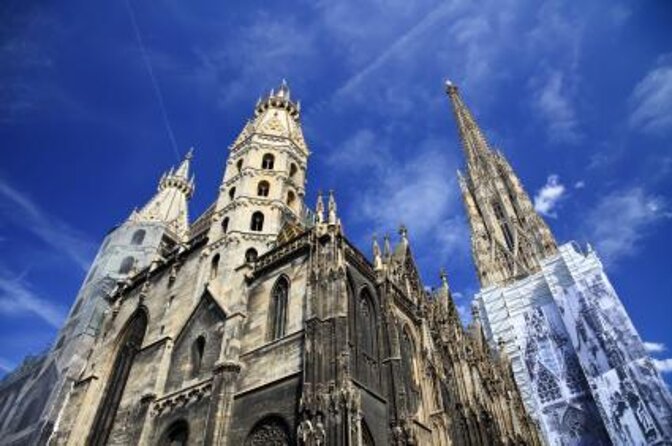
At Stephansplatz, you pause beside St. Stephen’s Cathedral. The Gothic church is one of the city’s defining sights, and this short stop helps place your food tour within the larger city tour. You should not expect a full cathedral visit or an extended architectural lecture. This is a brief landmark stop before the eating begins.
The center is easy to photograph, but it is also the most polished and tourist-heavy part of the route. The appeal of the day lies in leaving it.
More Food and Drink Tours in Vienna:
- Hungry in Vienna? A Food Lover’s Coffee & Market Walk
★ 4.9 · 276 reviews - Vienna: Typical Austrian Food Tour with Coffee House Visit
★ 4.8 · 159 reviews - 4×4 Dominican Adventure with Chocolate and Coffee Tasting
★ 5.0 · 2,920 reviews
Reumannplatz and the first sweet stop
The route then reaches Reumannplatz in Favoriten, a district south of the old center. The square dates to 1872, when it was created as a civic gathering place. That detail matters because it gives you a quick sense of how Vienna expanded beyond its imperial center.
Here, you stop at Groissböck for Viennese sweets and freshly roasted coffee. The bakery is known for traditional confectionery made with carefully chosen ingredients. Since the tour may begin with pastry and coffee, you should treat breakfast as optional and very light.
This stop gives you more than a sugar hit. Viennese food culture is closely tied to bakeries, coffee, and long-standing family businesses. Your guide can explain how these foods fit into daily life rather than presenting them as isolated treats.
The drawback is pacing. If you prefer savory food first thing in the morning, the early pastry stop may feel like a lot. The answer is not to arrive hungry enough to overeat at the first table. Save room. You have hours of food ahead.
Brunnenmarkt and Vienna beyond the postcards
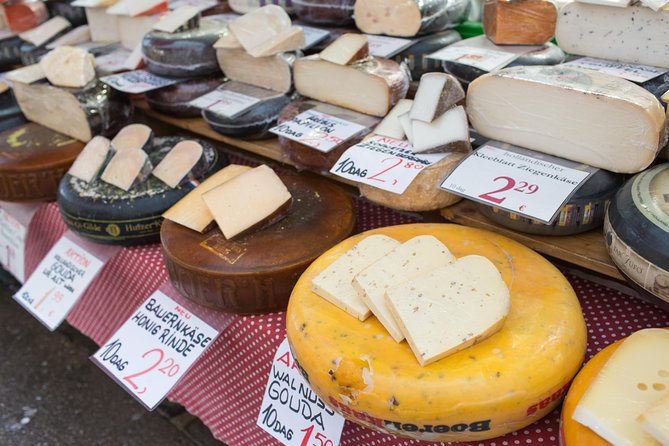
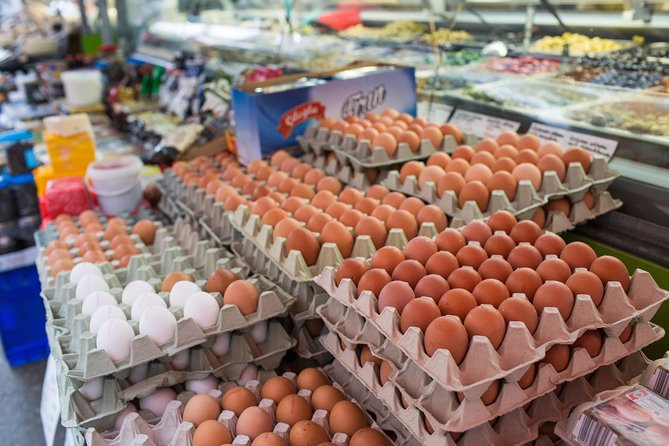
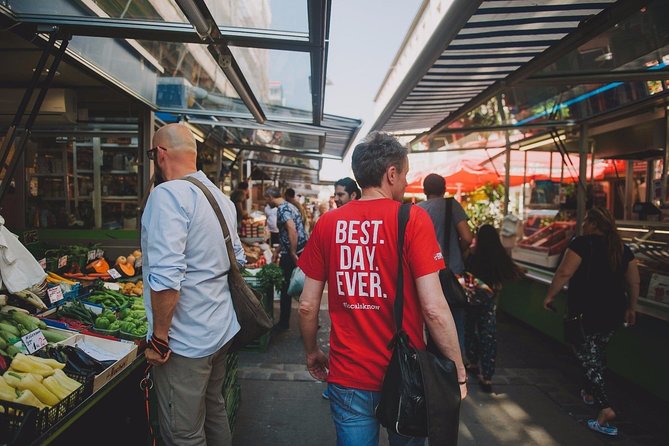
Brunnenmarkt is one of the most useful stops on the tour. Located in Vienna’s 16th district, it is a long street market with a strong multicultural character. You browse produce, sweets, household goods, and prepared foods while seeing a part of the city that many first-time visitors miss.
This is where the tour feels most like a neighborhood walk rather than a standard sightseeing circuit. A market gives you small clues about local life: what is sold, how stalls are arranged, which foods are familiar, and how different communities shape the city’s cooking.
The wider tour description also mentions Naschmarkt, Vienna’s best-known market. The exact route can change, and the listed stops focus on Brunnenmarkt, with Viktor-Adler-Markt and other food stops possible on some departures. Do not treat every named market as guaranteed. The operator adjusts stops and food choices according to the day.
That flexibility is useful for keeping the tour fresh, but it means you should book for the overall experience, not for one exact stall or market. If seeing Naschmarkt is your main goal, visit it separately.
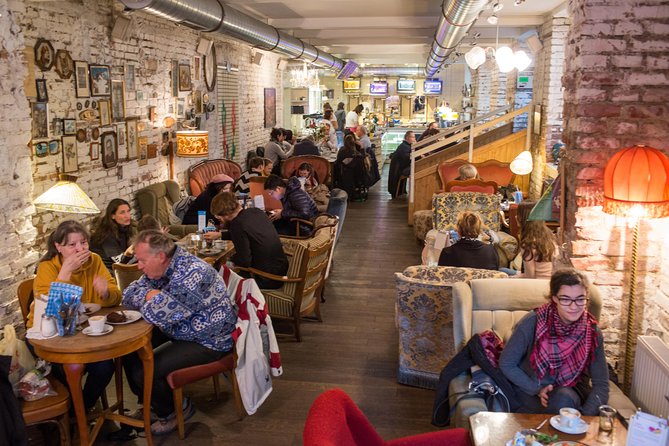
Coffeehouse culture at Café Korb
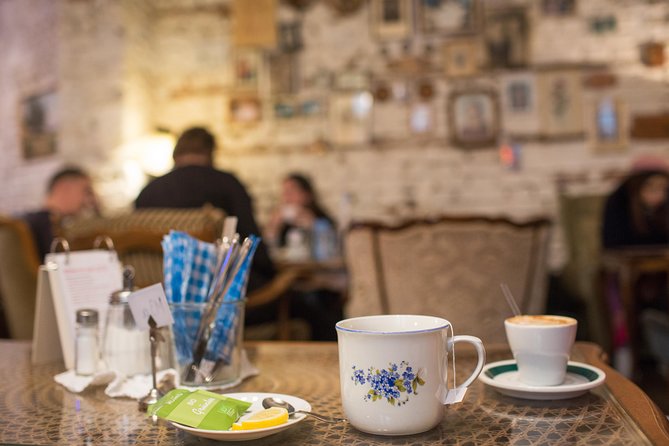
Café Korb provides the classic Viennese coffeehouse pause. You sit down for coffee and strudel in a place still used by local regulars. The stop is listed at about 40 minutes, long enough to enjoy the room and learn how coffeehouse customs work.
Vienna’s coffeehouse tradition is not just about drinking espresso quickly. It is tied to sitting, reading, talking, and taking time. The guide’s explanation gives the coffee a cultural setting, which is more useful than simply ordering a cup and moving on.
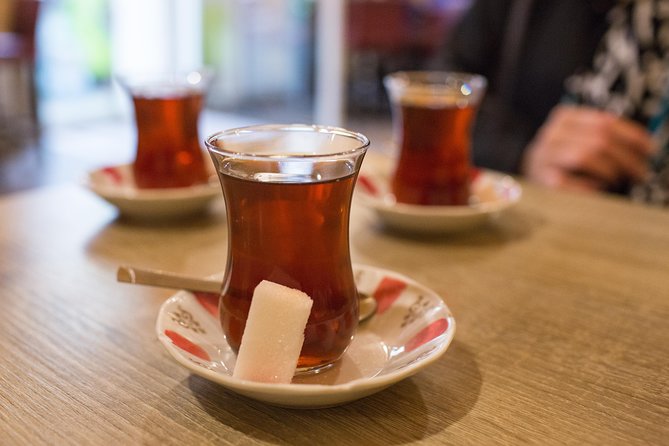
You may have a choice of Viennese coffee, tea, or hot chocolate, along with a seasonal strudel or pastry. Food availability can vary, so the precise sweet may not match the advertised example. That is normal for a food tour built around daily supplies.
Café Korb is also a welcome change of pace. After street markets and public transport, you get a chair and a quieter setting. If you want a long, leisurely café morning with no schedule, the fixed tour pace will feel more structured. Still, the stop offers a proper taste of Vienna’s coffeehouse life without requiring you to research the right café yourself.
More Food Tours in Vienna:
- Vienna Eats: Private Foodie Walk with Coffee & Markets
★ 5.0 · 77 reviews - Early Morning My Son Sanctuary Trip w. Champa Food & Coffee
★ 5.0 · 629 reviews - Hanoi: Vietnamese Street Food Tour with Egg Coffee
★ 4.9 · 315 reviews - Private Walking Tour, Food Tasting and Bosnian Coffee in Sarajevo
★ 5.0 · 255 reviews
The main meal: schnitzel, goulash, and Austrian comfort food
The tour includes a substantial Austrian lunch, with possible choices such as schnitzel, goulash, boiled beef, or a vegetarian dish. You may also receive a warm dessert such as Kaiserschmarren or an apricot dumpling.
This is the point where the price begins to make sense. You are not paying for a single tasting plate. You are receiving several sit-down and standing food experiences, plus a guide for six hours and transport instruction across multiple districts.
A glass of Grüner Veltliner or a local beer accompanies the meal. Nonalcoholic options are available through the food selections, but the included drink is described as wine or beer, so confirm details with your guide if you do not drink alcohol.
The meal is generous. You may taste schnitzel, goulash, pork roast, or a vegetarian alternative in one day. That variety is useful if you are still trying to understand Austrian food. You can compare crisp, fried dishes with slow-cooked food, market snacks, pastries, and coffeehouse sweets.
The one fair criticism is that the lunch can feel too large for some people, especially after the bakery, coffeehouse, and market samples. The food is spaced across the day, but this is not a light tasting tour. I would not schedule a special dinner that evening.
Würstelstand: Vienna’s best casual lesson
The traditional Würstelstand may be the most memorable stop. These sausage stands are part of Vienna’s everyday food culture, and they offer a more casual experience than a restaurant meal.
Possible accompaniments include mustard, horseradish, pickles, and spicy peppers. You may also taste goulash, pork roast, or a vegetarian snack, depending on the route and daily offerings. The emphasis is on hearty, unfussy food served in a setting locals use.
This stop has a practical advantage. It shows you how Vienna eats between meals and outside formal dining rooms. You learn what to order, how the condiments work, and why a simple sausage stand can matter as much to city life as a famous restaurant.
The stand is also one place where the personality of the guide and vendor matters. A guide may introduce you to the food, explain the stall’s place in Vienna’s culture, and help you order without guessing. If you have been nervous about German menus, this support is valuable.
Learning Vienna’s transport system along the way
Public transport is not just a way to get between stops. It is part of the tour’s practical lesson. You may use the underground, tram, or bus while moving between the central districts and neighborhoods such as Favoriten and the 16th district.
Guides explain how many stops you have, where to get off, and how to keep the group together. This can make the rest of your Vienna visit easier, especially if you are taking the tour early in your stay.
Metro tickets are not included, so budget for them separately. The tour is mostly walking plus public transport, rather than one continuous six-hour stroll. Still, you should wear comfortable shoes. You will walk through markets, streets, stations, and between food stops.
The route involves a moderate level of activity. It is suitable for people with moderate physical fitness, though the pace and transfers may not suit someone who needs frequent rest. Children are allowed, but the experience is aimed at adults and older children, and it is not recommended for children under 12.
What the guide adds to the day
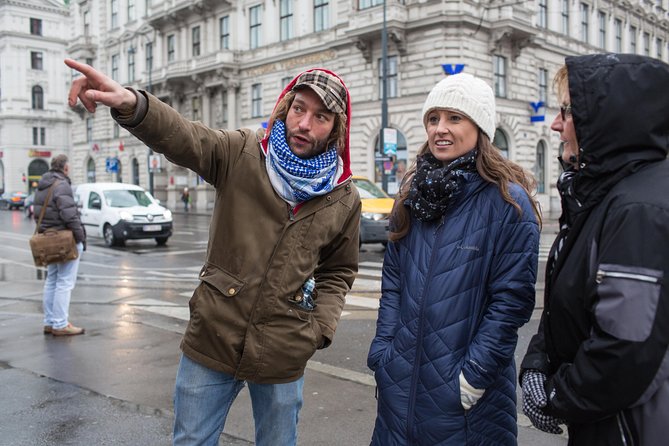
The guide is central to the experience. The best-known guide names attached to this tour include Christoph, Kristof, Maria, Patrick, Wolfgang, Verena, and Mary Ann. Names and assignments can change, but the guide’s role remains the same: connect food, neighborhoods, transit, and Vienna’s past.
Christoph is praised for humor and for explaining food history while keeping the group moving. Maria is described as warm, organized, and attentive, including when helping a group use the subway and bus system. Patrick is noted for his energy and personal attention. Wolfgang has led very small groups, while Mary Ann has added local stories and even shared photographs from the day.
The maximum group size is 16, though some departures may be much smaller. Smaller groups make it easier to hear explanations, ask about menus, and move through a station without losing people.
The guide also helps with language. You can ask for help reading menus, understanding regional dishes, and choosing between unfamiliar food. That is especially useful at a Würstelstand or restaurant where the menu may not be written with first-time visitors in mind.
Is $159.08 a fair price?
At $159.08 per person, this is not a budget walk. The value depends on how much food and guidance you want.
For six hours, the price covers several food settings: a bakery or pastry stop, a market, a coffeehouse, a main meal, drinks, dessert, and street food. You also receive a guided introduction to districts outside the center and a practical public-transport lesson. If you paid separately for a large lunch, several tastings, drinks, and a private food guide, the total could add up quickly.
I see the price as fair for someone who wants a substantial food day and a local introduction to Vienna. It is less appealing if you eat lightly, dislike group schedules, or already have a strong list of cafés and restaurants.
The tour is recommended by 99 percent of people who rate it, with a five-star average from more than 1,000 ratings. That high score fits the strongest features: abundant food, personable guides, and access to ordinary neighborhoods. It does not remove the need to consider the cost or the heavy meal schedule.
Dietary needs, timing, and practical limits
Vegetarian and vegan diets can be accommodated. Gluten allergies are harder because Austrian food includes many pastries and baked dishes. Tell the operator about restrictions before you arrive, and understand that the exact substitutions may depend on the day.
The tour is offered in English and uses a mobile ticket. Service animals are allowed, and the meeting point is near public transportation.
Start at 9:30 a.m. and expect to finish back at Stephansplatz, the original meeting point, after about six hours. Free cancellation is available if you cancel at least 24 hours before the start time. Last-minute cancellations and changes are not accepted for a refund.
The tour is carbon neutral and operated by a certified B Corp. That may matter to you if you want a food experience with a stated environmental and social commitment.
Who should book this Vienna food tour?
I would book this early in a Vienna visit. You learn the transport system, collect restaurant ideas, discover districts beyond the center, and get a useful introduction to Austrian food before choosing later meals.
It suits curious eaters, first-time visitors, couples, families with older children, and anyone who likes history delivered with lunch. It is also a good pick if you want help with German menus or prefer someone else to handle the route.
I would skip it if you want a slow, formal culinary meal, a focused tour of one market, or a small number of refined tastings. This is generous, social, and practical. It is not delicate. Bring an appetite, wear comfortable shoes, and leave your dinner schedule open.
FAQ
Where does the tour start?
The tour starts at 9:30 a.m. at Jasomirgottstraße 3/5, 1010 Vienna, near Stephansplatz.
Where does the tour end?
The tour ends back at the original meeting point near Stephansplatz.
How long does the tour last?
The experience lasts approximately six hours.
What food is included?
Food may include seasonal strudel or pastry, Viennese coffee or tea, a ham and horseradish sandwich, an Austrian main course such as schnitzel or goulash, a warm dessert, and street food such as sausage, pork roast, goulash, or a vegetarian alternative.
Are drinks included?
The tour includes coffee, tea, or hot chocolate at a coffeehouse and a glass of Austrian wine or local beer with the main meal. Additional food and drinks are not included.
Are public-transport tickets included?
No. The tour uses Vienna’s public transport, but metro tickets are not included in the price.
Can vegetarian or vegan diets be accommodated?
Vegetarian and vegan guests are welcome. Gluten allergies are harder to accommodate because Austrian food includes many pastries.
How large is the group?
The tour has a maximum of 16 people. Some departures may operate with smaller groups.
Is the tour suitable for children?
It is best suited to adults and older children. Children under 12 are not recommended for this experience.
Just added around Vienna
- Private Vienna Tour: Literature Walk with Coffee House Visit★ 5.0 · 2 reviews
- Vienna: Guided Viennese Coffee-House Tour★ 5.0 · 2 reviews
- Bratislava From Vienna By Bus With Coffee & Cake★ 4.0 · 5 reviews
- Sweet Vienna Tour: Home of Cakes and Cafe Culture★ 4.8 · 25 reviews
- Strauss Exhibition incl. LED Concert Show / Coffee + Strauss Cake★ 5.0 · 30 reviews
- Vienna Coffee and Cake Tour: Sweets, Stories & Hidden Cafés★ 5.0 · 41 reviews
- Vienna: 2.5-Hour Viennese Coffee, Cake, and Chocolate Tour★ 4.6 · 44 reviews
- Vienna: Guided Viennese Coffee-House Tour★ 4.8 · 48 reviews
Food & Drink, compared.

Buggy Ride Into the jungle with cave coffee & chocolate tasting
Read our review →
Da Nang Cooking Class with Coffee Tasting and Market Visit
Read our review →
Hungry in Vienna? A Food Lover’s Coffee & Market Walk
Read our review →
Private Walking Tour, Food Tasting and Bosnian Coffee in Sarajevo
Read our review →
Hanoi Michelin Star Walking Food Tour & Train Street
Read our review →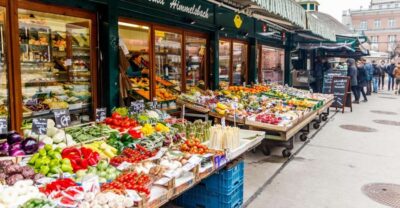
Typical Austrian Food Tour with Coffee House Visit
Read our review →Browse the lists this tour appears in