
Review · CROATIA
Zagreb in Ink and Coffee: A Feminist Café Chronicle
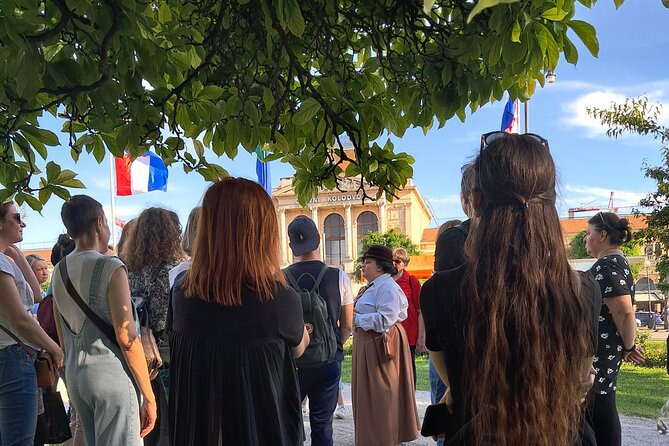
Zagreb in Ink and Coffee follows Marija Jurić Zagorka, Croatia’s pioneering female journalist, through the streets, cafés, and publishing offices that shaped her life. A costumed guide, including guide Đurđica on some departures, brings Zagorka’s story into the present with lively storytelling rather than a list of dates.
I like the way the walk connects women’s rights and journalism to real city addresses, including the former offices of Obzor and Ženski list. I also like the private format: only your group takes part, so you can ask questions and set the pace. The main consideration is that this is an outdoor walking tour, and the optional liqueur tasting requires a reservation.
Key points at a glance
- Follow Zagorka’s working life: See the former sites of Obzor and Ženski list, where her writing challenged the limits placed on women.
- Hear café stories in their original setting: Kavana Zagreb, Café Corso, and the former Velika Kavana help explain Zagreb’s literary and political life.
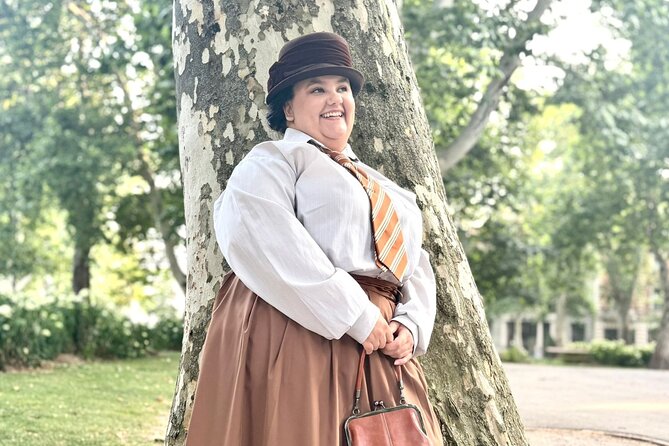
- Expect a costumed guide: The historical character adds theater and personality, with Đurđica praised for her passionate portrayal of Zagorka.
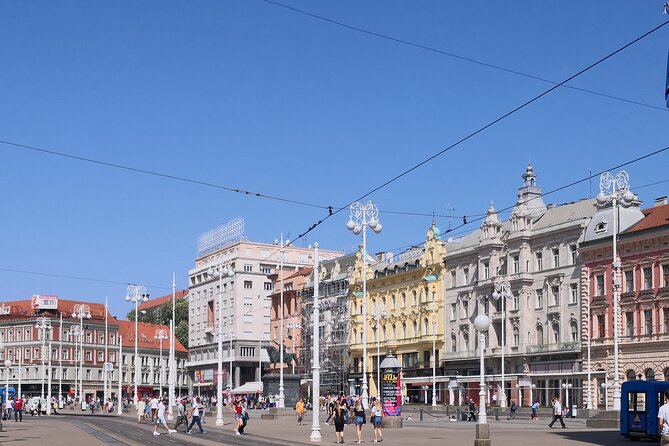
- Walk the Lower Town: The route links King Tomislav Square, Zrinjevac, Ilica, and Ban Jelačić Square in about two to three hours.
- Add a Croatian liqueur tasting: House of Spirits offers a separate, reserved finale near the city center.
- Know the weather limit: Poor weather can lead to a new date or a full refund, and cancellation is free up to 24 hours ahead.
Why Zagorka gives Zagreb a different voice
Many Zagreb walking tours begin with grand buildings, political rulers, and church towers. This one asks a more interesting question: who was writing, working, organizing, and arguing behind the official story?
Marija Jurić Zagorka gives the tour its focus. She worked as a journalist, edited a women’s magazine, wrote about social issues, and became one of the important public voices for women’s education and rights in Croatia. Her connection to Zagreb was not limited to one monument. It ran through editorial offices, cafés, streets, and conversations.
That makes the route feel personal. You are not simply looking at a square and hearing its construction date. You are considering what it meant to be a woman trying to work in journalism at a time when public life was largely controlled by men.
The guide’s costumed presentation matters here. Đurđica, who has led some departures, has been singled out for portraying Zagorka with warmth, pride, and energy. The best part of that approach is its human scale. Zagorka becomes more than a name attached to a street or statue. She appears as a working writer, a café regular, an editor, and a woman pushing against accepted rules.
A few more coffee tours around the world worth a look
- Hoi An: Vietnamese Coffee Culture and Coffee Making Class
★ 4.9 · 4,006 reviews - Hanoi Coffee Experience: 6 Brews, 9 Recipes & 3 Liquor Tastings
★ 5.0 · 2,945 reviews - 4×4 Dominican Adventure with Chocolate and Coffee Tasting
★ 5.0 · 2,920 reviews
Starting at King Tomislav Square
The tour begins at Trg Kralja Tomislava, or King Tomislav Square, in Zagreb’s Lower Town. The large statue of Croatia’s first king gives the meeting point an easy landmark, while the surrounding open space provides a clear introduction to the city.
You begin with the contrast that shapes the entire walk. Zagreb has formal squares and royal symbols, but it is also a city of cafés, offices, newspapers, and ordinary daily routines. Zagorka’s story belongs to both sides.
The first stop lasts about 15 minutes and has no admission charge. Since the tour is entirely based outdoors, wear comfortable shoes and be prepared to walk between stops. The short opening talk also helps you get your bearings before the route moves into streets with more café and publishing connections.
Strossmayer Square and the city’s thinkers

Strossmayer Square adds a quieter setting. It is named for Josip Juraj Strossmayer, a bishop and supporter of Croatian culture, and his residence was associated with artists, writers, and intellectuals during Zagorka’s era.
This is a useful place to discuss the city’s cultural circles. The tour is not only about Zagorka alone. It also shows the network of people and institutions around her, including the men who shaped public culture and the women who were often given less room within it.
The square’s green setting gives the walk a pause before the café stops. You may find this section less dramatic than the newspaper offices or the final café stories, but it provides needed context. It explains why Zagreb’s cultural life mattered so much to a journalist whose work crossed literature, politics, and social reform.
Kavana Zagreb and Zrinjevac’s café world
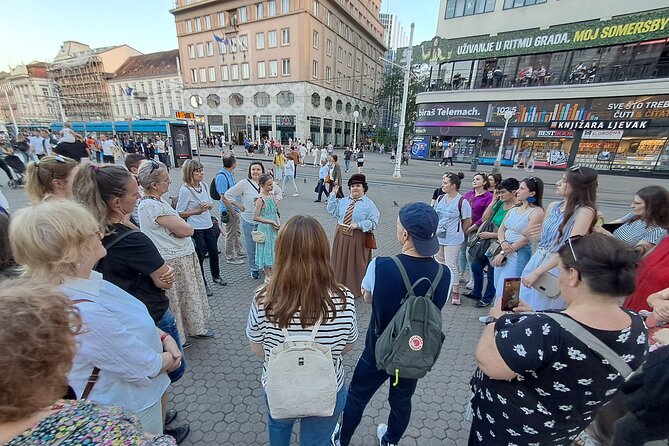
Near Zrinjevac Park, the guide stops outside historic Kavana Zagreb. You do not go inside, so this is a storytelling stop rather than a café visit. The value lies in hearing how places like this served as meeting points for writers, journalists, and political thinkers.
Cafés were workrooms, social clubs, and informal newsrooms. Ideas moved across tables along with coffee. For Zagorka and her circle, these places offered access to conversations that were not always open to women in more official settings.
You should keep your expectations clear here. The tour does not promise a drink at Kavana Zagreb, and the admission remains free because the discussion takes place outside. Still, the location helps you picture Zagreb’s old social life in a way that a museum display cannot quite manage.
Same place, a different way to drink it:
- Rome Morning Vespa Sidecar Tour in Rome with Cappuccino
★ 5.0 · 1,771 reviews - Giethoorn: Village & National Park Canal Cruise with Coffee
★ 4.6 · 1,596 reviews - Dresden: Guided City Walk with a Cup of Coffee
★ 4.7 · 1,568 reviews - 4×4 ATV Experience, Water Cave, Chocolate and Coffee Tasting
★ 5.0 · 1,430 reviews
Masarykova Street and everyday Zagreb
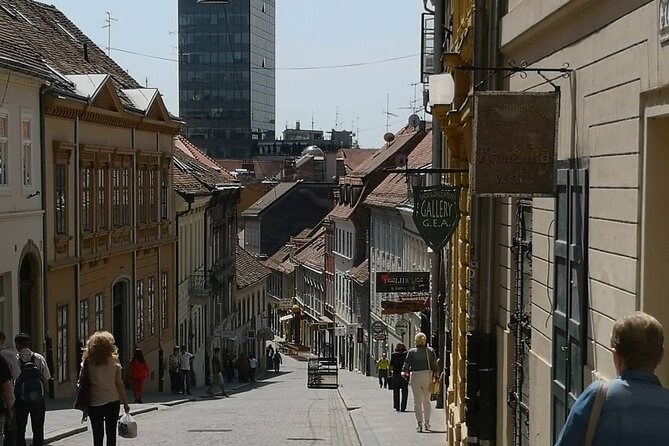
Masarykova ulica is named for Tomáš Garrigue Masaryk, the first president of Czechoslovakia. On this tour, the street is less about the name itself and more about the urban setting it represents.
Shops, theatres, and cafés line the kind of city street where daily life and public culture overlap. This is where Zagorka’s writing about urban society begins to make sense. Her work was connected to real people, changing social habits, and the pressure of city life.
I like this part because it keeps the tour from becoming a narrow biography. You are not simply moving from one Zagorka address to another. You are seeing the streets that supplied the background for her writing and helped shape her view of society.
Obzor and the power of a newspaper
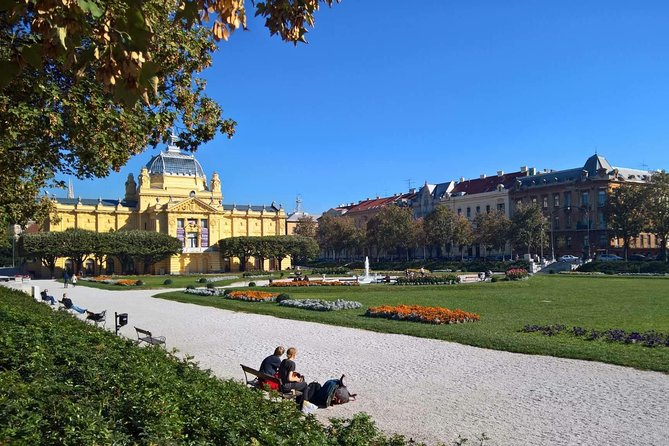
At Gundulićeva ulica, the route reaches the former editorial office of Obzor, where Zagorka worked as a journalist. This is one of the most important stops because it places her directly inside the professional world she had to fight to enter.
A newspaper office is not just a workplace. It is a place where public opinion can be formed, political arguments can spread, and social problems can receive attention. Zagorka used journalism as a way to take part in that public conversation.
The guide uses this address to explain her pioneering role in Croatian media. You hear about the force of the press and the courage required for a woman to work visibly within it. This stop should be especially valuable if you care about journalism, women’s history, or the ways cities remember their writers.
It also gives the tour a practical focus. Zagorka was not only an author celebrated after the fact. She was doing a demanding job in a real newsroom, using her pen to question accepted ideas.
Ženski list and a stronger feminist focus
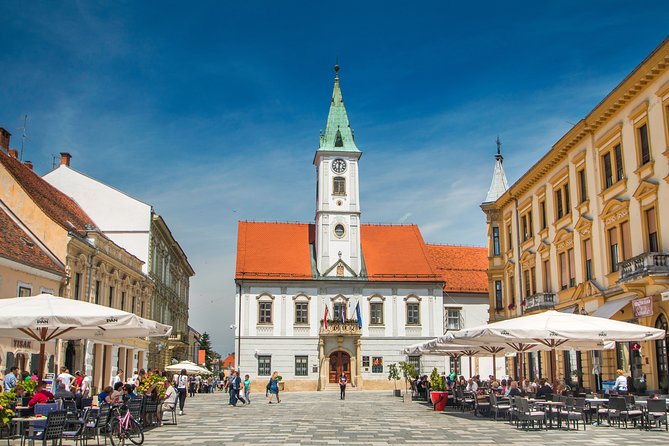
Varšavska ulica marks a change from the commercial rhythm of the Lower Town toward quieter residential streets. Here, the tour reaches the former headquarters of Ženski list, the magazine Zagorka founded and edited from 1925 to 1938.
This is arguably the clearest feminist stop on the route. The publication addressed women’s concerns, education, and rights at a time when such subjects were rarely discussed openly. Zagorka created a platform where those topics could be treated as public matters rather than private complaints.
The location also helps explain the value of a walking tour based on addresses. The building itself may not provide a large museum display or a dramatic interior visit. Instead, the guide supplies the missing connection between street, institution, and personal effort.
If you know little about Zagorka before arriving, this is the point where her work begins to look especially broad. She was a journalist, editor, writer, and public voice. The tour treats those roles as connected rather than separate achievements.
Café Corso at Ilica and Gundulićeva
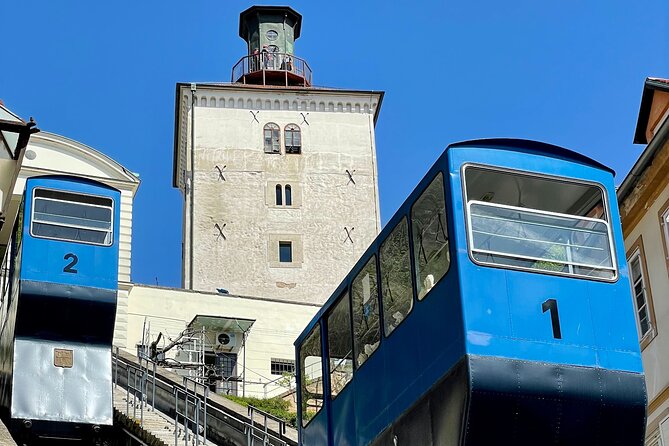
At the corner of Ilica and Gundulićeva, the guide discusses Café Corso, once a popular meeting place for writers, journalists, and progressive thinkers. Zagorka was among its regular visitors.
This stop brings the title of the experience into focus. Coffee was not merely a refreshment. It was part of the city’s intellectual machinery. People exchanged ideas, formed alliances, argued over politics, and tested new social views in café settings.
The atmosphere is reconstructed through stories, not through an interior café experience. That distinction matters. If you want a sit-down coffee included in the price, this is not that kind of tour. If you enjoy understanding how public life worked through ordinary gathering places, the stop has real appeal.
The café setting also adds humor and warmth to the heavier themes. After the discussion of editorial offices and women’s rights, you get a clearer picture of Zagorka as a person who lived within Zagreb’s social world, rather than as a distant historical figure.
The former Velika Kavana at Ban Jelačić Square
The walk ends near the former site of Velika Kavana, or Grand Café, close to Ban Jelačić Square. The café is gone, but the guide uses the location to reflect on the people and conversations that once filled it.
This is a fitting final stop. The route begins with the formal presence of King Tomislav and finishes in Zagreb’s central square, where the city’s streets, shops, cafés, and public life meet. Along the way, the story has moved from royal symbols to the voices of writers and working women.
The conclusion is reflective rather than packed with new facts. You consider what remains after a building disappears. In this case, memory survives through stories about the people who used the place and the ideas they carried into the wider city.
The tour ends at Ban Jelačić Square, a practical location for continuing your day. You can reach nearby shops and cafés from here, or simply use the square as a central point for further sightseeing.
The optional House of Spirits tasting
The listed route includes Radiceva as an optional finale, with a guided tasting at House of Spirits, a boutique distillery near the city center. You sample traditional Croatian liqueurs, including herbal and fruit-infused styles.
This is not an automatic stop you should assume is ready for you. A reservation is required, and further details are provided after booking. Ask about the tasting when you reserve so you understand how it fits with the walking portion.
The tasting gives the experience a pleasant social finish. After stories about cafés, newspapers, and strong opinions, you can raise a glass to Zagorka’s work and Zagreb’s old gathering places. It is also useful for visitors who want a small introduction to Croatian drinks without booking a separate distillery visit.
Keep in mind that alcoholic beverages are included only as part of this arranged tasting, not as drinks at every café on the route. Personal purchases and souvenirs are not included.
Is $65.53 a fair price?
At $65.53 per person, this costs more than a basic city orientation walk. The value depends on what you want from a Zagreb tour.
You are paying for a private experience, a costumed guide, a focused story about one important woman, and a route built around places that are easy to miss if you explore alone. The liqueur tasting adds value if you reserve it and enjoy that kind of cultural stop. Group discounts may also make the price easier to justify for a larger private party.
I would not choose this tour if your main goal is to cover Zagreb’s major architecture, museums, or every central landmark. The route is tightly focused on Zagorka, journalism, feminism, and café culture. That focus is its strength, but it also means less time for broad city sightseeing.
For a couple, family, or small private group that likes social history and storytelling, the cost is easier to defend. You get a personal format instead of a large group, and the guide can keep the discussion connected to your interests.
Timing, walking, and practical details
Plan on about two to three hours. Each of the main stops is described as roughly 15 minutes, with about 20 minutes for the optional tasting. The route is located in Zagreb’s Lower Town and finishes at Ban Jelačić Square.
The tour is offered in English and uses mobile tickets. Confirmation arrives at booking, and the route is near public transportation. Service animals are allowed, and most people can take part, though you should still be ready for a city walk on foot.
Because the experience is private, only your group participates. That is useful if you prefer asking questions, taking photographs, or discussing Zagreb at your own speed. Group discounts are available.
The tour needs good weather. If poor weather cancels it, you can choose another date or receive a full refund. You can also cancel for a full refund up to 24 hours before the start time. After that point, refunds and changes are not accepted. A minimum number of participants is also required, so a cancellation for that reason brings the choice of another date, another experience, or a full refund.
Who should book Zagreb in Ink and Coffee?
I would choose this tour if you enjoy women’s history, journalism, literary culture, and local stories more than a standard checklist of sights. It is a particularly good match for anyone who wants to understand how Zagreb’s public life worked beyond palaces and monuments.
It also suits repeat visitors. One local guest who grew up in Zagreb found that the walk revealed a side of the city and its women that had not been fully visible before. That is a useful sign that the route can offer something even if you already know the central streets.
The tour may be less suitable if you want substantial interior sightseeing, a food-focused experience, or a long café break. Most stops happen outside, and the cafés are discussed from the street rather than visited as included venues.
Should you book it?
Book Zagreb in Ink and Coffee if you want a focused, personal story of Zagreb through Zagorka’s life. The route makes newspapers, cafés, and women’s rights feel connected to actual streets, while the costumed presentation gives the history a human voice.
Skip it if you prefer broad landmark coverage or a self-guided walk at a lower price. For everyone else, especially visitors interested in feminist history and literary Zagreb, this is a thoughtful way to spend two or three hours. Add the House of Spirits tasting if you want a relaxed drink to finish the story.
FAQ
How long does Zagreb in Ink and Coffee last?
The walking experience takes about two to three hours, depending on the pace and whether you add the optional tasting.
Where does the tour begin?
It begins at Trg Kralja Tomislava 1, beside King Tomislav Square in Zagreb.
Where does the tour finish?
The main tour finishes at Ban Jelačić Square, also called Trg bana Josipa Jelačića.
Is the liqueur tasting included?
A guided tasting of traditional Croatian liqueurs is included as an optional finale, but a reservation is required. More details are provided after booking.
Is the tour private?
Yes. Only your group participates in the activity. Group discounts are also available.
What happens if the weather is poor?
The experience requires good weather. If it is canceled because of poor weather, you can receive a full refund or choose a different date.
Just added around the world
- Yerevan: Private Coffee Tour with 2 Café Stops★ 5.0 · 2 reviews
- Vietnamese Coffee 101 Workshop★ 5.0 · 11 reviews
- Vietnamese Coffee Making Class in Hoi An★ 5.0 · 4 reviews
- Vietnamese cooking class and coffee making with local girl★ 5.0 · 5 reviews
- Venice Delights: Coffee & Food Experience Walking Tour★ 5.0 · 2 reviews
- Private Vienna Tour: Literature Walk with Coffee House Visit★ 5.0 · 2 reviews
- Turin: Art Nouveau Walking Tour with Coffee★ 5.0 · 11 reviews
- Turkish Coffee and Traditional Turkish Dessert Cooking★ 4.6 · 8 reviews
Croatia Coffee Tours, compared.

Coffee, storytelling & walk – The best private tour of Split
Read our review →
Banac Gallery Entrance with Coffee and Fresh Juice
Read our review →
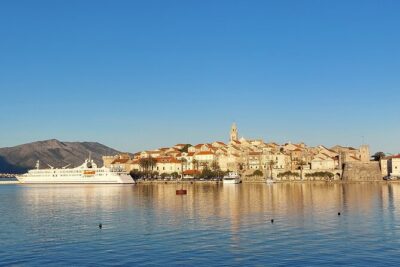
Korčula for Early Risers and Coffee Lovers Private Walking Tour
Read our review →Browse the lists this tour appears in