
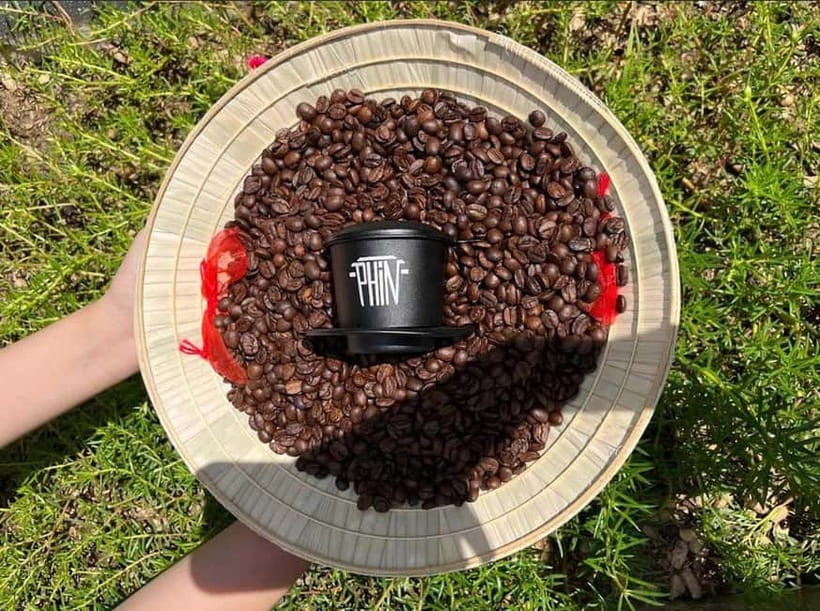
Review · VIETNAM
Hue: Brew Egg, Salt & Coconut Coffee
Vietnamese coffee is not just a quick caffeine stop. In this Hue workshop, you make four very different drinks yourself, using the slow-dripping phin filter and strong Robusta beans. The best part is the contrast: egg coffee is sweet and creamy, salt coffee is surprisingly balanced, and coconut coffee brings a cooler, softer finish.
I like the hands-on format, since you are not simply watching a demonstration. I also like the small group limit of eight, which gives you time to ask questions and work at your own pace. The main consideration is caffeine: four tastings add up, and one solo participant found the portions too much to finish.
Key points
- Four recipes in 90 minutes: Make classic phin coffee, egg coffee, salt coffee, and coconut coffee.
- Robusta beans and phin filters: Learn why Vietnamese coffee tastes so strong and how the traditional metal filter works.
- Local hosts with personality: Duck, also called Uyen, Daisy, and Annie have led sessions, with English and Vietnamese instruction available.
- Useful souvenir: Take home recipe instructions so you can repeat the drinks after Vietnam.
- Good rainy-day activity: The workshop is indoors and suits coffee fans, curious non-drinkers, couples, families, and solo visitors.
- Simple Hue meeting point: Enter alley number 1 on Hoàng Quốc Việt Street and walk about 50 meters to the Huế Experience sign.
Four Vietnamese coffees, one small Hue workshop
This experience focuses on four drinks that show how flexible Vietnamese coffee can be. You begin with the classic phin, then move through egg, salt, and coconut versions. Each one uses coffee as a base, but the flavor and texture change sharply with the additions.
That makes the workshop more useful than a standard tasting. You learn the basic brewing method first, then see how local ingredients transform it. I especially like this order because it gives you a reference point. After tasting plain phin coffee, you can better understand what the egg, salt, and coconut are doing.
The class lasts 90 minutes. That is long enough to explain the ingredients, prepare the drinks, taste them, and talk about Vietnamese coffee culture without turning the session into a full-day commitment. You will not need to set aside an entire afternoon.
More Vietnamese Coffee Experiences in Vietnam:
- Hoi An: Vietnamese Coffee Culture and Coffee Making Class
★ 4.9 · 4,006 reviews - Fun & Easy Vietnamese Coffee Workshop in Hồ Chí Minh City
★ 5.0 · 293 reviews - Hanoi: Vietnamese Coffee Workshop with 6 Brews and 8 Recipes
★ 5.0 · 237 reviews
Finding the Huế Experience meeting point
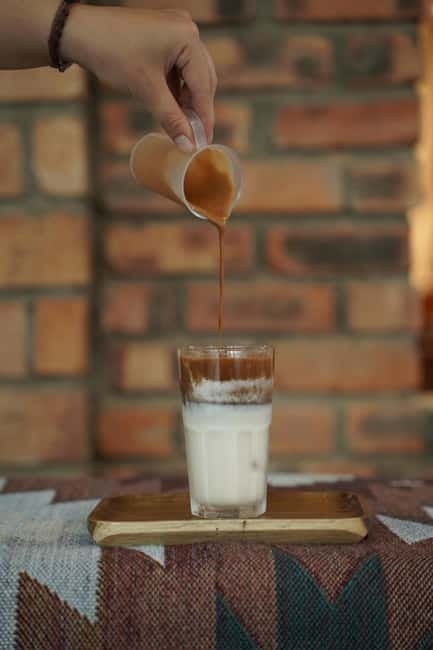
The meeting point is on Hoàng Quốc Việt Street. Enter alley number 1, walk about 50 meters, and look for the Huế Experience signboard.
This is a detail worth saving before you set out. The activity does not meet at a major landmark or a large hotel lobby, so having the street and alley information ready will make arrival easier. Once you see the signboard, you are in the right place.
The workshop is listed as wheelchair accessible. Starting times vary, so check the available sessions when booking. You can cancel up to 24 hours beforehand for a full refund, and the reserve-now, pay-later option lets you keep your schedule flexible.
Starting with Robusta and the phin filter
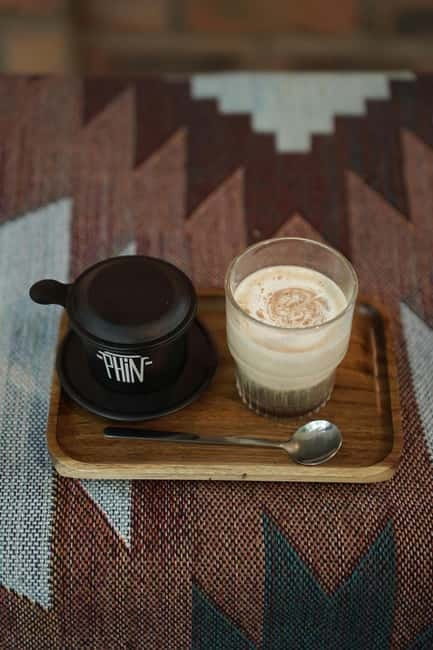
The class begins with an introduction to Robusta beans, the strong, earthy coffee variety closely linked with Vietnamese coffee. The goal is not to turn you into a coffee expert. It is to help you understand the bold base used in the four drinks you are about to make.
You then work with the traditional phin filter. This small metal brewer sits over your cup and lets the coffee drip slowly. The pace is part of the experience. Instead of pressing a button and walking away, you watch the coffee collect drop by drop.
I like this first step because it connects the drink to everyday Vietnamese coffee culture. It also teaches the practical foundation for the rest of the class. Once you understand the plain brew, the other recipes make more sense.
Your English-speaking host guides the process and explains each stage in English or Vietnamese. Hosts have included Duck, also known as Uyen, as well as Daisy and Annie. The exact host depends on the session, but the teaching style is clearly meant to be relaxed, social, and easy to follow.
Making the classic phin coffee
The classic phin is the least decorated drink of the four, but it may tell you the most about Vietnamese coffee. You prepare the coffee through the metal filter, then taste the strong brew on its own or in the style explained during the session.
This is the point where you get a clear sense of Robusta. It is more forceful than the mild coffee many people drink at home, and the slow filter gives you time to notice its aroma and weight.
Do not rush this part. The phin works slowly, and that waiting time is part of the method. You will learn how the filter is set up and how the coffee is brewed before you start changing the drink with sweet, salty, creamy, or tropical ingredients.
For a coffee lover, this is the technical heart of the workshop. For someone who rarely drinks coffee, it is still useful because you can taste the base before deciding which of the flavored versions suits you best.
A few more coffee tours around Vietnam worth a look
- Hanoi Coffee Experience: 6 Brews, 9 Recipes & 3 Liquor Tastings
★ 5.0 · 2,945 reviews - Hanoi Coffee Workshop: Taste Salt, Coconut and Egg Coffee
★ 5.0 · 1,286 reviews - Hanoi: Salt Coffee Workshop Awake Your Senses With 6 Brews
★ 5.0 · 792 reviews - Early Morning My Son Sanctuary Trip w. Champa Food & Coffee
★ 5.0 · 629 reviews
Egg coffee: dessert in a cup
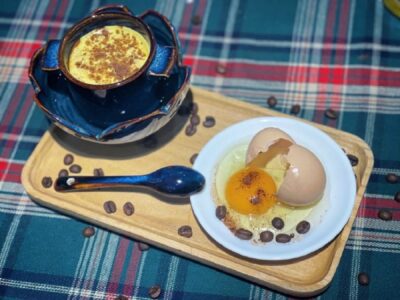
Egg coffee is the most obviously dessert-like drink in the class. Egg creates a thick, creamy topping that softens the power of the coffee underneath.
The appeal is the contrast between bitter Robusta and the sweet, silky layer above it. You will prepare the recipe yourself rather than receiving a finished cup, so you can see how an ordinary coffee becomes something closer to a small dessert.
This was one of the drinks that repeatedly drew praise from the participants whose sessions included it. The recipe is also practical to take home, since the class gives you instructions for all four drinks.
Egg coffee is a good reason to book the workshop even if you already know how to make basic coffee. It is unusual, memorable, and difficult to understand fully from a menu description alone. You need to taste the combination of strong coffee and creamy egg to see why it has become such a well-known Vietnamese style.
Salt coffee: the Hue specialty to watch for
Salt coffee is especially fitting for a Hue workshop. The salt does not turn the drink into a savory beverage. Used in a small amount, it helps balance the bitterness and can make the coffee taste rounder and smoother.
This is the recipe I would pay close attention to during the class. It is simple enough to repeat at home, but the proportions matter. Too much salt would overwhelm the coffee, while the right amount changes the drink without announcing itself.
The workshop explains the story and method behind the recipe, then gives you the chance to make and taste it. That personal preparation matters here. You will notice how a very small ingredient can alter a strong Robusta brew.
If you are visiting Hue and want a drink tied closely to the city, salt coffee is the most relevant of the four. It also gives you something specific to seek out at cafés after the class.
Coconut coffee: cooler, sweeter, and easy to like
Coconut coffee brings a softer flavor and often a cooler style to the tasting. Coconut gives the bold coffee a sweet, tropical edge, making this a natural choice for anyone who finds straight Vietnamese coffee too intense.
The class includes the tools and ingredients needed to prepare the drink. You will make it alongside the other recipes, then taste what you have produced rather than watching the host do all the work.
Coconut coffee is also useful as a comparison. The four drinks do not simply repeat the same recipe with minor changes. Egg alters the texture, salt adjusts the balance, and coconut shifts the flavor toward something lighter and more tropical.
You may find this is the easiest drink to share with a non-coffee drinker. One participant whose partner was not a major coffee fan still found the session enjoyable and liked the drinks. That does not guarantee every palate will agree, but it shows the workshop is not limited to serious coffee people.
A host-led class with room for conversation
The host is a major part of the experience. Duck has led many sessions and is also known as Uyen. Other sessions have been taught by Daisy and Annie. The descriptions of their teaching are consistent: friendly, funny, patient, and keen to explain both the method and the background.
That matters because the class is not built like a formal cooking school. You are there to talk, ask questions, try the recipes, and enjoy the process. A good host can make the difference between a quick demonstration and an activity you remember.
The group is limited to eight people. Some sessions may be smaller, and a solo participant once had a private class because no one else had booked that time. You should not assume every session will be private, but the small limit gives you a better chance to receive direct help.
Families can take part, as one group of five enjoyed the class together. Couples and solo visitors also fit well. The format gives you an easy way to meet people without committing to a long group tour.
What the 90 minutes actually feel like
The workshop has a clear rhythm:
- You arrive at the Huế Experience meeting point and settle into the small-group setting.
- The host introduces Vietnamese coffee, Robusta beans, and the phin filter.
- You prepare the classic phin coffee.
- You make egg coffee, learning how the creamy topping changes the drink.
- You prepare salt coffee and see how a small amount of salt balances the brew.
- You make coconut coffee, then taste all four drinks.
- You receive the recipes to use at home.
The exact order of the drinks may vary, but the structure is practical. You learn the basic method before moving into the more distinctive recipes.
You should arrive ready to participate. This is not an activity where you sit back while someone else handles every step. The fun comes from making the drinks yourself, even if your first attempt is not perfectly balanced.
Is $18 a fair price?
The price is $18 per person. For 90 minutes, that is good value if you want more than a single coffee stop.
You are paying for instruction, four recipes, ingredients, brewing tools, tastings, water, a small group, and a recipe handout. The recipe sheet has real value because it lets you recreate the drinks after the holiday. One participant even bought a phin filter to continue making Vietnamese coffee at home.
A cheaper café visit would give you one drink and little context. A more formal cooking class might cost more and take longer. This workshop sits in a useful middle ground: it is focused, affordable, and hands-on.
The value depends on your interest. If you only want to drink coffee and move on, $18 may feel unnecessary. If you like learning how local food and drinks are made, the combination of tasting and instruction makes the price reasonable.
Plan around the caffeine
Four coffee preparations create one practical issue: you may not want to finish every cup.
The tasting is generous enough that one participant could not drink it all. That is useful if you want to compare the recipes, but it means you should think about the timing. A late session could affect your sleep, especially if you are sensitive to caffeine.
You can focus on tasting rather than consuming every drop. Ask the host questions, compare the textures, and use the recipe notes as the main takeaway. The class is about understanding the drinks, not proving that you can finish four strong coffees in one sitting.
This is also why the workshop works well earlier in the day. Morning or afternoon sessions may fit better than an evening class, though you should check the actual starting times available for your date.
A good choice in rain or between Hue sights
Hue has plenty of historical sights, but not every part of a day needs to happen outdoors. This coffee class gives you a useful indoor break, particularly when the weather turns wet.
One participant specifically found it rewarding on a rainy day. That makes sense: the workshop has a fixed 90-minute length, gives you something active to do, and ends with a drink tasting rather than a passive lecture.
It also works as a change of pace between temple visits, museums, and walks. You learn a local habit rather than simply taking another photograph. The activity is especially appealing if you want a closer connection with daily life in Vietnam but do not have time for a larger food tour.
Who should book this Hue coffee class?
I would recommend it most strongly to:
- Coffee drinkers who want to understand Vietnamese brewing.
- People curious about egg coffee or salt coffee but unsure what to order.
- Couples looking for a relaxed shared activity.
- Solo visitors who enjoy small classes and conversation.
- Families who want an activity that works for several ages.
- Non-coffee drinkers willing to try sweet and creamy variations.
- Anyone needing a compact indoor plan for a rainy day.
I would be more cautious if you dislike strong coffee, cannot tolerate caffeine, or prefer to observe rather than take part. The class is built around four tastings and active preparation, so it is not simply a café visit.
Final call: book it for the method, not just the drinks
Book this workshop if you want to understand why Vietnamese coffee is so distinctive. The four recipes give you variety, the phin filter gives you a practical skill, and the recipe handout lets the experience continue after Hue.
The strongest reasons to go are the friendly local teaching, the small group size, and the chance to make salt, egg, and coconut coffee yourself. Just plan for a substantial amount of caffeine and allow time to find the alley meeting point.
At $18, this is a sensible pick for a 90-minute cultural activity. You should book it if you want to slow down, talk with a local host, and leave Hue knowing how to make more than a standard cup of coffee.
FAQ
How long does the Hue coffee workshop last?
The workshop lasts 90 minutes.
How much does the activity cost?
The price is $18 per person.
Which coffees will I make?
You will make classic phin coffee, egg coffee, salt coffee, and coconut coffee.
Are ingredients and equipment included?
Yes. The activity includes all ingredients and tools for the four recipes, along with traditional phin filters and Robusta beans.
Is the workshop taught in English?
Yes. Instruction is available in English and Vietnamese, with an English-speaking local host.
Where is the meeting point?
Enter alley number 1 on Hoàng Quốc Việt Street and walk about 50 meters. The meeting point is marked by the Huế Experience signboard.
Can I cancel or pay later?
You can cancel up to 24 hours in advance for a full refund. You can also reserve your place and pay later.
Just added around Vietnam
- Vietnamese cooking class and coffee making with local girl★ 5.0 · 5 reviews
- Vietnamese Coffee 101 Workshop★ 5.0 · 11 reviews
- Vietnamese Coffee Making Class in Hoi An★ 5.0 · 4 reviews
- Vietnamese Egg Coffee Making Course in Hoi An★ 3.5 · 2 reviews
- Authentic Vietnamese Coffee Making Experience in Hoi An★ 5.0 · 13 reviews
- Hoi An Ancient Town and Coffee Making Course★ 5.0 · 4 reviews
- Hoi An Vietnamese Coffee Workshop: Hands-On Brewing Class★ 5.0 · 3 reviews
- Hoi An Coffee Making Workshop★ 5.0 · 7 reviews
Vietnamese Coffee Experiences, compared.
Vietnamese Coffee Culture and Coffee Making Class
Read our review →
Fun & Easy Vietnamese Coffee Workshop in Hồ Chí Minh City
Read our review →
Vietnamese Coffee Workshop with 6 Brews and 8 Recipes
Read our review →
Vietnamese Coffee & Culture Exploration in Hồ Chí Minh City
Read our review →
Vietnamese Coffee Making Workshop at Local Roastery
Read our review →
Hanoi Coffee Workshop: Master 6 Signature Vietnamese Coffee
Read our review →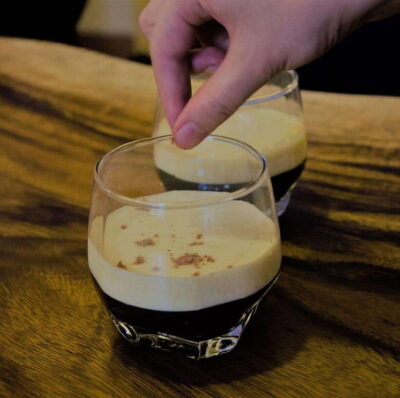
Hands-on Vietnamese Coffee Making Class with Long
Read our review →
Six Cups of Vietnam Coffee Workshop in Hanoi with Local Barista
Read our review →Browse the lists this tour appears in