Review · COFFEE TOURS
Beijing Hutong Breakfast & Coffee Tour
Beijing’s best breakfast may not come from a hotel buffet. This morning walk takes you into the old city for sesame balls, wontons, jianbing, and traditional sweets, then adds temples, markets, and quiet lanes to the meal. It is a useful way to see how daily life and old architecture fit together.
I like the mix of food and local history, especially the visit to Zhihua Temple, where Ming-era art and Beijing temple music may form the cultural high point. I also like the ending in Xizongbu Hutong, where coffee gives the morning a modern finish. The main drawback is pace: several stops are brief, and the $75 price makes the tour best for visitors who value a guide and several tastings rather than a cheap breakfast.
What makes this Beijing morning different
- Breakfast before sightseeing: Begin with sesame balls and wontons at a local eatery, not with a long historical lecture.
- Real neighborhood life: Shijia Hutong and Dongtangzi Hutong offer courtyards, old residences, and a look at ordinary community life.
- Market food in context: Try jianbing at Chaoyangmen Local Market while seeing where residents buy produce and daily supplies.
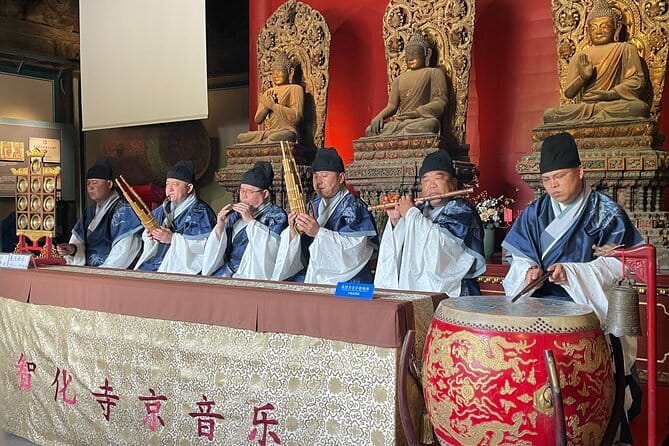
- A rare temple stop: Zhihua Temple adds Ming Dynasty murals, Buddhist objects, and possible temple music to the food walk.
- Old snacks beyond the usual list: Huguosi Hutong brings wandouhuang, ludagun, and aiwowo into the itinerary.
- Coffee in a historic lane: The final stop in Xizongbu Hutong shows how traditional Beijing streets now accommodate modern cafés.
Breakfast starts with sesame balls and wontons
Meet at 8:30 a.m. on Dengshikou Avenue, at 5 Deng Shi Kou Da Jie in Dongcheng District. The first food stop sets the tone: this is not a tour built around famous restaurants alone. It begins with familiar Beijing breakfast foods and the memories tied to them.
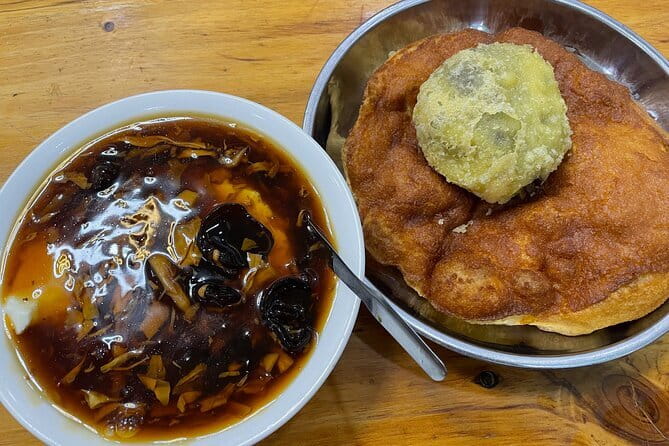
The sesame balls arrive golden and crisp, with sweet red bean filling inside. They are a small but telling introduction to Old Beijing cooking, where a simple snack can carry more character than a polished restaurant dish.
The wontons offer a different texture. Thin wrappers, a generous filling, and warm broth make them a sensible morning dish, especially in cooler weather. You get roughly 30 minutes here, enough for a relaxed first bite and a chance to hear how these foods fit into local breakfast habits.
The included food is described as two or three breakfast stops, with unlimited food and drinks listed among the inclusions. Still, the exact amount you eat may depend on the day and the group. If you have allergies or avoid meat, ask before booking, since the supplied details do not specify dietary alternatives.
A few more coffee tours around the world worth a look
- Hoi An: Vietnamese Coffee Culture and Coffee Making Class
★ 4.9 · 4,006 reviews - Hanoi Coffee Experience: 6 Brews, 9 Recipes & 3 Liquor Tastings
★ 5.0 · 2,945 reviews - 4×4 Dominican Adventure with Chocolate and Coffee Tasting
★ 5.0 · 2,920 reviews
Shijia Hutong gives the walk its old Beijing feel
After breakfast, the route moves into Shijia Hutong for about 25 minutes. Traditional siheyuan courtyards line the lane, and the setting offers a clearer idea of Beijing’s old residential pattern than a monument viewed from behind a fence.
The appeal here is human scale. You may see older residents sitting near their doors, talking or enjoying the sun, while children use the alley as a place to play. The value of this stop is not a single grand sight. It is the chance to see a neighborhood still functioning as a neighborhood.
Your guide can also explain how hutongs shaped Beijing’s social life and how the city changed over time. That context matters because a hutong is more than a narrow lane. It connects homes, courtyards, neighbors, shops, and routines.
You should expect a walking tour rather than a sightseeing bus with frequent photo breaks. Wear shoes that can handle several hours on foot, and keep the morning flexible. The route moves through working residential areas, so the atmosphere depends partly on what is happening that day.
Jianbing at the local market
At Nanxiaojie South Road, the tour reaches Dafangjia Hutong’s Chaoyangmen Local Market. The scheduled stop is only about 15 minutes, but it adds an important layer to the food experience.
A market shows the practical side of Beijing life. You can see fresh produce and daily necessities, then try jianbing, the savory crepe beloved across the city. It is a street food with more substance than its quick preparation suggests, and eating it near a local market gives the dish a useful setting.
I like this stop because it avoids treating food as a series of isolated samples. You are not simply handed a snack and sent onward. You see the kind of place where everyday purchases happen, then taste something linked to that same daily rhythm.
The short time here is the tradeoff. Fifteen minutes is enough for a tasting but not enough for a long market browse. If you want to shop, compare produce, or stop for photos, you may feel rushed.
Zhihua Temple brings a quiet change of pace
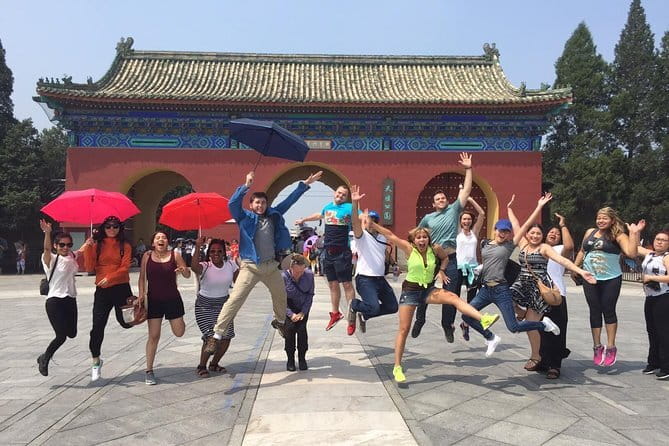
Zhihua Temple, in Lumicang, receives about 40 minutes. This is the most distinctive cultural stop on the route, since it shifts the morning from street food and residential lanes to a peaceful Buddhist setting.
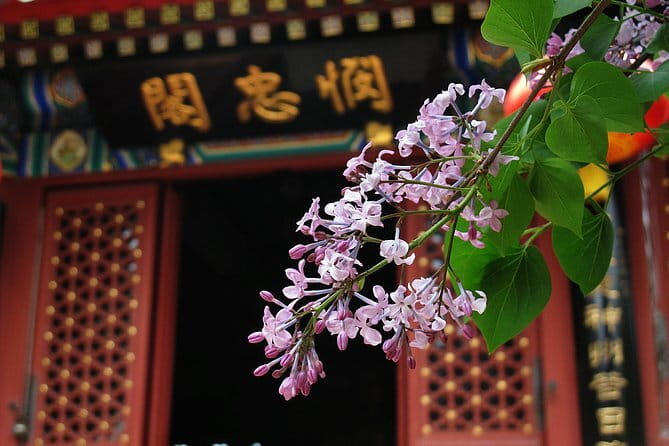
The temple is known for its Ming Dynasty murals and Buddhist artifacts. Incense, chanting, and the temple’s architecture create a sharp contrast with the city streets outside. I would pay close attention here, even if your main reason for booking is breakfast. This stop gives meaning to the old-city theme by showing the religious traditions that shaped Beijing alongside its homes and markets.
If timing allows, you may hear Beijing temple music. The tradition combines imperial court, Buddhist, and folk elements, and it is often described as a living form of ancient Chinese music. The wording matters: music is possible, not guaranteed. Do not book the tour solely for a performance.
The temple visit also gives your feet a rest. After the first food stops and hutong walking, 40 minutes in one place helps the morning feel less rushed. Entry is included, according to the tour details.
Same place, a different way to drink it:
- Rome Morning Vespa Sidecar Tour in Rome with Cappuccino
★ 5.0 · 1,771 reviews - Giethoorn: Village & National Park Canal Cruise with Coffee
★ 4.6 · 1,596 reviews - Dresden: Guided City Walk with a Cup of Coffee
★ 4.7 · 1,568 reviews - 4×4 ATV Experience, Water Cave, Chocolate and Coffee Tasting
★ 5.0 · 1,430 reviews
Dongtangzi Hutong and the people who lived there
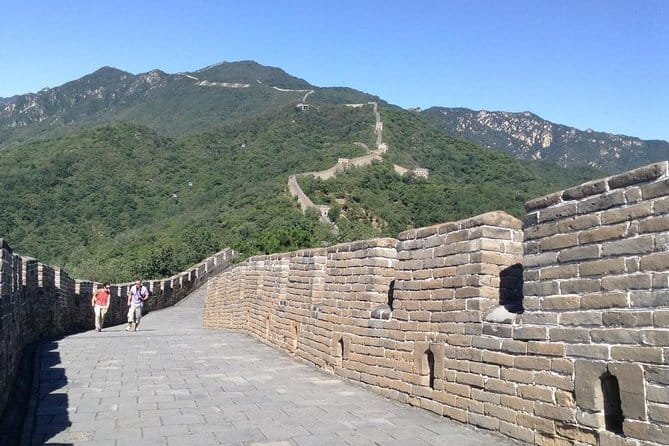
The longest walking section comes in Dongtangzi Hutong, with about one hour devoted to the lane and its history. This area has links to notable figures including Wu Lien-teh and Cai Yuanpei, and former residences help connect national events with ordinary-looking streets.
That is one of the better ideas in the tour. Beijing history can feel distant when it is presented only through palaces and official buildings. A hutong residence makes it more personal. You are walking through the type of setting where scholars, public figures, families, and workers once lived close together.
The buildings are weathered, and that is part of the point. Do not expect every former residence to look restored or museum-ready. Instead, you get a sense of time passing through doorways, walls, courtyards, and narrow lanes.
An hour here means the experience is not just a food crawl. It asks you to pay attention to architecture and local stories. If you prefer constant eating and fast movement, this may feel long. If you want a better understanding of the old city, it is one of the more useful sections.
Huguosi Hutong for classic Beijing sweets
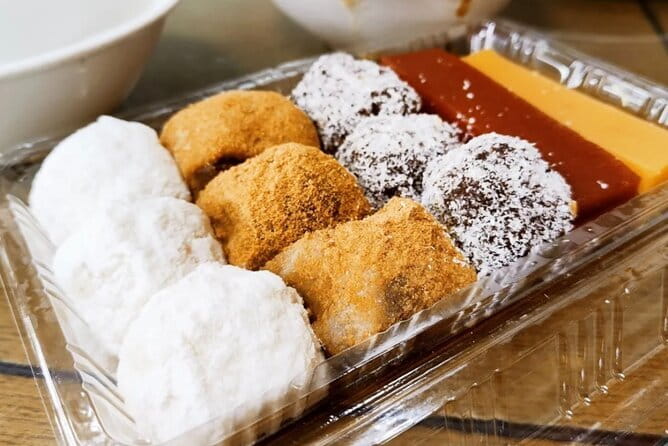
The food returns at Huguosi Hutong Snack Street, with about 20 minutes for traditional snacks. The selection includes wandouhuang, made from mung beans, ludagun, a glutinous rice roll, and aiwowo, a sweet rice cake.
These foods are valuable because they broaden your idea of Beijing cuisine. Breakfast here is not limited to savory bowls and crepes. Rice, beans, sugar, and careful preparation all have a place in the city’s snack culture.
The short stop works best if you treat it as a tasting rather than a full meal. You can sample several textures and flavors, but you should not expect an extended food market visit. The route has already included breakfast, jianbing, and other snacks, so most people will have eaten steadily by this point.
If you have a sweet tooth, this could be one of the most enjoyable food stops. If you prefer savory food, the earlier wontons and jianbing may be more satisfying.
Coffee and modern Beijing in Xizongbu Hutong
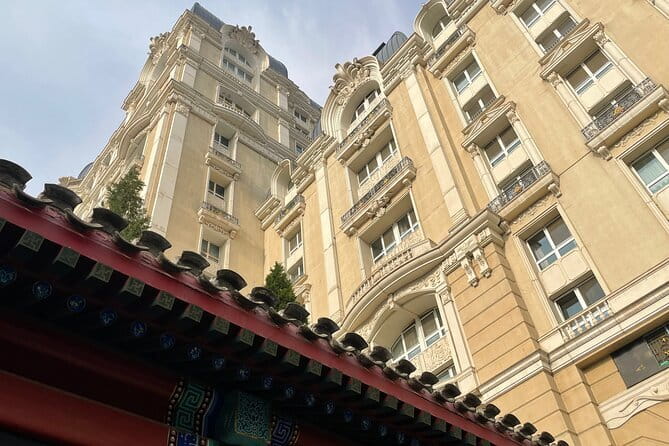
The tour ends in Xizongbu Hutong with coffee, taking about 20 minutes. The final stop is deliberately different from the temple, market, and residential lanes. It shows a traditional setting being used for modern café culture.
That contrast gives the morning a natural ending. You begin with old breakfast foods and finish with a familiar modern drink, all within the same historic part of Beijing. Coffee or tea is included, and the endpoint is listed as 10000 cafe in Xizongbu Hutong.
The end point also matters for planning. You do not return to the starting location, so arrange your next activity from Dongcheng rather than assuming a hotel drop-off. The advertised duration is about three and a half to four hours, though the listed stop times add up to roughly three hours and ten minutes. Walking between stops, ordering food, and group movement account for the extra time.
Guides named Coco and Wendy have led this experience. Their role is important because the food itself is only half the value. Good explanations can turn a sesame ball, courtyard, or temple doorway into something you remember.
Is $75 a fair price?
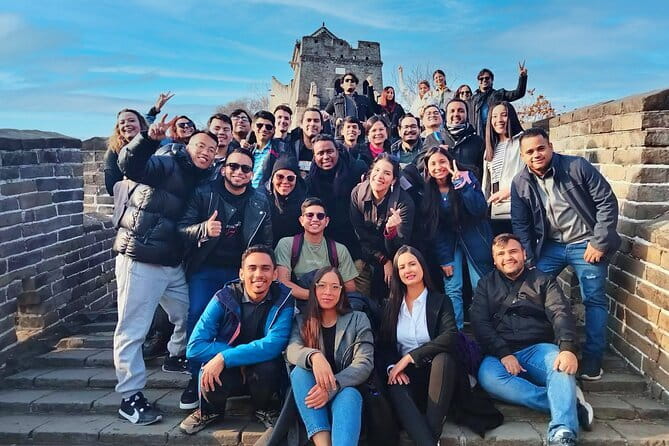
At $75 per person, this is not a bargain breakfast. You are paying for more than the food: a small-group guide, several tastings, bottled water, coffee or tea, temple admission, and a route through several old-city areas.
The value improves if you want structure. Beijing can be difficult to read on a first visit, especially when a lane looks like an ordinary shortcut but carries centuries of residential and cultural meaning. A guide helps connect the snacks, buildings, and stories.
The food included is described as unlimited, but I would still judge the price mainly by the complete experience. You are buying a half-day introduction to old Beijing, not simply a list of free samples. It suits someone who wants local food with context and would otherwise spend time figuring out where to go.
It may not suit a budget-minded person who can happily find breakfast alone, or someone who wants major imperial sights such as the Forbidden City. This tour is about street-level Beijing and neighborhood atmosphere.
Group size, walking, and practical planning
The experience is described as a small-group tour with fewer than 12 people, while the additional information gives a maximum of 20. That difference is worth clarifying when you book. The smaller the group, the easier it is to hear the guide and move through narrow hutongs.
The tour is near public transportation, begins at 8:30 a.m., and ends in Xizongbu Hutong. Most people can participate, but you should be ready for several hours of walking, standing, eating, and moving between stops.
Bring water even though bottled water is included, particularly in warm weather. Wear comfortable shoes, and avoid scheduling a distant morning appointment immediately afterward. Food timings and walking pace can vary.
The experience requires good weather. If poor weather cancels it, you can receive a different date or a full refund. A minimum number of bookings is also required. Free cancellation is available up to 24 hours before the start time, but changes or cancellations inside that window are not accepted.
Who should book this morning walk?
I would choose this tour for a first visit to Beijing, especially if you want to understand the old city through ordinary food and residential streets. It is also a good fit for anyone who likes a guided route but does not want to spend the whole morning inside major museums.
Food-focused visitors will appreciate the range, from sesame balls and wontons to jianbing and rice-based sweets. Culture-focused visitors get Shijia Hutong, Dongtangzi Hutong, and Zhihua Temple without giving up the pleasure of eating along the way.
Families may like the short sections and variety, although young children must be comfortable walking and trying unfamiliar foods. The route is less suitable for anyone who needs a slow pace, wants a single long sit-down meal, or has strict dietary requirements that have not been confirmed in advance.
The two strongest guide names attached to the experience are Coco and Wendy. If you book, ask who is leading your date and whether the full temple music portion is expected, since that part depends on timing.
Should you book the Beijing Hutong Breakfast and Coffee Tour?
Book it if you want a guided taste of old Beijing at street level, with food, courtyards, a market, a temple, and a café in one morning. The route has enough variety to keep the experience from feeling like either a standard food tour or a dry history walk.
Skip it if $75 feels high for breakfast, or if your priority is Beijing’s grand imperial landmarks. The best reason to choose it is the combination: sesame balls at the start, jianbing at a local market, possible temple music, traditional sweets, and coffee in a historic lane. That is a useful introduction to the city’s everyday character.
FAQ
How much does the Beijing Hutong Breakfast and Coffee Tour cost?
The tour costs $75 per person.
How long does the tour last?
The experience lasts approximately three hours and 30 minutes to four hours.
What time does the tour begin?
The tour starts at 8:30 a.m.
Where does the tour begin?
It begins at 5 Deng Shi Kou Da Jie in Dongcheng District, Beijing.
Where does the tour end?
The tour ends at Xizongbu Hutong, at or near 10000 cafe.
What food and drinks are included?
Breakfast at two or three food stops, bottled water, unlimited food and drinks as listed, and coffee or tea are included. The route includes sesame balls, wontons, jianbing, and traditional snacks such as wandouhuang, ludagun, and aiwowo.
How many people can join the tour?
It is described as a small-group tour with fewer than 12 people, while the stated maximum is 20 participants.
Can I cancel for a refund?
Yes. You can cancel at least 24 hours before the start time for a full refund. Cancellations or changes made less than 24 hours before the start time are not accepted.
Just added around the world
- Yerevan: Private Coffee Tour with 2 Café Stops★ 5.0 · 2 reviews
- Vietnamese Coffee 101 Workshop★ 5.0 · 11 reviews
- Vietnamese Coffee Making Class in Hoi An★ 5.0 · 4 reviews
- Vietnamese cooking class and coffee making with local girl★ 5.0 · 5 reviews
- Venice Delights: Coffee & Food Experience Walking Tour★ 5.0 · 2 reviews
- Private Vienna Tour: Literature Walk with Coffee House Visit★ 5.0 · 2 reviews
- Turin: Art Nouveau Walking Tour with Coffee★ 5.0 · 11 reviews
- Turkish Coffee and Traditional Turkish Dessert Cooking★ 4.6 · 8 reviews
Tours, compared.
Coffee Tour with Transport, Snacks and Tastings
Read our review →
Materuni Waterfalls, coffee tour & Kikuletwa Hot Springs
Read our review →
Seattle Coffee Tour: Capitol Hill Cafes, Tastings & Local Stories
Read our review →
Award Winning Farm Tour: Coffee, Chocolate and Unique Gifts
Read our review →
Vienna Coffee, Cake & Pastries Tour with Local Stories
Read our review →
La Herradura Coffee Farm: tour in Europe’s only plantation
Read our review →