
Review · JAPAN
Discover Coffee Experience Latte Art Workshop at Tokyo
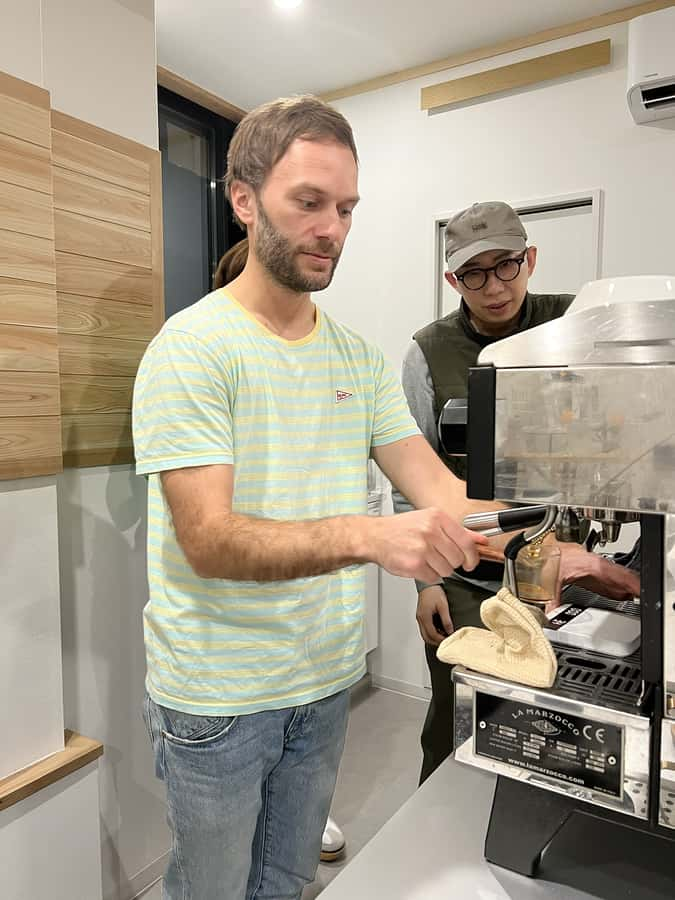
The best part of this Tokyo workshop is its small scale. With no more than four people, you get time at a professional espresso machine and direct help with the tricky parts, especially milk texture and the final pour. Wing leads the session, and instruction is available in English, Japanese, and Chinese.
I like the hands-on format and the chance to taste and assess your own drinks, rather than simply watching a barista work. I also like the clear focus on useful basics: espresso, silky milk, and classic heart and tulip designs. The main consideration is the price, $96 per person for 90 minutes, which makes the workshop best for people who want active instruction, not just a good cup of coffee.
Key points to know before booking
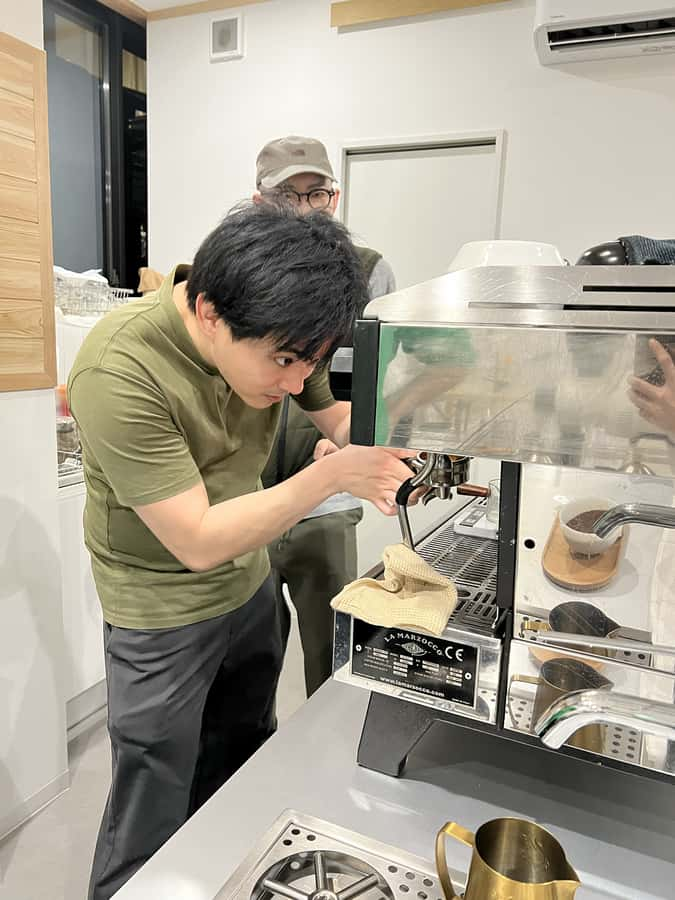
- Only four people per session: The small group gives you room to ask questions and receive individual feedback.
- Wing teaches in three languages: Instruction is available in English, Japanese, and Chinese.
- You practice on professional equipment: This is a working lesson, not a demonstration from across the counter.
- Milk texture matters as much as the pattern: You learn how to create silky milk that pours cleanly.
- Heart and tulip designs are central: More advanced patterns, including the rosetta, may also be introduced.
- The price includes tasting and instruction: All fees and taxes are included in the $96 cost.
A small Tokyo coffee class with real time at the machine
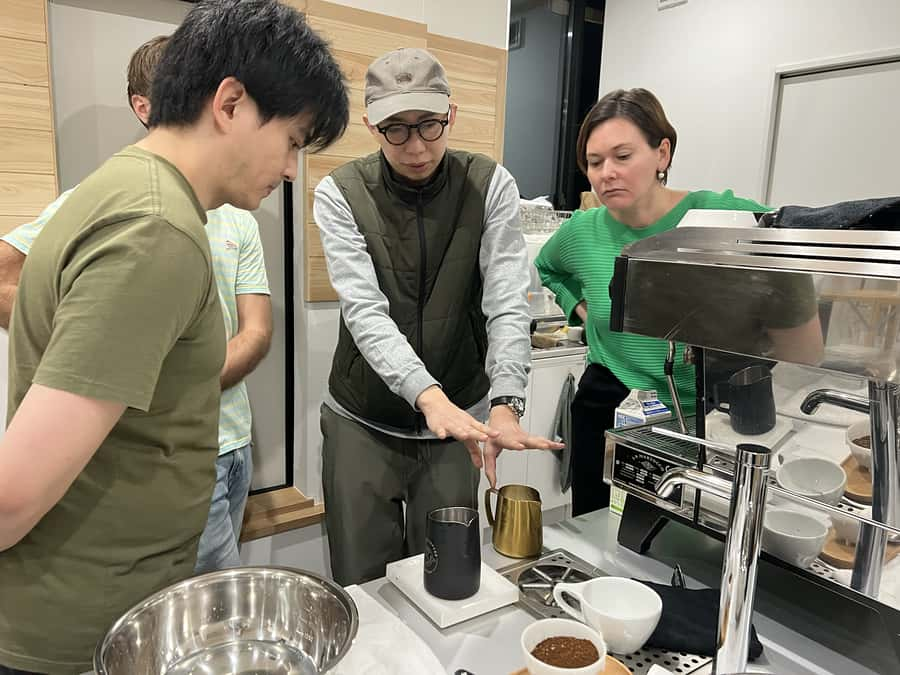
This is not a quick café activity where you watch someone make a pretty cup and then leave. The structure is built around practice. You learn the parts that make latte art possible, then try them yourself with guidance close at hand.
The workshop takes place at Tasse Coffee Roastery Shop in Tokyo. Your meeting point is the front door. The setting is described as modern and calm, with the coffee shop providing a quiet backdrop for a fairly technical lesson.
That setting matters. Latte art looks simple when a skilled barista makes it, but the result depends on several linked steps. Espresso must provide a sound base. Milk must be heated and mixed correctly. The pitcher must be held at the right height and speed. A group of four gives you a better chance to ask about each step instead of waiting behind a large class.
You should expect the session to move between explanation, demonstration, practice, and tasting. The total time is 90 minutes, so the pace will be focused. This is enough time to learn the core movements, but not enough to turn a beginner into a competition barista.
A few more coffee tours around the world worth a look
- Hoi An: Vietnamese Coffee Culture and Coffee Making Class
★ 4.9 · 4,006 reviews - Hanoi Coffee Experience: 6 Brews, 9 Recipes & 3 Liquor Tastings
★ 5.0 · 2,945 reviews - 4×4 Dominican Adventure with Chocolate and Coffee Tasting
★ 5.0 · 2,920 reviews
Starting with espresso before the milk
The first part gives you a quick overview of espresso making. The espresso is not the main subject, but it is the base of the drink. This short introduction helps you understand what the milk is being poured into and why the coffee needs to have the right strength and texture.
That foundation is useful for beginners. If you only practice pouring milk, you can make a pattern that looks fine while the drink itself tastes flat or unbalanced. The class connects appearance with flavor, which is a better way to learn.
The espresso section is brief rather than a full barista certification course. You should not expect an extended lesson on every variable in extraction. Instead, you get enough context to pair the coffee with the milk and to understand how the finished cup should taste.
For someone who already makes espresso at home, this part may feel familiar. The value then shifts toward the milk work and the pouring technique. The workshop has room for both complete beginners and coffee drinkers who want to improve one specific skill.
The real lesson is silky milk
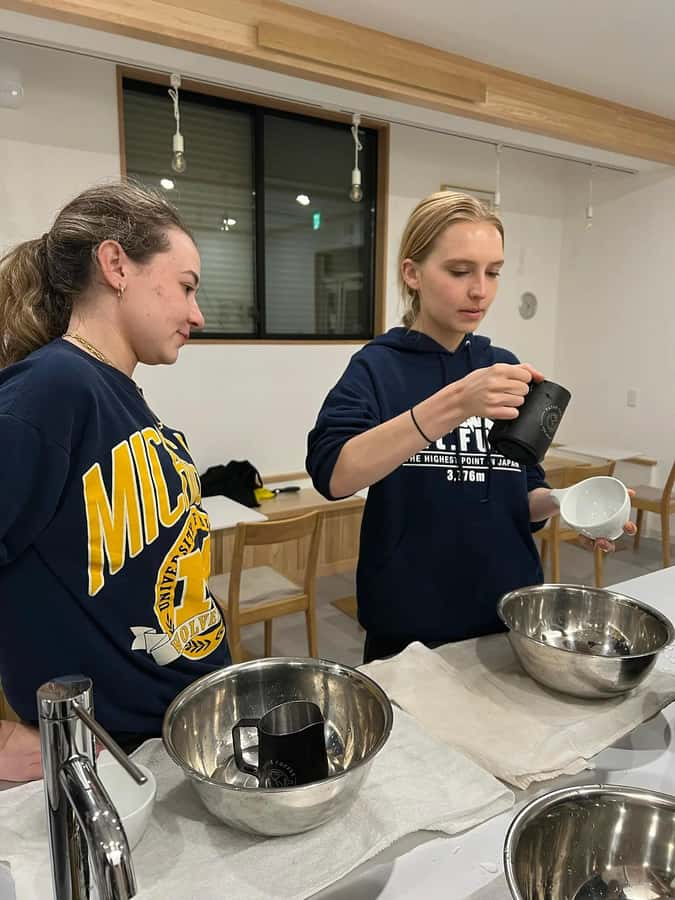
Milk texturing is where many first attempts go wrong. It is easy to create large bubbles or overheated milk. It is much harder to produce a smooth, glossy texture that flows in a controlled way.
You learn how to steam milk for a velvety finish and how that texture affects the pour. This is a practical skill with value beyond the class. Once you understand what properly textured milk feels and looks like, you can judge your own results more clearly at home.
The lesson also covers some of the milk chemistry behind the process. That does not mean a long science lecture. It means you get a reason for the technique, rather than being told to copy a hand movement without knowing what it does.
The instructor can correct small problems while they are happening. Maybe the milk is too foamy, the pitcher is positioned too high, or the pour is moving too fast. In a larger group, those details are easy to miss. Here, individual feedback is one of the strongest reasons to pay for the class.
Building a heart, then a tulip
The classic heart is a sensible first pattern. It teaches you to control the flow, bring the pitcher close to the surface, and finish with a clean cut through the center. The pattern is simple to describe but takes coordination to produce.
From there, the tulip adds more control. You learn how to place layers of milk and keep the shape from spreading into a white blur. These patterns help you understand the relationship between milk texture, pitcher height, hand movement, and timing.
The course information also includes rosetta and more advanced designs. The exact amount of time spent on those patterns can depend on the group and the participants’ progress. With only 90 minutes, the heart and tulip are the most realistic goals for a first visit.
That is not a weakness. Basic patterns teach the movements you need for more detailed work. I would rather leave with a repeatable heart and a better understanding of milk than rush through several designs without control.
Same place, a different way to drink it:
- Rome Morning Vespa Sidecar Tour in Rome with Cappuccino
★ 5.0 · 1,771 reviews - Giethoorn: Village & National Park Canal Cruise with Coffee
★ 4.6 · 1,596 reviews - Dresden: Guided City Walk with a Cup of Coffee
★ 4.7 · 1,568 reviews - 4×4 ATV Experience, Water Cave, Chocolate and Coffee Tasting
★ 5.0 · 1,430 reviews
Practice matters more than a perfect first cup
You get hands-on time with professional espresso machines and the tools used for the process. That makes this more useful than a purely visual class. You can feel the weight of the pitcher, hear the milk as it steams, and see how quickly the surface changes.
Do not book this expecting every cup to look perfect. Latte art requires timing, and beginners often make a drink that is tasty but visually uneven. The point of the practice session is to spot what went wrong and try again with a small adjustment.
Individual feedback should help keep the practice from becoming guesswork. Wing is described as patient and willing to tailor explanations to the participant’s level. That is especially helpful if you arrive with little or no coffee experience and do not know the usual barista terms.
The small group also changes the social feel of the activity. You are not performing in front of a crowd. You have space to ask basic questions, repeat a technique, and watch how other people solve the same problem.
Tasting turns the craft into a complete lesson
After making the drinks, you taste and evaluate them. This is an important part of the class because latte art is not only decoration. The texture of the milk changes the mouthfeel, and the balance between espresso and milk affects the whole drink.
You learn to notice flavor and texture together. A cup can have a pleasing pattern but taste thin, too hot, or overly foamy. Another cup may look less tidy while having better texture. Comparing those results gives you a clearer sense of what to aim for.
The tasting also helps you connect the technical work to ordinary café drinking. You are not just learning a trick for photographs. You are learning why a well-made latte feels smooth and why the milk should support the espresso instead of covering it completely.
This is one reason the activity suits coffee enthusiasts more than people seeking a general Tokyo sightseeing stop. The class asks you to pay attention. If you enjoy small changes in flavor, texture, and presentation, the tasting gives the 90 minutes a useful finish.
What the $96 price really buys you
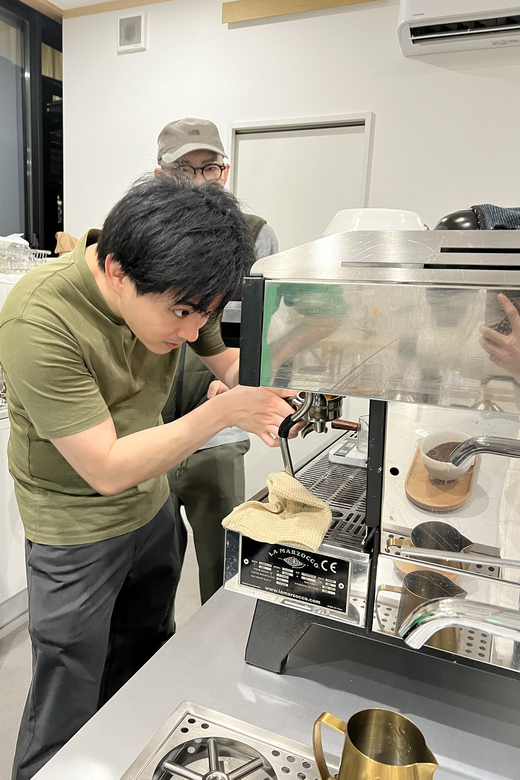
At $96 per person, this is not a cheap coffee break. You are paying for a short private-style lesson, though the group can include up to four people. The cost includes the training, use of the equipment, tasting, all fees, and taxes, so there are no extra charges added at the end.
The value depends on your goal. If you want a souvenir drink and a quick photo, the price is hard to justify. If you want to learn how milk behaves, practice on professional machines, and get feedback from an instructor, the calculation looks better.
The four-person limit is central to that value. A low price with a large class would offer less time at the machine. Here, the group cap makes personal instruction part of what you are buying.
The multilingual instruction is another practical benefit. English, Japanese, and Chinese are available, which can make technical explanations easier to follow. Confirm the available starting time and preferred language when you book, since the activity asks you to check availability.
Who will enjoy this most
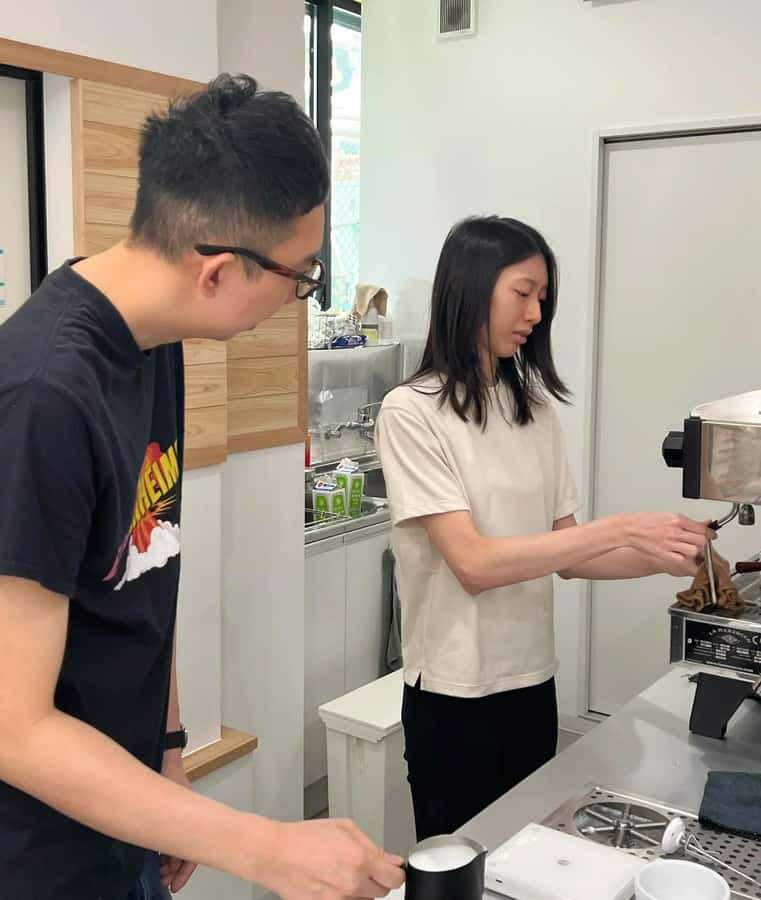
I would recommend this to coffee drinkers who want a skill they can keep practicing after leaving Tokyo. It is also a good choice for couples or friends who like making things together but want more structure than a casual café visit.
The class suits beginners because it starts with espresso basics and explains the milk process step by step. It also works for people who already know their way around coffee but want to improve pouring technique.
Families with young children may find the technical pace less suitable, since the activity centers on hot equipment, careful steaming, and focused practice. The supplied details do not state a minimum age, so check before booking if age is important for your group.
You should also allow enough energy for a concentrated 90 minutes. This is not a relaxed tasting where you simply sit back. You will be learning, handling equipment, and trying to control several movements at once.
What to know about the timing and meeting point
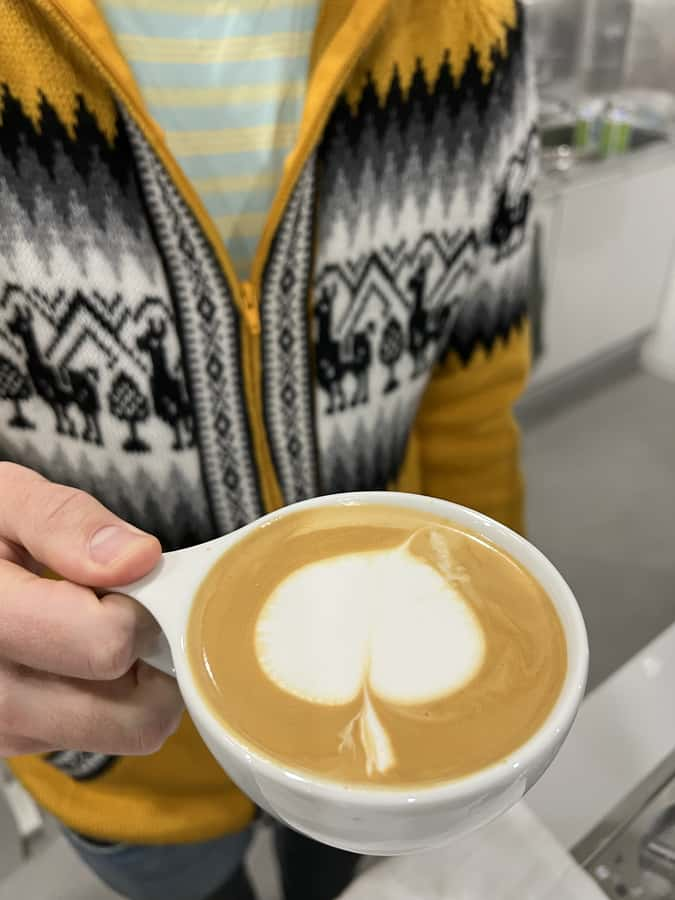
The workshop lasts 1.5 hours. That makes it easy to fit into a Tokyo day, especially before or after another activity in the same part of the city. Starting times vary, so check the schedule when choosing your date.
Meet at the front door of Tasse Coffee Roastery Shop. The available details do not provide a full route from a station, so you should use the exact meeting-point information supplied when booking rather than relying on a general map pin.
The cancellation policy is fairly flexible: you can cancel up to 24 hours before the activity for a full refund. You can also reserve now and pay later, which helps if your Tokyo plans are still shifting.
My call: book it if you want to make, not just drink
Book this workshop if you want focused instruction, a very small group, and a practical introduction to milk texturing and latte art. Wing’s patient teaching style, the three language options, and the chance to taste your own work make it more useful than a standard café stop.
Skip it if your main aim is a low-cost coffee or a quick break between sightseeing stops. At $96, the experience earns its price through personal practice and feedback. For a coffee lover who wants to understand what is in the cup and try making it at home, that is a fair exchange.
FAQ
Where does the latte art workshop take place?
The meeting point is the front door of Tasse Coffee Roastery Shop in Tokyo, Japan.
How long does the workshop last?
The workshop lasts 90 minutes, or 1.5 hours.
How much does the experience cost?
The price is $96 per person.
How many people can join?
The group is limited to four participants.
Which languages are available?
Instruction is available in English, Japanese, and Chinese.
Who teaches the workshop?
Wing leads the workshop, with expert baristas guiding participants through the coffee and latte art techniques.
What latte art designs will I learn?
The course focuses on classic heart and tulip patterns. Rosetta and more advanced designs are also included in the listed techniques, depending on the session.
Do I get to use an espresso machine?
Yes. The workshop includes hands-on practice with professional espresso machines and tools.
Is tasting included?
Yes. You taste and evaluate your creations, including their flavor and texture.
Can I cancel for a refund?
You can cancel up to 24 hours in advance for a full refund. You can also reserve now and pay later.
Just added around the world
- Yerevan: Private Coffee Tour with 2 Café Stops★ 5.0 · 2 reviews
- Vietnamese Coffee 101 Workshop★ 5.0 · 11 reviews
- Vietnamese Coffee Making Class in Hoi An★ 5.0 · 4 reviews
- Vietnamese cooking class and coffee making with local girl★ 5.0 · 5 reviews
- Venice Delights: Coffee & Food Experience Walking Tour★ 5.0 · 2 reviews
- Private Vienna Tour: Literature Walk with Coffee House Visit★ 5.0 · 2 reviews
- Turin: Art Nouveau Walking Tour with Coffee★ 5.0 · 11 reviews
- Turkish Coffee and Traditional Turkish Dessert Cooking★ 4.6 · 8 reviews
Japan Coffee Tours, compared.

Discover Japanese Politics Over a Coffee in Tokyo
Read our review →
Discover Japanese Coffee Brewing Experience at Tokyo
Read our review →
Tokyo’s Neighborhood Digs: Coffee, Records & Vintage Vibes
Read our review →
Best of Downtown Tokyo: Nature, Coffee, & Japanese Sweets Tasting
Read our review →Browse the lists this tour appears in