Review · COFFEE TOURS
Jaffa Cultural Stories and Coffee
The most unusual part of this Jaffa experience is simple: you sit in Doris Hiffawi’s home, not in a museum or on a standard walking tour. Over coffee, she talks about growing up Arab and Christian in a mainly Muslim part of Jaffa, and about living as part of a Christian Arab minority in Israel.
I like the personal scale and the family coffee, served with pastries and baklava. I also like that Doris leaves room for questions, so the hour can become a real conversation rather than a prepared speech. The main consideration is timing: the official visit lasts about one hour, though some groups have stayed longer, and the experience depends on Doris’s storytelling style and the comfort of the group.
Key points about Doris’s Jaffa home visit
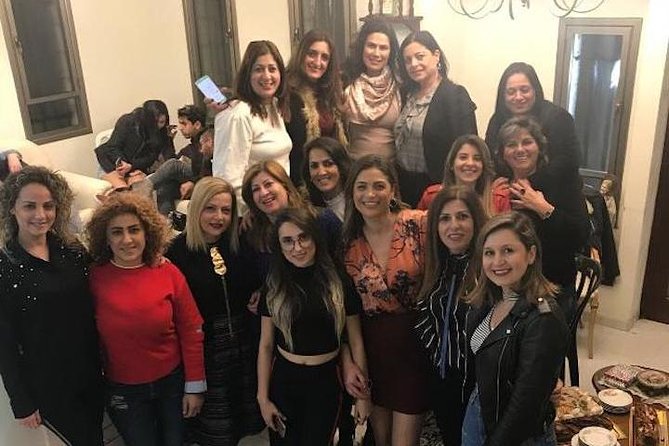
- Doris Hiffawi hosts at home: You get a face-to-face meeting with a local Arab Christian woman in Jaffa.
- Family coffee is part of the story: Expect coffee from a family blend, including cardamom coffee, along with tea and pastries.
- Personal history comes first: Doris discusses growing up Christian in a mainly Muslim area and living as an Arab Christian in a Jewish state.
- Questions are welcome: The final part of the visit gives you time to ask about identity, community life, and female empowerment.
- Small groups keep it intimate: The maximum group size is 15 people, though a smaller gathering will feel more conversational.
- The visit is good value at $21.80: The price covers a personal cultural meeting and refreshments, not just a drink stop.
Why this feels different from a standard Jaffa tour
Jaffa is full of postcard subjects: old stone lanes, the port, churches, mosques, galleries, and views toward Tel Aviv. Those sights matter, but they do not always explain how people in the city see themselves. This visit adds that missing human scale.
Doris Hiffawi speaks from her own life as a local Arab Christian woman. Her story touches several identities at once: Arab, Christian, Israeli, and Jaffa resident. That combination gives the conversation a clear focus without pretending that one person can explain every community in Israel.
I like this format because it avoids the usual rush from one sight to the next. You sit down, accept a cup of coffee, and listen. The setting makes the conversation feel less formal than a lecture. You are not simply receiving dates and facts about Jaffa. You are hearing how history, religion, family, and modern life meet in one person’s experience.
This is especially useful if you have already seen the main sights and want something more reflective. It also works well early in a stay, since Doris’s stories can give you a more personal frame for the neighborhoods and communities you encounter later.
A few more coffee tours around the world worth a look
- Hoi An: Vietnamese Coffee Culture and Coffee Making Class
★ 4.9 · 4,006 reviews - Hanoi Coffee Experience: 6 Brews, 9 Recipes & 3 Liquor Tastings
★ 5.0 · 2,945 reviews - 4×4 Dominican Adventure with Chocolate and Coffee Tasting
★ 5.0 · 2,920 reviews
Entering Jaffa Old City and the Ajami area
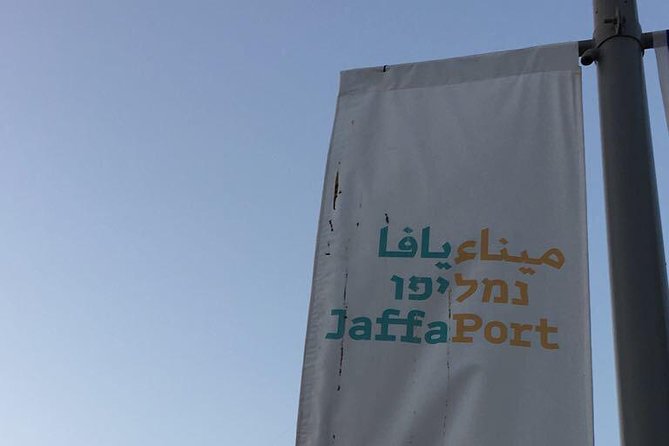
The meeting point is in Jaffa, in the Tel Aviv-Yafo area, and the activity ends back there. The experience takes place at Doris’s home, with the supplied information also identifying the Ajami neighborhood in Jaffa.
That setting matters. You are not meeting in a hotel lounge designed for tour groups. You are being welcomed into a home in the community that Doris is describing. The result is a more direct connection between place and story.
The exact route to the home is not detailed, so check the meeting instructions carefully before setting out. The area is near public transportation, which helps, but you should still allow enough time to find the meeting point. The mobile ticket is convenient, especially if you are already moving around Tel Aviv with your phone rather than carrying printed documents.
The home visit itself is the only planned stop. That is not a weakness, but it does mean you should book this for conversation, not for sightseeing. If you want a long walking tour through Jaffa’s alleys, this experience will not replace one.
Coffee, tea, and pastries with a family story
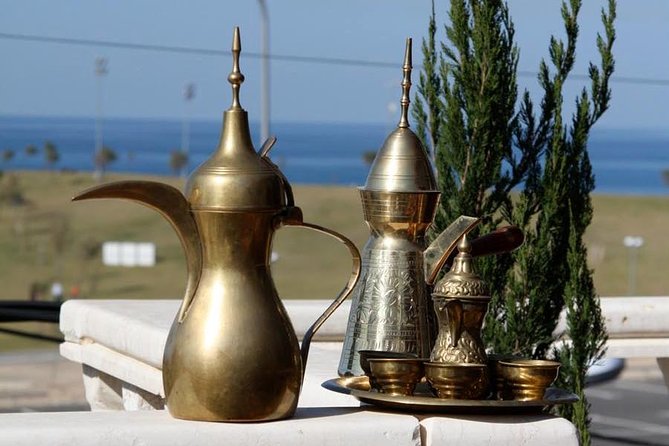
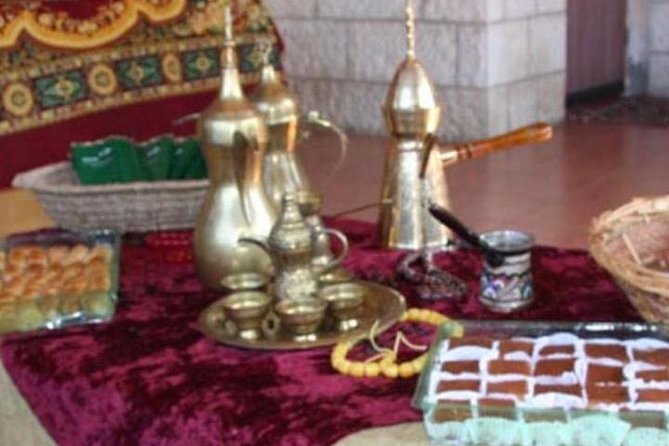
The refreshments are more than a small extra. Doris serves coffee made from her family’s special blend, and the coffee is described in the available details as including cardamom. Her family has been making coffee for generations, and that gives the drink a clear link to the personal story.
You can also expect tea and snacks, including pastries and baklava. The baklava has drawn particularly strong praise, so it may become one of the memorable parts of the hour. Still, I would treat the food as hospitality rather than a full meal. The experience is not designed to replace breakfast, lunch, or a café stop.
The coffee also gives the visit a natural rhythm. You have something to hold while Doris talks, and the familiar act of sharing a drink helps keep the meeting relaxed. In many cultures, coffee carries family habits and social meaning. Here, it becomes a small but useful doorway into Arab family life in Jaffa.
You should also keep in mind that tastes vary. Cardamom coffee can be strong and distinctive, and anyone who prefers mild coffee may find it more intense. Tea and other refreshments are available, which gives you another option.
Doris’s personal account of life as an Arab Christian
The central subject is Doris herself. She talks about growing up Christian in a predominantly Muslim area and about the position of an Arab Christian family in a Jewish state.
That is a complicated subject, and the one-hour format cannot cover every political or social issue. Its value is narrower and more human. You hear one person explain how several parts of identity can overlap, sometimes comfortably and sometimes with tension.
The supplied experience information describes Doris as part of a double minority, Arab Christian. That phrase helps explain why the conversation can offer a perspective you may not hear on a general Jaffa tour. Her story is not a complete guide to Christian Arabs, Muslims, Jews, or Israeli society. It is a personal account, and you should hear it in that spirit.
I appreciate that distinction. A home visit works best when you listen for lived details rather than expecting a final answer about a complicated country. Doris can help you understand how identity feels at the family and neighborhood level. She cannot, and does not need to, represent everyone.
Some of the strongest material concerns ordinary life: growing up in Jaffa, family traditions, community relationships, and the push and pull between traditional and modern culture. The conversation also touches on Arab, Israeli, and Christian identity. Those themes give the visit substance beyond the coffee.
Same place, a different way to drink it:
- Rome Morning Vespa Sidecar Tour in Rome with Cappuccino
★ 5.0 · 1,771 reviews - Giethoorn: Village & National Park Canal Cruise with Coffee
★ 4.6 · 1,596 reviews - Dresden: Guided City Walk with a Cup of Coffee
★ 4.7 · 1,568 reviews - 4×4 ATV Experience, Water Cave, Chocolate and Coffee Tasting
★ 5.0 · 1,430 reviews
Female empowerment and modern community life
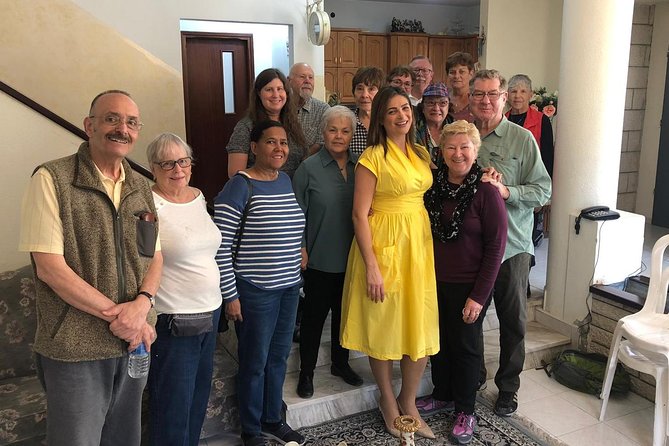
Female empowerment is another stated part of the discussion. This makes the experience broader than a story about religion or coffee. Doris connects her own life and community to the question of women’s roles in the area.
The details will depend on the conversation, and the information provided does not promise a formal talk on women’s rights. Instead, expect the subject to arise through Doris’s personal experiences and observations. That approach can be more useful than a general lecture because it connects the topic to one woman’s choices, family, and community.
I would recommend coming with a few respectful questions. You might ask how Doris balances family tradition with modern life, how she describes her Christian identity, or what changes she has seen in Jaffa. The final question period is important, since it turns the visit from a one-way presentation into a genuine exchange.
At the same time, remember that this is a private home visit, not a debate session. Sensitive topics may come up, but the best questions are curious and open rather than argumentative. The format rewards listening.
A one-hour visit that may run longer
The stated duration is about one hour. That makes this easy to add to a day in Jaffa. You can fit it between other activities without giving up half a day.
Past groups have sometimes stayed close to two hours, particularly when the conversation continued and the group was the final one of the day. That extra time is not guaranteed, so plan around the official one-hour duration. If you have a tight schedule, do not assume the visit will end early.
The group limit is 15 people. That is a reasonable maximum for a home setting, but the experience will feel more intimate with fewer people. A large group may make it harder for everyone to ask questions, while a small group should allow more back-and-forth.
This is also a good option for students and families who want a focused conversation. A university group reportedly found it memorable during a longer stay in Tel Aviv-Jaffa, and families with minority backgrounds may find parts of Doris’s story especially relatable. You do not need a similar background to appreciate the visit, but an interest in culture and identity will make it more rewarding.
What the $21.80 price really covers
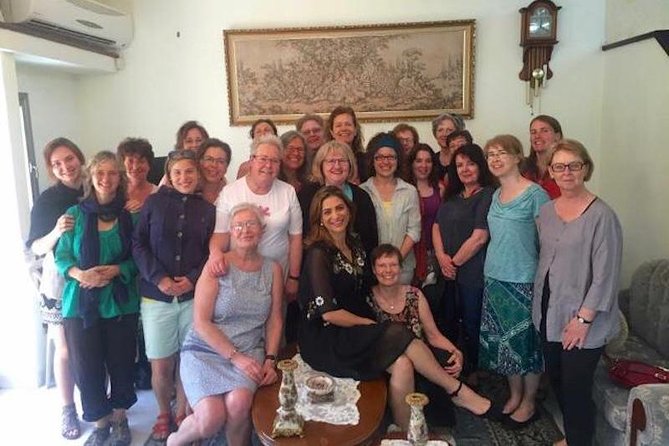
At $21.80 per person, this is not the cheapest coffee you will buy in Israel. You are paying for more than the refreshments, though. The price covers access to a local host, a home setting, a prepared personal presentation, and time for questions.
That makes the experience good value if you want human contact and cultural context. A standard café visit might offer better choice and more food, but it will not give you Doris’s family coffee or her account of growing up Arab Christian in Jaffa.
The value is less clear if your main goal is a quick snack or a list of major sights. You could spend the same money on food elsewhere and see more of Jaffa’s streets. This visit earns its price through the conversation, not through quantity.
The small group limit helps support that value. You are not paying for a large bus tour with a distant guide. You are paying for a limited gathering in a personal setting. I would book it for the story and treat the baklava as a welcome bonus.
Who will get the most from this visit
I would recommend the experience to you if you:
- Want to meet a local person instead of taking another standard sightseeing tour.
- Are curious about Arab Christian life in Jaffa and Israel.
- Enjoy personal stories, family traditions, and open questions.
- Are interested in how traditional and modern culture affect women and families.
- Have already seen some of Jaffa and want a different point of view.
- Prefer a short, focused activity that fits into a larger Tel Aviv day.
It may be less suitable if you want constant movement, a long guided walk, or a formal academic lecture. The visit is intimate and conversational. Your enjoyment will depend partly on how willing you are to sit, listen, and ask thoughtful questions.
The home setting may also feel more personal than some people expect. That is the point, but it is worth knowing in advance. You are entering a private space and taking part in a hosted conversation, not simply checking off another attraction.
Practical details before you book
Confirmation is normally sent at booking. If you book within one day of the scheduled visit, confirmation comes as soon as possible and depends on availability.
The activity is near public transportation, and service animals are allowed. Most people can participate. No special fitness level is stated, and the format does not involve a long walk during the visit.
The experience requires good weather. If poor weather causes cancellation, you will be offered another date or a full refund. You can cancel for a full refund up to 24 hours before the start time. Changes or cancellations made less than 24 hours ahead are not accepted for a refund, and local time controls the cut-off.
Because the tour starts and ends at the Jaffa meeting point, it is easy to pair with other plans in the same part of Tel Aviv. Allow time to reach the meeting point, since the supplied details do not provide a full street-by-street route.
Should you book Doris’s Jaffa coffee visit?
Book it if you want a personal story rather than another monument. Doris Hiffawi’s home visit brings together coffee, baklava, family memory, Christian Arab identity, Jaffa community life, and female empowerment in a compact experience.
I would not choose it as your only introduction to Jaffa. Pair it with a walk through the Old City or Ajami area so you have the streets and landmarks as well as the personal account. But if you have room for one quieter activity, the $21.80 price is fair for a small-group meeting with refreshments and time for questions.
The best reason to go is the chance to hear Jaffa explained by someone who lives its overlapping identities. The main risk is simply that a one-hour conversation is not for everyone. If you prefer that kind of direct, human encounter, this is one of the more distinctive ways to spend an hour in Tel Aviv.
FAQ
Where does the Jaffa Cultural Stories and Coffee experience take place?
It takes place in Jaffa, Tel Aviv-Yafo, at Doris Hiffawi’s home. The supplied details also identify the Ajami neighborhood in Jaffa.
How long does the experience last?
The scheduled duration is approximately one hour. Some groups have stayed longer when the conversation continued, but you should plan around the official one-hour duration.
Who hosts the visit?
Doris Hiffawi, a local Arab Christian woman, hosts the experience and shares personal stories about her life and Jaffa.
What refreshments are included?
The visit includes coffee, tea, and snacks such as pastries and baklava. The coffee comes from Doris’s family blend and may include cardamom.
What subjects does Doris discuss?
She discusses growing up Christian in a predominantly Muslim area, Arab Christian identity in a Jewish state, Jaffa’s cultural heritage, female empowerment, and the relationship between traditional and modern culture.
How large can the group be?
The maximum group size is 15 people.
Can I cancel for a refund?
Yes. You can receive a full refund if you cancel at least 24 hours before the experience starts. Cancellations or changes made less than 24 hours before the start time are not accepted for a refund.
Just added around the world
- Yerevan: Private Coffee Tour with 2 Café Stops★ 5.0 · 2 reviews
- Vietnamese Coffee 101 Workshop★ 5.0 · 11 reviews
- Vietnamese Coffee Making Class in Hoi An★ 5.0 · 4 reviews
- Vietnamese cooking class and coffee making with local girl★ 5.0 · 5 reviews
- Venice Delights: Coffee & Food Experience Walking Tour★ 5.0 · 2 reviews
- Private Vienna Tour: Literature Walk with Coffee House Visit★ 5.0 · 2 reviews
- Turin: Art Nouveau Walking Tour with Coffee★ 5.0 · 11 reviews
- Turkish Coffee and Traditional Turkish Dessert Cooking★ 4.6 · 8 reviews
Coffee Tours, compared.

Vietnamese Coffee Culture and Coffee Making Class
Read our review →
Hanoi Coffee Experience: 6 Brews, 9 Recipes & 3 Liquor Tastings
Read our review →
Coffee Tour with Transport, Snacks and Tastings
Read our review →
Turkish Coffee Making and Fortune Telling Workshop
Read our review →
Hanoi Coffee Workshop: Taste Salt, Coconut and Egg Coffee
Read our review →