Review · COFFEE TOURS
Paris Left Bank: Writers, Revolution, and Black Coffee
Paris’s Latin Quarter has always been more than pretty streets and old buildings. It is where students argued, writers worked, churches held power, and new ideas regularly made trouble. This 90-minute walk follows that intellectual thread from Notre-Dame to the Panthéon, with stops at Shakespeare & Company, the Sorbonne, medieval lanes, Roman baths, and tucked-away courtyards.
I like the small-group format and the fact that the guide is a Parisian who studied in this neighborhood. I also like the strong mix of famous sights and local color, from Cyrano de Bergerac and Hemingway to cheap coffee, jazz, student life, and the guide’s own memories. The main drawback is pace: 90 minutes is enough for a lively introduction, but not enough time to enter monuments or explore every stop at length.
Key points to know before you book
- Notre-Dame to the Panthéon: The route crosses the Latin Quarter from the Seine to one of Paris’s grandest civic monuments.
- Stories tied to real places: Hear about Cyrano de Bergerac, Dante, Picasso, Hemingway, jazz, cinema, and student politics along the streets where the neighborhood’s ideas took shape.
- An English-speaking Parisian guide: Guides have included Yago, Matthieu, and Floriane, with personal connections to the area.
- Good value at $23: The price covers a 90-minute guided walk, but museum and monument entry fees are separate.
- Rain or shine: Bring water, wear sensible shoes, and be ready to walk outdoors in changing weather.
- Not wheelchair suitable: Medieval lanes, uneven streets, and the walking format make this a poor choice for wheelchair users.
Starting under Charlemagne’s horseman
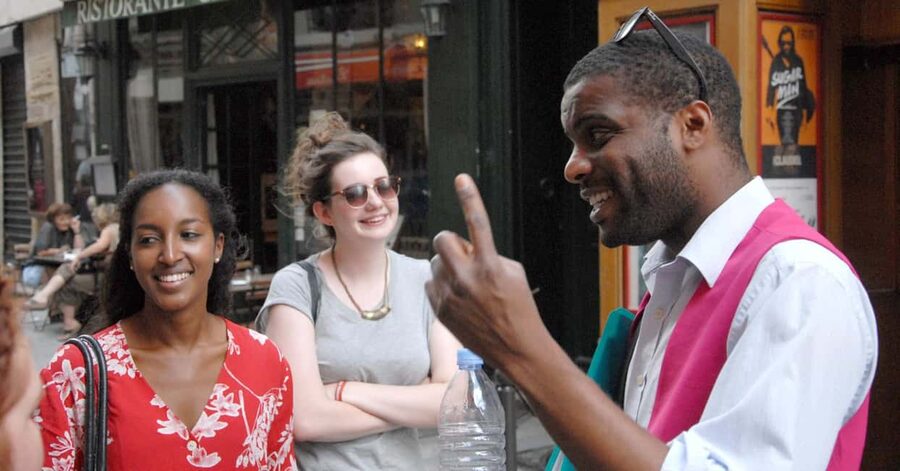
Your meeting point is the Statue of Charlemagne et ses leudes, a mounted figure in front of Notre-Dame. Look for the guide wearing a pink vest. The walk starts on time, so arrive early rather than trying to catch up from the first corner.
This is a smart place to begin. You are beside the Seine and at the edge of the Latin Quarter, with the medieval city, the cathedral, and the Left Bank all close together. The tour does not treat Notre-Dame as a stand-alone photo stop. Instead, it uses the area to explain how Paris grew around the river and why this part of the city became a center of religion, learning, and public argument.
If you miss the start, you can try to find the group about 20 minutes later at 77 rue Galande, in front of Café Odette. That is a useful backup, but it is not a guarantee, so the simplest plan is to be at the statue before departure.
A few more coffee tours around the world worth a look
- Hoi An: Vietnamese Coffee Culture and Coffee Making Class
★ 4.9 · 4,006 reviews - Hanoi Coffee Experience: 6 Brews, 9 Recipes & 3 Liquor Tastings
★ 5.0 · 2,945 reviews - 4×4 Dominican Adventure with Chocolate and Coffee Tasting
★ 5.0 · 2,920 reviews
Square René Viviani and the Seine
The first formal stop is Square René Viviani, where you spend about 10 minutes. This small public garden gives the walk a calm opening and helps you get your bearings between the river, Notre-Dame, and the Latin Quarter streets.
I like this early pause because it gives the guide room to set up the story of the neighborhood. The Latin Quarter is often reduced to cafés and souvenir shops, but the tour asks a more interesting question: why has this district attracted students, priests, writers, artists, and political rebels for so long?
The answer comes gradually. You hear how the university system was first tied to the Church, then broke away from that control. That shift matters. It explains why the neighborhood became a place where authority could be studied, questioned, and sometimes challenged in public.
Notre-Dame and Shakespeare & Company
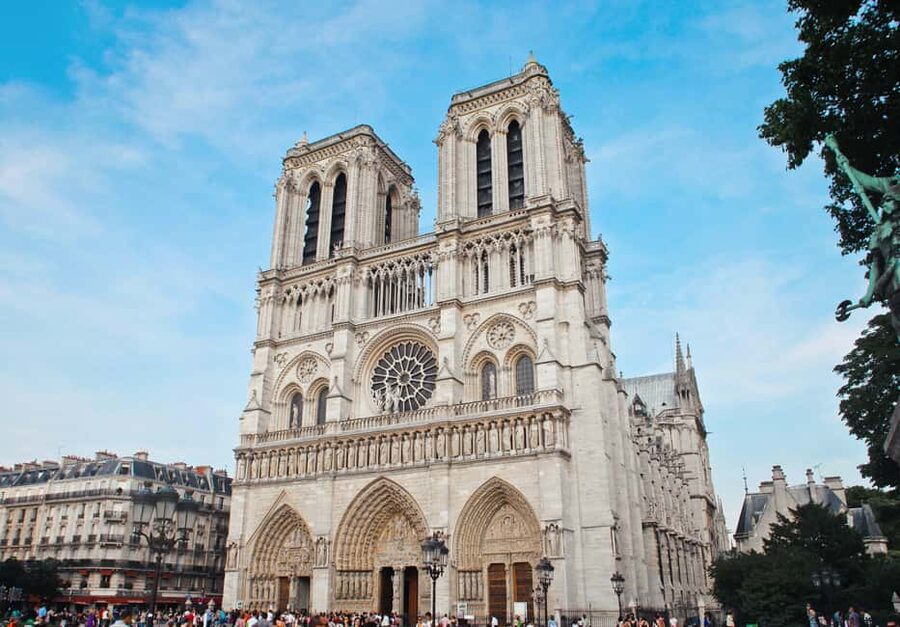
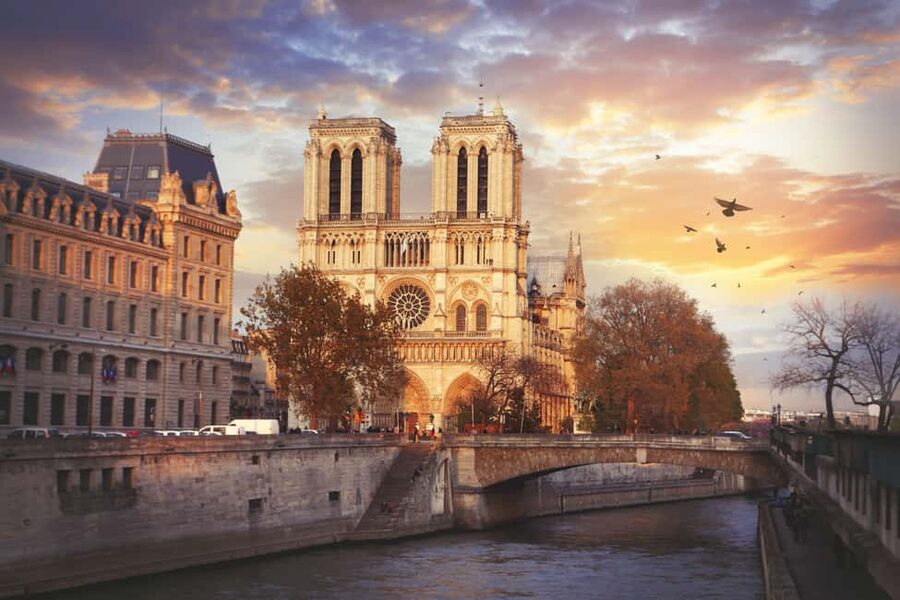
The walk pauses at Notre-Dame for around 10 minutes. Entry is not included, so treat this as an exterior visit rather than a cathedral tour. The focus is on the setting and the place Notre-Dame holds in the story of Paris.
From there, the group continues toward Shakespeare & Company, one of the Left Bank’s best-known literary landmarks. You have about 10 minutes here. The shop is an easy place to photograph, but the tour gives it more meaning by linking it to the wider tradition of English-speaking writers who came to Paris looking for conversation, freedom, and an affordable room or coffee.
This is where the tour’s literary theme becomes clear. Hemingway is part of the story, as are other writers drawn to the Latin Quarter by its bookstores, cafés, and arguments. You will not get a full literary walking tour of every author in Paris. You will get a brisk set of connections that makes the streets around you feel less random.
A useful touch is the guide’s ability to add personal material. Yago has been praised for his energy and passion for Paris, while another guide, Matthieu, brought the area to life through both historical facts and his own experience. One guide even used a book with extra photographs to help explain the past. That kind of visual aid can be especially helpful when a façade or street corner has changed over time.
Medieval lanes and the street of the English
The route then leaves the broad tourist paths for medieval back streets. This is one of the strongest reasons to book the walk. You can wander through the Latin Quarter on your own, but it is easy to miss the narrow passages and small courtyards that make the district feel older and more layered.
The tour also touches on the street of the English, a reminder that the neighborhood’s international life is not new. Students and outsiders have long come here to study, publish, debate, and start over. The guide connects those older patterns with modern Parisian student life, where a low-cost coffee and a sharp opinion still go a long way.
The walk is not designed as a food tour, but coffee is part of its character. The phrase black coffee is not just a title gimmick. It points to the everyday fuel of the quarter: inexpensive drinks, long conversations, and the habit of turning an ordinary table into a political salon.
You should expect frequent stops rather than a long continuous walk. The route includes chances for water and shade, but bring your own reusable bottle. Since the tour operates rain or shine, a light rain jacket and comfortable shoes are sensible additions.
Same place, a different way to drink it:
- Rome Morning Vespa Sidecar Tour in Rome with Cappuccino
★ 5.0 · 1,771 reviews - Giethoorn: Village & National Park Canal Cruise with Coffee
★ 4.6 · 1,596 reviews - Dresden: Guided City Walk with a Cup of Coffee
★ 4.7 · 1,568 reviews - 4×4 ATV Experience, Water Cave, Chocolate and Coffee Tasting
★ 5.0 · 1,430 reviews
The Sorbonne and the weight of one name
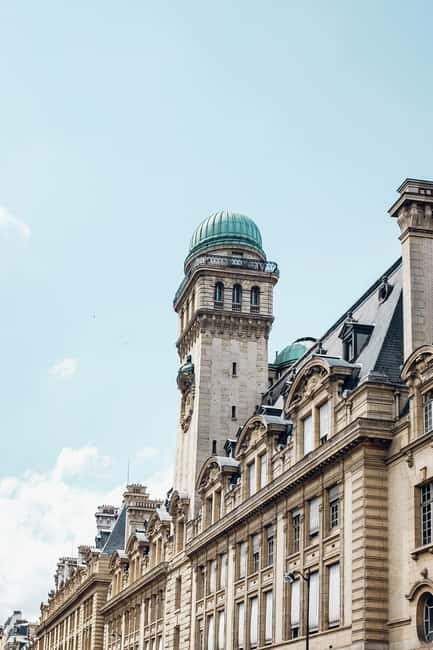
The Sorbonne receives two itinerary entries, one described as Sorbonne University and another as La Sorbonne. In practical terms, these stops focus on the university and its place in the Latin Quarter rather than offering a full academic-campus tour. Plan on roughly 10 minutes at each listed stop.
The value here is context. The Sorbonne is not simply a handsome institution with a famous name. For centuries, it has represented the power of education, the tension between established authority and free thought, and the way student movements can affect the wider country.
The guide explains how Europe’s oldest university system began under Church influence and later pushed toward independence. That is the kind of detail that helps you understand why the Latin Quarter has a rebellious reputation. The neighborhood’s arguments were not random. They grew from institutions built to teach, discipline, and shape public life.
The stop may appeal most to you if you enjoy political and intellectual history. If you want a detailed architectural tour or access to university interiors, this walk will feel too brief. The emphasis is on ideas and stories, not extended time inside buildings.
Roman baths at the Musée de Cluny

The route reaches the Musée National du Moyen Âge, also called the Musée de Cluny, for a short guided stop of about 10 minutes. The focus includes the Roman bathhouses, which add an earlier layer to the neighborhood’s story.
This is a useful change of pace. Much of the walk concerns medieval Paris, literary Paris, and university Paris, but the Roman remains show that the area mattered long before the modern city took shape. In a few minutes, you get a sense of how many different eras sit beneath the Latin Quarter.
Museum entry is not included. The tour therefore works best as an introduction, not as a substitute for visiting the museum. If the medieval period interests you, you may want to return separately with more time. The guided explanation helps you decide if that extra visit belongs in your Paris plans.
After Cluny, the route includes two shorter stops, one of about five minutes and another guided explanation of about three minutes. The details of these stops are not specified, so you should expect brief neighborhood points rather than major attractions or long visits indoors.
Cyrano, Picasso, Hemingway, and a rebellious quarter
The strongest part of this experience is the way it connects famous names to a wider neighborhood culture. Cyrano de Bergerac brings theatrical bravado and the image of the wordsmith who fights with style. Dante represents the international pull of Parisian intellectual life. Picasso and Hemingway point toward the Left Bank’s role in modern art and literature.
The tour also includes stories about jazz, cinema, and the district’s Catholic character. One guide has been especially praised for bringing together those subjects with academic institutions and the neighborhood’s film culture. That range keeps the walk from becoming a single-author literary trail.
I would not book this expecting a scholarly lecture. The tone is casual, lively, and personal. You may hear an anecdote that sends you toward a church, a cinema, a café, or a side street you would otherwise pass. The guides have also offered practical Paris advice, including tips for finding a quieter time to enter Notre-Dame and a list of restaurants.
That practical layer is valuable. A good walking tour should not only tell you what happened here. It should help you use the neighborhood after the tour ends.
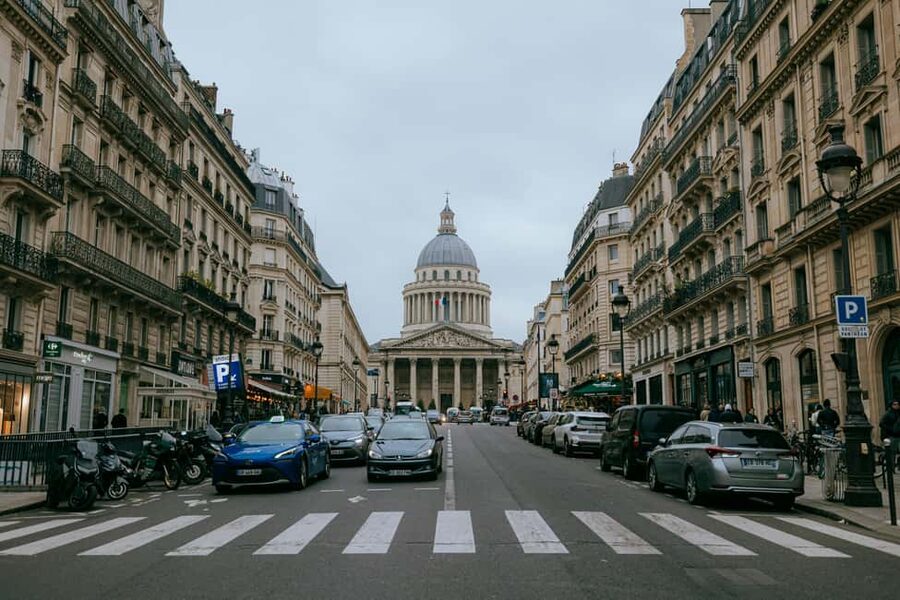
Ending at the Panthéon
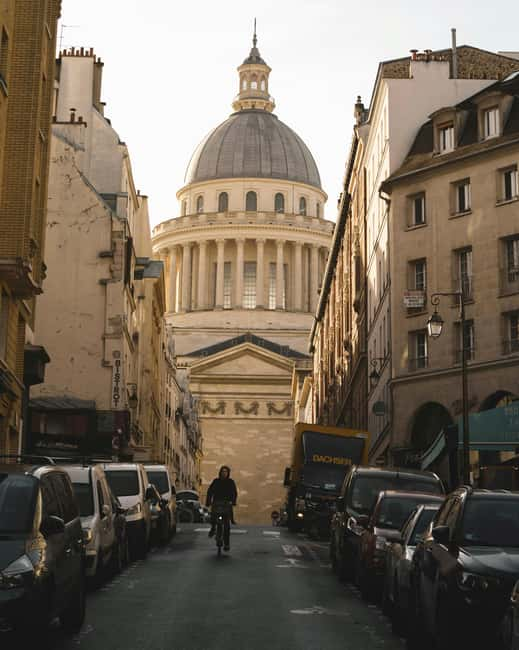
The walk finishes at the Panthéon, after about 90 minutes in total. This is a fitting endpoint because the monument represents the public memory of France. The route begins with religious and medieval Paris, passes through education and rebellion, and ends at a place tied to national heroes and civic identity.
You do not receive entry to the Panthéon as part of the tour. That is worth keeping in mind if you want to go inside immediately afterward. Still, ending here gives you an easy next step: continue exploring the surrounding streets, find a café, or visit the monument separately if its interior and tombs interest you.
The finish also makes the walk useful for planning the rest of your day. You are no longer at the riverfront, so allow time for your next destination. The tour does not return to Notre-Dame.
Is $23 a fair price?

At $23 per person, this is a good price for a 90-minute small-group walk, especially if you want orientation and stories rather than admission to a major attraction. The cost is low enough to fit into a first day in Paris, yet the route covers several important parts of the Left Bank.
The value depends on what you want from a guide. If you prefer to move quickly between photo stops, you could cover much of the route yourself. But you would miss the links between the Church, the university, writers, jazz, cinema, student life, and revolution. Those connections are the product you are paying for.
The price does not include museum or monument tickets, and tips are not included. That is normal for a walking tour, but budget separately if you want to enter Notre-Dame, the Musée de Cluny, or the Panthéon.
Who will enjoy this walk?
This tour suits you if you like:
- Literary stories with real streets and buildings attached
- University towns and the history of ideas
- Local guides with personal connections to Paris
- A short introduction before exploring on your own
- Small groups and English-language guiding
- Walking outdoors in all weather
It may not suit you if you need wheelchair access, dislike uneven medieval streets, or want extensive indoor sightseeing. It also has limited appeal if you are looking only for grand monuments and polished views. The charm here lies in the stories between the headline sights.
The group is small, but the exact number is not stated. You should expect to walk, stop in public spaces, and listen while standing for parts of the tour. Water and shade stops are provided, but this is still an outdoor activity.
Should you book Paris Left Bank: Writers, Revolution, and Black Coffee?
Book it if you want the Latin Quarter explained by someone who knows it as a lived-in student and intellectual neighborhood, not just as a string of famous addresses. The route is short, affordable, and packed with useful context.
I would especially recommend it early in a Paris visit. The walk can give you a better sense of where to return for a museum, church, café, bookshop, or quieter street. Choose it for ideas, stories, and local perspective. Skip it if your priority is entering monuments or seeing every stop at length.
Free cancellation is available up to 24 hours before departure, and you can reserve while paying later. Those terms help if your Paris schedule is still shifting, but the practical choice is simple: arrive at the horseman statue early, wear good shoes, and bring water.
FAQ
How long is the Latin Quarter tour?
The walking tour lasts 90 minutes.
How much does the experience cost?
The listed price is $23 per person.
What language is the tour offered in?
The live tour is conducted in English.
Where does the tour start?
Meet under the Horseman statue, the Statue of Charlemagne et ses leudes, in front of Notre-Dame.
How do I identify the guide?
The guide wears a pink vest.
Where does the tour finish?
The walk ends at the Panthéon.
Is the tour held in bad weather?
Yes. The walk operates rain or shine.
What should I bring?
Bring a reusable water bottle. Comfortable walking shoes and weather-appropriate clothing are also sensible for an outdoor walk.
Are museum and monument tickets included?
No. Entry to museums and monuments is not included in the tour price.
Is the tour suitable for wheelchair users?
No. The activity is listed as unsuitable for wheelchair users.
Can I cancel for a full refund?
Yes. You can cancel up to 24 hours in advance for a full refund.
Can I pay later?
Yes. The reserve now and pay later option lets you hold a spot without paying at the time of booking.
Just added around the world
- Yerevan: Private Coffee Tour with 2 Café Stops★ 5.0 · 2 reviews
- Vietnamese Coffee 101 Workshop★ 5.0 · 11 reviews
- Vietnamese Coffee Making Class in Hoi An★ 5.0 · 4 reviews
- Vietnamese cooking class and coffee making with local girl★ 5.0 · 5 reviews
- Venice Delights: Coffee & Food Experience Walking Tour★ 5.0 · 2 reviews
- Private Vienna Tour: Literature Walk with Coffee House Visit★ 5.0 · 2 reviews
- Turin: Art Nouveau Walking Tour with Coffee★ 5.0 · 11 reviews
- Turkish Coffee and Traditional Turkish Dessert Cooking★ 4.6 · 8 reviews
Coffee Tours, compared.

Vietnamese Coffee Culture and Coffee Making Class
Read our review →
Hanoi Coffee Experience: 6 Brews, 9 Recipes & 3 Liquor Tastings
Read our review →
Coffee Tour with Transport, Snacks and Tastings
Read our review →
Turkish Coffee Making and Fortune Telling Workshop
Read our review →
Hanoi Coffee Workshop: Taste Salt, Coconut and Egg Coffee
Read our review →