
Review · KIGALI
Kigali: Traditional Coffee Experience ( Bean to Brew)
Rwanda’s coffee story comes alive through your senses here: you follow the beans from cultivated fields to roasting fire to finished cup. The best part is the hands-on work, since you do not just watch someone roast coffee, you take part in it.
I like the chance to learn both traditional and modern roasting methods, and I like that the tasting takes place in Kigali with local coffee experts rather than ending at a farm gate. The small maximum of 20 people should also keep the session more personal.
The main thing to consider is transportation. Private transport is not included, so you must make your own way to Umurishyo Arts Gallery on KG 206 Street. The experience also depends on good weather and a minimum number of bookings.
Key points to know before booking
- You follow the bean-to-cup process: The experience links coffee fields, roasting, and tasting in one two-hour visit.
- You roast your own beans: Expect practical work, not just a talk about coffee.
- You compare two roasting approaches: Traditional and modern methods are both part of the session.
- You finish with a Kigali tasting: The final stop offers several blends and time to speak with local experts.
- You meet at Umurishyo Arts Gallery: Private transportation is not included, and the activity returns there.
- You can cancel free of charge up to 24 hours ahead: Bad weather or too few bookings can also lead to a new date or a full refund.
Why the field-to-cup format works

Many coffee activities stop at a café or offer a short tasting. This one tries to connect the whole chain. You begin with cultivation, learn how local farmers care for the crop, then see how the beans change through roasting before tasting the finished drink.
That order matters. It helps you understand that coffee is not simply a beverage poured into a cup. Farming decisions, local working practices, roasting choices, and blending all affect what you taste at the end.
The experience also gives you a useful look at Rwanda’s coffee industry. You hear about the country’s coffee past and the sustainable methods used by the community. The supplied details do not specify a particular farm or the exact distance from Kigali, so you should think of this as a guided coffee education with field access, not a full agricultural tour.
I especially like the connection between production and people. The activity is designed around conversation with farmers and coffee professionals, giving you a chance to ask how the beans are grown and prepared. That cultural exchange is part of the value, not filler between tastings.
More Roastery Tours in the world:
- Hoi An: Vietnamese Coffee Making Workshop at Local Roastery
★ 4.8 · 174 reviews - Cartagena: Colombian Specialty Coffee Tasting
★ 4.4 · 130 reviews - Coffee Farm Tour with Roasting & Tasting Workshop – Da Lat
★ 5.0 · 126 reviews
Starting at Umurishyo Arts Gallery in Kigali
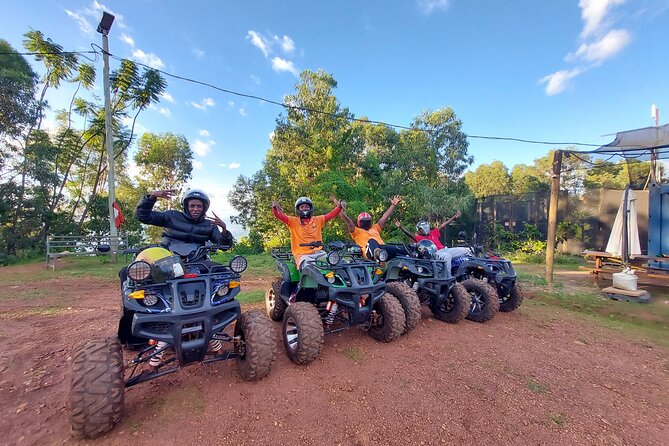
Your meeting point is Umurishyo Arts Gallery, KG 206 St, Kigali, Rwanda. The activity begins and ends there, which keeps the arrangement simple once you arrive at the starting point.
Since private transportation is not included, you need to plan your own route to the gallery. The meeting point is near public transportation, a useful detail if you are getting around Kigali without a private vehicle. The available information does not give a pickup service, hotel transfer, or exact instructions for reaching the gallery, so allow time to get there and confirm the meeting details after booking.
This setup can be a plus for independent visitors. You are not paying for a transport package you may not need, and you can fit the activity into a wider day in Kigali. The tradeoff is that the $50 price does not cover getting to the meeting point.
Confirmation is provided when you book. The group can include up to 20 people, large enough for a social atmosphere but limited enough that the roasting portion should not feel like a stadium demonstration.
Seeing how Rwandan coffee is grown
The first part takes you into Rwanda’s coffee fields. Local farmers explain the care involved in cultivation and the sustainable practices used by the community.
The useful point here is not simply seeing coffee plants. You get context for the work behind each batch, including the farming process and the role local communities play in producing coffee. If you already grind beans at home or enjoy making blends, this section gives you a stronger basis for understanding the product you handle later.
The exact field location and farm facilities are not specified, so do not expect a detailed list of buildings, elevations, or farming equipment. What is clear is that the activity places coffee production at the beginning of the story rather than treating the crop as an anonymous ingredient.
Weather may affect this part of the day. The activity requires good conditions, and poor weather can result in a different date or a full refund. That policy is practical in Kigali, where outdoor plans can be interrupted, but it also means you should keep some flexibility in your schedule.
Roasting your own beans by two methods
At the roastery, you take part in both traditional and modern roasting. Local experts explain how each approach works and guide you through the process.
This is likely the most active part of the experience. You are not only watching a professional roast a batch while standing behind a counter. You get closer to the decisions and physical work that turn green coffee beans into something ready to grind and brew.
The contrast between traditional and modern methods is useful because it shows how technique can shape the final cup. The activity does not specify the exact equipment or roasting profiles, so you should not book it expecting a technical course with detailed charts or professional certification. It is better understood as a practical introduction led by people who work with coffee locally.
One detail makes this portion especially appealing: you get to roast your own beans. That gives the session a personal result and makes it easier to remember the lesson later. A coffee lover who already grinds beans and creates blends at home may get more from this than someone who only drinks the occasional cup, although beginners can still follow the guided process.
The group size matters here. With a maximum of 20 people, the session may be shared with others, but it should remain more manageable than a large commercial workshop. If the group reaches its maximum, expect a social activity rather than one-on-one instruction throughout.
A few more coffee tours around the world worth a look
- Hoi An: Vietnamese Coffee Culture and Coffee Making Class
★ 4.9 · 4,006 reviews - Hanoi Coffee Experience: 6 Brews, 9 Recipes & 3 Liquor Tastings
★ 5.0 · 2,945 reviews - 4×4 Dominican Adventure with Chocolate and Coffee Tasting
★ 5.0 · 2,920 reviews - Rome Morning Vespa Sidecar Tour in Rome with Cappuccino
★ 5.0 · 1,771 reviews
Finishing with a Kigali coffee tasting
The final stage takes place in a Kigali coffee shop. You taste several blends made with care, compare their character, and talk with local experts and other people interested in coffee.
This is where the earlier sections come together. You have seen the crop, learned about preparation, and handled the roasting process. Now you can connect those steps to what is in the cup.
The tasting is described as exclusive, but no specific menu or number of pours is provided. You should expect a selection of Rwandan coffee blends rather than a guaranteed list of named beans. The details also do not state whether food, pastries, or a full meal is included, so do not count on anything beyond the coffee tasting and the fees and taxes covered by the booking.
I like the setting for the final conversation. A café is a natural place to ask questions, compare impressions, and talk about how coffee production supports local communities. The activity aims to create an exchange between visitors, experts, and fellow coffee drinkers, so the value goes beyond sampling several cups quickly.
If your main interest is a long café crawl or a specialist cupping class, this may feel brief. The full program lasts about two hours and includes several stages, so the tasting is one part of a wider experience rather than the entire event.
What the $50 price really covers
At $50 per person, this is not the cheapest way to have a cup of coffee in Kigali. You are paying for access to several parts of the production chain, hands-on roasting, guidance from local experts, and a final tasting. All fees and taxes are included.
The price makes the most sense if you value participation and context. You are not simply buying coffee. You are paying for an organized introduction to farming, roasting, blending, and local coffee culture in one compact outing.
The value is weaker if you only want a quick drink or already have advanced roasting skills. The supplied information does not include private transportation, meals, or a stated take-home amount of roasted coffee. Those omissions matter when you compare the total cost with other Kigali activities.
The activity is often booked about 16 days ahead. That pattern suggests you should not leave it until the last minute if the timing matters to you, especially since it requires a minimum number of people to operate.
Who will get the most from this experience
I would point coffee fans here first. If you grind your own beans, experiment with blends, or want to understand how roasting affects flavor, the hands-on section gives you something more useful than a standard tasting.
It also suits curious visitors who want a local activity with a clear cultural link. You learn from farmers and coffee professionals, see sustainable practices discussed in context, and spend time talking with people connected to the work.
It can work well for couples, friends, and small groups. The maximum of 20 keeps it from being an enormous tour, while the shared roasting and tasting give you natural points for conversation.
You may want to choose another activity if you need hotel pickup, dislike outdoor plans, or want a full-day farm visit. The available details do not promise transportation, a lengthy stay in the fields, or an advanced technical roasting course.
Timing, weather, and cancellation details
The experience lasts about two hours. Since it begins at the gallery, continues through field and roasting activities, and finishes at a Kigali café before returning to the meeting point, you should avoid scheduling a tight appointment immediately afterward.
You can cancel for a full refund if you do so at least 24 hours before the local start time. Cancellations within 24 hours are not refunded, and changes inside that period are not accepted.
Bad weather can cancel the activity because part of the program takes place outdoors. In that case, you are offered another date or a full refund. The same applies if the minimum number of participants is not reached, with the option of a different date or experience.
Service animals are allowed. The activity is near public transportation, but no private transport is included. These details make it reasonably accessible for independent visitors, though you still need to arrange your own route to KG 206 Street.
Should you book the Kigali coffee experience?
Book it if you want to understand Rwandan coffee through action rather than a quick tasting. The strongest reasons are the chance to roast your own beans, compare traditional and modern methods, and finish with local blends in Kigali.
The $50 cost is fair for a two-hour, guided, field-to-cup session with taxes included, but remember to add your own transportation costs. It is also wise to keep your schedule flexible because of weather and minimum booking requirements.
I would choose this for a coffee enthusiast, a culturally curious visitor, or anyone looking for a compact Kigali activity with local connections. I would skip it if your priority is hotel pickup, a long farm excursion, or a formal professional roasting class.
FAQ
How long does the coffee experience last?
The activity lasts approximately two hours.
Where does the experience start?
It starts at Umurishyo Arts Gallery, KG 206 St, Kigali, Rwanda.
Where does the activity end?
The activity ends back at the meeting point.
Is private transportation included?
No. Private transportation is not included, so you must make your own way to the meeting point.
What is included in the price?
All fees and taxes are included.
How much does the experience cost?
The price is $50 per person.
How many people can join the activity?
The maximum group size is 20 people.
Can I roast coffee myself?
Yes. The experience includes hands-on roasting, including the opportunity to roast your own beans.
Does the activity use traditional and modern roasting methods?
Yes. Local experts demonstrate and explain both traditional and modern roasting methods.
Can I cancel for a full refund?
Yes, if you cancel at least 24 hours before the experience start time. Cancellations within 24 hours are not refunded. If bad weather or too few bookings cause the provider to cancel, you are offered another date or a full refund.
Just added around the world
- Yerevan: Private Coffee Tour with 2 Café Stops★ 5.0 · 2 reviews
- Vietnamese Coffee 101 Workshop★ 5.0 · 11 reviews
- Vietnamese Coffee Making Class in Hoi An★ 5.0 · 4 reviews
- Vietnamese cooking class and coffee making with local girl★ 5.0 · 5 reviews
- Venice Delights: Coffee & Food Experience Walking Tour★ 5.0 · 2 reviews
- Private Vienna Tour: Literature Walk with Coffee House Visit★ 5.0 · 2 reviews
- Ubud: Waterfall, Holy Water Temple,Swing&coffee plantation★ 5.0 · 9 reviews
- Turin: Art Nouveau Walking Tour with Coffee★ 5.0 · 11 reviews
Specialty Coffee & Roastery Tours, compared.
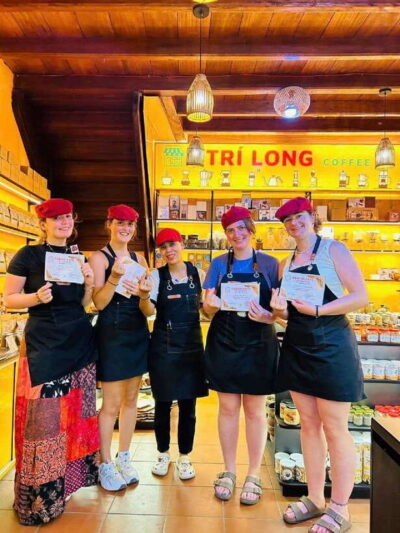
Vietnamese Coffee Making Workshop at Local Roastery
Read our review →
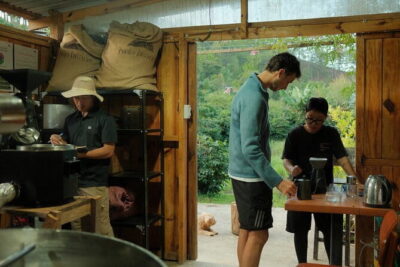
Coffee Farm Tour with Roasting & Tasting Workshop – Da Lat
Read our review →
Experience specialty coffee with sustainable coffee farmers
Read our review →
Vietnamese Bread & Brew: Banh Mi Baking Class & Specialty Coffee
Read our review →
Santo Domingo Small Group Walking Tour: Beer and Specialty Coffee
Read our review →
Browse the lists this tour appears in