

Review · KIGALI
Kigali: Traditional Coffee Experience ( Bean to Brew)
The best part of this Kigali experience is that you do not simply watch someone make coffee. You help open the fruit, work the beans, roast them, pound them, and finally drink what you made. The hands-on process makes the cup taste like a small achievement, not just a refreshment.
I like the mix of coffee craft and Rwandan culture. You may be welcomed with drums, learn about music and dances, play the traditional game Igisoro, or browse crafts made through the center’s community work. I also like the personal feel: guides including Deborah, Gilbert, John, and Chaplan have been praised for taking time to explain each step.
The main thing to know is that this is based at Umurishyo Arts Gallery, a cultural center in the city, not necessarily a long outing to a remote coffee plantation. The coffee story begins with cultivation and may include fresh beans, but the heart of the activity is the cultural center, roasting space, and tasting.
Key points to know before you book

- Coffee made from scratch: Work through the process from coffee fruit and beans to a finished pot.
- Traditional and modern roasting: Compare hands-on local methods with a more modern approach.
- A cultural center, not just a coffee stop: Expect drums, crafts, stories, music, games, and conversation alongside the coffee.
- Personal instruction: Guides such as Deborah, Gilbert, John, and Chaplan are named in the experience feedback, though your guide may vary.
- A social purpose: Your payment supports local businesses, the center, and community work connected with helping children return to school.
- Flexible timing: Allow between 150 minutes and three hours, with English, French, and Swahili available.
Starting at Umurishyo Arts Gallery in Kigali

Your meeting point is Umurishyo Arts Gallery, where this activity takes place within a wider cultural center. That setting matters. You are not being rushed through a commercial coffee demonstration and sent straight back to your hotel. Coffee is presented alongside local art, traditional activities, and a community project.
Some sessions begin with drums, which gives the visit an immediate cultural note. You may also see artisan crafts made by children supported through the center’s work. The owners use income from the center and its activities to help get children off the streets and back into school, so your visit has a direct local connection.
I would allow a little extra time around the scheduled activity if your day permits. One visitor stayed afterward to learn about traditional life, play Igisoro, and join a football game at the center. Those extras are not listed as fixed parts of every session, so do not book this expecting a guaranteed game or performance. Still, the setting gives the visit more depth than a standard tasting.
The activity lasts from two and a half hours to three hours. That is a useful amount of time for a hands-on process, but it also means you should not squeeze it between two tightly timed sightseeing stops. The exact starting time depends on availability.
More Roastery Tours in the world:
- Hoi An: Vietnamese Coffee Making Workshop at Local Roastery
★ 4.8 · 174 reviews - Cartagena: Colombian Specialty Coffee Tasting
★ 4.4 · 130 reviews - Coffee Farm Tour with Roasting & Tasting Workshop – Da Lat
★ 5.0 · 126 reviews
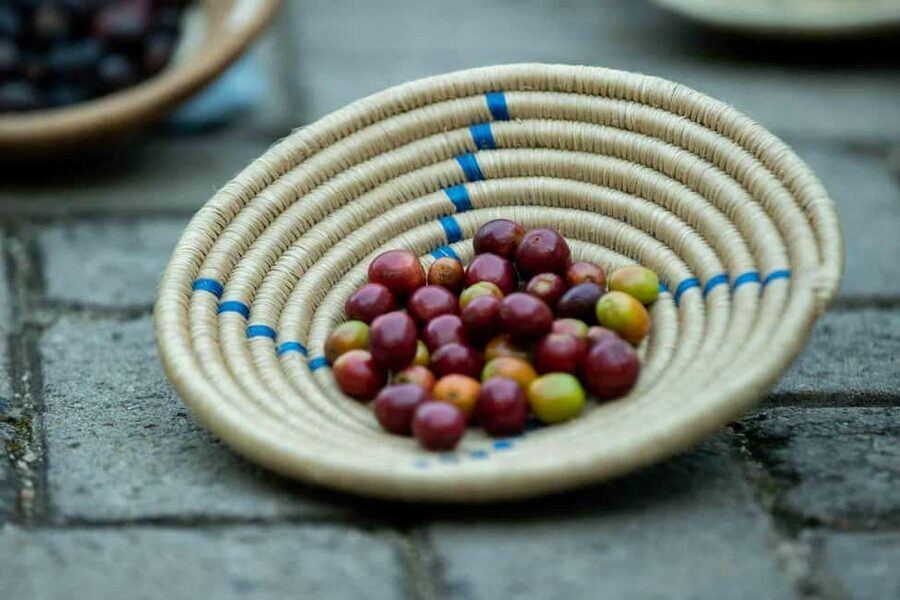
From coffee fruit to prepared beans
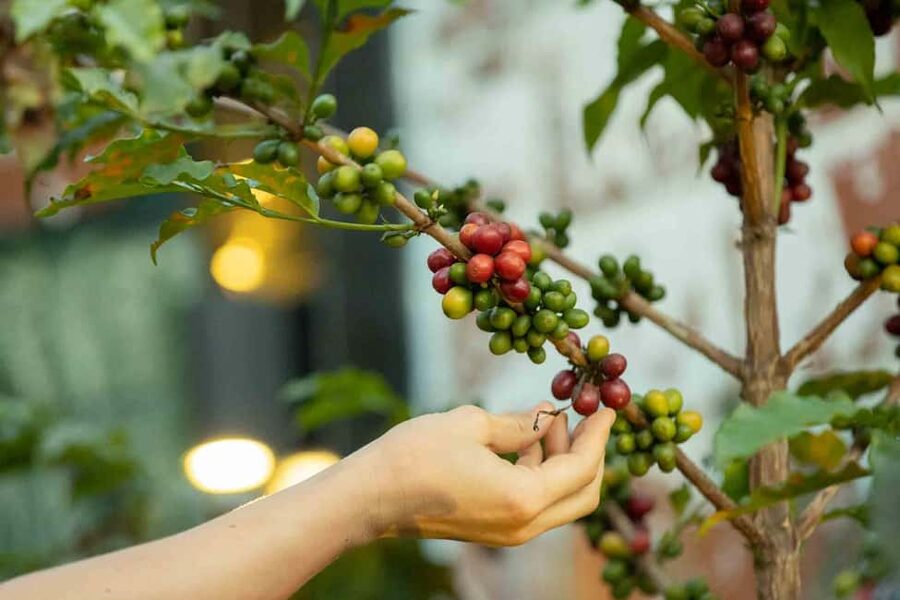
The activity follows the journey from crop to cup. You learn about coffee cultivation in Rwanda and the work done by local farmers before the beans ever reach a roastery or café. Guides explain the country’s coffee story and the sustainable practices used by communities connected with coffee production.
The wording of the experience presents a coffee field visit, but the practical setting is the Kigali cultural center. One account describes picking fresh coffee beans, while another makes clear that there is no drive out to a plantation. The safest expectation is this: you will learn and take part in the early stages of coffee preparation, but you should not assume a separate rural farm excursion unless the operator confirms it before booking.
That distinction is important if your main goal is seeing large coffee farms. If you want an easy-to-reach city activity with a farm-to-cup explanation, the format works well. If you want a full agricultural tour with long views over coffee-growing hills, this may feel more limited.
The early stages are still worthwhile because they show how much work sits behind an ordinary morning drink. You get a clearer sense of the difference between coffee as a packaged product and coffee as a crop that must be processed, dried, roasted, ground, and prepared.
Getting your hands dirty with traditional coffee making
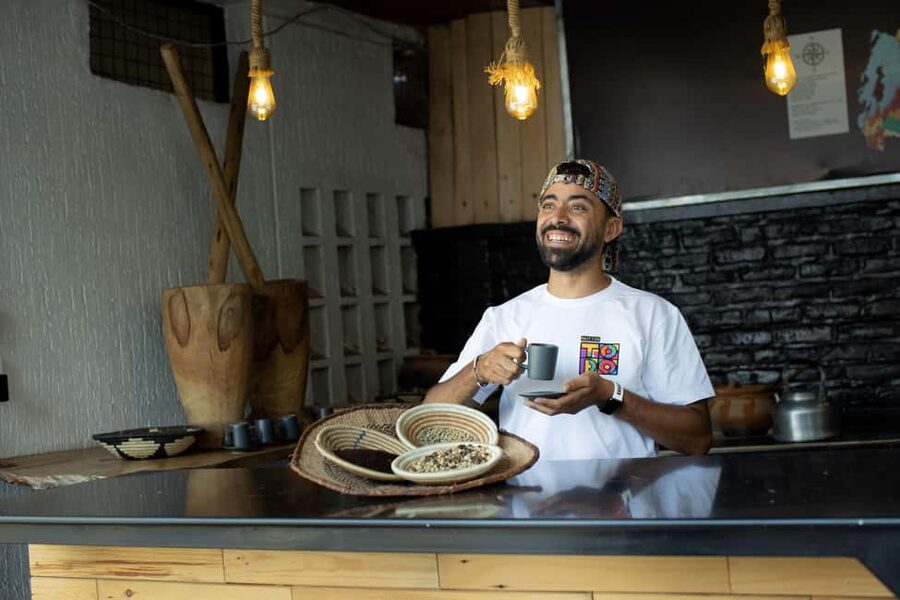
The strongest part of the experience is the manual work. You may open the coffee fruit, handle the beans, roast them, and pound them before brewing. It is not a polished demonstration where you sit quietly and take notes. You are expected to roll up your sleeves.
The pounding stage is especially useful because it makes traditional preparation physical and memorable. The process can seem intimidating at first, particularly if you are unsure how much to do or how to handle the early steps. My advice is simple: ask questions and take part from the beginning. The activity makes more sense when you touch the materials rather than watch from the side.
Guides explain each step patiently, and the pace suits people who are new to coffee preparation. The instructors are described as friendly and willing to repeat details, which matters when several methods are being shown at once. You do not need specialist coffee knowledge to enjoy this.
The work also creates a natural chance to talk. You can ask about farming, preparation, local customs, and the role of the cultural center. That conversation is one of the reasons this feels more personal than a short café tasting.
Comparing traditional and modern roasting
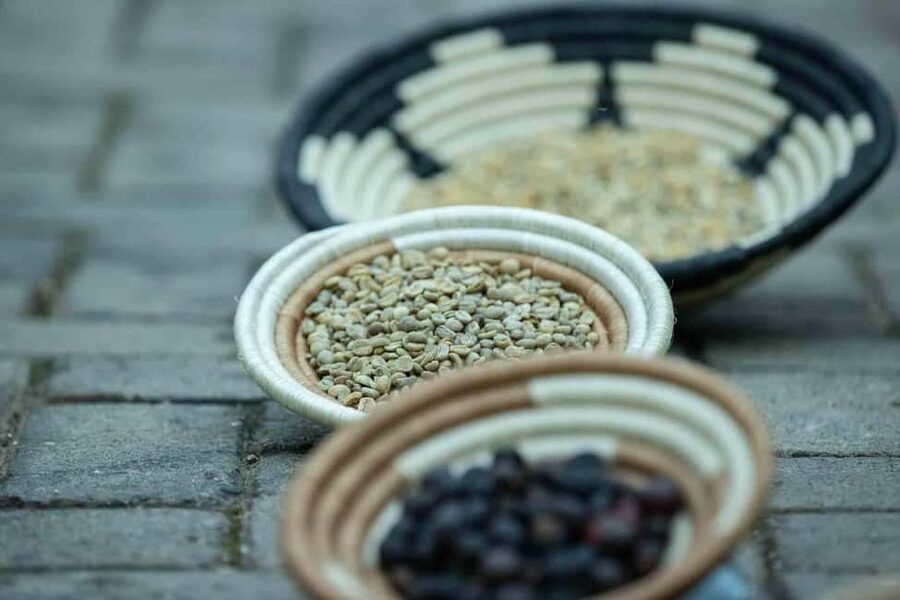
You take part in both traditional and modern roasting methods. This comparison is more useful than learning one technique in isolation. It lets you see how tools, heat, timing, and handling affect the beans before brewing.
The traditional method connects the drink to older household practices and local customs. The modern method shows how the same raw ingredient can be handled with greater control and consistency. Your guide explains the differences as you work, so the roasting is not just a photo opportunity.
Expect the smell of roasting coffee to become part of the experience. The beans change as they heat, and the process gives you a practical sense of why freshly roasted coffee tastes different from beans that have been sitting for a long time. The activity does not promise a professional barista course, so you should come for cultural understanding and direct participation, not technical certification.
The traditional approach may be the more memorable of the two, especially if you have never roasted or pounded coffee by hand. The modern stage gives useful context, helping you see that Rwandan coffee is part of both a living tradition and a current coffee trade.
A few more coffee tours around the world worth a look
- Hoi An: Vietnamese Coffee Culture and Coffee Making Class
★ 4.9 · 4,006 reviews - Hanoi Coffee Experience: 6 Brews, 9 Recipes & 3 Liquor Tastings
★ 5.0 · 2,945 reviews - 4×4 Dominican Adventure with Chocolate and Coffee Tasting
★ 5.0 · 2,920 reviews - Rome Morning Vespa Sidecar Tour in Rome with Cappuccino
★ 5.0 · 1,771 reviews
The final tasting in a Kigali coffee shop
The session ends with coffee prepared for tasting. You may sample local blends and compare different preparations, including black coffee and coffee made with ginger. That ginger option adds a local touch without turning the tasting into a formal tasting class.
The best cup is the one you have helped create. After handling the fruit, roasting the beans, and preparing them, you understand the drink in a more direct way. It is also a relaxed time to talk with the guide, the center’s owner, and other people taking part.
The tasting is described as exclusive, but do not expect a large flight of carefully printed tasting notes or a specialist coffee lab. The value lies in the story and the process. You are tasting coffee in the same place where you have learned how it is made, with local blends and explanations from people connected with the center.
A certificate may be provided at the end. It is a small souvenir rather than a formal qualification, but it suits the playful, participatory tone of the activity.
More than coffee: music, crafts, and local conversation
Coffee is the main subject, but the cultural center gives you other ways to understand Kigali. Guides may explain traditional life, music, dances, and older ways of doing things. The visit can also include a look at artisan crafts made by children linked with the center’s community work.
Chaplan has also taken participants around Kimironko Market, although you should treat that as an added possibility rather than a guaranteed part of every booking. The set program is the coffee activity at Umurishyo Arts Gallery.
I like this broader setting because it keeps the visit from feeling like a single-purpose tasting. You get a chance to ask how coffee fits into daily life and how cultural activities can support local work. The center’s social aim gives your spending a clear local benefit, while the crafts offer a practical way to support the project beyond the activity fee.
Still, the cultural extras can vary. Your experience may focus mainly on coffee, or it may expand into games, music, crafts, or conversation depending on the guide and the time available. Book it for the coffee process first, then treat the other activities as welcome additions.
The guides and languages
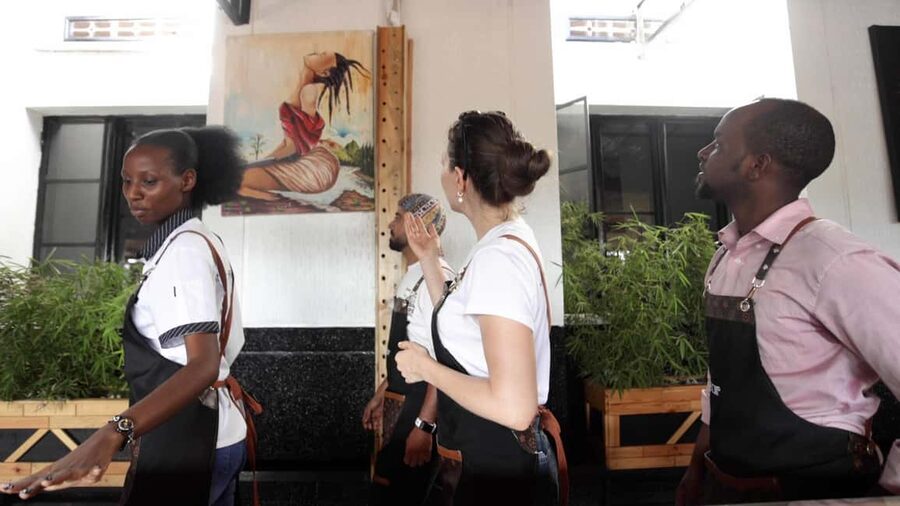
Instruction is available in English, French, and Swahili. The individual guide changes, but named instructors include Deborah, Gilbert, John, and Chaplan. Their roles may vary by date, so do not assume you will meet one particular person unless the operator confirms it.
A good guide makes a real difference here because the activity has several stages. You need clear directions when handling the fruit, roasting the beans, and pounding the coffee. You also benefit from someone who can explain the difference between a practical technique and a cultural tradition.
The strongest guide style for this activity is patient and conversational. You are not just being told facts about coffee. You are being shown how to do things, then given time to try them yourself. If you are shy about joining in, take the invitation seriously. The experience is much better when you participate fully.
Is $50 a fair price?
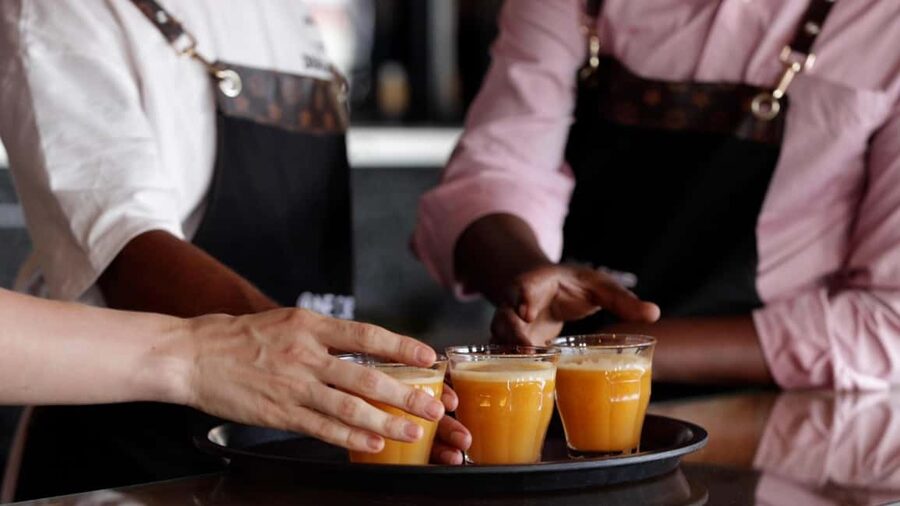
At $50 per person, this is not the cheapest cup of coffee in Kigali. You are paying for two and a half to three hours of instruction, hands-on preparation, a tasting, cultural interpretation, and support for a local center. Transportation to the meeting point and personal expenses are not included.
The price makes the most sense if you value direct participation and community connection. A simple café visit costs less, but it cannot show you the full preparation process or give you the same amount of time with a local guide. A standard sightseeing stop may show you more places, but it will not give you this focused look at coffee and traditional life.
The value is weaker if you only want to taste high-end coffee or if you expect a full farm visit outside Kigali. In that case, confirm the exact field component before paying. The city setting is convenient, but it is also the main limitation for anyone seeking a rural coffee-growing experience.
Your money also supports local businesses and community work. That does not remove the need to judge the activity on its own merits, but it adds a worthwhile practical benefit to the booking.
Who will enjoy this most?
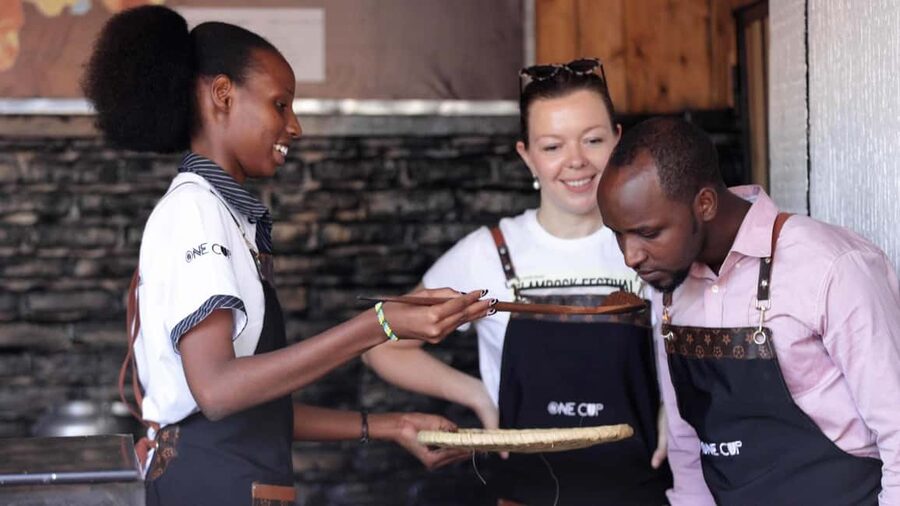
This activity suits coffee drinkers, curious first-time visitors to Rwanda, and anyone who prefers learning by doing. It is also a good choice if you want cultural contact without committing to a full-day excursion outside Kigali.
Families and small groups may enjoy the varied format, though the supplied information does not set a minimum age or describe child arrangements. Ask the operator if you are booking for young children. The activity involves handling coffee fruit, heat, and manual pounding, so it may not suit every child.
You should also be comfortable with tasting coffee products. People with food allergies are specifically advised not to take part. If you have a particular allergy, ask for details before booking rather than relying on a general description of the tasting.
This is less suitable for visitors who want a silent, polished tasting led by a certified coffee professional. It is also not the right pick if you need included transport. You must make your own way to Umurishyo Arts Gallery.
Practical details that affect your day
Plan on 150 minutes to three hours. Since the activity has several hands-on stages, give yourself room before and after it. A rushed departure would cut short the conversation and tasting, which are part of the appeal.
The meeting point is Umurishyo Arts Gallery in Kigali Province. Transportation is not included, so check your route in advance. The exact start time depends on availability.
You can cancel up to 24 hours before the activity for a full refund, and the reserve-now, pay-later option lets you hold a place without paying immediately. Those terms are useful if your Kigali schedule is still changing.
The overall rating is 4.8 from 54 ratings, and the most consistent strengths are clear instruction, friendly guides, full participation, and the quality of the cultural setting. The one point to keep in mind is the difference between a city-based cultural experience and a dedicated plantation visit.
Should you book the Kigali coffee experience?
Book it if you want to understand coffee through your hands, not just through a tasting cup. The opening, roasting, pounding, brewing, ginger coffee, local conversation, and cultural activities create a memorable half-day in Kigali.
I would especially choose it early in a Kigali stay. It gives you useful context for Rwandan coffee, introduces you to a local community space, and may help you find your footing through conversation, music, crafts, and games.
Before booking, be clear about the setting. This is centered at Umurishyo Arts Gallery, and the field-to-cup story does not guarantee a separate trip to a plantation. If that is acceptable, $50 is a reasonable price for a personal, practical, and community-minded experience.
FAQ
Where does the coffee experience take place?
The meeting point is Umurishyo Arts Gallery in Kigali Province, at the Umurishyo Cultural Centre.
How long does the activity last?
The stated duration is between 150 minutes and three hours. Starting times depend on availability.
What languages are available?
The instructors can conduct the activity in English, French, or Swahili.
Is transportation included?
No. You must arrange your own transportation to the meeting point, and personal expenses are also excluded.
Will I visit a coffee plantation?
The activity explains the coffee journey from cultivation to cup, but the main setting is the cultural center in Kigali. The information does not guarantee a separate drive to a plantation.
What will I do during the activity?
You may learn about coffee cultivation, open coffee fruit, handle the beans, take part in traditional and modern roasting, pound the coffee, and taste the finished drink and local blends.
Is coffee tasting included?
Yes. An exclusive tasting session featuring local blends is included. The experience may also include black coffee and coffee prepared with ginger.
Can I cancel for a refund?
Yes. You can cancel up to 24 hours in advance for a full refund.
Is the activity suitable for people with food allergies?
No. People with food allergies are listed as unsuitable for this activity. If you have an allergy, ask the operator for more details before booking.
Just added around the world
- Yerevan: Private Coffee Tour with 2 Café Stops★ 5.0 · 2 reviews
- Vietnamese Coffee 101 Workshop★ 5.0 · 11 reviews
- Vietnamese Coffee Making Class in Hoi An★ 5.0 · 4 reviews
- Vietnamese cooking class and coffee making with local girl★ 5.0 · 5 reviews
- Venice Delights: Coffee & Food Experience Walking Tour★ 5.0 · 2 reviews
- Private Vienna Tour: Literature Walk with Coffee House Visit★ 5.0 · 2 reviews
- Turin: Art Nouveau Walking Tour with Coffee★ 5.0 · 11 reviews
- Turkish Coffee and Traditional Turkish Dessert Cooking★ 4.6 · 8 reviews
Specialty Coffee & Roastery Tours, compared.
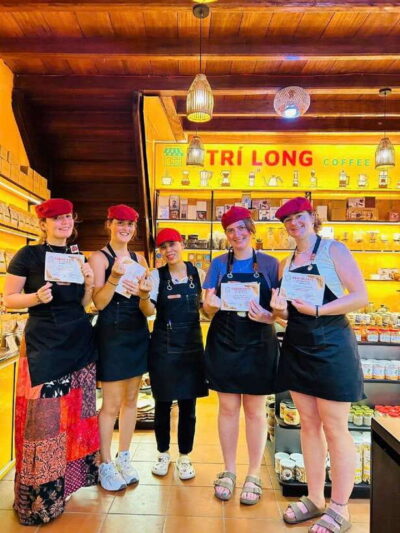
Vietnamese Coffee Making Workshop at Local Roastery
Read our review →
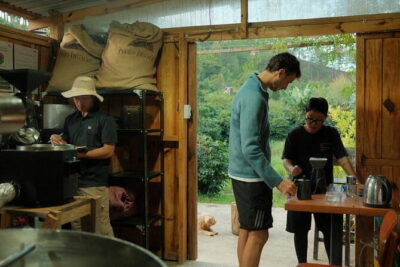
Coffee Farm Tour with Roasting & Tasting Workshop – Da Lat
Read our review →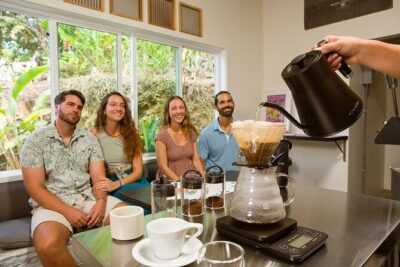
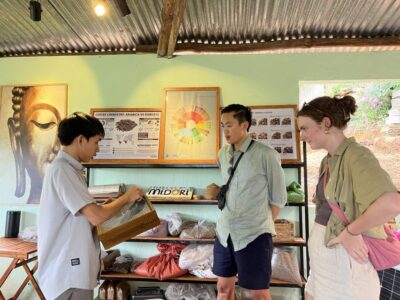
Experience specialty coffee with sustainable coffee farmers
Read our review →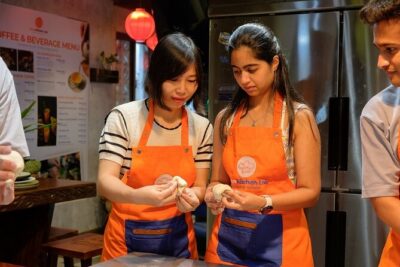
Vietnamese Bread & Brew: Banh Mi Baking Class & Specialty Coffee
Read our review →
Santo Domingo Small Group Walking Tour: Beer and Specialty Coffee
Read our review →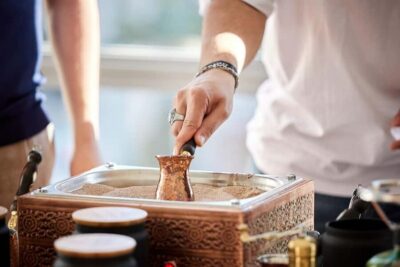
Browse the lists this tour appears in