
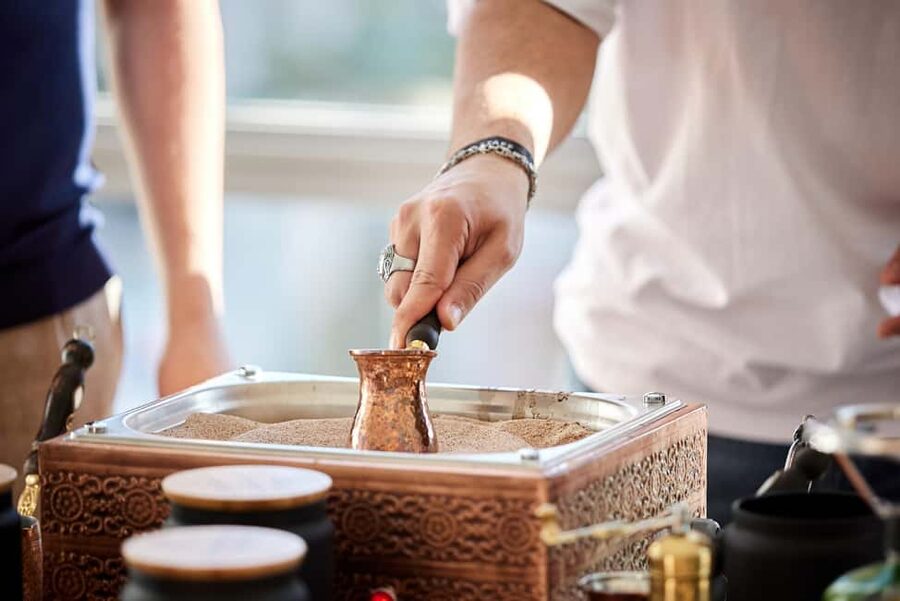
Review · ISTANBUL
Istanbul: Turkish Coffee Brewing on Sand + Gift Set
Turkish coffee is not simply poured into a cup here. You grind the beans, manage the foam, and brew your coffee on hot sand, following a ritual shaped by Ottoman-era custom. I like the hands-on control and the chance to taste both traditional Turkish coffee and caffeine-free menengiç coffee. I also like that the workshop ends with a useful gift set, not just a quick sip.
The main consideration is the 90-minute pace. This is a slow, social lesson rather than a fast sightseeing stop, so it may feel long if you only want a coffee tasting. The fortune reading is playful and traditional, not a serious prediction service.
Key points
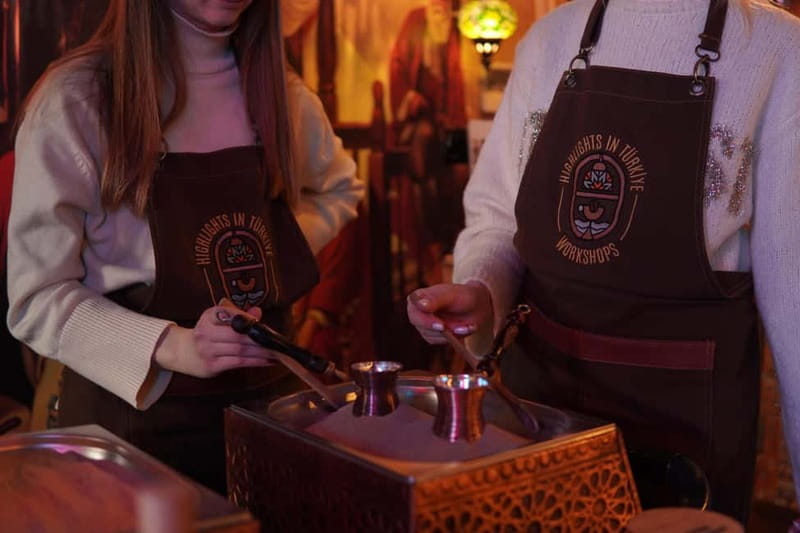
- Brew coffee on heated sand: Control the foam and timing with guidance from an instructor.
- Grind beans by hand: Use a traditional hand mill before preparing your own cup.
- Taste two Turkish styles: Compare classic Turkish coffee with nutty, caffeine-free menengiç coffee.
- Learn an Ottoman-era ritual: Hear how Turkish coffee became part of Turkey’s UNESCO-recognized cultural heritage.
- Read the coffee grounds: Close your cup, turn it over, and interpret the patterns in a friendly fortune ceremony.
- Take home practical souvenirs: The gift set includes a copper cezve, cup, coffee, and a recipe booklet.
A coffee workshop between Galataport and Galata Tower
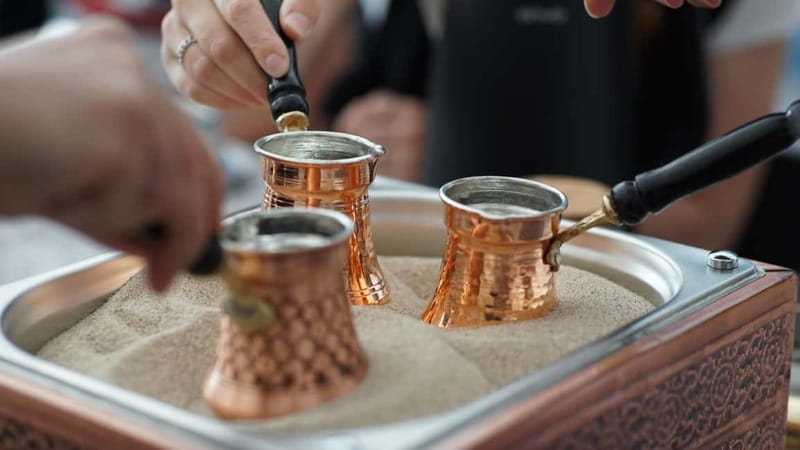
The workshop takes place in a spacious, bright studio in central Istanbul. Look for the entrance diagonally to the right of Arada Beyrut Cafe and directly across from Lavander Cafe. That location puts the activity within reach of two well-known parts of the city, so it can fit neatly into a day around Karakoy, Galataport, or the Galata Tower area.
This is a useful setup for an Istanbul itinerary. You are not being sent far outside the center for a specialist lesson, and you can combine the coffee session with restaurants, shops, and historic streets nearby. Still, allow time to find the studio. The meeting directions rely on nearby cafes rather than a large landmark or transport hub.
Inside, the high ceiling and open layout help the class feel less cramped. Other creative workshops may be taking place around you, adding a social studio feel. That also means this is not a private museum room or a quiet cafe corner. The mood is relaxed and shared.
More Turkish Coffee Experiences in Istanbul:
- Istanbul: Turkish Coffee Making and Fortune Telling Workshop
★ 4.9 · 1,308 reviews - Istanbul: Turkish Coffee Making and Fortune Telling Workshop
★ 4.9 · 451 reviews - Turkish Coffee on Sand Workshop: Fortune Telling & Gift Set
★ 5.0 · 309 reviews
Starting with beans, mills, and coffee stories
The session begins with an introduction to Turkish coffee and its place in Turkish life. You learn why this preparation method is different from filtered coffee or espresso, and how the drink became tied to hospitality, conversation, and ceremony.
The coffee is ground very finely. Instead of pressing a button, you turn a hand-operated mill and prepare the beans yourself. That small task matters. You see the texture change, smell the freshly ground coffee, and understand why the grind is central to the final cup.
Your instructor guides you through the process in English, Turkish, or Russian. Guides named in the class include Esin, Zeynep, Ilham, Rostum, and others. The teaching style can vary by guide, but the strongest part of the session is the personal help at the worktable. Esin is especially good at combining facts, jokes, and step-by-step instruction, while Zeynep has helped people who needed extra language support for family members.
The history section is not just filler before the brewing begins. Turkish coffee was added to UNESCO’s Intangible Cultural Heritage list, and the workshop explains the customs behind that recognition. You get a clearer sense of why the coffee is served slowly, why the grounds remain in the cup, and why the drink has long been linked with conversation and hospitality.
Brewing on sand, where foam matters
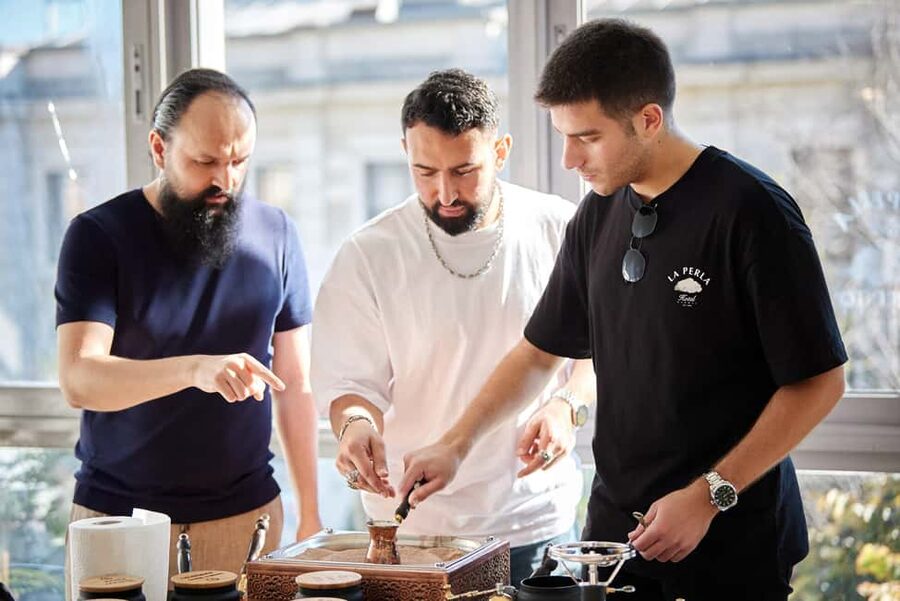
The most unusual part is the sand brewing. Your coffee pot sits in a roasting pan filled with heated sand. The sand transfers heat gradually and gives you control over the brewing process.
You add the finely ground coffee and manage the pot as it heats. Your goal is a thick foam on top without letting the coffee boil over. This sounds simple until you try to judge the right moment. The guide helps you watch the surface and adjust the pot, so the lesson remains hands-on without becoming frustrating.
The sand method also slows the process in a useful way. You are not rushing through a machine cycle. You watch the coffee change, talk with the group, and learn how small changes affect the foam. I like this part because it turns preparation into the main event rather than treating it as a technical step before the tasting.
You should expect a strong, unfiltered cup. Fine grounds settle at the bottom, so do not drink to the last drop. That remaining coffee is important later, when you turn the cup over for the fortune ceremony.
Tasting classic Turkish coffee and menengiç

The tasting includes traditional Turkish coffee, served in the familiar ritual style, along with menengiç coffee. Menengiç is made from the roasted fruit of the terebinth tree and is valued for its nutty flavor. It is caffeine-free, which gives you a gentler alternative to the classic cup.
The contrast makes the tasting more useful than simply serving one coffee twice. Traditional Turkish coffee is intense and familiar to anyone who has tried the style in Istanbul. Menengiç offers a different taste and shows you another drink associated with Anatolian coffee culture.
Turkish delights and other local snacks are included. These sweet bites balance the strong coffee and make the tasting feel more like a hosted ritual than a technical class. If you do not usually drink unfiltered coffee, the snacks help soften the experience.
The guide will help you understand what you are tasting, but this is not presented as a formal professional coffee certification course. You are learning a traditional home and cafe method, with cultural context and practice. That makes it a good choice for curious coffee drinkers, but less suitable if you want advanced roasting theory or a detailed study of coffee-growing regions.
More Roastery Tours in Istanbul:
- Hoi An: Vietnamese Coffee Making Workshop at Local Roastery
★ 4.8 · 174 reviews - Cartagena: Colombian Specialty Coffee Tasting
★ 4.4 · 130 reviews - Coffee Farm Tour with Roasting & Tasting Workshop – Da Lat
★ 5.0 · 126 reviews - Private Coffee Roasting Class
★ 5.0 · 101 reviews
The fortune-reading ceremony
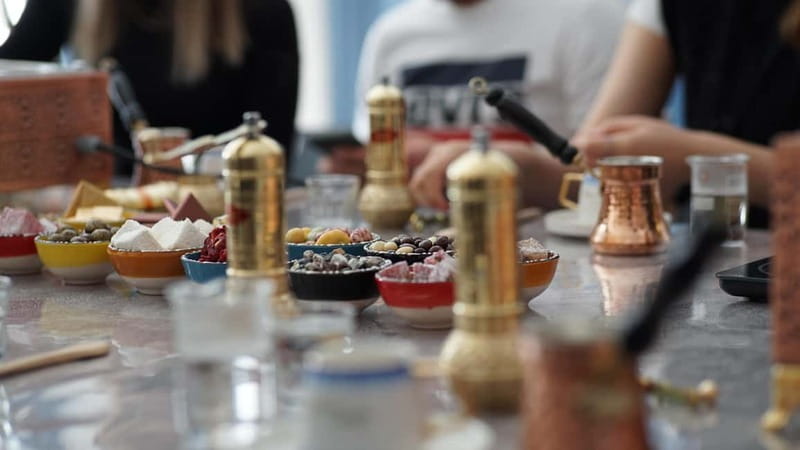
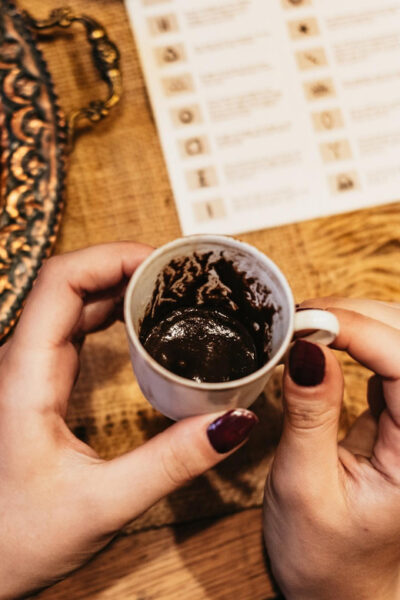
After drinking your coffee, you place the saucer over the cup and turn it upside down. As the grounds cool and leave patterns on the inside, the instructor reads the shapes and symbols.
This part is lighthearted, social, and closely tied to Turkish coffee customs. It gives the coffee ritual a storytelling ending. Guides such as Esin and Irem have made this especially engaging by treating the symbols as prompts for conversation rather than making grand claims.
You should approach the reading in that spirit. It is not presented as a scientific service or a guaranteed forecast. The fun comes from seeing what the patterns suggest and joining a tradition that has been passed around coffee tables for generations.
For couples, friends, and families, the reading can be the most memorable part because everyone compares symbols and stories. If you prefer a purely practical cooking lesson, this may feel like an unnecessary extra. If you enjoy cultural customs and a little theater, it rounds out the session well.
The gift set adds real value
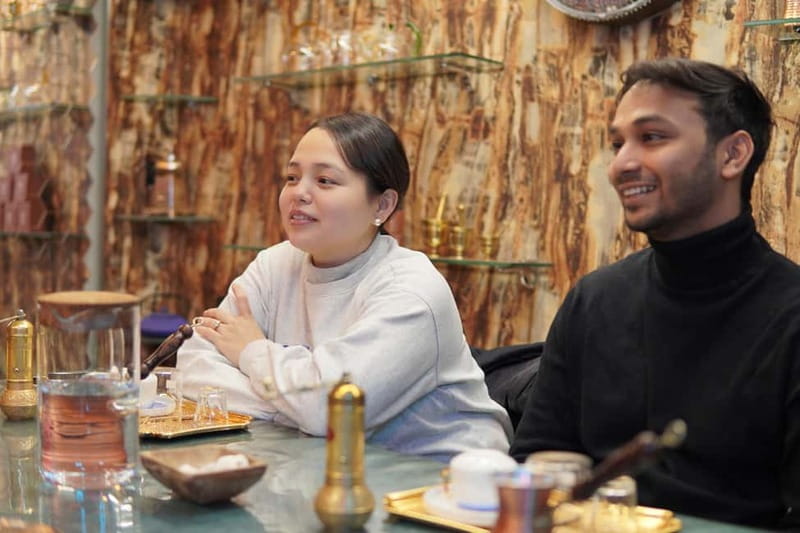
At $33 per person, the class becomes easier to justify because the take-home items are part of the package. You receive a traditional high-quality coffee pot, described as a copper cezve, along with a cup, premium coffee or ground coffee, and a Turkish coffee booklet.
You also use a hand grinder during the lesson, though the listed take-home set centers on the cezve, cup, coffee, and booklet. The booklet covers coffee history and brewing techniques, giving you a way to repeat the process at home.
That is more useful than a small branded souvenir. A cezve is an actual tool, and the booklet helps you remember the order of the steps after your Istanbul trip. You may still need your own heat source, water, and finely ground beans at home, but the basic equipment is covered.
The value depends on what you want from the activity. If you only want to sample Turkish coffee, a cafe will cost less and take less time. If you want instruction, cultural context, a social ritual, and equipment to keep, the price is reasonable for a central Istanbul workshop.
What the 90-minute schedule feels like
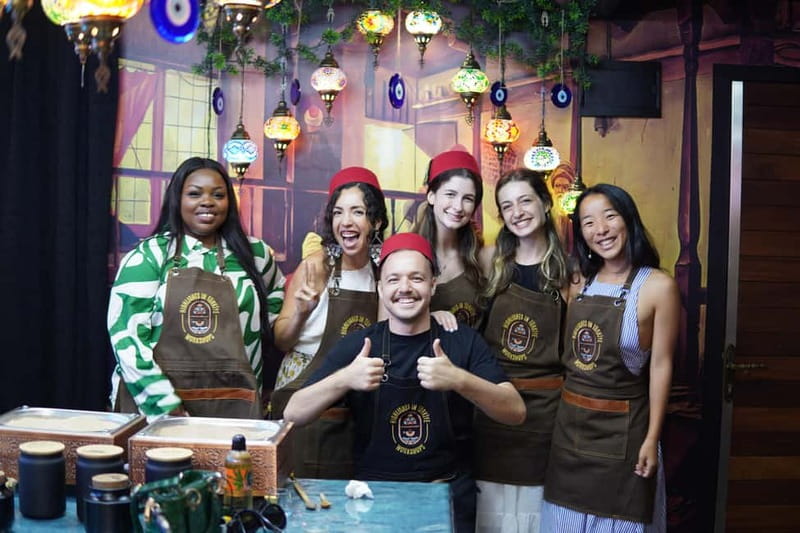
The full experience lasts about 90 minutes. That gives enough time for an introduction, hand-grinding, brewing, tasting, and the fortune ceremony without making every step feel hurried.
The timing also explains why this should be treated as a planned activity, not a quick stop between attractions. You need to be present for the sequence, since the brewing and grounds reading are linked. Arriving late could mean missing the early explanation or the chance to prepare your own coffee.
Group size can vary. One person had a one-on-one class, while another group included seven people. A smaller group gives you more time for questions and close help at the sand pan. A larger group can feel more social, though you may spend more time watching other people complete a step.
The instructors have received repeated praise for being friendly, clear, and adaptable. Esin is noted for her energy and humor, Zeynep for patient support and language help, Ilham for a calm style, and Rostum for making the session interactive in several languages. The specific guide is not something you should assume in advance, but the available teaching languages are English, Turkish, and Russian.
Who will get the most from this activity
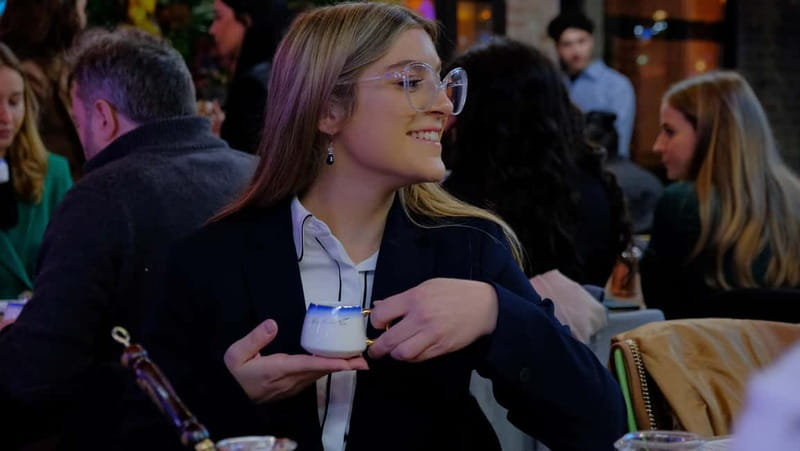
I would choose this for anyone who wants a cultural activity with a clear practical result. Coffee lovers get to control the brewing, while history-minded visitors get an introduction to Ottoman coffee customs and UNESCO recognition.
It also suits people who prefer a small workshop to a large guided tour. You do not spend the session moving from one sight to another. You stay in one studio and focus on one tradition from several angles.
Families and mixed-age groups may enjoy the variety. Grinding, sand brewing, tasting, and fortune reading each offer something different. The activity can also work well for a couple looking for an indoor break near Galataport or Galata Tower.
I would think twice if you dislike strong coffee, do not enjoy social participation, or want a short tasting with no instruction. The process is the point, and the fortune reading is part of the appeal. There is no need to take it seriously, but you do need to be comfortable joining in.
Practical details before you reserve
The provider offers free cancellation up to 24 hours before the start time, with a full refund. You can also reserve now and pay later, which helps if your Istanbul plans are still shifting.
Check the available start times because the activity runs on scheduled sessions. The meeting point is a bright studio near Arada Beyrut Cafe and Lavander Cafe, not a famous public monument. Save the nearby cafe names before setting out.
The experience is offered in English, Turkish, and Russian. If you are bringing relatives who speak limited English, mention that when arranging the booking or rely on a family member to help translate. The class can accommodate language support informally, but the listed instruction languages are the ones to count on.
Should you book the Turkish coffee workshop?
Book it if you want to understand Turkish coffee as a ritual rather than simply order it in a cafe. The sand brewing, hand grinder, menengiç tasting, and coffee-ground reading give the session several distinct parts, while the cezve and booklet let you repeat the tradition at home.
Skip it if your schedule is tight or you only want a fast caffeine stop. At $33, the price is fair when you value the lesson and gift set, but it is not the cheapest way to drink coffee in Istanbul.
For most culture seekers, I would make room for it, especially on a rainy afternoon or between Galataport and Galata Tower. You leave with a better understanding of the drink, a few stories to tell, and equipment that can keep the Istanbul memory alive in your own kitchen.
FAQ
Where does the Turkish coffee workshop take place?
It takes place in a spacious, bright studio in the Marmara Region of Turkey, between Galataport and Galata Tower. The studio is diagonally to the right of Arada Beyrut Cafe and directly across from Lavander Cafe.
How long does the activity last?
The workshop lasts 90 minutes.
How much does the experience cost?
The listed price is $33 per person.
Which languages are available?
Instruction is available in English, Turkish, and Russian.
Do I get to make my own coffee?
Yes. You hand-grind the beans, manage the brewing, and control the foam while preparing the coffee with guidance from the instructor.
Is the coffee brewed on sand?
Yes. The workshop includes a traditional roasting pan with heated sand for the brewing process.
What types of coffee will I taste?
You will taste traditional Turkish coffee and menengiç coffee. Menengiç is a caffeine-free drink with a nutty flavor.
Is fortune telling included?
Yes. The activity includes a coffee-ground fortune-reading ceremony based on the patterns left in your cup.
What is included in the gift set?
The take-home set includes a traditional coffee pot called a cezve, a cup, coffee or ground coffee, and a Turkish coffee booklet. The activity also includes Turkish delights and snacks during the session.
Can I cancel the booking?
You can cancel up to 24 hours in advance for a full refund. Reserve now and pay later is also available.
More Brewery Visits in Istanbul
- Coffee Brewing Workshop
★ 5.0 · 28 reviews - Medellin: Avoeden Café Coffee Brewing Workshop
★ 5.0 · 12 reviews - Discover Japanese Coffee Brewing Experience at Tokyo
★ 4.9 · 8 reviews - Antalya: Turkish Coffee Brewing on Sand & Fortune Telling
★ 4.9 · 7 reviews
Just added around Istanbul
- Turkish Coffee and Traditional Turkish Dessert Cooking★ 4.6 · 8 reviews
- Walking Tour from Taksim to Galata (inc. Turkish Coffee Tasting)★ 5.0 · 10 reviews
- Istanbul Turkish Coffee Cooking and Tasting with Locals at Home★ 5.0 · 3 reviews
- Istanbul Home Style Turkish Coffee Making and Fortune Telling★ 5.0 · 4 reviews
- Home Style Turkish Coffee Making and Fortune Telling★ 5.0 · 10 reviews
- İstanbul: Bosphorus Private Yacht Cruise with Tea and Coffee★ 4.0 · 18 reviews
- Istanbul: Turkish Coffee Trail★ 3.6 · 16 reviews
- Afternoon Bosphorus Boat and Bus Tour with cable car from Pierre Loti Coffee★ 3.0 · 25 reviews
Turkish Coffee Experiences, compared.
Turkish Coffee Making and Fortune Telling Workshop
Read our review →
Turkish Coffee Making and Fortune Telling Workshop
Read our review →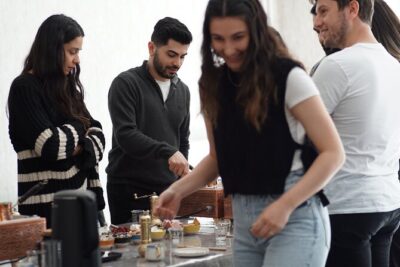
Turkish Coffee on Sand Workshop: Fortune Telling & Gift Set
Read our review →
Istanbul Turkish Coffee Making & Fortune Telling Workshop
Read our review →
Sand Brewed Turkish Coffee Workshop in Old Town
Read our review →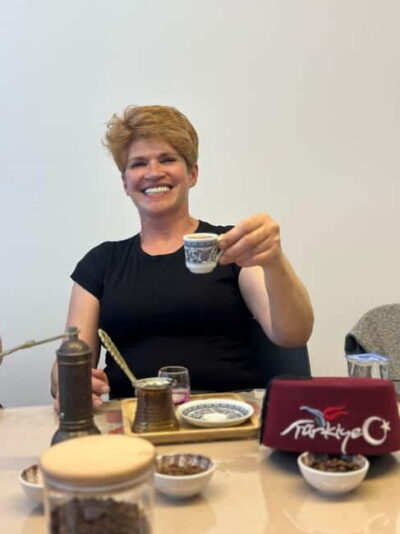
Turkish Coffee Workshop + Fortune Telling + Gift Set
Read our review →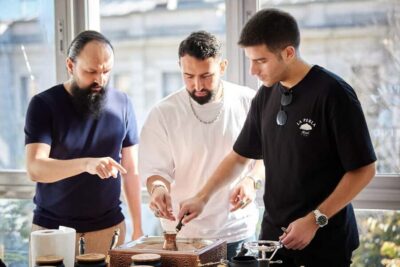
Turkish Coffee Workshop on Sand & Fortune + Gift
Read our review →Browse the lists this tour appears in