
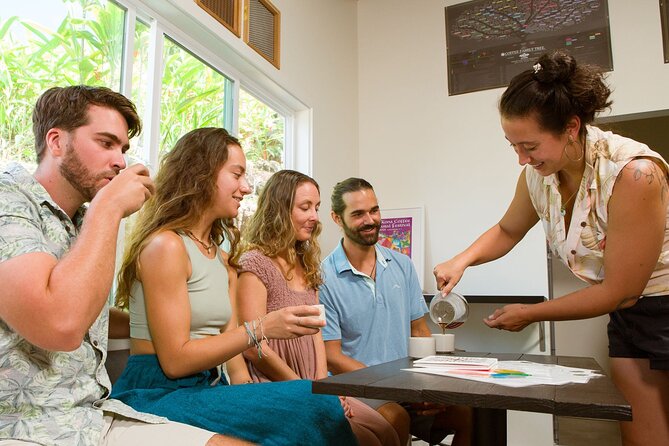
Review · BIG ISLAND
Coffee Brewing Workshop
The most useful part of this one-hour coffee class is that you do not simply taste finished coffee. You brew it three ways, then compare how pour-over, French press, and espresso change the cup. That makes coffee advice far easier to understand once you are back in your kitchen.
I like the tiny group size, capped at four people, and the chance to step into the roasting room and ask about the full process. The free tasting of Medium and Dark 100% Kona Coffee is another strong point. The only drawback is that this is a focused workshop, not a long plantation tour, so visitors hoping for a full morning of farm activity may want to add the optional farm tour.
Key points
- Three brewing methods: Compare pour-over, French press, and espresso in one compact session.
- Small class size: A maximum of four people allows plenty of time for questions and hands-on help.
- Roasting-room access: See where the beans are roasted and ask about growing, harvesting, and roasting.
- Kona tasting included: Sample both Medium and Dark 100% Kona Coffee without an extra tasting fee.
- Optional farm tour: Continue with a free farm visit after the workshop if you want more context.
- Good beginner value: The $20 price buys practical brewing instruction, tasting, and personal attention.
Three Brewing Methods in One Small Class

Hala Tree Coffee’s workshop is built around a simple question: why can the same coffee taste different depending on how you brew it? In about an hour, you work through three methods, pour-over, French press, and espresso, and learn how each one affects flavor and the way you drink the coffee.
That structure works well because it turns abstract coffee talk into a direct comparison. You can taste the difference instead of trying to remember a list of terms. If you normally add cream or sugar, the tasting also gives you a chance to try the coffee black and notice its flavor on its own.
The workshop is hands-on, not just a talk. You get a baseline for brewing a good cup at home, with practical guidance aimed at ordinary coffee drinkers. The class is not presented as advanced barista training, and that is part of its appeal. You do not need to arrive with specialty coffee experience.
For a beginner, the class should answer useful questions: How does a pour-over differ from a French press? What changes when coffee is made as espresso? How does the roast affect the flavor? The hour is short, but the format keeps moving and gives you several ways to taste what you are learning.
More Roastery Tours in the USA:
- Private Coffee Roasting Class
★ 5.0 · 101 reviews - New York City Specialty Coffee Tour
★ 5.0 · 17 reviews - Behind The Scenes Of The Coffee Roasting Process 101
★ 5.0 · 2 reviews
Inside Hala Tree Coffee Near Captain Cook
The workshop begins at Hala Tree Coffee, at 82-5966 Mamalahoa Highway in Captain Cook. That puts the experience in the Kona coffee area on Hawaii Island, rather than in a hotel or a city classroom. The setting matters because the class connects the drink in your cup with the place where Kona coffee is produced.
Before or alongside the brewing lesson, you can ask about the larger coffee process. The experience covers growing, harvesting, and roasting, so you get a basic view of how the bean changes before it reaches a brewer. Questions are encouraged, which is especially useful in a group of only four.
You also get access to the roasting room. This is one of the more appealing details for coffee fans, since roasting is the step that helps shape the flavor you later taste. The visit does not promise a long technical tour of every machine or stage, so keep your expectations measured. Think of it as a chance to see the working coffee side of the business and ask direct questions.
Guides named Marissa and Kat are associated with the class. Marissa is praised for explaining the growing, roasting, and preparation stages clearly, while Kat is described as willing to handle unusual questions and make the class fun. Since guide assignments can vary, you should not count on one specific person, but the available teaching style appears friendly and personal.
Tasting Medium and Dark Kona Coffee
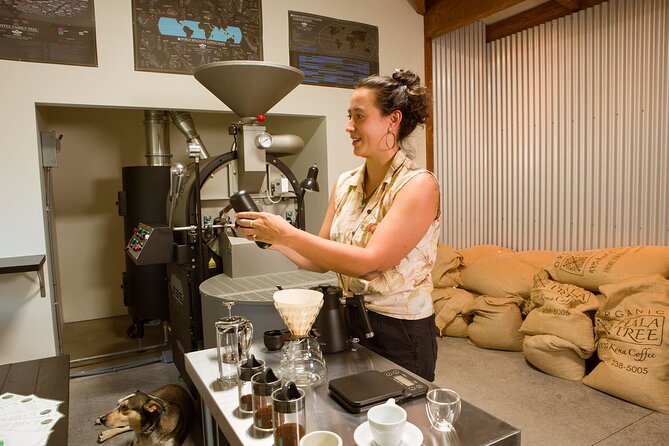
The tasting includes free samples of Medium and Dark 100% Kona Coffee. This gives you a useful comparison within the same regional coffee tradition. Instead of sampling unrelated beans from different places, you can focus on how roast level changes the cup.
A medium roast and a dark roast can present very different impressions, even when the coffee comes from the same source. The class uses that contrast to show how preparation and roast affect the final drink. You are not simply told that roast matters. You get to taste the result.
The coffee is served black during the tasting, which may be a small challenge if your usual cup includes milk, cream, or sugar. It is also one of the best reasons to attend. Trying the coffee without additions lets you pay attention to its basic flavor, aroma, and finish. One useful lesson from the class is that a well-made cup may not need anything added.
The experience also sells coffee and other products, so you can buy beans after learning how to prepare them. That purchase is optional, of course, but the workshop gives you better information for choosing a roast. If you enjoyed one of the samples, you can take home a direct reminder of the class.
One extra detail worth noting is the cherry tea made by the farm. It is not listed as a formal part of the workshop, so do not book solely for that. Still, it is a worthwhile thing to ask about if it is available during your visit.
What the Pour-Over Lesson Adds
Pour-over is often the clearest method for learning how technique changes flavor. Water passes through coffee grounds and a filter, so the way you pour, the contact time, and the grind all matter. The workshop gives you a starting point for making a cleaner, more controlled cup at home.
You should leave with a better sense of why small brewing choices matter. The class is not described as a technical certification course, so it will not cover every possible piece of equipment or recipe. Instead, it gives you a usable foundation and a way to repeat the process with more confidence.
This section is especially helpful if you have bought good coffee but found that your home cup never tastes as good as expected. Better beans alone do not solve every problem. The brewing method can bring out different qualities, and the workshop helps you connect that cause and effect.
More Brewery Visits in the USA:
- Istanbul: Turkish Coffee Brewing on Sand + Gift Set
★ 4.9 · 49 reviews - Medellin: Avoeden Café Coffee Brewing Workshop
★ 5.0 · 12 reviews - Discover Japanese Coffee Brewing Experience at Tokyo
★ 4.9 · 8 reviews - Antalya: Turkish Coffee Brewing on Sand & Fortune Telling
★ 4.9 · 7 reviews
French Press and Espresso Side by Side
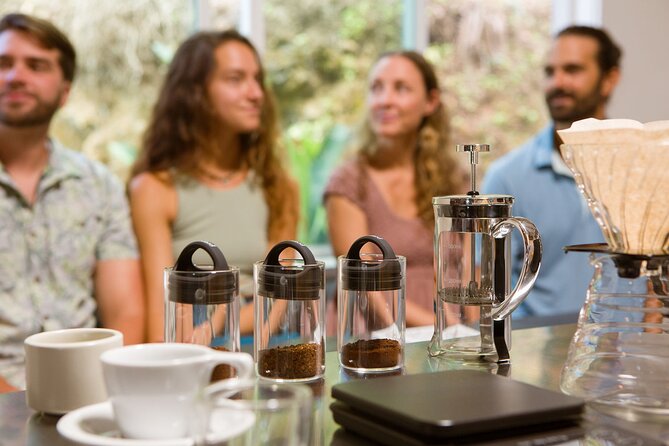
French press provides a useful contrast to pour-over. The coffee is prepared in a different way, producing another texture and flavor profile. By tasting both during the same class, you can decide which style fits your preferences and your normal morning routine.
The French press portion should appeal to people who want a simple home method with a fuller feel in the cup. You do not need to buy expensive equipment to apply the general lesson, which improves the class’s value for casual coffee drinkers.
Espresso completes the comparison. It shows how a more concentrated preparation changes the drinking experience. The workshop does not claim to turn you into a professional espresso maker in an hour, and you should not expect that. What it does provide is a clear look at how espresso differs from longer brewed coffee.
Seeing all three methods together is more useful than learning one method in isolation. You can compare them while the differences are fresh. That makes it easier to decide what you actually want to repeat at home.
A Free Farm Tour After the Workshop
After the workshop, you can take an optional free farm tour. This adds a second layer to the visit by connecting the brewing lesson with the coffee plants and farm setting.
The farm tour is not required, and the main class does not depend on it. If you have limited time, the one-hour workshop can work on its own. If you want more background on Kona coffee production, stay for the additional visit.
The wording matters here: the farm tour is optional, so confirm the timing on arrival if you want to include it. The information provided does not give a separate duration or a detailed route. You should therefore see it as an informal add-on rather than a guaranteed extended plantation program.
For many visitors, this will be the right order: learn how the drink is made, then look at where the coffee begins. It gives the visit a natural flow without forcing you into a long tour if your schedule is tight.
Is $20 a Good Value?
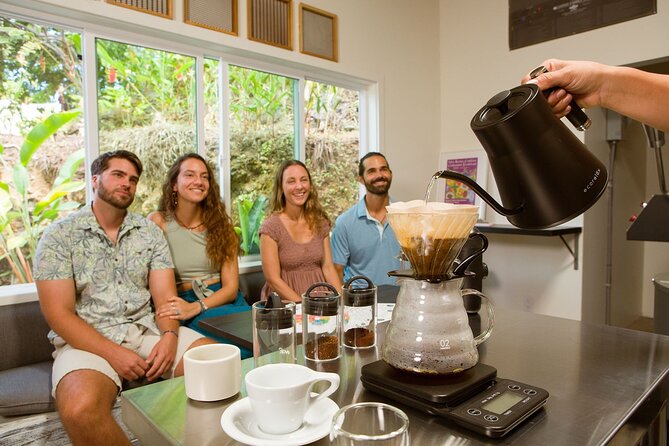
At $20 per person, this is an easy experience to justify for anyone who already likes coffee or wants a practical introduction. You receive instruction in three brewing methods, samples of two Kona roast styles, access to the roasting room, and the option of a free farm tour afterward.
The small group limit improves the value. With no more than four people, you have a better chance to ask questions and get help during the hands-on brewing. A larger class might cost the same but leave you watching from the edge. Here, the personal format is a central part of what you are paying for.
The price is less compelling if you only want a quick coffee sample. You can find coffee tastings elsewhere, but this experience is designed around learning. The best return comes when you pay attention to the brewing steps and plan to use the advice at home.
I would also treat the workshop as a good choice for a couple or a solo visitor. Couples can compare their impressions of each method, while solo visitors are not likely to feel lost in a large group. Families and friends can book as well, but the maximum of four means the group may fill quickly.
Timing, Meeting Point, and Cancellation
The experience lasts about one hour and begins and ends at Hala Tree Coffee on Mamalahoa Highway in Captain Cook. You need to make your own way to the meeting point, since no transportation service is described.
Mobile tickets are accepted, and the workshop is offered in English. Confirmation arrives when you book. Because the class is limited to four people and averages about 15 days of advance booking, reserve ahead if the timing matters to your Hawaii Island plans.
Free cancellation is available if you cancel at least 24 hours before the local start time. A cancellation within 24 hours is not refunded, and changes inside that window are not accepted. Keep that rule in mind before placing the workshop between fixed tours or flights.
Who Should Book This Coffee Workshop?
I would recommend this class to coffee drinkers who want more than a quick plantation stop. It suits beginners who want clear instruction, home brewers who want to improve their routine, and coffee fans who enjoy tasting the same product prepared in different ways.
It also works well for a honeymoon or a low-key afternoon activity. The class is short, personal, and tied to local Kona production. You can learn something useful without giving up a full day of sightseeing.
You may want to skip it if you are looking for a large-scale farm attraction, a long guided walk, or an advanced professional barista course. The workshop is compact and practical. Its strength is the close instruction, not a packed list of attractions.
Should You Book It?
Book this Hala Tree Coffee workshop if you want to understand why brewing method changes flavor and you value time to ask questions. The combination of three brews, two Kona roast samples, roasting-room access, and a maximum of four people makes $20 a strong value.
Add the free farm tour if you want more of the growing side of Kona coffee. If your interest ends with the perfect home cup, the one-hour workshop alone should be enough. Just reserve ahead, arrive at the Captain Cook meeting point, and cancel at least 24 hours early if your plans change.
FAQ
How long does the Coffee Brewing Workshop last?
The workshop lasts approximately one hour.
Where does the workshop start and end?
It starts and ends at Hala Tree Coffee, 82-5966 Mamalahoa Hwy, Captain Cook, Hawaii 96704.
How many people can join the workshop?
The activity has a maximum of four participants.
Which brewing methods are included?
You will learn about and taste three methods: pour-over, French press, and espresso.
Is a farm tour included?
You can take a free farm tour after the workshop, but it is optional.
What is the cancellation policy?
You receive a full refund if you cancel at least 24 hours before the local start time. Cancellations or changes made within 24 hours are not accepted for a refund.
Just added around the USA
- Roasted in Seattle Bean to Cup Coffee Tour★ 5.0 · 5 reviews
- Roasted in Seattle: Bean to Cup Coffee Tour★ 5.0 · 15 reviews
- Roast Your Own Coffee★ 5.0 · 2 reviews
- Coffee Roasters of Portland Eastside Walking Tour★ 5.0 · 7 reviews
- Kona Coffee Tasting: A Farm to Cup Experience★ 5.0 · 5 reviews
- Turkish Coffee Fortune Reading★ 5.0 · 15 reviews
- Historic Grounds: A Music City History and Coffee Morning Tour★ 5.0 · 19 reviews
- The Little Havana Walking Tour: A Taste of Cuba in Miami★ 4.5 · 2 reviews
Specialty Coffee & Roastery Tours, compared.
Vietnamese Coffee Making Workshop at Local Roastery
Read our review →
Coffee Farm Tour with Roasting & Tasting Workshop – Da Lat
Read our review →
Experience specialty coffee with sustainable coffee farmers
Read our review →
Vietnamese Bread & Brew: Banh Mi Baking Class & Specialty Coffee
Read our review →
Santo Domingo Small Group Walking Tour: Beer and Specialty Coffee
Read our review →
Browse the lists this tour appears in