
Review · GERMANY
Berlin: DIY Coffee Roasting Workshop
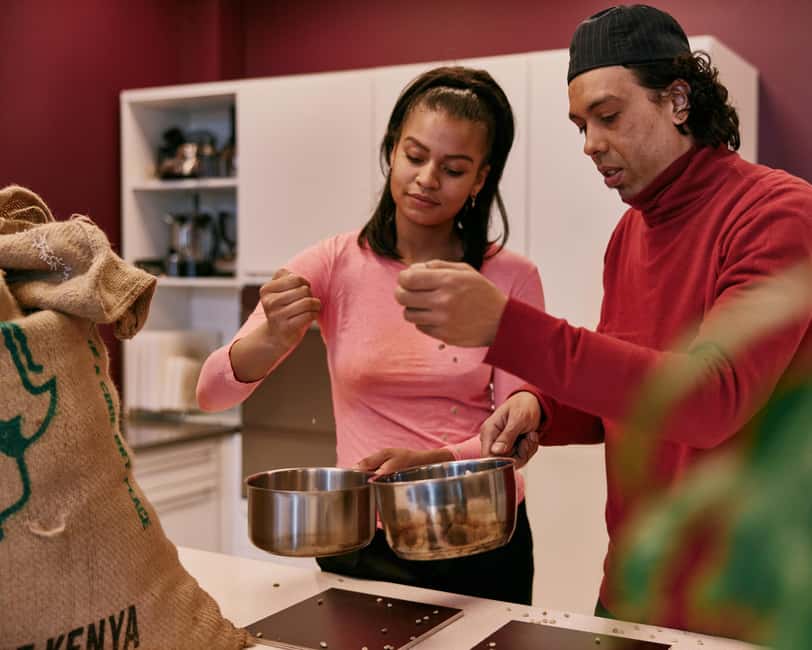
The most unusual part of this Berlin experience is also the simplest: you roast green coffee beans in a household pot. You watch the beans change color, smell the roast develop, and learn a practical method you can repeat at home without buying a large machine.
I like the hands-on format, because you do not just hear about roasting, you roast two different coffees yourself. I also like that the workshop connects the cup to its source, with a coffee cherry, East African coffee history, and a look at the host’s 20 coffee trees.
The main consideration is the price: $81 for two hours is a serious spend for a short workshop. It makes the best sense if you value the take-home coffee, personal instruction, tasting, and the chance to learn a home method rather than simply wanting a cup of coffee in Berlin.
Key points to know before booking
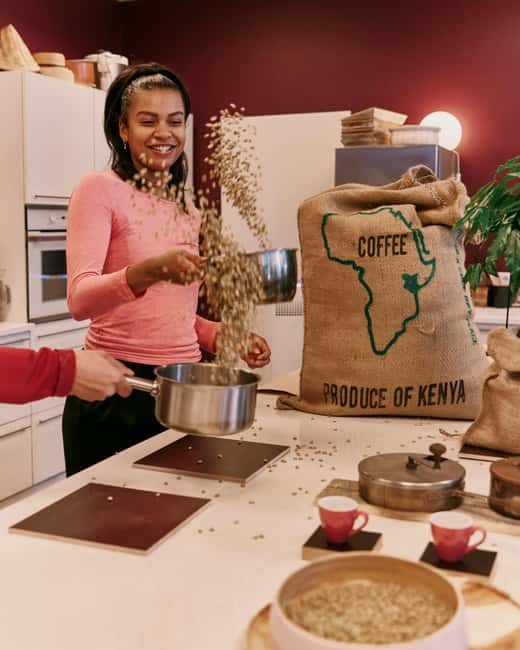
- Roast in a household pot: Learn a low-tech method you can try in your own kitchen.
- Work with two coffee types: Compare how different beans develop during roasting and brewing.
- See a coffee cherry up close: The workshop links roasted beans to the fruit they come from.
- Taste what you make: Grind, brew, and drink both fresh roasts during the session.
- Take home your own coffee: Your roasted beans are packaged for you to serve at home.
- Best for adults and older teens: The workshop is not suitable for children under 16.
Roasting coffee in a Berlin cooking pot
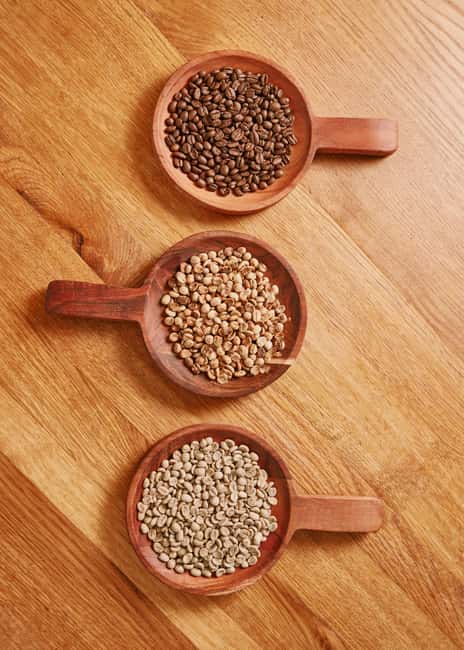
This workshop turns an everyday kitchen tool into a small coffee roaster. You begin with green coffee beans, not the familiar brown beans sold in shops, and follow step-by-step instructions as they heat in a pot.
That change is the heart of the experience. Instead of treating coffee as a finished product, you see how roasting shapes its color, aroma, and flavor. The process gives you a useful answer to a question many coffee drinkers have: what actually happens before the beans reach the grinder?
The method is traditional and intentionally simple. You are not being trained to operate a commercial roaster, and this is not a technical certification course. It is a practical introduction for anyone who wants to understand the roast and try it at home with basic equipment.
You will roast two different types of coffee during the session. That comparison matters. One coffee can show you how a particular bean reacts to heat, while the second gives you a point of reference for aroma and taste. Even in a relaxed workshop, side-by-side tasting makes the lesson easier to remember.
Expect an active session rather than a lecture. You will handle the beans, follow the roasting stages, and pay attention as the smell of fresh coffee fills the room. The host supplies the instructions and explains the roasting techniques behind the changes you see.
More Roastery Tours in the world:
- Hoi An: Vietnamese Coffee Making Workshop at Local Roastery
★ 4.8 · 174 reviews - Cartagena: Colombian Specialty Coffee Tasting
★ 4.4 · 130 reviews - Coffee Farm Tour with Roasting & Tasting Workshop – Da Lat
★ 5.0 · 126 reviews
From coffee cherry to roasted bean
One of the more distinctive details is the chance to open an original coffee cherry. That small demonstration helps connect the finished drink with the fruit that grows on a coffee tree.
Coffee culture can feel distant when you only encounter it as a bag of ground beans. Seeing the fruit gives you a clearer sense of the crop’s starting point. The workshop also places coffee culture in East Africa, where coffee originated, rather than treating the drink as a purely European café tradition.
You will also get a look at the host’s own 20 coffee trees. This adds a personal touch to the broader story. It is one thing to hear about coffee growing, and another to see that the person leading the workshop has a direct relationship with the plant itself.
The information reaches beyond roasting temperature and timing. You will hear about coffee’s history, different roasting processes, and the host’s engagement in Kenya. That combination should suit you if you enjoy food experiences that explain both the product and the people connected to it.
The historical material is presented as a short part of the workshop, not as a long academic talk. If your main goal is to roast and taste, you will get there without sitting through hours of background information. If you want a full specialist course on coffee production, this two-hour format will naturally feel limited.
Grinding, brewing, and tasting both coffees
After roasting, the beans are ground and brewed on site. This is the payoff of the workshop, because you get to taste the result while the lesson is still fresh in your mind.
You will try both coffee types in a relaxed setting and compare your impressions. The tasting is not just a free drink added at the end. It gives you a chance to notice how the roasting process affected the cup, and it helps turn abstract talk about flavor development into something you can actually taste.
Freshly roasted coffee can be a different experience from the beans you normally use at home. The timing, grind, and brewing method all affect the result, so you should approach the tasting as an introduction rather than a promise that every cup will taste perfect.
The session includes a short presentation on coffee and roasting processes. That keeps the workshop from becoming a simple make-and-take activity. You will leave with a basic framework for thinking about roast development, flavor, and the differences between coffee types.
I especially like the order of the experience: roast first, then grind and brew. You see the beans change, wait for the next stage, and finally drink them. That sequence gives the coffee a story, and it makes the tasting more satisfying than an ordinary café stop.
Packaging your own coffee to take home
At the end, your freshly roasted beans are placed in attractive packaging for the trip home. The experience includes two bags of self-roasted coffee, according to the booking details, which gives you something tangible beyond the memory of the workshop.
This is an important part of the value. At $81, you are paying for instruction, ingredients, tasting, and a take-home product. If you would buy specialty coffee anyway, the packaged beans help justify the cost. If you mainly want the cheapest way to drink coffee in Berlin, this is not the right comparison.
The take-home beans also let you repeat the experience after you leave. You can serve them to friends and family and explain that you roasted them yourself. One participant planned to proudly serve the coffee at home, and that is exactly the kind of social payoff this workshop creates.
You may also buy more unroasted coffee beans if you want to continue practicing. The extra purchase is optional, so you are not required to spend more. It does give you a practical way to keep testing the pot-roasting method after the two-hour course.
The packaging is described as trendy, but the more important point is that it makes the beans easy to carry and present. You are not leaving with loose coffee in an improvised container.
A few more coffee tours around the world worth a look
- Hoi An: Vietnamese Coffee Culture and Coffee Making Class
★ 4.9 · 4,006 reviews - Hanoi Coffee Experience: 6 Brews, 9 Recipes & 3 Liquor Tastings
★ 5.0 · 2,945 reviews - 4×4 Dominican Adventure with Chocolate and Coffee Tasting
★ 5.0 · 2,920 reviews - Rome Morning Vespa Sidecar Tour in Rome with Cappuccino
★ 5.0 · 1,771 reviews
What the $81 price really covers
The listed price is $81 per person, and the session lasts two hours. That works out to a substantial hourly cost, so you should book it for the teaching and activity rather than for the volume of coffee alone.
The fee includes participation in the DIY course, instructions, two coffee types, roasting techniques, coffee history, the coffee-tree presentation, grinding, brewing, tasting, the short presentation, packaging, and home-roasting tips. It is a fairly full package for a compact workshop.
I would compare it with other hands-on food classes, not with a coffeehouse tasting. The value improves if you are curious about making coffee at home, enjoy small-group instruction, or want a distinctive birthday or couple’s activity. It is also a useful choice when you have already seen Berlin’s major sights and want a slower, more personal stop.
The value is weaker if you do not drink coffee, dislike practical kitchen activities, or want a long tour of Berlin. The experience stays focused on coffee. It does not include a city walk or a broader food tour.
The three available ratings are all five out of five, with praise centered on fun, learning, the fresh tasting, the host’s knowledge, and the two take-home bags. That pattern gives you a clear picture of the workshop’s strongest points, though the small number of ratings means you should still judge it by your own interest in coffee.
Language, age, and access details
The workshop is offered in German and English, so you can choose the language that works best for you. Some content may be shown in its original language, which is worth keeping in mind if you want every part of the presentation in English.
Children under 16 are not suitable for this activity. That age limit fits the format, which includes hot roasting equipment, coffee preparation, and a fairly focused explanation of roasting and coffee culture.
The workshop is wheelchair accessible. That can make it a practical choice for visitors who need an accessible activity, though you should still confirm the exact meeting arrangements when checking availability.
The duration is two hours, with starting times dependent on the date you select. The provider is CoffeeandBananas. No individual instructor name is supplied, but the host leads the roasting, presentation, tasting, and home-roasting advice.
You can cancel up to 24 hours in advance for a full refund. A reserve-now-and-pay-later option is also available, which helps if your Berlin schedule is still changing.
Who will enjoy this coffee workshop most
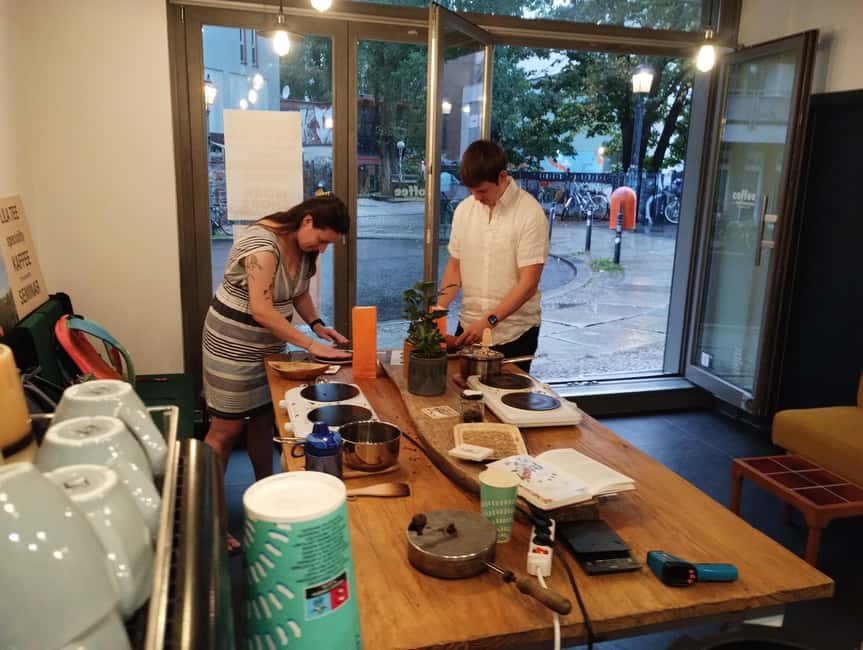
This is a strong choice for coffee lovers who want to understand the drink at a basic, practical level. You do not need specialist equipment at home, because the central lesson is how to roast in a pot.
It also works well as a birthday activity for a partner or friend. The workshop offers something to do together, a tasting at the end, and a pair of packaged coffee bags to take home. It has more substance than simply meeting for coffee, without requiring a full day.
You should also consider it if you like food experiences with a personal story. The coffee cherry, the host’s 20 trees, and the connection with Kenya give the session more character than a standard barista lesson.
It may not suit you if you prefer a fast, polished demonstration where you simply watch someone else work. The hands-on approach means you will spend time following instructions and paying attention to the roast. That is the point for some people, but it will feel like work if you only want to relax.
The session is also not aimed at young children, and the two-hour format may feel too short for anyone seeking a detailed professional roasting course. Think of it as a friendly introduction with real practice, not formal vocational training.
Practical tips for getting the most from the session
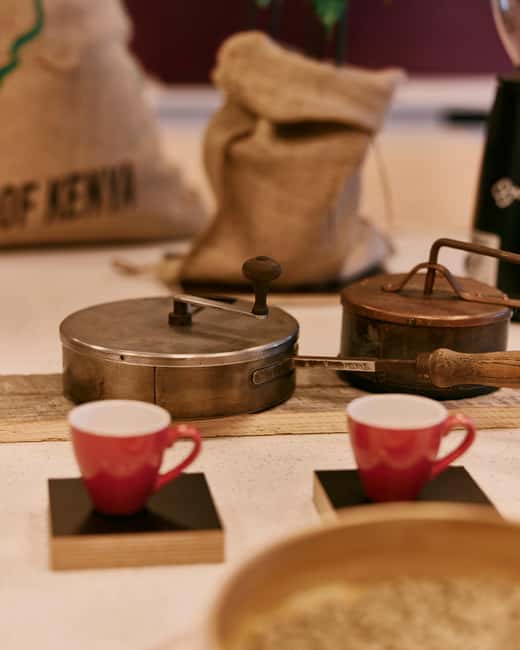
Arrive ready to participate. The useful part is not only the final cup, but also noticing the beans as they move from green to roasted.
Wear something you are comfortable in for a food-related workshop. The description does not give specific clothing requirements, but roasting coffee in a pot is a practical activity, not a formal tasting event.
Pay attention to the host’s home-roasting tips. The point is to leave with a method you can repeat, and small details about heat, timing, and flavor development will matter when you try the process later.
Taste the two coffees separately and remember what you notice. You do not need expert vocabulary. Simple observations about smell, strength, or preference will help you compare your home results.
If you plan to keep roasting, consider buying additional unroasted beans at the end. This is optional, but it saves you from having to find green beans on your own immediately after the workshop.
Give yourself time after the activity to carry the packaged beans safely. The coffee is a souvenir you can use, so it is worth treating it as part of your Berlin food experience rather than an afterthought.
Should you book the Berlin DIY Coffee Roasting Workshop?
Book it if you want a personal, hands-on coffee experience and like the idea of roasting beans in a simple pot at home. The strongest reasons are the two coffee types, the fresh tasting, the East African and Kenyan connections, and the two bags of beans you take with you.
I would especially recommend it for coffee drinkers, couples, birthday gifts, and curious cooks who enjoy learning by doing. The perfect five-out-of-five ratings line up with the activity’s clear strengths: it is fun, informative, social, and gives you a useful souvenir.
Skip it if $81 feels too high for a two-hour activity, if you do not drink coffee, or if you want a broader Berlin food or history tour. For the right audience, though, this is a memorable way to turn a daily habit into a small craft you can continue at home.
FAQ
Where does the DIY coffee roasting workshop take place?
The experience takes place in Berlin, Germany, with CoffeeandBananas as the provider.
How long does the coffee workshop last?
The workshop lasts two hours.
How much does the workshop cost?
The price is $81 per person.
What languages are available?
The instructor offers the experience in German and English. Some content may be shown in its original language.
What will I roast during the workshop?
You will roast two different types of green coffee beans in a household pot.
Can I drink the coffee I roast?
Yes. After roasting, the beans are ground and brewed so you can taste both coffees during the workshop.
Do I take coffee home afterward?
Yes. Your self-roasted beans are placed in packaged bags for you to take home. The experience includes two bags of roasted coffee.
Is the workshop suitable for children?
No. Children under 16 are not suitable for this activity.
Is the activity wheelchair accessible?
Yes. The workshop is wheelchair accessible.
Can I cancel my booking?
Yes. You can cancel up to 24 hours in advance for a full refund. You can also reserve now and pay later.
Just added around the world
- Yerevan: Private Coffee Tour with 2 Café Stops★ 5.0 · 2 reviews
- Vietnamese Coffee 101 Workshop★ 5.0 · 11 reviews
- Vietnamese Coffee Making Class in Hoi An★ 5.0 · 4 reviews
- Vietnamese cooking class and coffee making with local girl★ 5.0 · 5 reviews
- Venice Delights: Coffee & Food Experience Walking Tour★ 5.0 · 2 reviews
- Private Vienna Tour: Literature Walk with Coffee House Visit★ 5.0 · 2 reviews
- Turin: Art Nouveau Walking Tour with Coffee★ 5.0 · 11 reviews
- Turkish Coffee and Traditional Turkish Dessert Cooking★ 4.6 · 8 reviews
Specialty Coffee & Roastery Tours, compared.
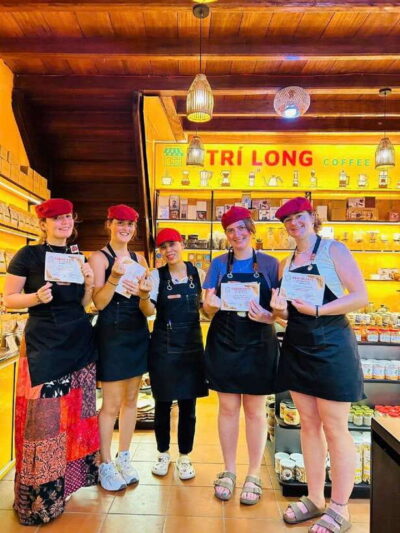
Vietnamese Coffee Making Workshop at Local Roastery
Read our review →
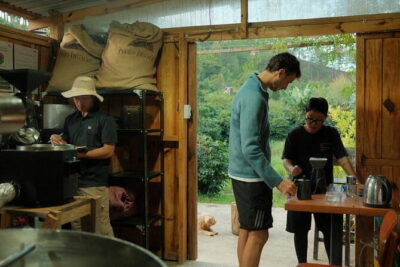
Coffee Farm Tour with Roasting & Tasting Workshop – Da Lat
Read our review →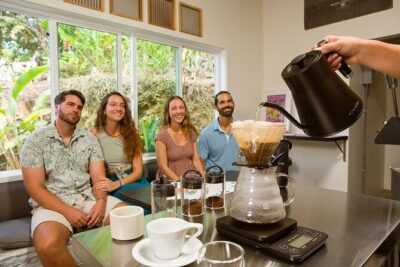
Experience specialty coffee with sustainable coffee farmers
Read our review →
Vietnamese Bread & Brew: Banh Mi Baking Class & Specialty Coffee
Read our review →
Santo Domingo Small Group Walking Tour: Beer and Specialty Coffee
Read our review →
Browse the lists this tour appears in