
Review · LJUBLJANA
Coffee Sensory Training in Ljubljana
The most useful part of this Ljubljana coffee workshop is learning to separate what you taste from what you expect to taste. You will calibrate your basic taste senses, identify coffee aromas, and practice judging coffee like a professional. I like that Lev leads both the theory and hands-on work, rather than leaving you with a long lecture.
I also like the private format, since your group gets the instructor’s attention throughout the seven-hour session. The chance to take a theory and practical exam for an internationally recognized CSP Sensory Skills Foundation certificate gives the day a clear purpose. The main caution is the amount of coffee involved. One participant found the tasting load a little much, even with advice to spit it out, so plan to use the spittoon and pace yourself.
The workshop starts at 10:00 a.m. at Dunajska c. 61 and ends at the same address. Coffee, tea, water, and snacks are included, but lunch is not. At $355.04 per person, this is not a casual café stop. It makes the most sense if you want serious coffee training, a useful certificate, or a focused activity for two adults.
Key points about the Ljubljana coffee course
- Seven hours of sensory practice: You work on taste, smell, and coffee evaluation rather than simply sampling drinks.
- Lev is the instructor: He guides the theory, tasting exercises, and exam preparation.
- CSP Sensory Skills Foundation exam: You can take both a theoretical and practical test for an internationally recognized Specialty Coffee certificate.
- Private group setting: Only your party takes part, which allows questions and a more personal pace.
- Coffee volume requires care: Spitting is recommended, and sensitive coffee drinkers should avoid swallowing every sample.
- Simple logistics: The class starts and ends at Dunajska c. 61, begins at 10:00 a.m., and is close to public transportation.
What you actually learn during seven hours
This is not a latte-art class or a quick introduction to Slovenian cafés. The focus is sensory training: how to notice, describe, and assess what is in your cup.
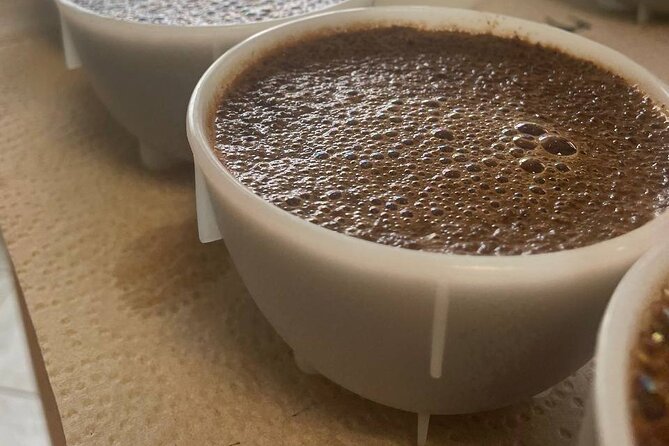
You begin by working with basic tastes and your own perception of them. That matters because coffee evaluation is not only about having a good palate. You need a shared reference point for sweetness, acidity, bitterness, and other basic sensations. The course helps you calibrate those responses before you start making more detailed judgments about coffee.
From there, the work shifts to aroma. Coffee can suggest fruit, flowers, spices, chocolate, nuts, and many other smells, but those impressions are easy to miss or confuse. You learn to pay attention to aroma in a more controlled way, rather than simply saying that one coffee tastes stronger than another.
The useful change is that you begin to notice why a coffee feels different. You might identify a particular aroma, compare levels of acidity, or describe the balance of a cup with more precision. That skill is useful for coffee professionals, but it also changes how you buy and drink coffee at home.
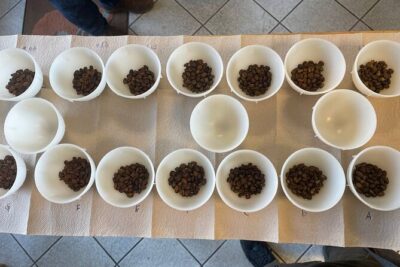
Expect both explanation and repeated tasting. The day is built around practice, not passive listening. You will likely taste several coffees and compare their profiles, then apply the same method again as your senses become more alert.
A few more coffee tours around the world worth a look
- Hoi An: Vietnamese Coffee Culture and Coffee Making Class
★ 4.9 · 4,006 reviews - Hanoi Coffee Experience: 6 Brews, 9 Recipes & 3 Liquor Tastings
★ 5.0 · 2,945 reviews - 4×4 Dominican Adventure with Chocolate and Coffee Tasting
★ 5.0 · 2,920 reviews
Lev’s teaching style and the private format
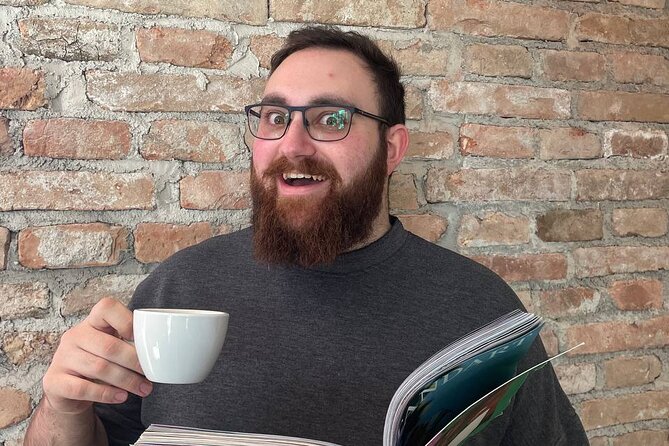
The instructor is Lev, and the available feedback places his expertise and enthusiasm at the heart of the experience. One participant specifically praised the way he made the sessions engaging and informative. Another said he was happy to answer almost any coffee question.
That is important here. Sensory language can feel vague at first. If you say a coffee smells fruity, the next useful question is which fruit, and whether the aroma comes through before or after tasting. A good instructor helps you move from broad impressions to clearer descriptions.
Because this is a private activity, you do not have to compete with a large group for attention. Your party can ask questions, repeat an exercise, or spend more time on a confusing aroma. This also makes it a good choice for a couple. The format gives you a shared activity without the usual pressure of keeping up with strangers.
The private setup does not mean the course is light or informal. The certificate exam adds structure, and the seven-hour length suggests a full training day rather than a tasting designed only for entertainment. If one person in your group loves coffee and the other is merely curious, talk through the commitment before booking. Seven hours is a long time to spend on sensory work.
The coffee tasting: useful practice, but pace yourself
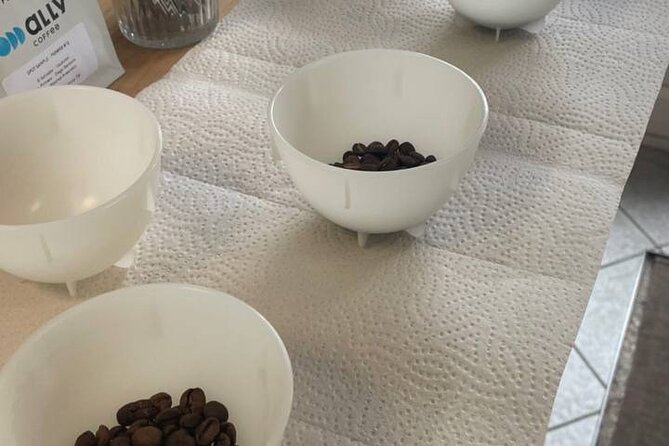
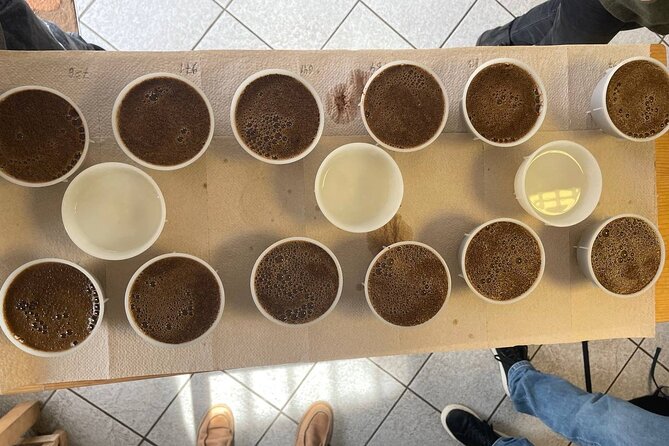
The tasting is the most memorable part of the day, and also the part that requires the most self-control. You will work through different coffees and try to identify differences in taste and aroma. The goal is not to drink a series of large café servings. It is to sample, compare, and evaluate.
You are advised to spit out the coffee. Take that advice seriously. One participant found the sheer amount of coffee too much and felt dizzy by the end. That is not a reason to reject the course, but it is a clear warning for anyone sensitive to caffeine.
Use the tasting as a sensory exercise rather than a drinking contest. Small sips are enough to assess a sample. If you are used to drinking coffee quickly, this workshop asks you to slow down and pay attention instead.
The inclusion of bottled water helps you reset between samples. Snacks are also provided, which is useful during a long session. Still, lunch is not included, so do not arrive expecting a full meal or plan to finish the day without eating. Since the activity lasts about seven hours, you may want to eat beforehand and arrange lunch separately if needed.
Tea is included as well as coffee, which gives you another drink option during the day. Alcoholic beverages are not included. That is hardly surprising for a sensory course, but it is worth noting if you were expecting a broader food-and-drink event.
From basic tastes to professional evaluation
The value of this course comes from learning a repeatable method. You are not simply told that one coffee has more acidity or a particular aroma. You practice making those judgments yourself.
That distinction matters. Coffee descriptions can seem like marketing language when you read them on a bag or menu. After sensory training, you can test those claims against your own perception. You may also find that your preferences become clearer. Perhaps you enjoy bright, sharp coffees, or maybe you prefer a rounder and less acidic cup.
The course also teaches you to notice subtle differences that disappear when coffee is consumed casually. Aroma plays a major role. Much of what people call flavor is tied to smell, so training your nose can change the way you understand the cup.
The practical work is especially useful for anyone who buys specialty coffee, works in a café, roasts coffee, or wants a formal introduction to professional tasting. It can also suit a dedicated home brewer who wants better language for comparing beans and brewing results.
You should not expect the certificate alone to turn you into a coffee expert. The certificate is a marker that you completed the required theory and practical assessment. The real benefit is the practice you retain and continue using afterward.
Same place, a different way to drink it:
- Rome Morning Vespa Sidecar Tour in Rome with Cappuccino
★ 5.0 · 1,771 reviews - Giethoorn: Village & National Park Canal Cruise with Coffee
★ 4.6 · 1,596 reviews - Dresden: Guided City Walk with a Cup of Coffee
★ 4.7 · 1,568 reviews - 4×4 ATV Experience, Water Cave, Chocolate and Coffee Tasting
★ 5.0 · 1,430 reviews
The CSP Sensory Skills Foundation certificate
The course includes a theoretical and practical exam for the Specialty Coffee Association’s CSP Sensory Skills Foundation certificate. The certificate is described as internationally recognized, which gives the day more weight than a general coffee appreciation class.
The theory portion tests your understanding of sensory concepts. The practical portion asks you to apply what you have learned through tasting and evaluation. The two parts work well together: one checks what you understand, while the other checks what you can actually do.
If you are booking mainly for the certificate, confirm the current exam and certification details when reserving. The supplied information says the opportunity is included, but it does not provide a pass requirement, certificate delivery timeline, or any retake policy.
For a casual coffee drinker, the exam may feel more formal than necessary. For someone building a coffee career or adding a recognized qualification, it is the feature that may justify the price. You get a defined goal and a way to measure your progress.
Is $355.04 per person fair value?
At $355.04 per person, this is an expensive activity by ordinary Ljubljana sightseeing standards. It costs far more than a café crawl, a standard food tour, or an informal tasting.
The comparison is not really with those activities, though. You are paying for roughly seven hours of instruction, repeated sensory practice, a private group setting, refreshments, and access to theory and practical certification exams. If you use the course as professional training, the price can make sense.
The value is weaker if you mainly want to sample local coffee. You could spend much less at cafés and have a more relaxed day. This course is built for learning and evaluation, not leisurely coffee drinking.
I would also factor in your caffeine tolerance. If you cannot comfortably taste many samples, part of the course may be spent managing the coffee rather than enjoying the exercises. Spitting helps, but it does not remove every concern.
The strongest case for booking is made by coffee workers, serious home brewers, and curious couples who want a structured shared experience. If you are only looking for a light activity between sightseeing stops, choose something shorter and less specialized.
Getting there and planning the day
The meeting point is Dunajska c. 61, 1000 Ljubljana. The location is near public transportation, so you do not need to rely on a private car. The activity begins at 10:00 a.m. and returns to the same meeting point at the end.
Plan the full day around the workshop. A seven-hour session leaves little room for another major tour at the same time. You may still have time for dinner or an evening walk, but do not book a midday museum visit that depends on a precise finish.
Wear something comfortable and arrive ready to concentrate. No special clothing is listed, and the class is indoors by its nature, but sensory training can become tiring. Bring a notebook if you like taking notes, although no notebook or other personal equipment is specifically listed as included.
Only adults over 18 are accepted for the coffee-related workshops. There is no age limit for drinking coffee in general, but that does not change the workshop’s age rule. This is an important detail for families planning activities in Ljubljana.
The experience is offered in English, making it practical for international visitors. Confirmation is provided at booking, and the ticket is mobile, so you can keep the booking on your phone.
Who will enjoy this most?
I would recommend this course to you if coffee is more than a morning habit. It is a good fit if you want to understand sensory evaluation, build professional skills, or work toward the CSP certificate.
It also suits a couple. The private setting keeps the day personal, and the shared tasting gives you plenty to discuss. You do not need to be a coffee professional, but you should be ready for a structured and fairly demanding session.
You may want to skip it if you dislike caffeine, have limited time in Ljubljana, or want a simple food experience. The day is long, the price is high, and the coffee volume can be challenging even when you spit out the samples.
The atmosphere appears friendly, and the instructor is open to questions. That makes the course less intimidating for beginners, though the amount of material still requires attention. You will get more from it if you arrive curious and willing to describe what you sense, even when you are not sure at first.
Booking and cancellation details
Free cancellation is available if you cancel at least 24 hours before the 10:00 a.m. start time. Canceling less than 24 hours before the activity means you will not receive a refund, and changes made inside that period are not accepted.
The cut-off follows Ljubljana local time. Keep that in mind if you are arranging the booking from another time zone.
Should you book the Ljubljana coffee sensory course?
Book it if you want a serious, private coffee lesson with a recognized certificate option. The combination of Lev’s instruction, repeated tasting, sensory calibration, and practical testing gives the day a clear purpose.
Think twice if you simply want good coffee and a relaxed afternoon. At $355.04, this is a specialist course, not a bargain tasting. The long format and large number of samples demand patience, and you should be comfortable spitting coffee and managing caffeine.
For a committed coffee fan, the course offers something most sightseeing activities cannot: a skill you can keep using after you leave Ljubljana. That lasting value is the best reason to book.
FAQ
Where does the coffee sensory training start?
It starts at Dunajska c. 61, 1000 Ljubljana, Slovenia.
What time does the activity begin?
The workshop starts at 10:00 a.m.
Where does the activity finish?
It ends back at the starting meeting point.
How long does the experience last?
The activity lasts approximately seven hours.
Is the activity offered in English?
Yes. The experience is offered in English.
Is this a private activity?
Yes. Only your group participates.
Is there a minimum age for the workshop?
Participants must be over 18 for the coffee-related workshop.
What is included in the price?
Coffee and/or tea, bottled water, snacks, and the training experience are included.
Is lunch included?
No. Lunch is not included.
Can I cancel for a full refund?
Yes, if you cancel at least 24 hours before the experience start time. Cancellations made less than 24 hours in advance are not refunded.
Just added around the world
- Yerevan: Private Coffee Tour with 2 Café Stops★ 5.0 · 2 reviews
- Vietnamese Coffee 101 Workshop★ 5.0 · 11 reviews
- Vietnamese Coffee Making Class in Hoi An★ 5.0 · 4 reviews
- Vietnamese cooking class and coffee making with local girl★ 5.0 · 5 reviews
- Venice Delights: Coffee & Food Experience Walking Tour★ 5.0 · 2 reviews
- Private Vienna Tour: Literature Walk with Coffee House Visit★ 5.0 · 2 reviews
- Turin: Art Nouveau Walking Tour with Coffee★ 5.0 · 11 reviews
- Turkish Coffee and Traditional Turkish Dessert Cooking★ 4.6 · 8 reviews
Ljubljana Coffee Tours, compared.

Introduction to the Specialty Coffee world in Ljubljana
Read our review →Browse the lists this tour appears in