
Review · LJUBLJANA
Introduction to the Specialty Coffee world in Ljubljana
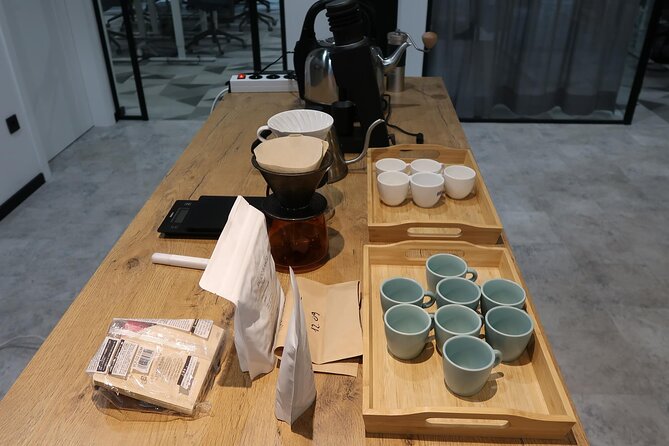
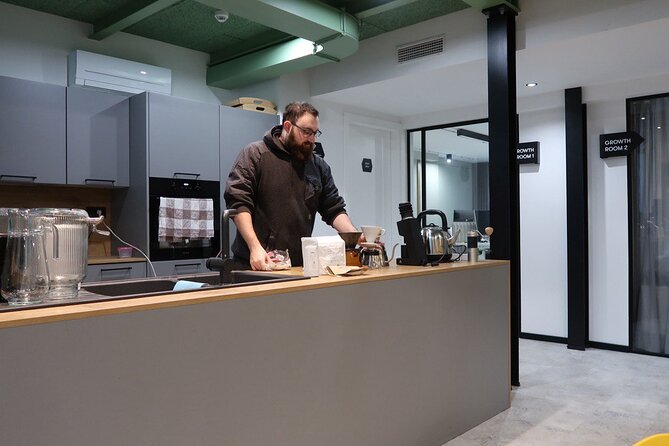
The most useful part of this Ljubljana workshop is that you do not just drink coffee, you learn how it gets from farm to cup and then practice making it yourself. Led by Slovene Coffee Degustation Champion and Authorized SCA Trainer, with Lev and Andrew involved in the teaching, it gives you both tasting skills and practical espresso advice.
I like the focus on locally roasted specialty coffee and the chance to compare different processing methods. I also like that you work with espresso, cappuccino, and other classic drinks rather than stopping at a formal tasting. The main drawback is the narrow coffee selection noted by one attendee, who wanted more beans from Asia.
Key points at a glance
- Three hours of hands-on coffee learning: Cover production, processing, tasting, espresso, cappuccino, and other classic drinks.
- Local roasting is the rule: The coffee served comes from Slovenian specialty roasters rather than a generic commercial supply.
- Private group format: Only your party takes part, making it easier to ask questions and get help with technique.
- Practical skills for home: You can use the espresso and drink-making methods the next day, not just admire them during the class.
- A coffee gift is included: Take home some of the coffee you liked best as a complimentary extra.
- Simple logistics: Meet at Dunajska cesta 61 at 11 a.m., with the session ending back at the same point.
What This Ljubljana Coffee Workshop Actually Teaches
This is not simply a café stop with a few samples. The session is built around the full coffee chain, from production and processing to roasting, tasting, and preparation.
You begin by learning how coffee is produced and processed. That matters because processing can change the flavor you notice in the cup. Even if you already drink specialty coffee, this part helps explain why two beans from different places, or treated in different ways, can taste so unlike each other.
The workshop also explains the difference between specialty and commercial coffee. That distinction is useful when you shop in Ljubljana or at home, since it gives you a way to judge coffee beyond a nice-looking package or a familiar brand.
The teaching is aimed at curious drinkers and serious coffee people alike. You do not need to arrive as a home barista, but you should be ready to ask questions and taste carefully. The host is a Slovene Coffee Degustation Champion and an Authorized SCA Trainer, so the class has a formal coffee-training base without being limited to professional students.
More Roastery Tours in the world:
- Hoi An: Vietnamese Coffee Making Workshop at Local Roastery
★ 4.8 · 174 reviews - Cartagena: Colombian Specialty Coffee Tasting
★ 4.4 · 130 reviews - Coffee Farm Tour with Roasting & Tasting Workshop – Da Lat
★ 5.0 · 126 reviews
Tasting Locally Roasted Coffee in Ljubljana
The tasting is the heart of the workshop. You try freshly roasted specialty coffee from local roasters, then compare how different coffees and processing methods affect the final drink.
That local focus is one of the best reasons to book this class. Ljubljana has a strong café culture, but it can be hard for a first-time visitor to know which beans represent the local specialty scene. Here, you get a guided introduction instead of ordering one espresso and guessing what you are tasting.
Pay attention to the contrasts between coffees. You might notice changes in aroma, acidity, body, sweetness, or finish. The point is not to find a single correct answer. It is to learn which styles suit your own taste and to understand why one coffee appeals to you more than another.
One practical limit is variety. The selection focuses on locally roasted coffee, and one participant wished the tasting had included more coffee from Asia. If you want a wide world tour of origins, this may feel a little focused. If you want to understand Slovenia’s own specialty coffee scene, the local approach makes good sense.
You can also take home the coffee you liked most as a complimentary gift. That turns the tasting into something useful after your holiday. Write down or remember what you preferred, then use the sample to keep testing your palate at home.
From Coffee Production to the Cup
The production and processing discussion gives the tasting some needed context. Coffee is not simply a bean that gets roasted and ground. The way it is grown, processed, dried, roasted, and prepared all affects what you taste.
You will learn about those stages in plain terms, then connect the information to the coffees in front of you. That connection is valuable. A technical explanation can quickly become forgettable, but tasting the result gives it a practical purpose.
The workshop also helps you understand why specialty coffee can cost more than commercial coffee. You are not told only to accept a higher price. You learn what can shape quality and why careful production, roasting, and preparation matter.
I especially like this educational side for people who usually buy coffee without knowing what they are choosing. After the workshop, labels and tasting notes may make more sense. You should still judge coffee by what you enjoy, but you will have better tools for making that choice.
Learning Espresso, Cappuccino, and Classic Drinks
The workshop moves from tasting to preparation, including espresso, cappuccino, and other classic coffee drinks. This is where the class earns its place as more than a guided sampling.
You learn how to make espresso and espresso-based drinks yourself. The exact equipment and step-by-step order are not specified, so you should not book expecting a particular machine or a professional café shift. You can expect instruction aimed at improving your technique and understanding what goes into a better cup.
This section should appeal most to people who already make coffee at home, or who want to start. A participant specifically found the methods useful the very next day and was able to make better coffee at home. That is a strong sign that the class deals with workable techniques rather than abstract coffee talk.
The value here depends on how much you take part. Ask questions about grind, extraction, milk, and drink balance as they come up. The tour is private, so you are not competing with a large room for attention. Your group can focus on the drinks you care about most.
If you rarely drink coffee, the class may feel too specialized. There is no age limit for drinking coffee, but the provider accepts people over 18 for the coffee-related workshops. That age rule is worth noting if you are arranging a family activity.
A few more coffee tours around the world worth a look
- Hoi An: Vietnamese Coffee Culture and Coffee Making Class
★ 4.9 · 4,006 reviews - Hanoi Coffee Experience: 6 Brews, 9 Recipes & 3 Liquor Tastings
★ 5.0 · 2,945 reviews - 4×4 Dominican Adventure with Chocolate and Coffee Tasting
★ 5.0 · 2,920 reviews - Rome Morning Vespa Sidecar Tour in Rome with Cappuccino
★ 5.0 · 1,771 reviews
Why the Private Format Matters
Only your group participates in this activity. That gives the workshop a more personal feel and makes it easier to shape the conversation around your interests.
A coffee professional can spend more time on your questions when the group is private. You might want to know how specialty coffee differs from what you buy at home, how to choose beans, or how to improve a cappuccino. The three-hour length leaves room for those questions instead of forcing the lesson into a quick tasting.
The private format also suits mixed skill levels. One person in your group might be a coffee professional, while another only knows that they like a strong morning cup. You can ask for basic explanations without slowing down a public class, or request more technical detail if you already know the fundamentals.
Still, private does not mean fully customized unless you arrange that in advance. The advertised subjects remain production, processing, tasting, espresso, and classic drinks. Think of it as a private workshop with room for questions, not a lesson designed from scratch around your kitchen setup.
The Three-Hour Schedule and Meeting Point
The experience starts at 11 a.m. at Dunajska cesta 61, 1000 Ljubljana. It ends back at the same meeting point, which makes planning easier than a tour with a separate drop-off.
The three-hour timing works well as a morning activity. You finish around the middle of the day, with coffee and snacks included but lunch not included. Plan to arrange your own meal afterward if you expect to be hungry.
The meeting point is near public transportation. You do not need private transport, and none is provided. Check your route to Dunajska cesta 61 before the start time, especially if you are staying in central Ljubljana and have a fixed afternoon plan.
A mobile ticket is accepted, and confirmation arrives at the time of booking. I would still arrive with a little spare time because a coffee workshop works best when you are settled before the first tasting begins.
Coffee, Snacks, and What You Do Not Get
Coffee and tea are included, along with snacks. That covers the basic refreshments during a three-hour session, but it is not a meal.
Alcoholic drinks are not included, which will not surprise anyone booking a coffee workshop. Lunch is also excluded, and private transportation is not part of the price.
The included coffee is the main value, not the snacks. You are tasting freshly roasted specialty coffee, learning how it is prepared, and practicing drink-making under professional guidance. The snacks are useful for keeping the session comfortable, but they should not influence your decision as much as the coffee instruction.
Is $57.88 a Fair Price?
At $57.88 per person, the workshop is not the cheapest way to drink coffee in Ljubljana. You could order several excellent café drinks for much less.
The comparison changes when you consider the three-hour length, the private setting, the guided tasting, the coffee education, hands-on preparation, snacks, and take-home coffee. You are paying for instruction and access to a professional, not just for beverages.
I consider the price fair for someone who wants to understand specialty coffee or improve home preparation. It is especially reasonable if you will use the techniques afterward. The value drops if you only want a quick tasting or prefer to spend your budget on a broad selection of international coffees.
The private format is another important part of the calculation. A public class may cost less per person, but it may also give you less time to ask questions. Here, your group can spend the session on its own level and interests.
Who Should Book This Experience?
I would recommend this workshop to coffee drinkers who want practical skills, not just a pleasant café visit. It suits anyone curious about the difference between specialty and commercial coffee, especially if you want to buy better beans or improve espresso at home.
It is also a good choice for a couple, family group of adults, or small group of friends who want a focused Ljubljana activity. The private setup lets beginners and more experienced coffee drinkers share the same session without needing separate tours.
The workshop may appeal strongly to people who already own an espresso machine. The techniques can be tested at home, and one participant found the instruction useful immediately afterward. If your machine is still waiting in a cupboard, this could give you a reason to use it.
You may want to skip it if you dislike coffee, want a general food tour, or expect a large international range of origins. The focus is coffee education and local roasting, not lunch, alcohol, or a broad city sightseeing program.
Small Limits to Keep in Mind
The available information does not specify the exact number of coffees tasted, the equipment used, or the individual order of each exercise. If those details matter to you, ask the provider before booking.
The experience is listed as a private activity, but the exact group size is not given. Your party alone will participate, yet you should not assume that this means a one-to-one lesson.
The local-roast focus is a strength, but it also sets a boundary. If you are hoping to compare beans from every major coffee-growing region, you may find the range limited, particularly if Asian coffees are important to you.
The session begins at 11 a.m. and runs for about three hours. That fixed start may not suit an early sightseeing plan or a late morning, but it gives you a clear block of time and leaves the rest of the day open.
Cancellation and Booking Details
You can cancel for a full refund up to 24 hours before the local start time. Cancellations made less than 24 hours before the session are not refunded, and changes inside that period are not accepted.
Confirmation is provided when you book. The activity uses a mobile ticket, is near public transportation, and returns to the starting point.
Should You Book It?
Book this workshop if you want to leave Ljubljana with more than a caffeine boost. The combination of local specialty coffee, processing knowledge, espresso practice, private teaching, and a take-home sample gives the session a clear purpose.
I would be less quick to book it if your priority is a wide international tasting or a relaxed café crawl. For most curious coffee drinkers, though, the strongest feature is its practical side: you can use what you learn the next day at home.
FAQ
Where does the coffee workshop start?
It starts at Dunajska c. 61, 1000 Ljubljana, Slovenia.
What time does the activity begin?
The workshop starts at 11:00 a.m.
How long does the experience last?
It lasts approximately three hours.
Where does the activity end?
It ends back at the meeting point on Dunajska c. 61.
What is included in the price?
Coffee and/or tea, snacks, the coffee workshop, and a complimentary amount of the coffee you liked most are included.
Is lunch included?
No. Lunch is not included.
Are alcoholic beverages included?
No. Alcoholic beverages are not included.
Is transportation provided?
No. Private transportation is not included, although the meeting point is near public transportation.
Is this a private activity?
Yes. Only your group participates in the activity.
Who can take part in the workshop?
There is no age limit for drinking coffee, but the provider accepts people over 18 for the coffee-related workshops.
Can I cancel for a full refund?
Yes. You can cancel for a full refund if you do so at least 24 hours before the local start time. Cancellations or changes made less than 24 hours before the experience are not accepted.
Just added around the world
- Yerevan: Private Coffee Tour with 2 Café Stops★ 5.0 · 2 reviews
- Vietnamese Coffee 101 Workshop★ 5.0 · 11 reviews
- Vietnamese Coffee Making Class in Hoi An★ 5.0 · 4 reviews
- Vietnamese cooking class and coffee making with local girl★ 5.0 · 5 reviews
- Venice Delights: Coffee & Food Experience Walking Tour★ 5.0 · 2 reviews
- Private Vienna Tour: Literature Walk with Coffee House Visit★ 5.0 · 2 reviews
- Ubud: Waterfall, Holy Water Temple,Swing&coffee plantation★ 5.0 · 9 reviews
- Turin: Art Nouveau Walking Tour with Coffee★ 5.0 · 11 reviews
Specialty Coffee & Roastery Tours, compared.
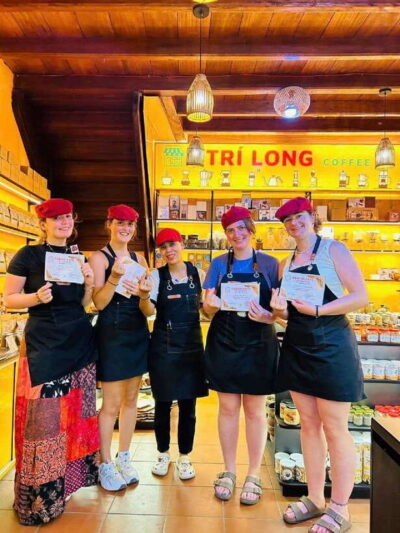
Vietnamese Coffee Making Workshop at Local Roastery
Read our review →
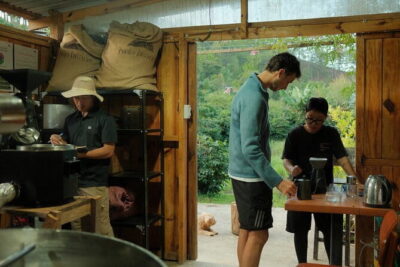
Coffee Farm Tour with Roasting & Tasting Workshop – Da Lat
Read our review →
Experience specialty coffee with sustainable coffee farmers
Read our review →
Vietnamese Bread & Brew: Banh Mi Baking Class & Specialty Coffee
Read our review →
Santo Domingo Small Group Walking Tour: Beer and Specialty Coffee
Read our review →
Browse the lists this tour appears in