
Review · ARUSHA
Coffee walk day trip
The best part of this Arusha day trip is that coffee is only half the story. You walk from a village through small farms, schools, and churches to an organic coffee plot, seeing how local families live and work before the beans reach the roaster. The walk connects coffee to daily life, rather than treating the farm as an isolated photo stop.
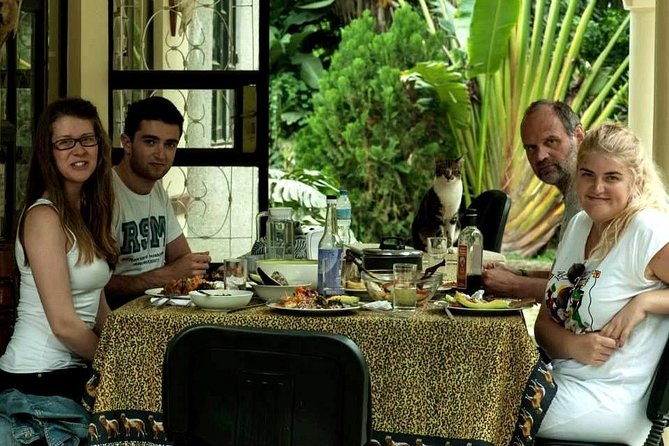
I like the personal scale of the outing and the chance to eat a real village lunch with chapati, ugali, roasted banana, goat sauce, spinach, salad, fruit, and banana cake. I also like that guide Samwel has more than 10 years of experience with the coffee walk, and that the visit ends with coffee tasting and a bag of coffee to take home.
The main consideration is the walking. You spend much of the day on foot, including a 30 to 40 minute walk down to the roaster, so this is not a quick farm visit from a parked vehicle. At $102 per person, the value depends on your interest in local life, coffee production, and a private outing rather than a simple tasting.
Key points to know before booking
- A village walk comes before the coffee lesson: You pass small farms, schools, and churches on the way to the coffee fields.
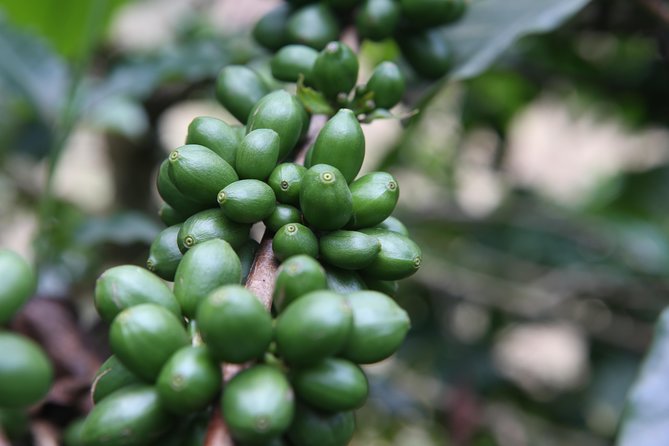
- The farm is organic and Fairtrade: You compare traditional and organic coffee production and learn how the crop supports local livelihoods.
- Samwel brings long experience: He has worked with this coffee tour for more than 10 years.
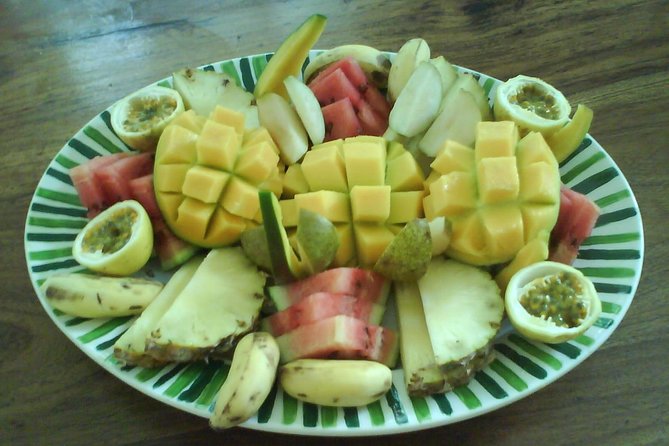
- Lunch is a full Tanzanian meal: Expect chapati, roasted banana, rice, ugali, goat sauce, spinach, salad, seasonal fruit, and banana cake.
- You finish with coffee in several forms: The day includes roasting, tasting, and a bag of coffee to take home.
- It is a private outing: Only your group participates, allowing the guide to shape the experience around your questions.
From Arusha town to a coffee-growing village
The coffee village is about 40 minutes from Arusha town, at roughly 1,400 meters above sea level. The setting is described as evergreen, and the change from town to countryside is part of the experience rather than dead time between attractions.
The tour begins at 9:00 a.m. Since pickup is offered, confirm the exact pickup arrangement when you book. The provided information does not state a separate pickup fee or list every pickup location, so you should check those details before setting out.
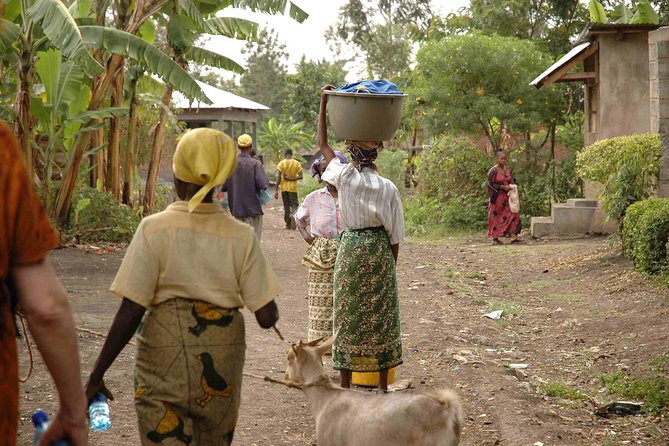
Once you reach the village center, you leave the vehicle and continue on foot. This is a useful feature if you want to see more than the farm itself. The route passes small farms, schools, and churches, giving you a look at the places and routines that surround coffee production.
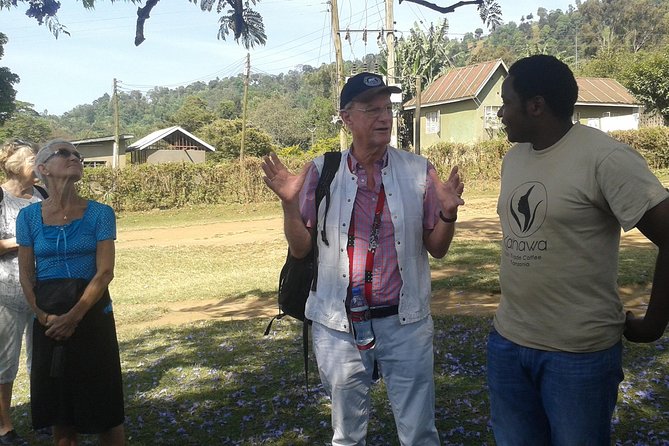
Your guide explains local culture and traditions along the way. That makes the walk more than a transfer. You are not simply shown a coffee plant and then led to a gift shop. You get a sense of how coffee fits into a wider farming community.
The route also means you should treat this as an active half-day outing. The tour lasts about six hours and 30 minutes, and the walking sections are central to the plan. Wear comfortable shoes and be ready to spend time outdoors. Specific trail conditions are not provided, so ask about the surface and walking difficulty if those points matter to you.
More Walking Tours in Arusha:
- Waterfall & Coffee Walking Tour
★ 5.0 · 6 reviews - 7 Days Tanzania Luxury Safari Experience & Coffee Walking Tour
★ 5.0 · 6 reviews - Coffee walk with stay in the village
★ 5.0 · 5 reviews
Walking through small farms and village life
The first section is especially useful for anyone who wants context. Coffee can seem like a polished product in a café, but here you follow part of the route from cultivation toward roasting. Small farms, local institutions, and village roads help explain where the work happens and who depends on it.
I like this order. You first see the community, then the crop. It gives the later coffee lesson a human scale. You can ask how farming fits into daily life, how coffee is handled, and what makes organic production different from traditional methods.
Because the tour is private, your group has room to ask questions without having to follow a large crowd. That does not guarantee a particular pace or depth of discussion, but it gives Samwel more flexibility than a standard group excursion. If your party has a keen coffee drinker, a photographer, or someone interested in rural life, this format should make it easier to pause for questions.
The private format also affects the price. At $102 per person, this costs more than a basic shared coffee stop, but the fee covers a long outing with a guide, a village walk, farm instruction, roasting, lunch, tasting, and take-home coffee. Group discounts are offered, which may improve the value for a larger party.
Comparing traditional and organic coffee production
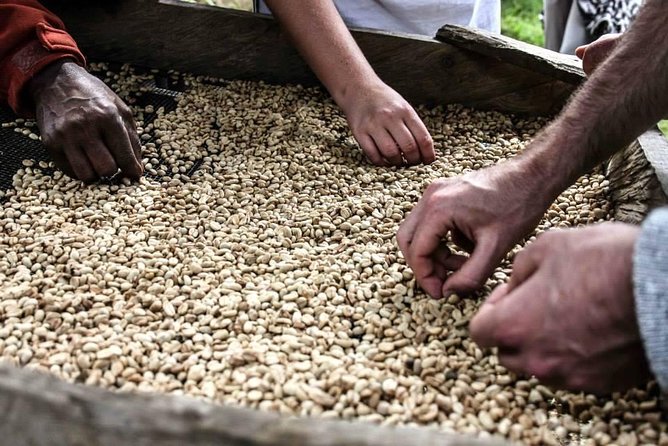
At the farm, you learn how coffee is grown and see the difference between traditional and organic production. The experience is designed to explain the full path from bean to cup, not just the appearance of the coffee plant.
The supplied details do not specify every farming technique, the coffee varieties, or the exact certification process. That is worth keeping in mind. You should expect an introduction to organic and Fairtrade farming rather than a technical agricultural course.
The Fairtrade element matters because it places the crop within a larger economic picture. Coffee is not only a drink or a souvenir. It is part of the way people earn a living. A good guide can help you connect the work in the field with the price and quality of the finished product.
You will also see how the coffee moves toward the roaster. The description places the roaster at the end of a 30 to 40 minute walk from the farm. That walk may be one of the more memorable parts of the outing, but it is also the section most likely to feel long if you expected a vehicle-based tour.
The timing is generous enough to allow explanation and questions. Still, the tour is not ideal for someone who wants to spend most of the day sitting. Ask in advance about the walking route if you have mobility concerns. The stated information says most people can participate, but it does not provide a detailed accessibility assessment.
Reaching the roaster after a 30 to 40 minute walk
The walk down to the roaster gives the tour a physical sense of the production process. You do not simply hear that coffee moves from farm to processing. You walk through the area toward the place where the beans are roasted.
That distance also gives you time to notice the relationship between the coffee farm and the surrounding village. The exact views and terrain are not specified, so I would not book this for a particular panorama. Book it for the chance to move through a working rural area with a guide who can explain what you are seeing.
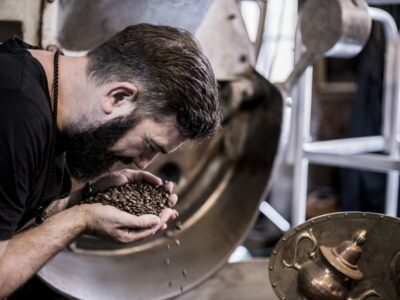
At the roaster, the focus shifts from farming to preparation. You learn how coffee is manufactured and get closer to the stage most visitors recognize: roasting and drinking. The day therefore follows a clear chain, from local cultivation to the finished cup.
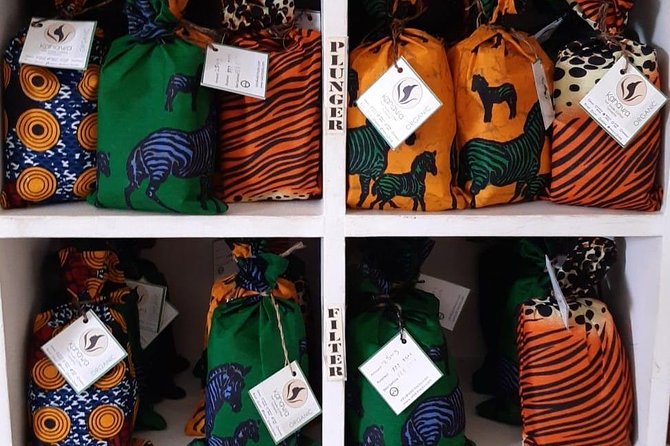
The take-home bag is a practical part of the experience. You do not leave with only photographs and a story. You have coffee to use later, and you can shop for more if you find a variety you like. The available information does not state the bag size, roast level, or shipping options, so ask before buying additional coffee if luggage space matters.
A few more coffee tours around Arusha worth a look
- Materuni waterfalls coffee tour & Chemka hot springs Day trip
★ 5.0 · 131 reviews - Santa Marta: Minca Coffee, Cocoa, & Waterfall Full-Day Trip
★ 4.6 · 102 reviews - Jardin Private Day Trip: Colombian Coffee Tour from Medellin
★ 4.5 · 43 reviews - Doka Coffee Tour, Poas Volcano and La Paz Waterfall Day Trip from San Jose
★ 4.5 · 35 reviews
A Tanzanian lunch in the garden
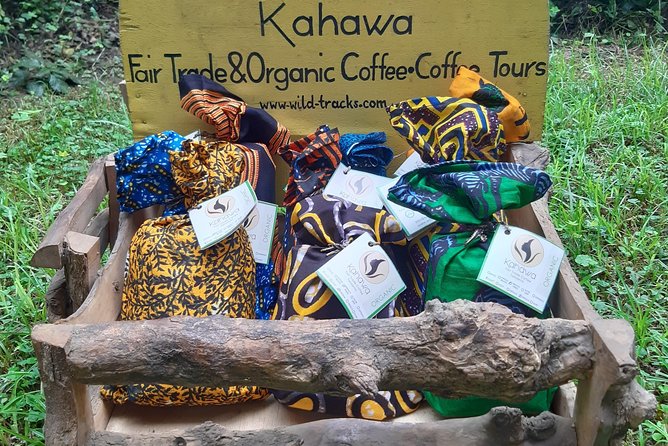
Lunch is served in the garden and includes local specialties prepared by people from the village. This is one of the strongest reasons to choose the full experience rather than a short farm tour.
The meal includes chapati, roasted banana, rice, ugali, goat sauce, spinach, salad, and seasonal fruit. It is a broad introduction to Tanzanian food, with familiar ingredients presented alongside staples that may be new to you. Ugali, in particular, gives you a chance to try a central East African maize dish rather than relying on a standard tourist lunch.
Dessert includes coffee tasting with banana cake. The tasting is not treated as an isolated sample at the beginning. It comes after you have seen the farm and roasting process, so you can think about the flavor in relation to the work behind it.
The lunch setting also slows the day down. After the village walk and the route to the roaster, sitting in a garden gives you time to eat and talk with your guide. Since this is private, your group can set a comfortable pace within the tour schedule.
Food information is detailed, but dietary substitutions are not listed. If you have allergies, vegetarian requirements, or other restrictions, tell the provider before the tour. Do not assume that every dish can be changed on the day.
What private touring changes
A private tour is useful here because coffee production invites questions. You can ask about farming, roasting, local traditions, and the Fairtrade model without waiting for a large group to catch up.
The experience provider is Wild Tracks/Kahawa Coffee Walks. The guide identified in the tour information is Samwel, also spelled Samuel in one account, and he has worked with the coffee tour for more than 10 years. That length of experience matters because the walk covers several subjects: coffee production, village life, farming, culture, and food.
The private format does not mean the outing is luxurious or highly polished. The appeal is the opposite. You are visiting a working coffee area, walking between village locations, and eating food connected to the local community. If you want a staged plantation show with minimal walking, this may not be your best match.
For couples, families, and small groups, the format offers a more relaxed way to learn. Group discounts may make the $102 price easier to justify when several people book together. Solo visitors should weigh the full per-person price against the amount of time and the included food, coffee, guide, and private arrangement.
Is $102 a fair price?
The price is $102 per person. On paper, that is a substantial cost for a six-and-a-half-hour activity, especially if you compare it with a short coffee tasting. The comparison is not quite fair, though, because this includes much more than a drink.
You are paying for transport or pickup arrangements, a private guide, a village walk, farm instruction, the coffee production lesson, the walk to the roaster, a traditional lunch, coffee tasting, and a bag of coffee. The tour also gives you access to a local setting that would be difficult to understand from a café visit alone.
I see the value most clearly for someone who wants a full cultural outing. If you are mainly looking for a cheap souvenir bag, the price is harder to defend. If you value time with a local guide, a meal, and a better understanding of how coffee supports a community, the cost is more reasonable.
Group discounts are worth asking about before booking. The activity is mobile-ticket friendly, and confirmation is received at booking. Free cancellation is available until 24 hours before the 9:00 a.m. start time. Changes or cancellations made inside that window are not accepted for a refund, so keep the local cutoff in mind when finalizing your Arusha plans.
Who should book this coffee walk?
I would choose this for you if you enjoy walking, food, and the story behind everyday products. It suits curious coffee drinkers, visitors who want to see rural life near Arusha, and small groups that prefer a private guide over a large scheduled tour.
It is also a good match if you want a day that combines several modest experiences rather than one major sight. The village, farms, schools, churches, coffee fields, roaster, garden lunch, and tasting each add a piece to the day.
You should think twice if you dislike walking or want a tightly focused coffee lecture. The route takes time, and the tour includes culture and farming as much as roasting. Families and older visitors should judge the walking based on their own abilities, since the exact path and terrain are not described.
The meal is another reason to choose carefully. You should be comfortable trying a range of Tanzanian dishes, or at least willing to ask the provider about substitutions before you go. The menu is generous, but dietary details are not supplied.
Should you book the Arusha coffee walk?
Book it if you want to understand coffee as a crop, a livelihood, and a finished drink. The combination of a village walk, organic Fairtrade farm, long-time guide Samwel, local lunch, roasting, tasting, and take-home coffee gives the day real substance.
Skip it if you want a quick, vehicle-based stop or a bargain activity with little walking. At $102, this is a better purchase for someone who values a private, food-filled cultural outing than for someone who only wants to see coffee beans being roasted.
For the right person, the strongest memory will probably not be the bag of coffee. It will be the connection between the farms, the village, the people doing the work, and the cup you taste at the end.
FAQ
Where does the coffee walk take place?
The coffee village is in the Arusha Region, about 40 minutes from Arusha town, at approximately 1,400 meters above sea level.
What time does the tour start?
The stated start time is 9:00 a.m.
How long does the experience last?
The tour lasts approximately six hours and 30 minutes.
Is pickup available?
Pickup is offered. The exact pickup details are not specified, so confirm the location and arrangement when booking.
Is this a private tour?
Yes. Only your group participates in the activity.
What food is served for lunch?
Lunch includes chapati, roasted banana, rice, ugali, goat sauce, spinach, salad, and seasonal fruit. Dessert includes banana cake and coffee tasting.
Do I receive coffee to take home?
Yes. The experience includes a bag of coffee to take home, and you can shop for more.
Can I cancel for a full refund?
Yes. You can cancel up to 24 hours before the experience starts for a full refund. Cancellations or changes made less than 24 hours before the start time are not accepted for a refund.
Just added around Arusha
- Private Tour to Marangu Waterfalls, Chagga Caves, Coffee tour & Hot Springs★ 5.0 · 7 reviews
- Waterfall & Coffee Walking Tour★ 5.0 · 6 reviews
- Private Materuni Waterfalls Hiking and Coffee Tour★ 5.0 · 4 reviews
- Private Tour to Materuni waterfalls, coffee tour & Kikuletwa hot- springs★ 5.0 · 14 reviews
- Materuni Waterfall Coffee Tour and Chemka Hot Springs Experience★ 5.0 · 15 reviews
- Materuni (Coffee Tour) and Chemka (Kikuletwa Tour)★ 5.0 · 8 reviews
- Materuni Waterfalls and Coffee Tour★ 5.0 · 9 reviews
- Materuni Waterfalls and Coffee Day Tour★ 5.0 · 9 reviews
Walking Tours, compared.
Hungry in Vienna? A Food Lover’s Coffee & Market Walk
Read our review →
Private Walking Tour, Food Tasting and Bosnian Coffee in Sarajevo
Read our review →
Hanoi Michelin Star Walking Food Tour & Train Street
Read our review →
Vienna Eats: Private Foodie Walk with Coffee & Markets
Read our review →
Angra do Heroísmo: Walking Tour with Local Pastry and Coffee
Read our review →
New Orleans True Crime and Coffee Walking Tour: Adults Only
Read our review →Browse the lists this tour appears in