
Review · HO CHI MINH CITY
Egg coffee & Course on 4 traditional types of Viet coffee
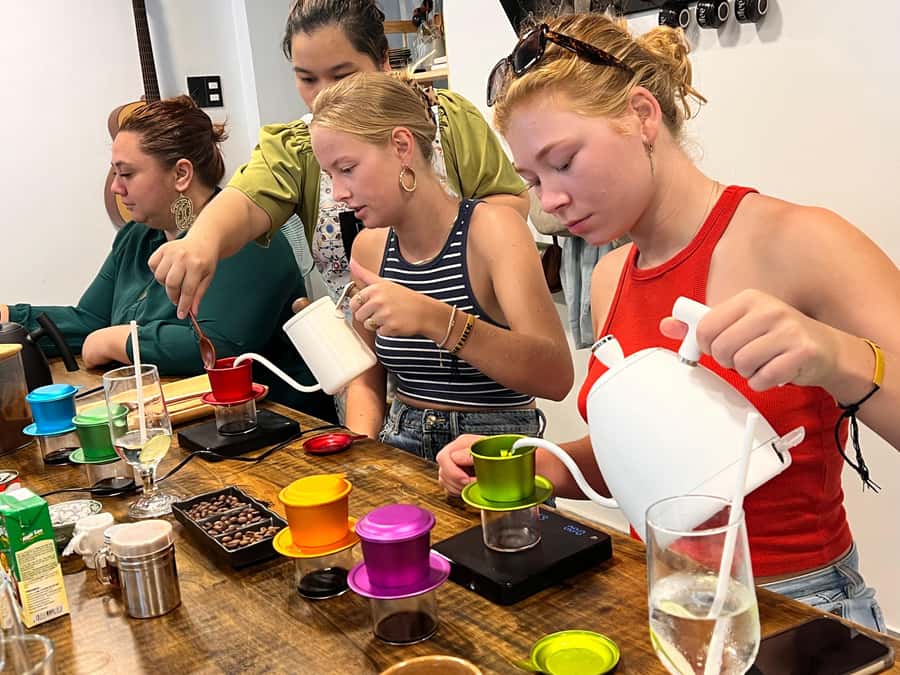
Vietnamese coffee is much more than dark coffee poured over ice. In this two-hour workshop, you make four distinct drinks, including the famous egg coffee and the surprisingly smooth sea salt version. I like the hands-on format, and I like that a barista explains the history and culture behind each cup instead of treating coffee as a quick tasting.
The class also gives you practical skills: how to use the traditional drip filter, how to build attractive layers, and how to balance bitter coffee with sweet, creamy, and salty flavors. The main drawback is the caffeine. Four tastings can add up quickly, so eat first and do not drink coffee before class.
Key points at a glance
- Four Vietnamese styles: Make egg coffee, condensed milk iced coffee, sea salt coffee, and coconut milk coffee.
- Traditional brewing: Learn to use the Vietnamese drip filter and control the steeping process.
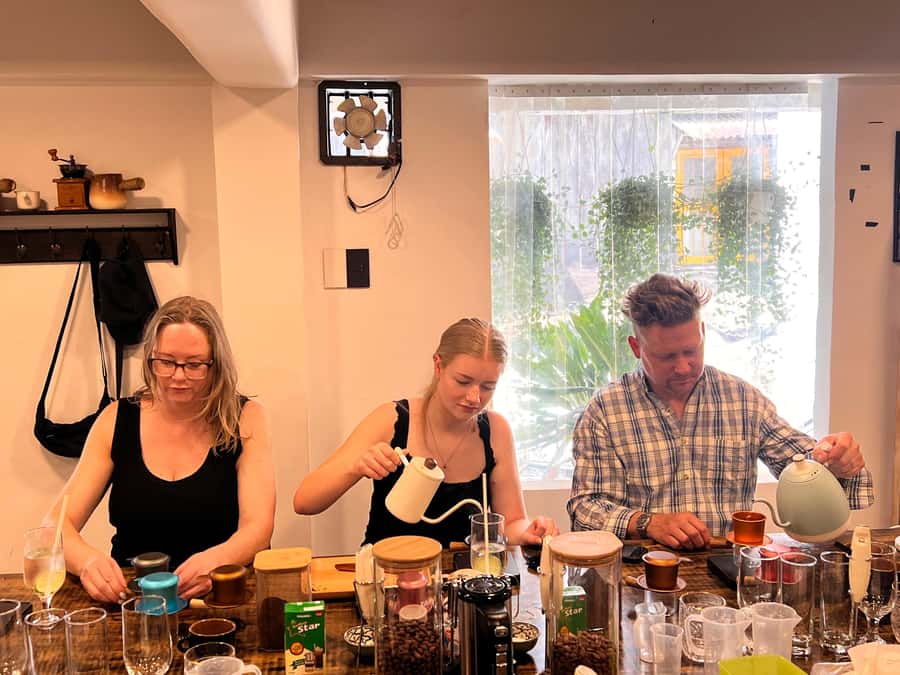
- Barista-led instruction: Sarah, Ann, An, or Anna may lead the session, depending on the class.
- Strong caffeine warning: Eat before you arrive, and know that you do not have to finish every cup.
- Useful for home coffee makers: Recipes are shared, making it possible to recreate the drinks after your trip.
- Easy to fit into a day: The class lasts two hours and finishes where it begins.
Four cups that show how Vietnamese coffee works
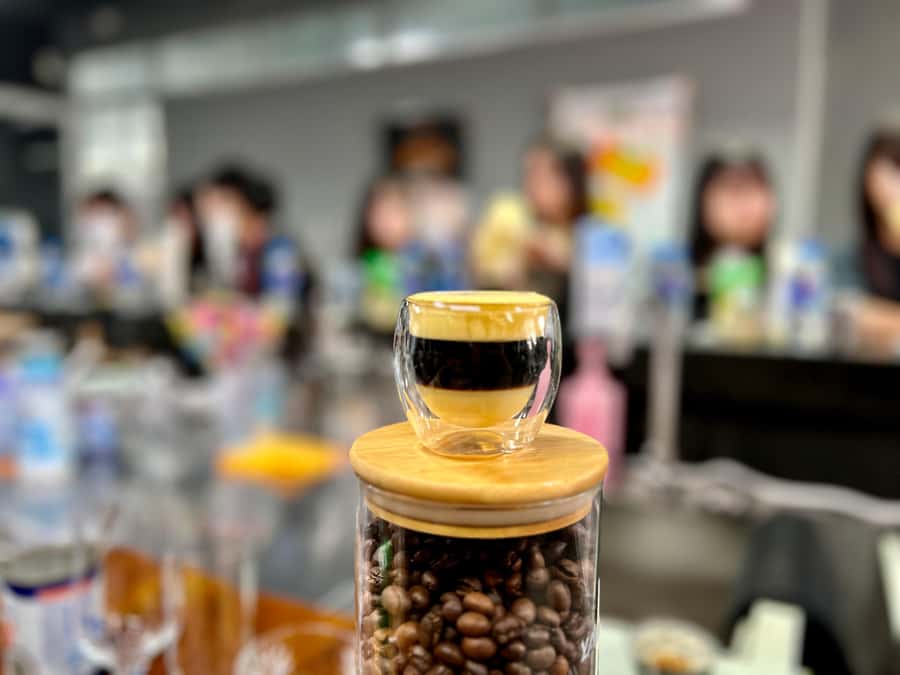
The appeal of this class is the contrast between the four drinks. You are not simply tasting the same coffee with four toppings. Each recipe changes the texture, temperature, sweetness, and overall character of the brew.
Vietnamese coffee is often dark, bold, and naturally suited to strong additions. Sweetened condensed milk softens the bitterness. Egg creates a thick, creamy topping. Sea salt sharpens the flavor and can make the coffee taste rounder. Coconut milk brings a cool, tropical sweetness.
You prepare each drink yourself, with the barista guiding you through the steps. That matters because the fun is not only in drinking the finished cup. You see how each layer forms, how the ingredients react, and how presentation changes the experience.
The four drinks are:
- Cà Phê Trứng Lòng Đỏ: Vietnamese egg coffee
- Cà Phê Sữa Đá: dark roast coffee with condensed milk and ice
- Cà Phê Muối Biển: sea salt coffee
- Cà Phê Cốt Dừa: coconut milk coffee
The exact order may vary, but the class moves from background and technique into preparation, tasting, and questions. The pace is designed for participation rather than a lecture, so you should expect to stir, pour, assemble, and taste throughout.
More Egg Coffee Experiences in Ho Chi Minh City
- Decadent Vietnamese “Egg Coffee” Workshop in Hồ Chí Minh City
★ 5.0 · 150 reviews - Techniques & Secrets Behind the Famed Vietnamese Egg Coffee
★ 5.0 · 99 reviews - 1 hour Egg Coffee Cooking Class with Snack and Local Instructor
★ 5.0 · 72 reviews
Starting with Vietnam’s coffee story
The session begins with an introduction to coffee in Vietnam, including its origins, outside influences, and place in daily life. This opening gives the drinks more meaning. You learn why condensed milk became such an important partner for strong coffee and why local preparation methods remain central to the café experience.
I like this part because it helps you notice details later. A Vietnamese coffee filter works slowly, one drop at a time. That pace is different from pressing a button on a modern machine, and the class explains how the method affects strength and texture.
The instructor speaks English and Vietnamese. Guides named Sarah, Ann, An, and Anna have led sessions, and the teaching style described for the class is friendly, clear, and playful. You should expect questions and demonstrations rather than a formal culinary-school lesson.
This is useful for both coffee beginners and serious coffee drinkers. Beginners get a straightforward introduction without needing prior skills. Experienced coffee fans get a closer look at preparation methods and flavor combinations that may be new to them.
Brewing with the traditional Vietnamese filter
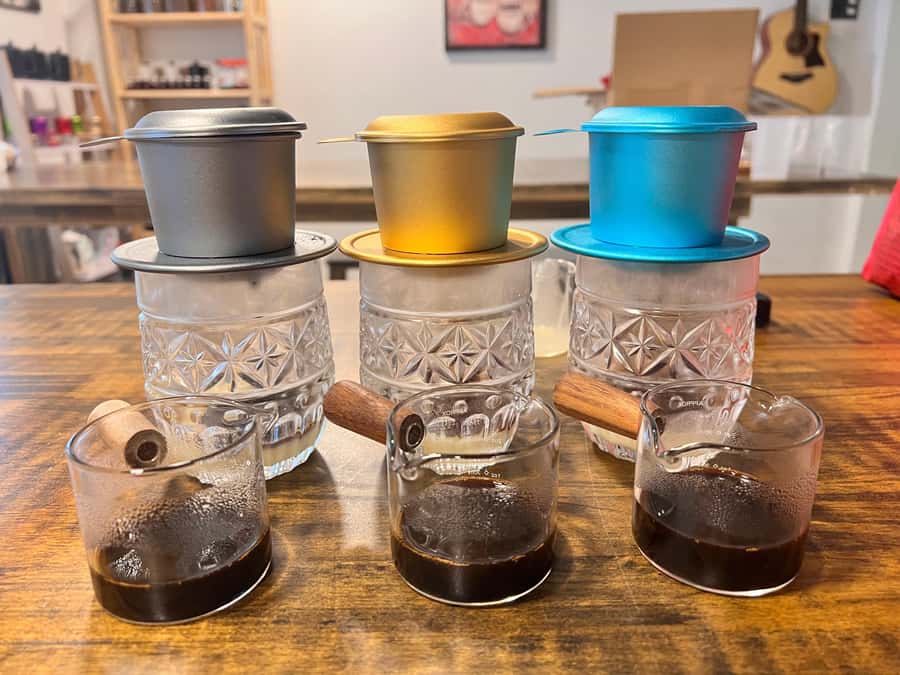
The Vietnamese drip filter, often called a phin, is central to the experience. Coffee grounds sit in the small metal filter, hot water is added, and the brew collects slowly below. The method is simple, but small choices affect the result.
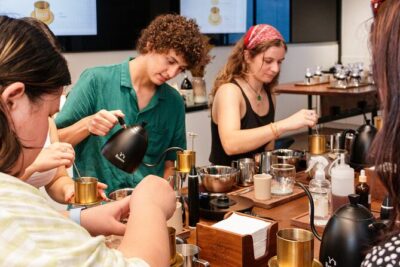
The barista shows you how to steep and brew the coffee, then helps you assemble the drinks. You learn to pay attention to the flow of the coffee, the amount of liquid, and the balance between the bold brew and the other ingredients.
This is one of the best reasons to take the class instead of simply ordering Vietnamese coffee at a café. At a café, you can enjoy the result. Here, you understand how it was made and can repeat the process later.
The preparation also gives the class a calm rhythm. Coffee drips slowly while you listen, watch, and prepare the next element. It is a pleasant change from a tightly packed sightseeing schedule, especially if you have spent the morning walking around.
Egg coffee: a dessert-like Hanoi classic
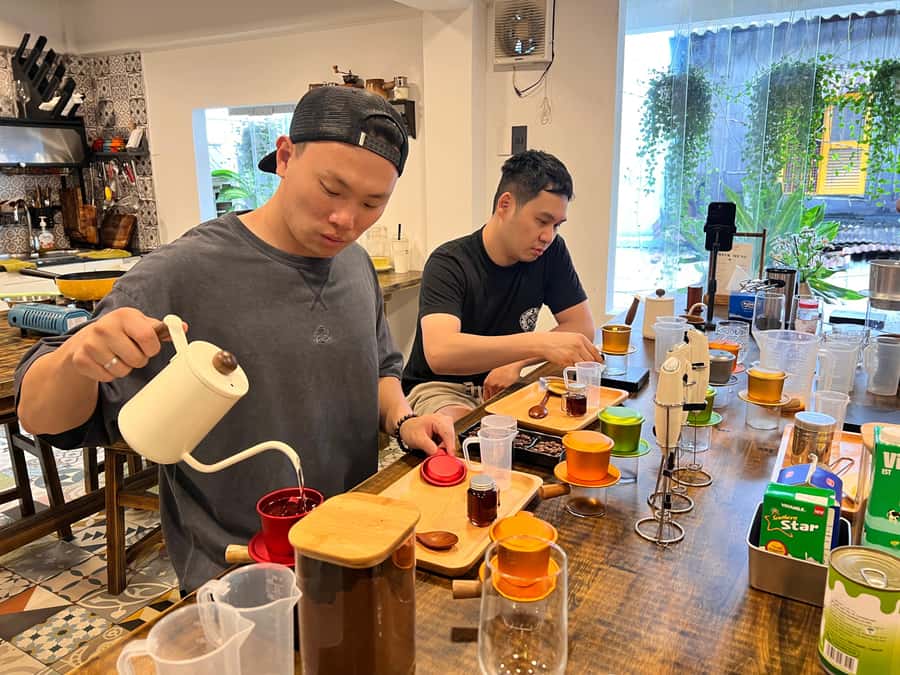
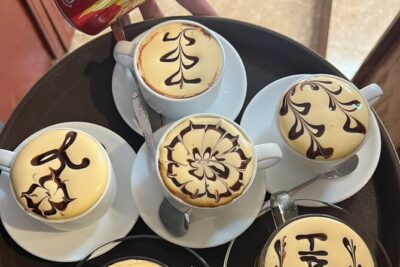
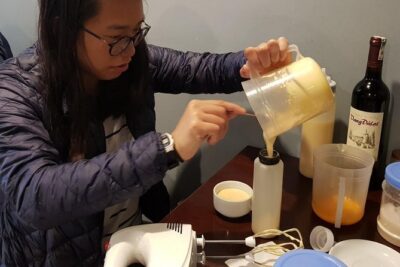
Egg coffee is usually the most eye-catching drink in the class. You prepare an egg-based topping that sits over strong coffee, creating a soft, creamy layer. The contrast between the warm coffee and the cool or lightly chilled topping is part of the appeal.
The flavor is richer and sweeter than a plain black coffee. The egg mixture can make the drink feel closer to a dessert, but the coffee underneath keeps it from becoming simple sugar in a cup.
The important lesson is texture. You are not just mixing everything together. The topping should look smooth and sit attractively above the coffee. The barista explains how to make the drink presentable, which is useful if you plan to photograph your work.
Egg coffee may sound unusual if you have never tried it. The class gives you a gentle way to sample it because you make it yourself and can see exactly what goes into the cup. If you dislike sweet drinks, take small sips and compare the coffee base with the topping rather than treating it like a standard black coffee.
Same place, a different way to drink it:
- Fun & Easy Vietnamese Coffee Workshop in Hồ Chí Minh City
★ 5.0 · 293 reviews - Vietnamese Coffee & Culture Exploration in Hồ Chí Minh City
★ 5.0 · 202 reviews - Ho Chi Minh City: Fun and Easy Coffee Workshop for Beginners
★ 4.9 · 121 reviews - Saigon Unseen: Culture, Coffee, Hidden Spots Motorbike Adventure
★ 5.0 · 60 reviews
Condensed milk coffee: the everyday favorite
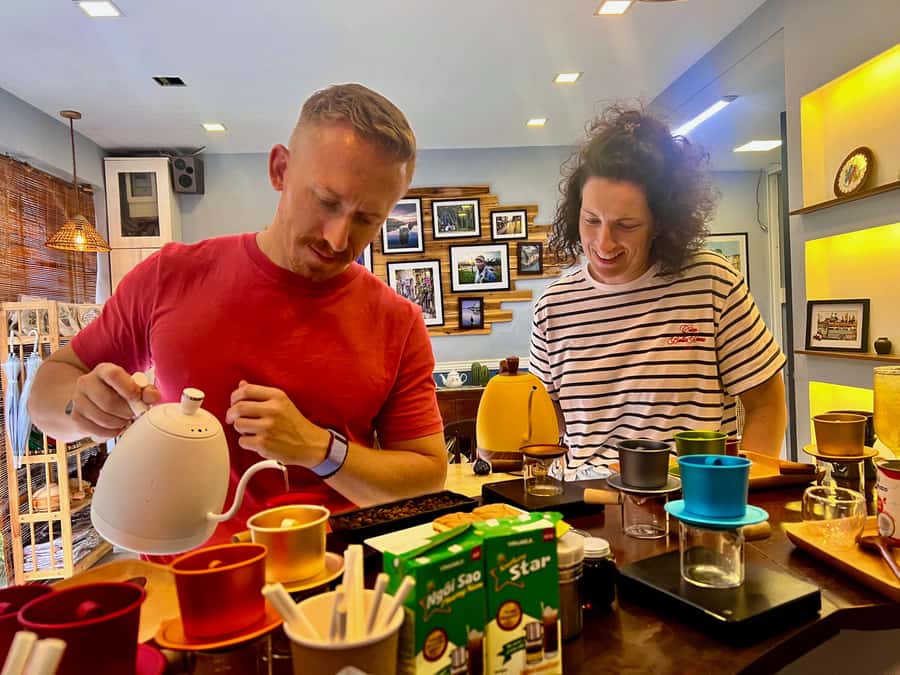
Cà Phê Sữa Đá is the most familiar style for many visitors. Strong dark roast coffee is combined with sweetened condensed milk and served over ice. The result is cold, sweet, powerful, and very refreshing in a hot climate.
This drink shows why Vietnamese coffee is often served in small portions. The coffee has real strength, while the condensed milk supplies sweetness and body. Ice changes the temperature and gradually softens the drink as it melts.
You learn how to build the layers and mix them to your preferred balance. That gives you a useful tip for future café orders. If you want a sweeter drink, leave more condensed milk at the bottom. If you prefer a stronger coffee taste, stir less at first and taste as you go.
For many people, this will be the easiest drink to recreate at home. The ingredients are familiar, and the method is less delicate than egg coffee. The class also helps you understand why a small Vietnamese iced coffee can deliver more caffeine than its modest size suggests.
Sea salt coffee: the surprise of the class
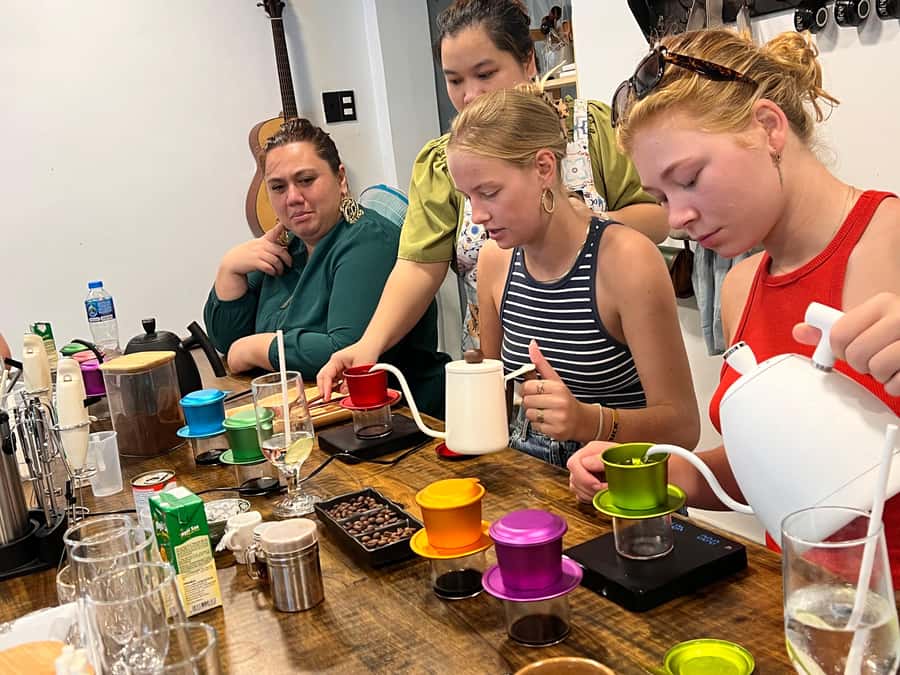
Sea salt coffee is often the unexpected favorite. A small amount of salt can reduce the sharp edge of bitter coffee and make the drink taste fuller. The goal is not to make the coffee taste salty. It is to create a better balance between bitterness, sweetness, and creaminess.
This is a good example of why the workshop goes beyond basic preparation. You learn how one minor ingredient can change the whole cup. The drink also gives you a clear lesson in restraint. Too much salt would overwhelm the coffee, so the proportions matter.
If you are unsure about the idea, give it a fair try. The sea salt version is one of the most distinctive drinks in the set, and it is easy to understand why people want to make it again at home.
The temperature and texture also play a role. The cold coffee, creamy mixture, and subtle salt create a different experience from the hot, dessert-like egg coffee. Tasting the drinks side by side helps you recognize these changes.
Coconut coffee: cool, creamy, and easy to enjoy
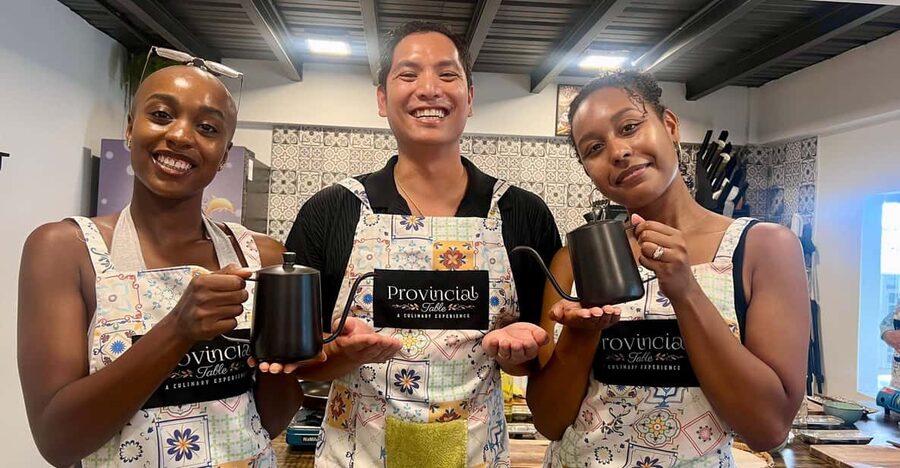
Coconut milk coffee adds another texture and temperature contrast. The coconut element brings sweetness and a smooth, creamy quality, while the coffee keeps the drink from becoming too mild.
This is likely to appeal to anyone who enjoys iced coffee, coconut flavors, or sweeter drinks. It also provides a useful comparison with condensed milk coffee. Both are sweet and cooling, but coconut milk gives the cup a different aroma and mouthfeel.
The class focuses on presentation as well as taste. Layering the coffee and coconut mixture makes the drink attractive, and the finished cup is well suited to a quick photograph before you stir it together.
If you request vegan options in advance, they are available. It is still wise to explain any allergies or dietary restrictions before the class begins, especially because egg and dairy-based ingredients are part of the standard tasting.
A small workshop with practical instruction
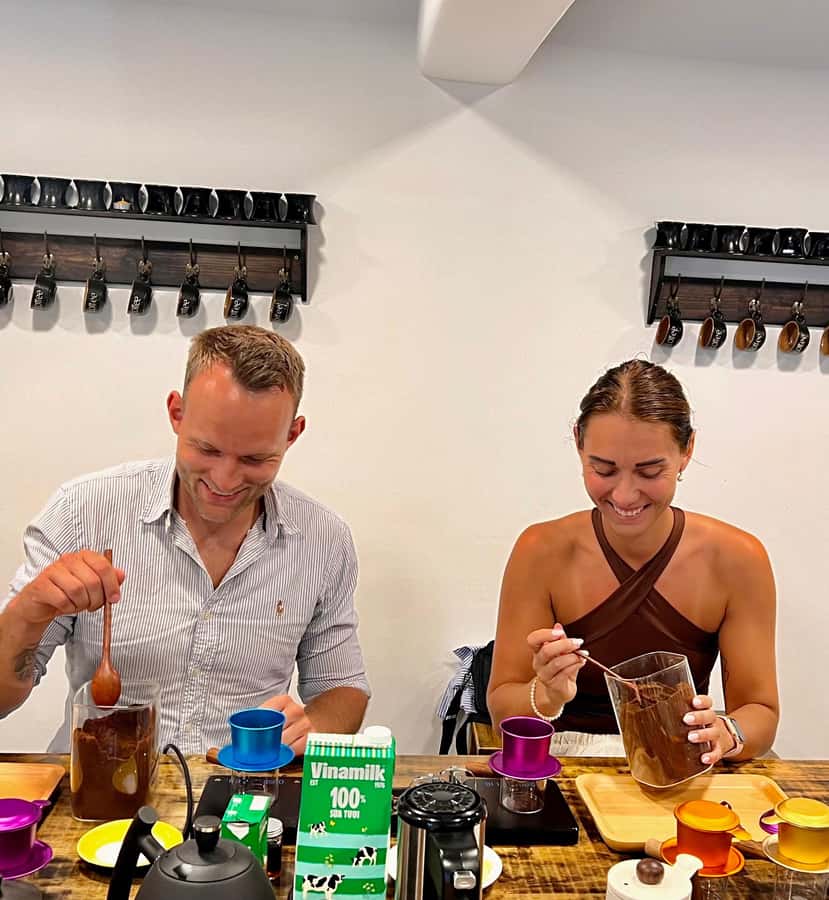
The class uses all necessary coffee-making equipment, and a head barista guides you through the process. The setup is intended for hands-on participation, not simply watching someone prepare drinks at a distance.
The teaching style is one of the strongest parts of the experience. The instructor explains each step, checks that you understand it, and keeps the mood relaxed. Past sessions have included patient, funny, and enthusiastic instruction, which is helpful when you are working with unfamiliar recipes.
You should wear comfortable clothing suitable for a workshop. Comfortable shoes are also recommended. Bring a camera if you want photos of the layered drinks, and bring water because the caffeine and sweetness can leave you wanting a break between tastings.
The class ends with a question-and-answer session. This is a good time to ask about coffee beans, brewing at home, substitutions, or the way coffee culture continues to change in Vietnam. Recipes are shared at the end, giving the class value beyond the two hours in the room.
The caffeine issue is real
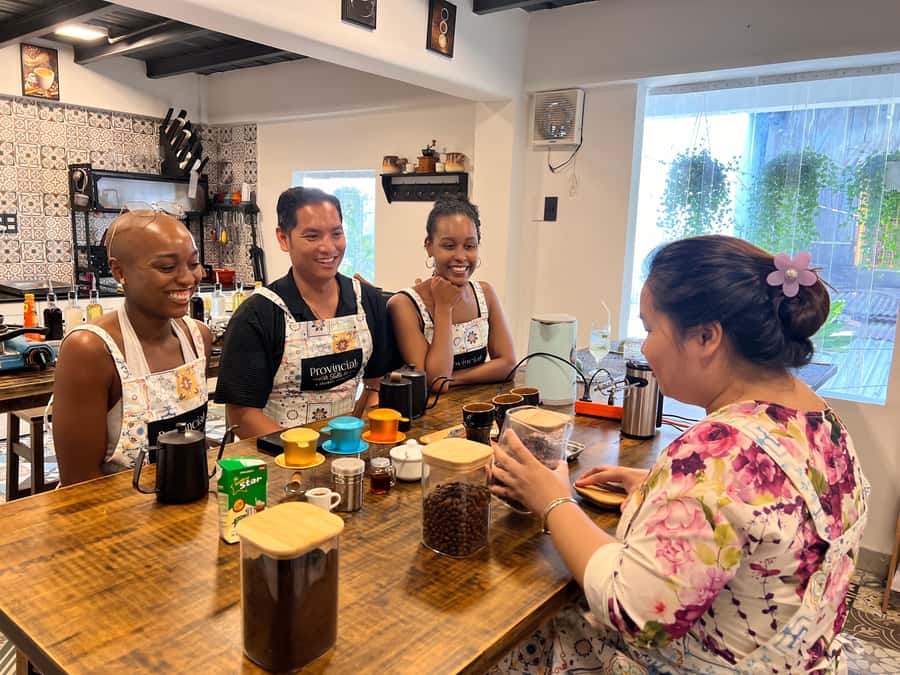
The organizers are right to warn you about caffeine. You prepare four coffee drinks, and even if each serving is modest, the total can be substantial. Eat something before class, and avoid drinking coffee immediately beforehand.
You are not required to finish every cup. If the caffeine starts to feel like too much, taste each drink and leave the rest. This is a tasting workshop, not a test of endurance.
Pregnant women are advised not to take the activity. It is also not suitable for children under five or people with back problems. Smoking is not allowed during the experience.
If you are sensitive to caffeine, schedule the class earlier in the day rather than close to bedtime. The two-hour format makes it easy to fit into a morning or afternoon, but the caffeine may matter more than the clock.
Finding the meeting point in Hem 131
Transportation to the venue is not included. If you book a car or taxi, you will most likely be dropped at the beginning of Hem 131. Walk down the corridor and look for the fourth building on the left.
This is worth noting because alley addresses in Vietnam can be confusing when you are in a hurry. Allow a few extra minutes to find the correct building, especially if you are arriving by Grab or another hired car.
The activity ends back at the same meeting point. That makes it easy to plan your next stop, but you will need to arrange your own transport afterward.
The location is part of the practical character of the class. You are not being picked up and carried between attractions. You make your own way there, then spend two focused hours learning and tasting.
Is $18 a fair price?
At $18 per person, the class offers solid value if you are interested in coffee. The price includes barista guidance, equipment, four coffee styles, the tasting, the question-and-answer session, and gratuity.
You are also paying for instruction, not just four drinks. A café tasting would be cheaper in some cases, but it would not teach you how to brew with a phin, build the layers, or recreate the recipes at home.
The value is strongest if you plan to use what you learn. Coffee fans can buy ingredients later and repeat the drinks. Even if you never make egg or sea salt coffee again, you will understand Vietnamese café menus much better.
For someone who rarely drinks coffee, the value is less clear. You may enjoy the cultural lesson and the unusual textures, but four caffeinated drinks are a lot for a non-coffee drinker. In that case, choose the class for the activity and food culture, not simply for the quantity of tasting.
Free cancellation is available up to 24 hours before the start time, and you can reserve now and pay later. Starting times vary, so check availability before planning the rest of your day.
Who will enjoy this class most?
I would recommend it to coffee lovers, curious eaters, and anyone who wants a practical cultural activity between sightseeing stops. It works well for couples, friends, and small groups because everyone makes the drinks and compares the results.
It is also a smart choice for a last activity before an evening flight, provided you allow enough time for your own transport and airport plans. The class lasts two hours and returns you to the meeting point.
You do not need to know anything about coffee before arriving. The barista explains the process from the beginning, and the hands-on format keeps the lesson easy to follow.
I would hesitate to recommend it to anyone avoiding caffeine, pregnant people, children under five, and anyone with a back problem. I would also think twice if you dislike sweet drinks, eggs, coconut, or condensed milk, since these flavors shape much of the tasting.
Should you book the Vietnamese coffee class?
Book it if you want more than a standard café stop. The combination of four distinct drinks, traditional drip brewing, and clear cultural context gives you something useful to take home. The sea salt coffee is especially worth trying, and the recipes make the experience practical rather than purely entertaining.
Skip it if caffeine is a serious concern or if you want a quiet, passive tasting. This is a hands-on workshop with four drinks to prepare, and the coffee is strong.
For most coffee drinkers, $18 is a reasonable price for two hours of instruction, tasting, and recipes. Eat first, arrive with an open mind, and plan to share or leave part of a cup if the caffeine catches up with you.
FAQ
How long does the Vietnamese coffee class last?
The activity lasts two hours. Starting times vary, so check availability when booking.
Which Vietnamese coffees will I make?
You will make egg coffee, dark roast condensed milk coffee, sea salt coffee, and coconut milk coffee.
Is transportation included?
No. You are responsible for getting to the venue and returning from the meeting point afterward.
Where do I meet the class?
You will most likely be dropped at the start of Hem 131. Walk down the corridor to the fourth building on the left. The activity ends at the same meeting point.
Is the class available in English?
Yes. The instructors speak English and Vietnamese.
Can I cancel the booking?
Yes. You can cancel up to 24 hours in advance for a full refund. Reserve now and pay later is also available.
Just added around Ho Chi Minh City
- Ho Chi Minh Best Walking Tour: Food, Coffee & History★ 5.0 · 19 reviews
- Sai Gon Special Coffee At Landmark 81 & Street Food tour★ 5.0 · 3 reviews
- Saigon Special Night Coffee Landmark 81 & Food Tour★ 5.0 · 2 reviews
- Tea & Coffee Experience★ 5.0 · 10 reviews
- Hands-on making 3 Iconic Coffees of South Central North Vietnam★ 5.0 · 14 reviews
- Mastering Egg Coffee-Course on 4 traditional types of Viet coffee★ 5.0 · 16 reviews
- Private Ho Chi Minh City Tour from Port & Vietnamese Egg Coffee★ 5.0 · 6 reviews
- Discover Vietnam’s Coffee Culture.★ 5.0 · 5 reviews
Egg Coffee Experiences, compared.
Hanoi Coffee Workshop: Taste Salt, Coconut and Egg Coffee
Read our review →
Decadent Vietnamese “Egg Coffee” Workshop in Hồ Chí Minh City
Read our review →

Techniques & Secrets Behind the Famed Vietnamese Egg Coffee
Read our review →Browse the lists this tour appears in