
Review · HANOI
Ha Noi Egg Coffee Class
Hanoi’s egg coffee is part dessert, part strong brew, and this hands-on class shows you why the drink has such a loyal following. At Cafe Minh, just off Ta Hien Beer Street, you learn the history and technique before whisking your own coffee rather than simply watching someone else make it.
I like the small maximum group of eight, which gives the teacher room to correct your technique. I also like the range: Hanoi-style espresso-strength milk coffee and sweeter Saigon-style milk coffee are included, while some class sessions have also covered salt and coconut coffee. The main consideration is that the exact recipes may vary by teacher and session, so do not book it expecting only one fixed menu.
Key points at a glance
- Egg coffee is the main event: Learn the careful mixing and preparation behind Hanoi’s famous creamy coffee.
- Three Vietnamese coffee styles are taught: The advertised class covers egg coffee, Hanoi-style milk coffee, and Saigon-style milk coffee.
- Small groups help: The maximum is eight people, making it easier to ask questions and get hands-on help.
- A useful Old Quarter location: Cafe Minh is at 53 Luong Ngoc Quyen Street, only a few meters from Ta Hien Beer Street.
- Some sessions add local favorites: Salt coffee, coconut coffee, coffee art, tea, and a snack have appeared in class sessions.
- Good value for a short activity: At $12, the price includes instruction, ingredients, equipment, and a small gift.
Why Hanoi egg coffee deserves an hour of your time

Egg coffee is one of Hanoi’s most distinctive drinks. It is not simply coffee with a little cream stirred in. The recipe takes work, and the texture depends on preparing the topping properly before placing it over strong Vietnamese coffee.
That effort is the reason a class makes sense. You get to see the process in stages, handle the ingredients, and learn the small details that can be easy to miss when you order a finished cup at a cafe. The teacher explains the drink’s background and coffee culture in English, then walks you through the preparation.
The class is short, running about 50 minutes to one hour. That is long enough to learn several recipes without taking half a day from your Hanoi sightseeing. You can book one of several daily times, which is useful if you are fitting this around the Temple of Literature, Hoan Kiem Lake, or an evening food outing.
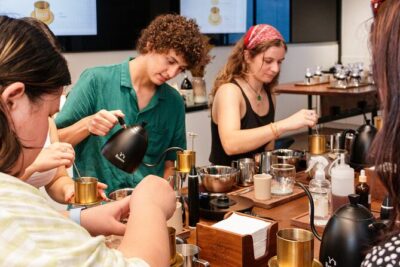
You should arrive ready to participate. This is not a demonstration where you sit back and take photographs while someone else does the work. You prepare ingredients, follow the instructions, and make the drinks yourself. That practical element is the best reason to choose it over simply ordering egg coffee at a nearby cafe.
More Coffee Making Classes in Hanoi
- Hanoi Coffee Workshop: Taste Salt, Coconut and Egg Coffee
★ 5.0 · 1,286 reviews - Hanoi: Salt Coffee Workshop Awake Your Senses With 6 Brews
★ 5.0 · 792 reviews - Hanoi: Vietnamese Coffee Workshop with 6 Brews and 8 Recipes
★ 5.0 · 237 reviews
Meeting the teacher at Cafe Minh
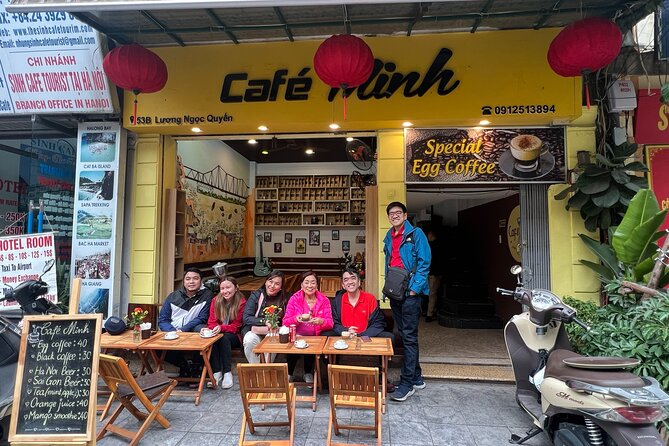
The meeting point is Cafe Minh, 53 B Luong Ngoc Quyen Street, in Hanoi’s Old Quarter. It is only a few meters from Ta Hien Beer Street, so the location is easy to combine with an Old Quarter walk.
The class ends at the same place, with no transport included or needed. The mobile ticket is handy for a short activity like this, since you can show your booking on your phone and get on with the class.
Your teacher is English-speaking and begins with an introduction to Vietnamese coffee culture and the drinks you will make. Several instructors have led sessions, including Iris, Ha, and Jen. The teaching style can therefore have a personal touch that varies from one class to another, but the basic format remains clear: introduction, ingredient preparation, guided making, and tasting.
Because the meeting point is close to a busy nightlife street, the surrounding area can be lively, especially later in the day. That is part of the Old Quarter setting, but it also means you should allow a little time to find the exact address rather than cutting it close.
Making the three advertised coffee styles
The core class teaches three drinks with different personalities. Each one helps explain how coffee changes from northern to southern Vietnam.
Hanoi-style egg coffee
Egg coffee is the drink that gives the class its name. You learn to prepare its creamy topping and pair it with a strong coffee base. The work is more involved than making ordinary milk coffee, which is why having the teacher show each step is useful.
The class presents egg coffee as a Hanoi specialty, so it also gives you a small lesson in local food culture. You are not just copying a recipe. You learn why the drink is made this way and how the ingredients come together.
Your finished cup should be treated as both a drink and a small dessert. The coffee remains important, but the soft, sweet topping changes the whole experience. If you usually take your coffee black, this may be a dramatic change. If you enjoy sweet drinks, it may be the easiest recipe to recreate at home.
More Coffee Making Classes in Vietnam
- Hanoi Coffee Workshop: Master 6 Signature Vietnamese Coffee
★ 5.0 · 171 reviews - Hanoi Coffee Class learning 5 famous coffee in Hanoi
★ 5.0 · 161 reviews - Mini Hanoi Coffee Workshop: Pick Any Signature Coffee You Like
★ 5.0 · 160 reviews - Hanoi Egg Coffee making course
★ 4.9 · 112 reviews
Hanoi-style espresso-strength milk coffee
The second advertised recipe uses a strong coffee base with milk. The description points to several small details that make this style work, and that is exactly where instruction has value.
Vietnamese coffee is often stronger and heavier than the mild drip coffee many people drink at home. A teacher can show you how the milk and coffee should balance rather than leaving you to guess. You also get a useful comparison with the egg coffee, since both use a powerful coffee base but produce very different results.
This is a good recipe to focus on if you want a drink you can make often after returning home. Egg coffee is memorable, but milk coffee may be easier to fit into a normal morning routine.
Saigon-style milk coffee
The Saigon-style version is described as a little sweeter. That difference gives the class a simple way to compare coffee traditions from northern and southern Vietnam.
You do not need to be an expert taster to notice the contrast. The class lets you try the drinks close together, so the differences in sweetness and style are easier to understand than they would be across separate cafe visits.
The three recipes also make the class suitable for a mixed group. One person can focus on egg coffee, another can prefer the sweeter southern style, and everyone still takes part in the same activity.
Extra drinks and small teaching touches
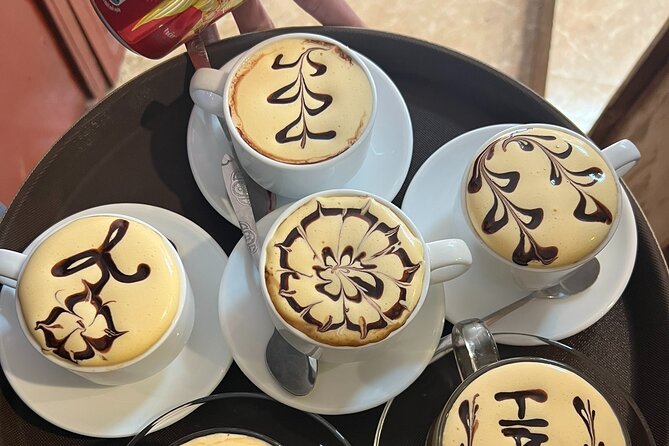
The advertised menu centers on egg coffee and the two milk coffees, but class sessions have also included salt coffee and coconut coffee. One session featured salt coffee, egg coffee, and coconut coffee, along with coffee art made on the foam using chocolate syrup.
That detail matters if you are especially interested in modern Vietnamese coffee. Coconut coffee has become a favorite for some people visiting Hanoi, and learning the recipe gives you more than a photograph of a finished drink. Salt coffee offers another variation, using a salty note to change the balance of the brew.
You should treat these additions as possible class content rather than a firm promise. The stated recipes are egg coffee, Hanoi-style milk coffee, and Saigon-style milk coffee. The instructor and operating conditions may affect what you make on your chosen day.
Some sessions have also started with tea and a snack. That is a pleasant touch, particularly if you arrive between meals, but extra food and drinks are not listed as part of the standard inclusion. Do not book this as a full meal or food tour.
Why the group size matters
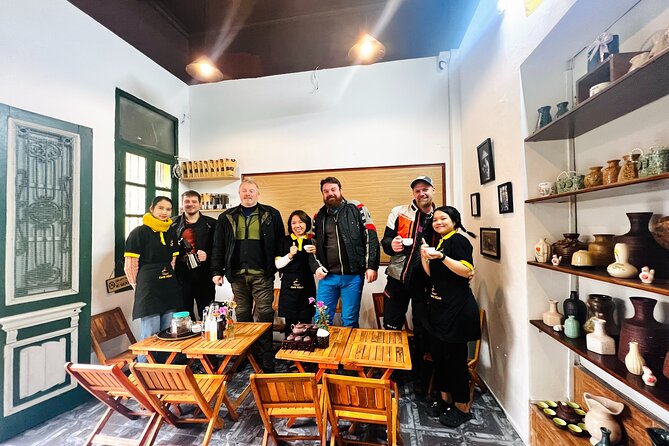
The class accepts a maximum of eight people. That is small enough to keep the activity personal without making it a private lesson.
Coffee preparation involves several small actions, and it is easy to miss one if you are standing at the back of a large demonstration. In a group of eight, you have a better chance of seeing the teacher’s method and getting help when your mixture does not look right.
The format also works well for families and couples. Children who can safely participate in basic preparation may enjoy the practical element, while adults get a simple introduction to Vietnamese food culture. The activity is not described as a children-only program, so supervision and participation should be judged by the adults in your group.
The setting remains social rather than formal. You can ask questions about Vietnamese coffee, compare your results, and try several drinks in one sitting. If you prefer a quiet private lesson, the group format may feel less tailored.
What the hour feels like from start to finish
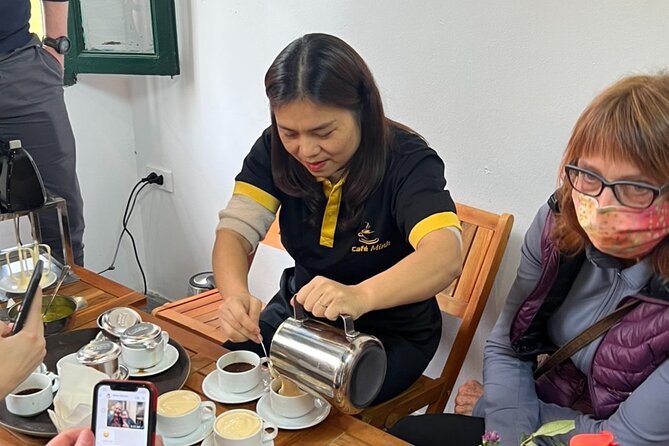
You choose a class time and make your own way to Cafe Minh. Once the session begins, the teacher introduces the drinks, explains some coffee history and culture, and lays out the ingredients and equipment.
You then roll up your sleeves and prepare the ingredients. The instructions are given step by step, so you are not expected to know how to make any of the drinks before arriving.
The main work is hands-on preparation. You follow the teacher’s method for the egg coffee, then make the other coffee styles included in your session. This is where the class differs from an ordinary cafe visit: you learn the process instead of receiving a finished cup.
At the end, you taste what you have made and receive a small gift. The activity finishes back at the cafe after roughly one hour. Since there is no travel between stops, you can plan another Old Quarter activity immediately afterward.
The class can also help you decide which Vietnamese coffee to order for the rest of your trip. After comparing the drinks, you will have a clearer sense of whether you prefer the creamy egg version, strong Hanoi milk coffee, sweeter Saigon milk coffee, or one of the salt and coconut variations.
The $12 price and what it includes

At $12 per person, this is a modestly priced activity for Hanoi. The fee includes an English-speaking teacher, the ingredients, the equipment, admission to the class, and a small gift.
The value comes from the combination of instruction and tasting. Buying three separate drinks at cafes might cost less or more depending on the venue, but it would not teach you how to prepare them. A class also gives you a direct connection to the drinks’ history and local context.
The short duration keeps the cost practical for an afternoon filler activity. You do not need to sacrifice a major sightseeing block, and the central location means you can walk to other Old Quarter sights afterward.
There are limits. Additional food or drink, tips, and personal expenses are not included. If the class session begins with tea or a snack, consider that a possible extra touch rather than something to rely on. The small gift is included, but it is not specified, so do not choose the experience based on the souvenir alone.
Who should book this coffee class
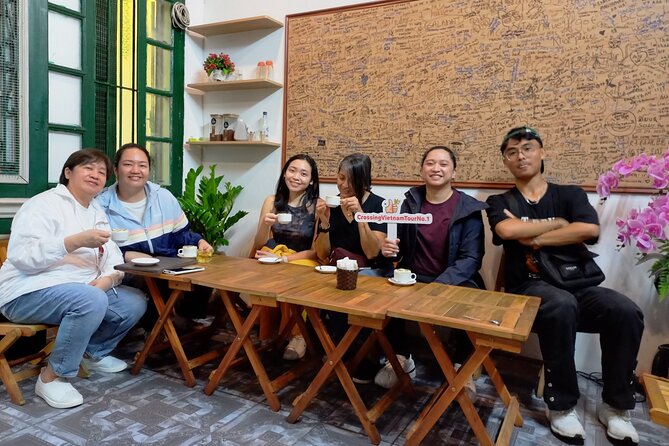
I would recommend it most strongly to coffee lovers who want to understand what they are drinking in Vietnam. It is also a good choice if you want a short cultural activity that requires little planning and takes place in the Old Quarter.
It suits you if:
- You want to make egg coffee instead of only ordering it.
- You enjoy tasting several coffee styles in one sitting.
- You prefer a small group to a large demonstration.
- You have about one hour free in Hanoi.
- You want a recipe you can try again at home.
- You are traveling with family members who enjoy practical activities.
It may be less suitable if you dislike sweet coffee, have no interest in preparing food or drinks, or want a long, detailed coffee workshop. The class is an introduction, not a professional barista course. Its strength is the accessible format and local focus.
Vegetarians should inform the provider in advance. The information does not give a full ingredient list, so anyone with food concerns should ask before attending.
Booking, timing, and cancellation details
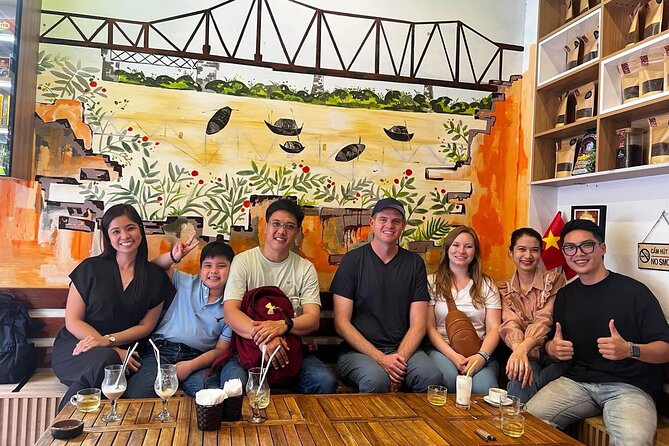
You receive confirmation when you book, and the mobile ticket makes arrival simple. Choose the time that fits your day, then go to the Old Quarter meeting point at Cafe Minh.
Free cancellation is available up to 24 hours before the start time for a full refund. Changes or cancellations made less than 24 hours before the experience are not accepted for a refund, and the cut-off follows Hanoi local time.
The schedule can change because of weather or operating conditions. Since the class takes place indoors at a cafe, weather may not usually affect the activity itself, but it can still affect operations. Keep the provider’s instructions handy on the day.
Should you book the Hanoi Egg Coffee Class?
Book it if you want a practical introduction to Vietnamese coffee, especially if egg coffee has caught your attention but you do not know how it is made. The $12 price, central location, one-hour length, and maximum group of eight make it an easy activity to add to a Hanoi itinerary.
Go in expecting a friendly, hands-on introduction rather than a formal culinary course. You may make egg coffee and the two advertised milk coffees, and your session may also include salt coffee, coconut coffee, tea, a snack, or coffee art. If that flexible format suits you, this is a sensible way to turn a famous Hanoi drink into a skill you can take home.
FAQ
Where does the Hanoi Egg Coffee Class take place?
The class takes place at Cafe Minh, 53 B Luong Ngoc Quyen Street, Hang Buom, Hoan Kiem, Hanoi. It is only a few meters from Ta Hien Beer Street.
How long does the class last?
The activity lasts approximately 50 minutes to one hour. The stated itinerary duration is one hour.
What coffee drinks are taught?
The advertised recipes are Hanoi egg coffee, Hanoi-style espresso-strength milk coffee, and Saigon-style milk coffee. Some sessions have also included salt coffee and coconut coffee.
Is the class taught in English?
Yes. An English-speaking teacher leads the class and explains the coffee history, culture, ingredients, and preparation methods.
What is included in the price?
The price includes the English-speaking teacher, ingredients, equipment, admission to the class, and a small gift after the class.
How many people can join the class?
The maximum group size is eight participants.
Does the class include food or extra drinks?
Additional food or drink is not included. Some class sessions have started with tea and a snack, but these are not listed as standard inclusions.
Does the class end at the same place where it starts?
Yes. The activity ends back at the meeting point at Cafe Minh.
Can I cancel for a full refund?
Yes, if you cancel at least 24 hours before the experience start time. Cancellations or changes made less than 24 hours in advance are not accepted for a refund.
More Egg Coffee Experiences in Hanoi
- Hanoi: Vietnamese Street Food Tour with Egg Coffee
★ 4.9 · 315 reviews - Hanoi Egg Coffee Making Course
★ 5.0 · 76 reviews - Hanoi: Cyclo the Old Quarter and Egg Coffee Tour
★ 4.6 · 63 reviews - Hanoi Jeep Night Street Foodie Tour, Train Street and Egg Coffee
★ 5.0 · 60 reviews
Just added around Hanoi
- Vietnamese Coffee 101 Workshop★ 5.0 · 11 reviews
- Private tour: Hanoi city tour-Van Phuc silk village with egg coffee, lunch★ 5.0 · 2 reviews
- Hanoi 2.5 hour Guided Sightseeing Cyclo Tour & Egg Coffee Class★ 5.0 · 16 reviews
- Taste of Vietnam’s Coffee Scene – A Guided Experience★ 5.0 · 2 reviews
- hidden gems cafe – learn making coconut and egg coffee★ 5.0 · 2 reviews
- Hanoi daily egg coffee making course with local guide★ 5.0 · 17 reviews
- Private Hà Nội Coffee History Tour★ 5.0 · 6 reviews
- Hanoi Private And All Inclusive Coffee Lovers Tour in Vietnam★ 5.0 · 6 reviews
Egg Coffee Experiences, compared.
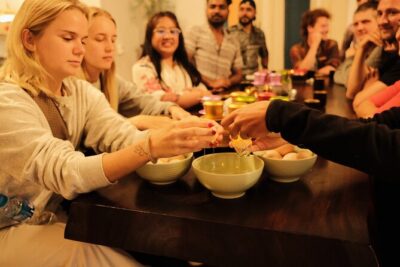
Hanoi Coffee Workshop: Taste Salt, Coconut and Egg Coffee
Read our review →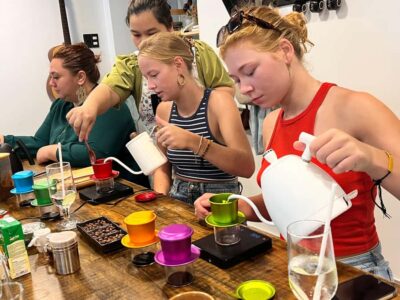
Egg coffee & Course on 4 traditional types of Viet coffee
Read our review →
Decadent Vietnamese “Egg Coffee” Workshop in Hồ Chí Minh City
Read our review →

Techniques & Secrets Behind the Famed Vietnamese Egg Coffee
Read our review →