
Review · HANOI
Hanoi Coffee Classes
Hanoi’s coffee culture is best understood one small cup at a time. In this two-hour class, you make four distinct drinks, beginning with traditional phin coffee and moving through Hanoi egg coffee, central Vietnam’s salt coffee, and a modern cold brew. You also get to taste a curious peanut butter coffee.
I like the hands-on format and the chance to compare Arabica and Robusta side by side. I also like the regional thread: egg coffee represents Hanoi, salt coffee points south toward central Vietnam, and cold brew brings in Vietnam’s newer coffee scene. The main consideration is that the class has only two published ratings, and the available written feedback concerns food tours rather than this coffee activity, so there is limited independent detail about the barista or teaching style.
Key points
- Four coffee styles in two hours: You make phin coffee, egg coffee, salt coffee, and cold brew.
- Arabica versus Robusta: You taste both beans and learn how their flavors differ.
- A taste of Hanoi culture: Egg coffee is presented as a local specialty tied to northern coffee traditions.
- Small class size: A maximum of eight people allows more room for questions and practical instruction.
- Old Quarter pickup: Local transport pickup is included within the Old Quarter, while pickup outside it costs 490,000 VND per group.
- A playful bonus cup: Peanut butter coffee adds an unusual finish to the class.
Starting with Vietnam’s small metal phin filter
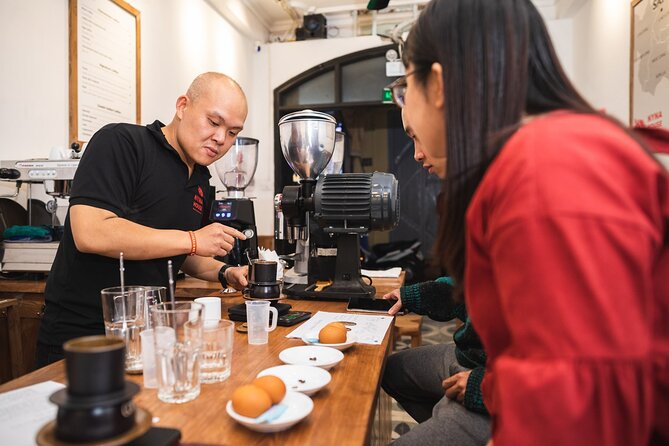
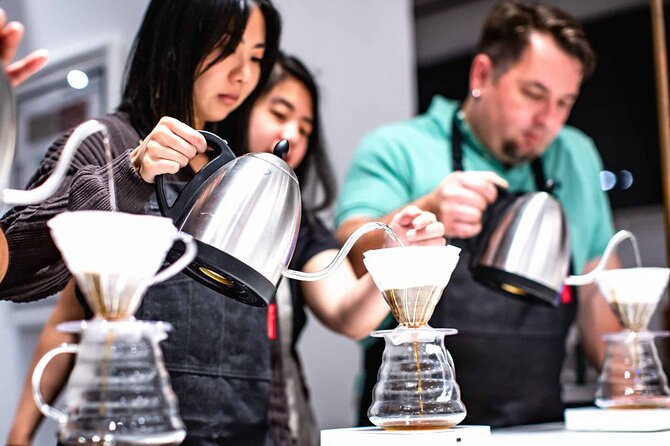
The class begins on Phố Hàng Bè, in or near Hanoi’s Old Quarter, with the most useful foundation: how Vietnamese coffee is brewed through a phin filter. This little metal brewer sits directly on your cup. Ground coffee goes inside, water is added, and the drink slowly drips through.
That slow drip is part of the pleasure. It gives you time to notice the aroma before you take the first sip, and it helps explain why Vietnamese coffee feels different from a quick espresso or a large filter coffee. The barista guides you through the method rather than simply handing you a finished drink.
You work with two types of beans, Arabica and Robusta. Tasting them separately is valuable because Vietnamese coffee is often associated with Robusta, a bean known for a stronger, heavier character. Arabica generally brings a different balance of aroma and acidity. The point is not to declare one better. It is to learn what changes when the bean changes.
I especially like this part for anyone who normally orders coffee without thinking about the beans. You can ask questions, compare the cups, and connect the taste to the brewing method. For a coffee beginner, the lesson is clear and practical. For a serious coffee drinker, it gives you a short introduction to one of the key ingredients in Vietnamese café culture.
The class description promises tips for making typical Vietnamese coffee drinks at home. The exact roasting process is not laid out in detail, so you should expect the focus to be on preparing and tasting drinks rather than a full professional roasting course. That distinction matters if you are hoping to spend much of the session learning commercial roasting techniques.
A few more coffee tours around Hanoi worth a look
- Hanoi Coffee Experience: 6 Brews, 9 Recipes & 3 Liquor Tastings
★ 5.0 · 2,945 reviews - Hanoi Coffee Workshop: Taste Salt, Coconut and Egg Coffee
★ 5.0 · 1,286 reviews - Hanoi: Salt Coffee Workshop Awake Your Senses With 6 Brews
★ 5.0 · 792 reviews
Making Hanoi egg coffee from scratch

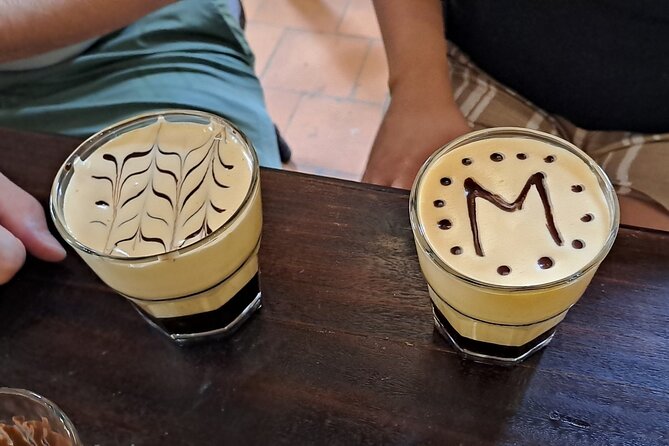
Next comes Hanoi egg coffee, the city’s signature specialty. This drink is more than coffee topped with a sweet foam. Its appeal comes from the contrast between dark brewed coffee and a creamy egg mixture, creating something closer to a dessert than a plain morning cup.
You prepare the drink yourself using the Hanoi Coffee Station recipe and receive guidance from the barista. That hands-on step is useful because the texture is central to the experience. A good egg coffee should feel smooth and light rather than simply thick or sugary.
The class presents egg coffee as a symbol of northern coffee culture. That gives you a helpful piece of local context without turning the lesson into a long history lecture. You get to understand why this particular drink belongs so closely to Hanoi, then taste the result while it is fresh.
This is likely the most immediately memorable drink in the session, especially if you have never tried egg coffee before. It is also the one I would recommend approaching with an open mind. If you prefer black coffee, the sweetness and creamy topping may be a big change from what you usually drink.
The practical value is clear: you are not only sampling a local favorite in a café. You are learning the basic idea behind it, so you can recognize the drink and perhaps prepare a version of it later. The recipe is described as unique to the Hanoi Coffee Station, so you should not assume you will receive a standardized recipe used by every café in Vietnam.
Preparing central Vietnam’s salt coffee
The third drink is salt coffee, presented as a representative of central Vietnamese coffee culture. Salt may sound strange in a coffee class, but a small amount can alter the balance of bitterness and sweetness. It can make the drink taste rounder and give the coffee a different finish.
Here, you make the drink yourself under the barista’s direction. That is important because salt coffee depends on proportion. Too much salt would dominate the cup, while the right amount can work with the coffee and cream. The class gives you a chance to see how a very small ingredient can change the whole drink.
This section adds variety to the class. Egg coffee is rich and sweet, while salt coffee works from a different idea. You are not simply repeating the same recipe with new toppings. Each cup introduces a new way of thinking about Vietnamese coffee.
The regional label also helps you place the drink within Vietnam. Hanoi and central Vietnam have different food and drink traditions, and this class uses coffee to show that local variation. You do not need prior knowledge of Vietnamese regions to follow along. The instruction is built around the cup in front of you.
If you are short on time in Vietnam, this is a useful way to sample a specialty associated with another part of the country without adding another trip to your schedule. At the same time, the class cannot replace visiting central Vietnam or learning about its broader food culture. Think of the drink as a small window, not a complete regional lesson.
Trying Vietnam’s modern cold brew
The final main drink is cold brew with a twist. It represents the third wave of coffee in Vietnam, a newer approach that places more attention on brewing style, presentation, and experimentation.
The description does not specify the exact mix used in the cold brew. That leaves some mystery, but it also means you should not book this expecting a detailed formula in advance. The value is in trying a contemporary Vietnamese coffee style after tasting the older, more traditional drinks.
Cold brew changes the pace of the class. The phin coffee is slow and direct. Egg coffee is tied to Hanoi. Salt coffee introduces a regional variation. The cold brew gives you a modern finish and shows that Vietnamese coffee is not limited to one familiar style with condensed milk.
I like the progression because it turns the two hours into a small story. You start with beans and equipment, then move through local specialties before reaching a newer drink. The class therefore suits someone who wants both tradition and experimentation.
The main limitation is time. With four drinks, bean comparisons, explanations, and hands-on preparation packed into about two hours, you should expect a focused session rather than a long conversation about cultivation, trade, or advanced brewing theory. That is not a flaw for most people. It simply tells you what kind of coffee experience this is.
Same place, a different way to drink it:
- Hanoi: Master the Art of 4-6 Signature Vietnameses Coffees
★ 5.0 · 517 reviews - Hanoi: Vietnamese Street Food Tour with Egg Coffee
★ 4.9 · 315 reviews - Hanoi Cooking Class: Pho/Bun Cha/Banh Xeo…+Free Egg/Salt Coffee
★ 5.0 · 267 reviews - Hanoi: Vietnamese Coffee Workshop with 6 Brews and 8 Recipes
★ 5.0 · 237 reviews
Ending with peanut butter coffee
The bonus drink is peanut butter coffee, a playful combination that gives the class an unexpected finish. It is not described as one of the four regional or stylistic examples, so it works more like an extra tasting than a core lesson.
This is a good addition for curious eaters who enjoy unusual combinations. It also gives the session a lighter ending after the more structured tasting sequence. You can compare how a familiar food flavor changes the coffee, just as egg, salt, and cold brewing changed the drinks before it.
Because the activity provides all drinks, you do not need to budget extra for the tasting portion. Bottled water is included as well, which is useful when you are sampling several strong or sweet drinks in a short period.
If you have a peanut allergy or a strong dislike of peanut flavors, you should ask the provider about the bonus drink before participating. The information provided does not explain how the coffee is prepared or whether alternatives are available, so this is one point worth clarifying directly.
Why the small group matters
The maximum group size is eight people. That is a sensible limit for a practical class. You have a better chance of seeing the preparation clearly, handling the equipment, and asking questions than you would in a large demonstration.
The experience includes an English-speaking barista. No individual barista name is provided, so you should not book it expecting a particular instructor. The teaching language does make the class easier to follow if you want explanations about ingredients, methods, and local coffee customs.
The available written feedback is not a reliable guide to the coffee class itself. It praises a guide named Tom for a relaxed manner, jokes, local insight, and smooth driving, but those comments describe food and sightseeing outings rather than this coffee session. I would therefore treat the coffee class as a product with limited public feedback and place more weight on the clearly stated format, small group size, and drink lineup.
What the $55 price gets you
At $55 per person, this is not the cheapest way to drink coffee in Hanoi. You can buy individual cups around the city for far less. The question is what you are paying for beyond the liquid in each cup.
You are paying for instruction, several prepared drinks, bean comparison, an English-speaking barista, bottled water, and local pickup within the Old Quarter. You also receive a structured introduction to coffee styles that could take several café visits to discover on your own.
The price makes the most sense if you value participation. If you only want to taste egg coffee and salt coffee, ordinary cafés will probably cost less. If you want to understand the phin method, compare Arabica and Robusta, make the drinks yourself, and ask questions as you go, the class offers more useful value.
Pickup also affects the calculation. Pickup in the Old Quarter is included as local transportation. Pickup and drop-off outside the Old Quarter costs 490,000 VND per group, so you should factor that extra charge into the total if your accommodation is elsewhere.
Timing, pickup, and who should book
The class lasts about two hours. That makes it easy to fit into a Hanoi schedule before lunch, after a morning walk, or as a break from sightseeing. The exact start time is not provided here, so check your selected booking time carefully.
Pickup is offered in the Old Quarter. The activity is near public transportation, and most people can participate. Children must be accompanied by an adult, so families can consider it, provided the children are comfortable with a tasting session built around coffee.
I would recommend this class to:
- Coffee drinkers who want to understand Vietnamese brewing rather than simply order a cup.
- First-time visitors looking for a compact local food and drink activity.
- People curious about egg coffee and salt coffee.
- Couples or small groups who prefer practical instruction to a formal lecture.
- Anyone who enjoys comparing traditional and modern styles in one sitting.
I would be more cautious if you dislike sweet drinks, avoid caffeine, have food allergies, or want a serious roasting course. The class includes several drinks and focuses on making and tasting them. It is not advertised as a full coffee-farm visit, professional barista qualification, or advanced roasting workshop.
Booking and cancellation details
Confirmation is received at the time of booking, and free cancellation is available up to 24 hours before the start time. If you cancel less than 24 hours in advance, the amount paid is not refunded, and changes within that period are not accepted.
The experience is often booked well ahead, with an average booking lead time of 44 days. That suggests you should reserve early if the class is an important part of your Hanoi plans, especially since the group is limited to eight people.
Should you book Hanoi Coffee Classes?
Book it if you want a compact, hands-on introduction to Vietnamese coffee and like the idea of making four different drinks instead of merely sampling one. The Arabica and Robusta comparison, Hanoi egg coffee, central-style salt coffee, cold brew, and peanut butter coffee create a varied two-hour session.
Skip it if your main goal is simply a cheap café stop, or if you want detailed roasting science and coffee production at farm level. The public information supports a practical tasting class, not an advanced technical course.
For most first-time visitors who enjoy coffee and have two free hours in Hanoi, I think the class is a sensible choice. Just keep your expectations precise: you are paying for guided preparation, local context, and a broad taste of Vietnamese coffee culture, with limited independent information about the specific teaching experience.
FAQ
Where does the coffee class take place?
The class takes place at Phố Hàng Bè in Hanoi.
How long does the experience last?
The class lasts approximately two hours.
How much does the class cost?
The listed price is $55 per person.
What coffee drinks will I make?
You will make phin coffee, Hanoi egg coffee, salt coffee, and cold brew coffee with a twist.
Will I taste different coffee beans?
Yes. The class includes Arabica and Robusta beans so you can compare their flavors.
Is peanut butter coffee included?
Yes. Peanut butter coffee is offered as a bonus tasting during the class.
Is an English-speaking instructor included?
Yes. An English-speaking barista leads the class.
Is pickup available?
Yes. Pickup within Hanoi’s Old Quarter is included as local transportation.
Is pickup outside the Old Quarter available?
Yes, but pickup and drop-off outside the Old Quarter costs 490,000 VND per group.
How large is the class?
The activity has a maximum of eight participants.
Just added around Hanoi
- Vietnamese Coffee 101 Workshop★ 5.0 · 11 reviews
- Private tour: Hanoi city tour-Van Phuc silk village with egg coffee, lunch★ 5.0 · 2 reviews
- Hanoi 2.5 hour Guided Sightseeing Cyclo Tour & Egg Coffee Class★ 5.0 · 16 reviews
- Taste of Vietnam’s Coffee Scene – A Guided Experience★ 5.0 · 2 reviews
- Hanoi daily egg coffee making course with local guide★ 5.0 · 17 reviews
- Private Hà Nội Coffee History Tour★ 5.0 · 6 reviews
- hidden gems cafe – learn making coconut and egg coffee★ 5.0 · 2 reviews
- 3 Dishes cooking + Egg Coffee bonus & Local Market Tour★ 5.0 · 14 reviews
Hanoi Coffee Tours, compared.
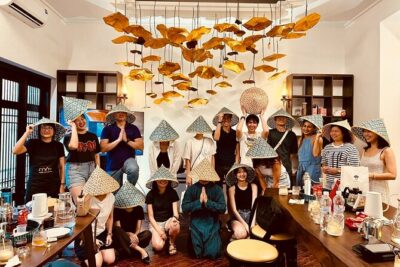
Hanoi Coffee Experience: 6 Brews, 9 Recipes & 3 Liquor Tastings
Read our review →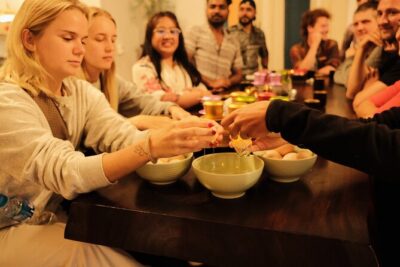
Hanoi Coffee Workshop: Taste Salt, Coconut and Egg Coffee
Read our review →
Salt Coffee Workshop Awake Your Senses With 6 Brews
Read our review →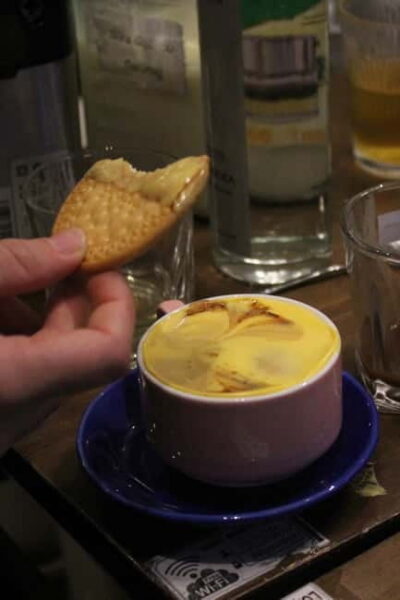
Master the Art of 4-6 Signature Vietnameses Coffees
Read our review →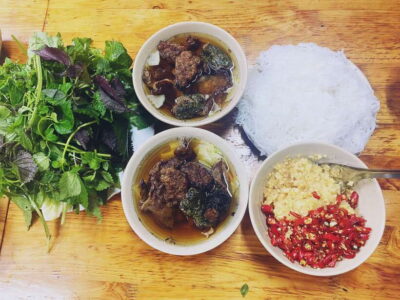
Hanoi Cooking Class: Pho/Bun Cha/Banh Xeo…+Free Egg/Salt Coffee
Read our review →
Vietnamese Coffee Workshop with 6 Brews and 8 Recipes
Read our review →
Browse the lists this tour appears in