

Review · HANOI
Hanoi Coffee Workshop: Crafting Your Perfect Brew
Vietnamese coffee is not just a strong drink in a small glass. It is a lesson in patience, texture, sweetness, and local taste. In this hands-on Hanoi workshop, you brew the coffee yourself, then drink every cup you make.
I like the choice between four, five, or six recipes, and I like that the class gives you instructions you can use at home. The small group, air-conditioned room, and English-speaking guides such as Gene, Moon, Ashley, and Jay also make the session easy to follow. The main drawback is the caffeine load: six coffees can be a lot, especially if you arrive hungry.
Key points at a glance
- Six Vietnamese styles in one class: Make black, brown, egg, white, coconut, and salt coffee, depending on your chosen option.
- The phin filter is the star: Learn the slow, traditional method behind strong Vietnamese coffee.
- Small groups help: With no more than 10 people, you have room to ask questions and work with the tools.
- Recipes go home with you: You can repeat the drinks after your trip instead of leaving the skills in Hanoi.
- Strong coffee needs a plan: Eat before class, and think carefully before choosing all six if caffeine affects you.
- A good $12 value: Ingredients, equipment, instruction, tasting, and recipes are included, though food is not.
Why this Hanoi coffee class is more than a tasting
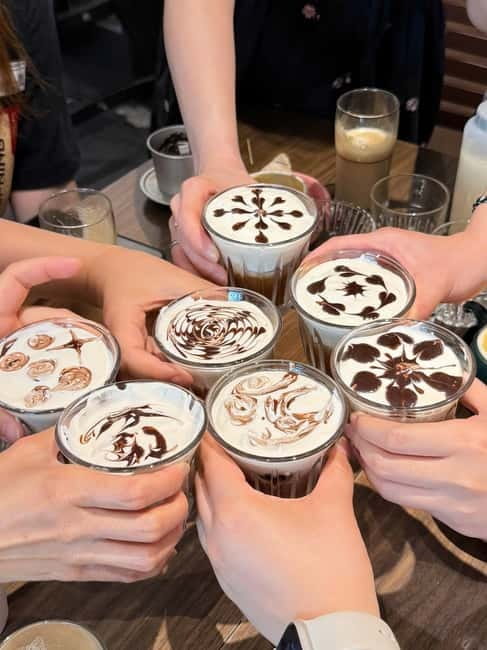
Many coffee stops in Hanoi give you a finished drink and a pleasant table. This workshop gives you the steps behind the drink. You see how Vietnamese coffee changes when you add condensed milk, whipped egg yolk, coconut cream, or a little salt.
That difference matters. You are not only tasting local coffee culture. You are learning why the drinks have such different textures and flavors. The class also gives you a practical souvenir: recipes you can use when you get home.
The workshop takes place on the first floor of the Lotus Hanoi Hostel building. The setting is air-conditioned, which is welcome in Hanoi, especially after walking outside. You do not need to plan a full day around it. The session lasts about one to two hours, depending on the pace and the number of coffees you choose.
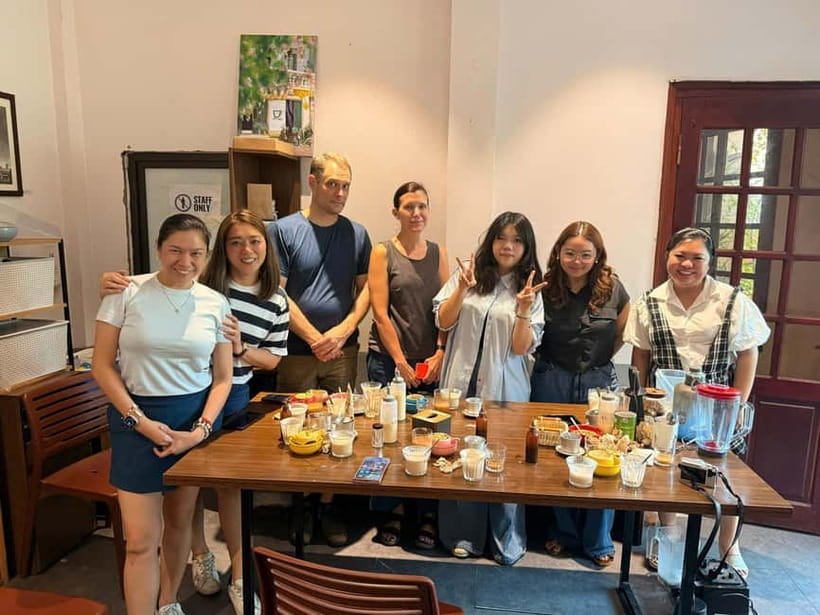
The group is limited to 10 people. That is large enough to meet other coffee fans, but small enough for an instructor to explain the process and watch what you are doing. The named instructors include Gene, Moon, Ashley, and Jay. Their teaching style can vary, but the useful pattern is clear: English instruction, friendly guidance, and room to adjust drinks to your taste.
More Coffee Making Classes in Hanoi
- Hanoi Coffee Workshop: Taste Salt, Coconut and Egg Coffee
★ 5.0 · 1,286 reviews - Hanoi: Salt Coffee Workshop Awake Your Senses With 6 Brews
★ 5.0 · 792 reviews - Hanoi: Vietnamese Coffee Workshop with 6 Brews and 8 Recipes
★ 5.0 · 237 reviews
Starting with the phin filter and black coffee
The natural starting point is cà phê đen, or Vietnamese black coffee. This is brewed with a phin filter, the small metal brewer found in homes and cafés across Vietnam.
The phin is simple. Coffee grounds sit in the metal chamber, hot water is added, and the coffee drips slowly into the cup below. It is not an instant process, and that is part of the point. You learn to let the coffee take its time.
This first cup gives you the clearest taste of the coffee itself. It is strong and aromatic, with no condensed milk or cream to soften it. If you normally drink mild coffee, this can be a serious opening move.
I like beginning here because it gives you a reference point for the rest of the class. Once you add sweetness or cream, you can compare the changes instead of treating each drink as an unrelated recipe. You also learn the basic tool that appears again in several Vietnamese coffee traditions.
The phin is small and easy to pack or buy later, and the method is realistic for home use. You are not learning a trick that only works with restaurant equipment.
Turning black coffee into cà phê nâu
Next comes cà phê nâu, often called brown coffee. This combines strong phin coffee with sweetened condensed milk.
The result is smoother and sweeter than black coffee, but it still has plenty of force. The condensed milk does more than add sugar. It gives the drink a thick, silky quality and helps balance the bitterness of the coffee.
This is one of the most familiar Vietnamese coffee combinations, and it is a useful recipe to learn because the ingredients are easy to understand. You can see how a small amount of condensed milk changes the drink without covering the coffee completely.
The instructor explains the ingredients and the background of each style as you work. That makes the class more useful than simply following a recipe card. You get a sense of how the drink fits into daily Vietnamese coffee habits, then you get a chance to adjust the balance to your own taste.
The workshop is not a meal, so do not expect food alongside the coffee. Eat beforehand, especially if you plan to make five or six cups.
Making the rich, creamy egg coffee
Egg coffee, or cà phê trứng, is the drink many people most want to try. It uses whipped egg yolk to create a thick, creamy topping over coffee.
The fun here is texture. You are not just adding milk. You are working with a sweet, airy egg mixture that turns the coffee into something closer to a dessert. The bitterness below gives the topping a useful contrast.
This is also the part of the class where technique matters most. You learn how the egg mixture is prepared and how it is combined with the coffee. The session presents egg coffee as a drink you can make again, not as a mysterious café specialty that requires a professional kitchen.
If you like sweet drinks and soft, creamy textures, this is likely to be a favorite. If you prefer plain black coffee, it may feel more like a dessert than a daily caffeine stop. Either way, making it yourself helps you understand why egg coffee has such a different character from the first two cups.
More Coffee Making Classes in Vietnam
- Ha Noi Egg Coffee Class
★ 5.0 · 227 reviews - Hanoi Coffee Workshop: Master 6 Signature Vietnamese Coffee
★ 5.0 · 171 reviews - Hanoi Coffee Class learning 5 famous coffee in Hanoi
★ 5.0 · 161 reviews - Mini Hanoi Coffee Workshop: Pick Any Signature Coffee You Like
★ 5.0 · 160 reviews
Trying bạc xỉu, the gentler milk coffee
Bạc xỉu is the lightest option in the four-coffee selection. It contains more milk and has a gentler coffee flavor than black or brown coffee.
This is a useful inclusion because not everyone wants a hard hit of bitter coffee. The drink gives you a softer option while still keeping the Vietnamese coffee style. It can also help reset your palate after the stronger first cups.
The four-coffee option includes black coffee, brown coffee, egg coffee, and white coffee. For many people, that is enough variety to understand the main ideas of the class. You get a plain brew, a condensed milk version, a creamy egg drink, and a milkier preparation.
At $12 per person, this four-drink option offers solid value. You receive the ingredients, tools, instruction, tastings, and recipes. The price is especially fair if you want a short cultural activity rather than a long sightseeing tour.
Adding coconut coffee to the five-drink choice
The five-coffee option adds cà phê cốt dừa, or coconut coffee. This is a chilled combination of coffee and coconut cream.
Compared with the hot and creamy egg coffee, coconut coffee brings a cooler, smoother direction. The coconut gives the drink a rich texture and a mild tropical flavor, while the coffee keeps it from becoming simply sweet cream.
This is a good choice if you want more contrast in the class. The first four recipes show several hot and milk-based styles. Coconut coffee adds a colder, more refreshing drink to the set.
You should choose five coffees if you want variety but do not feel the need to try every recipe. It is also a sensible middle option for people who enjoy coffee but know that six full preparations may be too much.
The instructions include room to adjust drinks to your flavor preferences. That matters with coconut coffee, since some people want a stronger coffee taste and others prefer the coconut to lead.
Finishing with salt coffee
The full six-coffee option adds cà phê muối, or salt coffee. The recipe combines bitterness, sweetness, and a small salty note.
Salt may sound odd in coffee, but the idea is easy to understand once you taste the balance. A little salt can change how you notice bitterness and sweetness. The result is not meant to taste like seawater. It is a small adjustment that creates a different profile.
This is the most unusual drink in the workshop, and it gives the full option a clear reason to exist. You are not simply drinking another version of the same coffee. You are testing how one extra ingredient changes the whole cup.
The six-coffee option is best for serious coffee fans, curious cooks, or anyone who wants the fullest lesson. It is not automatically the best choice for everyone. Six coffee preparations in one to two hours can leave you over-caffeinated, so eat first and consider your normal caffeine limit.
One participant specifically found the class useful for learning which beans work best, as well as how to make six styles. That detail adds value for anyone who wants to keep experimenting at home.
How the teaching style affects the experience
The instructors teach in English and explain the origins, ingredients, and preparation of the drinks. Names associated with the workshop include Gene, Moon, Ashley, and Jay.
The strongest pattern in the teaching is friendliness and clarity. Gene is described as welcoming and easy to understand. Moon is noted for adjusting the drinks to personal flavors. Ashley brings a playful tone, including coffee art. Jay is praised for clear explanations and a friendly manner.
You should not expect a formal culinary school lesson. This is a relaxed activity where you mix, brew, taste, and ask questions. That makes it a good fit if you want to learn by doing rather than sit through a long talk.
The small group helps here. With a limit of 10 people, you are less likely to disappear at the back of the room. You can handle the equipment and see what is happening. For a short class, that hands-on time is more useful than a long lecture.
What is included, and what is not
The $12 price includes all coffee ingredients and tools, guided instruction in English, tastings of the coffee you prepare, and recipes to take home. The air-conditioned workshop room is also included.
That is a strong package for the cost. You are paying for both the activity and the materials used during it, rather than paying separately for every sample. The recipes give the class value beyond the hour or two you spend in Hanoi.
Food is not included, and the activity lists other expenses as separate. Plan to eat before arriving. This is especially important because the coffee is strong and the class may include four, five, or six drinks.
Vegan and dairy-free options are available if requested in advance. Ask for the option before the session rather than assuming the standard recipes will suit your diet. People with diabetes should not book this activity, according to the stated restrictions.
The workshop is not suitable for wheelchair users. That is important to check before booking, since the meeting point is on the first floor of the hostel building and no accessibility details are provided.
Picking four, five, or six coffees
Here is the practical choice:
- Four coffees: Best for a balanced introduction and a shorter caffeine commitment. You make black, brown, egg, and white coffee.
- Five coffees: Best for extra variety. You add chilled coconut coffee without taking on the final salt coffee.
- Six coffees: Best for committed coffee fans who want the complete set, including salt coffee.
The duration is listed as one to two hours, and the starting time depends on availability. The number of drinks you choose may affect how quickly the session moves, but you should allow the full two-hour window when planning your day.
The most important advice is simple: do not choose all six just because it sounds like the best deal. At this price, the full set is tempting, but your enjoyment may drop if you are already sensitive to caffeine. Four well-made drinks can be more satisfying than six cups you struggle to finish.
Who should book this Hanoi activity
I would recommend this workshop to coffee lovers, curious cooks, couples, solo visitors, and small groups looking for an easy cultural activity. It also suits you if you want something practical to do between sightseeing stops.
It is a good choice for people who enjoy learning local food traditions through preparation. You will get more from it if you are willing to handle the filter, mix the ingredients, and taste several different styles.
I would be more cautious if you dislike sweet coffee, avoid caffeine, or want a full meal-based food tour. The workshop is focused on coffee, not Vietnamese cooking in general. It also has clear limits for people with diabetes and wheelchair users.
Free cancellation is available up to 24 hours before the activity for a full refund, and you can reserve now and pay later. Those terms help if your Hanoi schedule is still changing.
Should you book the coffee workshop?
Book it if you want a low-cost, hands-on way to understand one of Vietnam’s most distinctive food traditions. The price is modest, the class is short, and the recipes give you something useful to take home.
Choose four coffees if you want a manageable introduction. Choose five for more variety, or all six if you are comfortable with strong caffeine and want to try the unusual salt coffee.
I would not book it on an empty stomach, and I would not treat the class as a casual stop for people who cannot handle several coffee servings. For everyone else, this is a practical, friendly activity with enough flavor, technique, and local context to earn a place in a Hanoi itinerary.
FAQ
Where does the Hanoi coffee workshop meet?
The meeting point is on the first floor of the Lotus Hanoi Hostel building in Hanoi.
How long does the workshop last?
The activity lasts about one to two hours. Starting times depend on availability.
How many coffee styles can I make?
You can choose four, five, or all six coffee styles. The full set includes black, brown, egg, white, coconut, and salt coffee.
Is the instruction in English?
Yes. The workshop is taught in English.
What is included in the price?
The price includes coffee ingredients, tools, guided instruction, tastings of the coffees you make, recipes to take home, and use of the air-conditioned workshop space.
Can I request vegan or dairy-free coffee?
Yes. Vegan and dairy-free options are available upon request.
Should I eat before the class?
Yes. You are advised to eat beforehand because the coffee is strong. Food and meals are not included.
Can I cancel for a refund?
You can cancel up to 24 hours in advance for a full refund. You can also reserve now and pay later.
Just added around Hanoi
- Vietnamese Coffee 101 Workshop★ 5.0 · 11 reviews
- Private tour: Hanoi city tour-Van Phuc silk village with egg coffee, lunch★ 5.0 · 2 reviews
- Hanoi 2.5 hour Guided Sightseeing Cyclo Tour & Egg Coffee Class★ 5.0 · 16 reviews
- Taste of Vietnam’s Coffee Scene – A Guided Experience★ 5.0 · 2 reviews
- hidden gems cafe – learn making coconut and egg coffee★ 5.0 · 2 reviews
- Hanoi daily egg coffee making course with local guide★ 5.0 · 17 reviews
- Private Hà Nội Coffee History Tour★ 5.0 · 6 reviews
- Hanoi Private And All Inclusive Coffee Lovers Tour in Vietnam★ 5.0 · 6 reviews
Coffee Making Classes, compared.

Vietnamese Coffee Culture and Coffee Making Class
Read our review →
Turkish Coffee Making and Fortune Telling Workshop
Read our review →
Hanoi Coffee Workshop: Taste Salt, Coconut and Egg Coffee
Read our review →
Salt Coffee Workshop Awake Your Senses With 6 Brews
Read our review →


Turkish Coffee Making and Fortune Telling Workshop
Read our review →Browse the lists this tour appears in