
Review · SARAJEVO
Sarajevo: City Tour with Bosnian coffee ritual ☕️
Sarajevo’s story is best understood over a cup of strong Bosnian coffee, with Ottoman lanes, Austro-Hungarian facades, Jewish heritage, and Yugoslav memories all within the same compact city center. This three-and-a-half-hour tour connects those pieces without turning the outing into a long history lecture.
I like the small group of no more than eight, which should make questions and conversation easy. I also like the way food is built into the route: baklava, local cheeses, cured meats, and coffee give you a taste of daily culture, not just a parade of monuments.
The main consideration is pace. You visit many sites in 210 minutes, so some stops will be introductions rather than lengthy museum visits. If you want a slow, detailed look at every landmark, you may need extra time afterward.
Key points at a glance
- Sarajevo’s religious mix: Visit the Sacred Heart Cathedral, Gazi Husrev-beg Mosque, the Orthodox cathedral, and the Museum of the Jews of Bosnia and Herzegovina.
- Coffee with a lesson: Learn how Bosnian coffee is prepared and served, plus details about the three kinds of coffee people drink at home.
- Food along the route: Try baklava, another beloved Bosnian dessert, local cheeses, and cured meats.
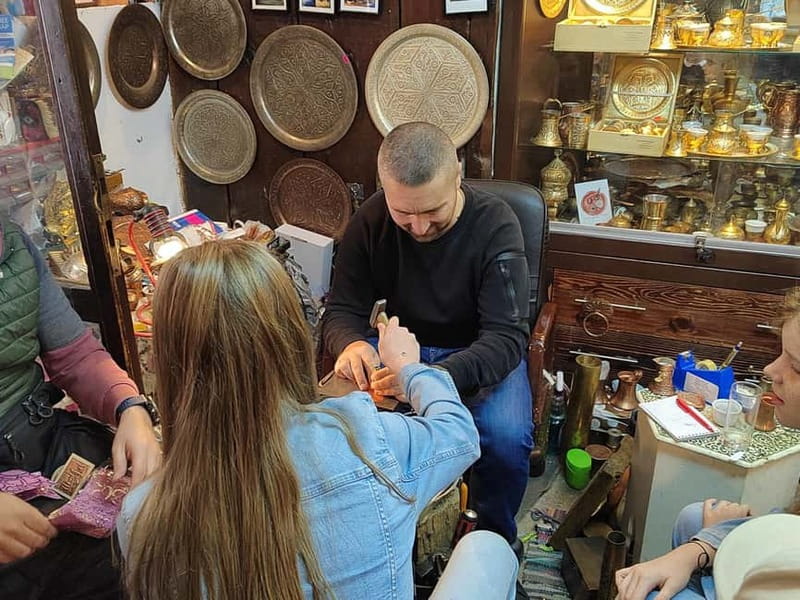
- Copperwork in Kazandžiluk: See a traditional coppersmith at work and learn about techniques passed through generations.
- Major turning points: Follow the city from the Slavs and Bosnian kingdom through Ottoman and Austro-Hungarian rule, the World Wars, and Tito’s Yugoslavia.
- Easy booking terms: The tour costs $38 per person, lasts 210 minutes, and allows cancellation up to 24 hours before departure for a full refund.
Sarajevo’s story begins beside the Sacred Heart Cathedral
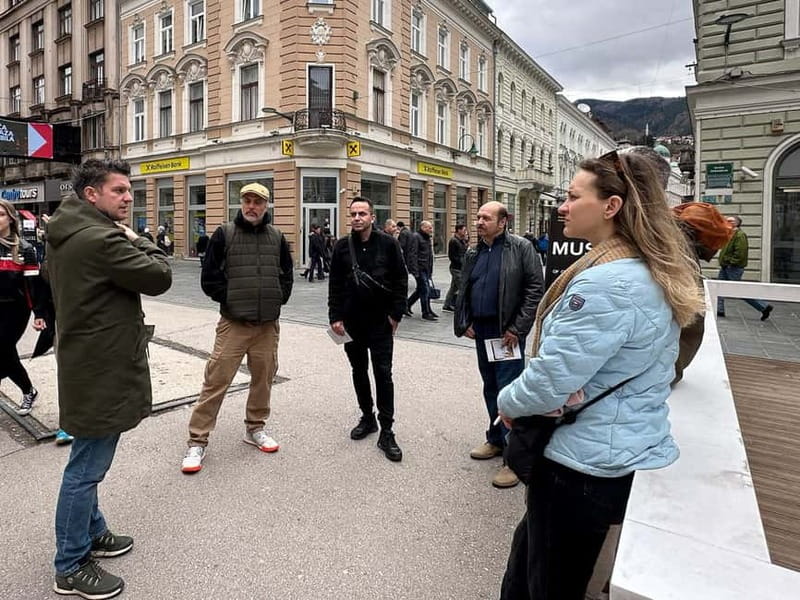
The meeting point is beside the statue of Pope John Paul II, next to Sarajevo’s Sacred Heart Cathedral. That location is a useful introduction to the city’s layered identity. Within a short central route, you encounter Catholic, Muslim, Jewish, and Orthodox traditions, each tied to a different part of Sarajevo’s past.
The tour’s historical arc begins with the Slavs and the Bosnian kingdom, then moves through Ottoman rule, Austro-Hungarian administration, the World Wars, and Yugoslavia under Tito. You are not simply collecting dates. You are learning why streets, religious buildings, bridges, and public squares look so different from one another.
I appreciate the stated approach of keeping the history lively and selective. A guide who explains why a place matters, rather than listing every date attached to it, can make Sarajevo easier to understand. Still, the amount of material is large, so ask questions when a period interests you. The small group makes that practical.
More City Tours in the world:
- Dresden: Guided City Walk with a Cup of Coffee
★ 4.7 · 1,568 reviews - Fun & Easy Vietnamese Coffee Workshop in Hồ Chí Minh City
★ 5.0 · 293 reviews - Puerto Vallarta: City Tour, Tequila and Coffee Factory Tour
★ 4.2 · 212 reviews
The Museum of the Jews of Bosnia and Herzegovina
The Museum of the Jews of Bosnia and Herzegovina adds an essential part of the city’s story. Sarajevo is often called the Jerusalem of Europe because several major religious communities have lived close together, and this stop helps explain that description.
The museum visit is guided, giving you a chance to connect Jewish life in Bosnia and Herzegovina with the wider development of Sarajevo. The tour does not treat the city as a single tradition. Instead, it places Jewish heritage alongside Muslim, Catholic, and Orthodox landmarks.
Because the entire experience covers so much ground, this should be viewed as an introduction rather than a full museum study. If the Jewish history of Sarajevo interests you most, note the museum’s location and consider returning independently if time allows.
Sarajevo Meeting of Cultures in one street
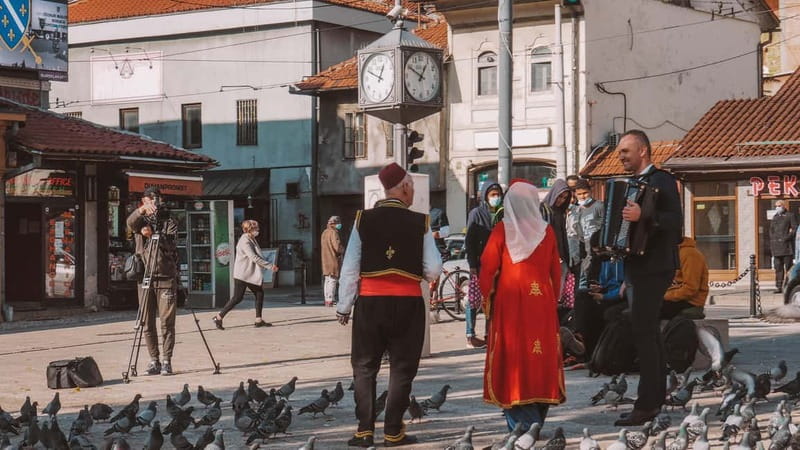
The Sarajevo Meeting of Cultures marks the point where the city’s Ottoman and Austro-Hungarian areas meet. It is one of the clearest places to see Sarajevo’s contrasting architectural and cultural zones in a single view.
This stop works well early in the tour because it gives you a visual framework for everything that follows. The eastern side leads toward the Ottoman-era bazaar and mosque complex. The western side feels more connected to the Austro-Hungarian period.
I find this kind of stop more useful than a long explanation alone. You can look at the change in the street itself and understand how Sarajevo developed in layers. Your guide can then place later landmarks into that picture instead of presenting them as unrelated attractions.
Gazi Husrev-beg Mosque and the Ottoman center
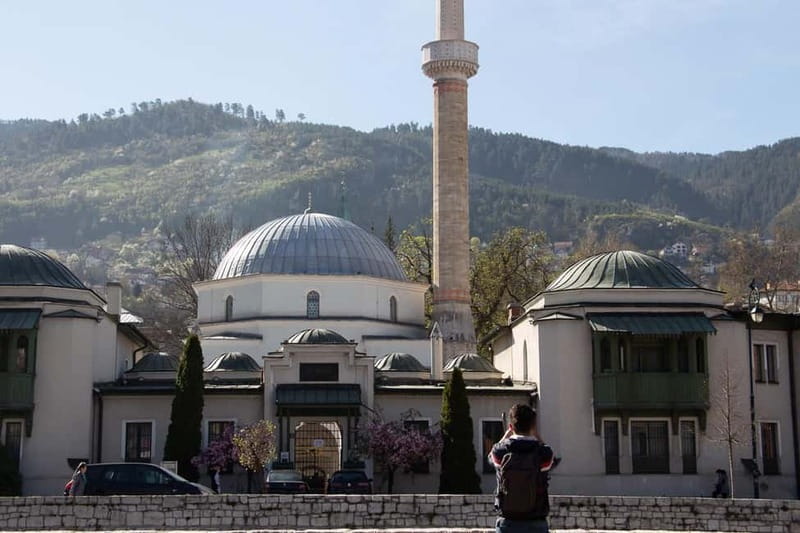
Gazi Husrev-beg Mosque is one of the key religious and architectural stops. The guided visit introduces the Ottoman period and its lasting influence on Sarajevo’s center.
This is also where the city’s coffee and market traditions begin to make more sense. The Ottoman-era commercial district is not only a collection of old buildings. It is a working part of Sarajevo where craft, food, worship, and social life remain linked.
Dress respectfully for the mosque visit. The provided information does not specify a separate clothing policy, so practical modest clothing is the sensible choice. The tour includes major landmarks, but remember that a guided stop may be brief because several more sites remain on the schedule.
A few more coffee tours around the world worth a look
- Hoi An: Vietnamese Coffee Culture and Coffee Making Class
★ 4.9 · 4,006 reviews - Hanoi Coffee Experience: 6 Brews, 9 Recipes & 3 Liquor Tastings
★ 5.0 · 2,945 reviews - 4×4 Dominican Adventure with Chocolate and Coffee Tasting
★ 5.0 · 2,920 reviews - Rome Morning Vespa Sidecar Tour in Rome with Cappuccino
★ 5.0 · 1,771 reviews
Baklava, bakery treats, and the food of the bazaar
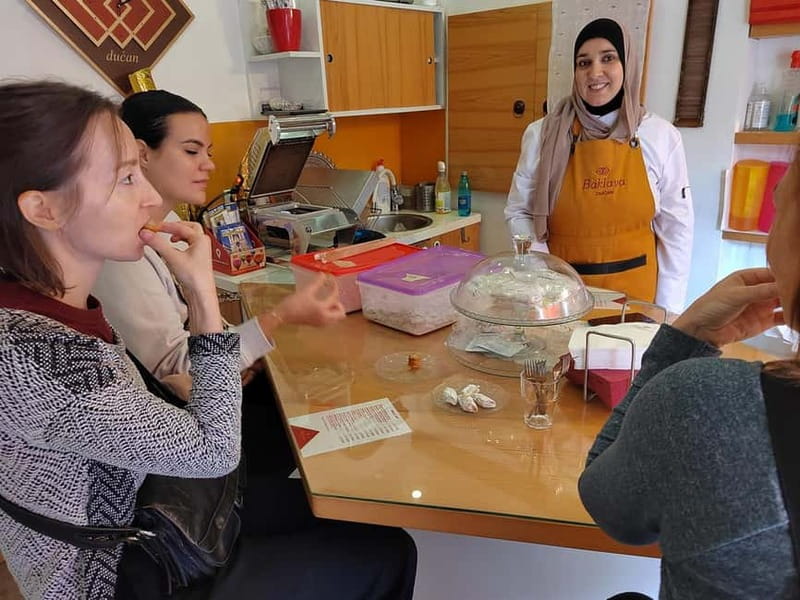
A stop at a local bakery adds a simple pleasure to the historical route. You get to try local food rather than only hearing how food fits into Bosnian life.
Baklava is included at a traditional manufacturer, and the tour also includes another beloved Bosnian dessert. The details of that second dessert are not specified, so you should treat it as a pleasant surprise rather than plan around a particular dish.
The sweets matter because Bosnian coffee is rarely just about the drink. Coffee is presented as a social habit and an important part of everyday life. Pairing coffee culture with baklava makes the explanation more concrete, and you can judge the flavors for yourself.
Food and drinks beyond the listed tastings are not included. If you have a large appetite, keep that in mind. The included samples are part of the cultural experience, not a full meal.
Baščaršija and the sound of copperwork
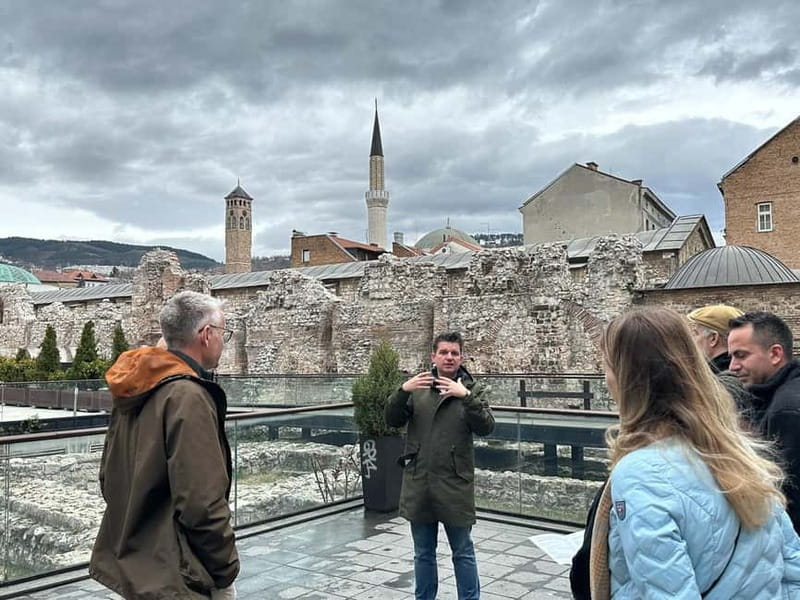
Baščaršija is Sarajevo’s best-known Ottoman market area and one of the tour’s central sections. Here, the route shifts from broad historical explanation to the sights, sounds, and crafts that give the old center its character.
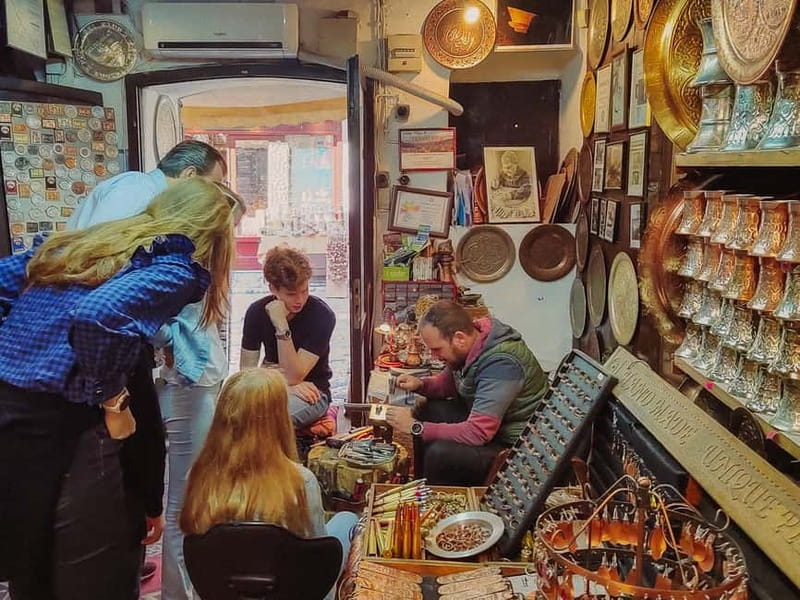
The visit to Kazandžiluk, the traditional coppersmiths’ market, is one of the most specific parts of the experience. You visit a local workshop and watch a master at work. The important point is not simply seeing finished copper objects. You learn about techniques passed through generations and see how much skill sits behind a familiar souvenir.
This is a good place to think about value. Many city tours point out craft shops from the street. This one includes access to a working workshop, which gives you a better sense of the labor involved. You do not need to buy anything to benefit from the stop, though the market provides an opportunity to purchase something if you wish.
Bosnian coffee as a social ritual
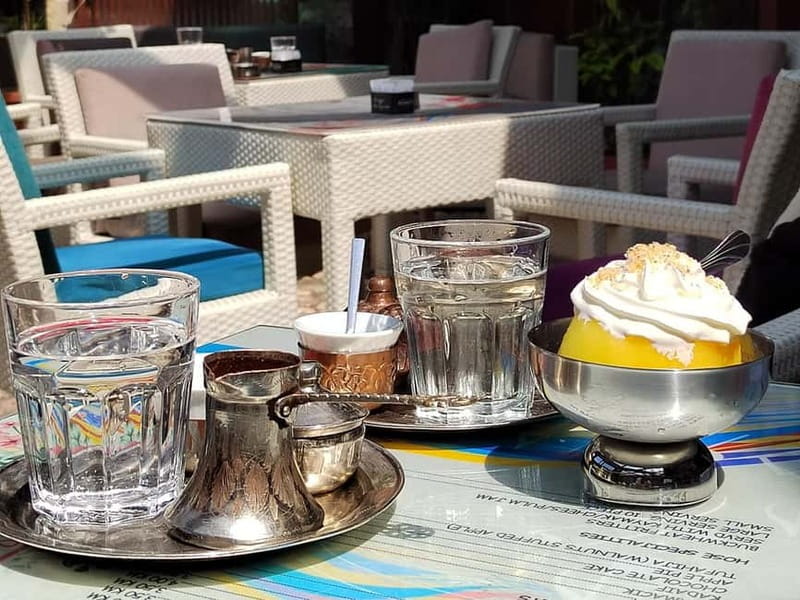
The coffee tasting takes place at a local café and is one of the tour’s main draws. Bosnian coffee is strong and traditionally served, and the guide explains how the ritual works rather than treating it as a quick caffeine break.
You will learn about coffee culture and the three kinds of coffee people drink at home. The experience is designed to show how coffee fits into Bosnian society and daily conversation.
Pay attention to the preparation and serving details. A coffee tasting is more rewarding when you approach it as a cultural custom, not as a contest over which brew tastes strongest. If you normally take coffee with milk or sugar, the traditional serving may be different from your usual order.
The timing also matters. This is a social drink that can appear at any time of day, so the café stop helps explain a habit you may notice during the rest of your stay.
City Hall and Sarajevo’s Austro-Hungarian face
Sarajevo City Hall brings the tour into the Austro-Hungarian chapter. Its architecture and civic role show how the city changed after the Ottoman period.
The guided visit helps connect the building to Sarajevo’s political and cultural development. It also balances the earlier Ottoman landmarks, making the contrast between the two periods easier to see.
City Hall is among the stops where the guide’s storytelling matters most. The building is visually impressive, but its real value on this tour comes from understanding how Sarajevo became a meeting point for different empires, religions, and political systems.
Latin Bridge and the weight of the twentieth century
Latin Bridge is tied to the events that helped trigger the First World War. The guided stop places Sarajevo within the larger story of the World Wars and the dramatic changes that followed.
This is a short stop with a large historical impact. You may already know the basic event, but seeing the location gives the story a clear physical setting. It also provides a transition from imperial Sarajevo to the difficult twentieth century.
The tour continues through the period of Yugoslavia and introduces Tito, the country’s leader. That section is useful because Sarajevo cannot be understood only through Ottoman and Austro-Hungarian history. Its twentieth-century identity matters just as much.
Expect the tour to give you the framework rather than every political detail. If Yugoslav history is a major interest, use the guide’s overview as a starting point for further reading or another museum visit.
Market Hall, cured meats, and local cheeses
The City Market Hall adds another food stop, this time with samples of local cheeses and cured meats. It is a practical way to see how food is sold and enjoyed in the city, while also giving you something savory after the sweets and coffee.
I like this balance in the route. Baklava introduces pastry traditions, coffee introduces social ritual, copperwork introduces craft, and market tastings introduce everyday food. Together, those stops give you more than a list of buildings.
The market visit is also a chance to ask your guide what to buy later. The included tasting is limited to the foods listed, so any additional purchases or drinks are your responsibility.
Eternal Flame and the Orthodox cathedral
The Eternal Flame provides another link to Sarajevo’s twentieth-century story. The guided stop adds a public memorial to the route and gives the city’s modern history a visible place in the center.
The final religious landmark is the Cathedral Church of the Nativity of the Theotokos, an Orthodox cathedral. Along with the mosque, Catholic cathedral, and Jewish museum, it reinforces why Sarajevo is known for its close mix of faiths.
Ending with these sites makes the tour’s main idea clear. Sarajevo is not defined by one empire, one religion, or one period. Its identity comes from the overlap of many communities and political eras.
The route returns to the Sacred Heart Cathedral, where the tour began. That makes the meeting point easy to remember and leaves you in the central area for further exploring.
Is $38 good value for 210 minutes?
At $38 per person, this is a strong value if you want one organized introduction to Sarajevo. The price includes a live guide, major central landmarks, traditionally prepared Bosnian coffee, baklava, a second dessert sample, local cheeses, cured meats, and a coppersmith workshop visit.
You are also paying for structure. In three and a half hours, the tour connects religious sites, market streets, museums, bridges, public buildings, and food stops. Planning that sequence yourself would take time, and you might miss the cultural links between the places.
The tradeoff is depth. You will not receive a long, specialist lecture at every stop. The tour’s strength is range and connection. I would book it early in a Sarajevo stay, then return to the places that catch your attention.
The maximum group size is eight. That is small enough for a more personal outing and makes it easier to ask about sensitive or complicated parts of the city’s past. Guides are available in English, German, Bosnian, Croatian, and Serbian.
Who should book this Sarajevo tour?
I would choose this experience if you are visiting Sarajevo for the first time, want a clear historical introduction, and enjoy tasting local food along the way. It suits you especially well if coffee, craft traditions, and religious history matter as much as major landmarks.
It is also a good match for visitors who prefer a social small-group experience instead of a private tour. You get the benefits of a guide without paying private-tour prices.
You may want a different plan if you dislike structured sightseeing, need a slow pace, or want long visits inside museums and religious buildings. The itinerary is full, and the many stops mean you should expect a broad look at Sarajevo rather than extended time at each one.
You can cancel up to 24 hours before the tour for a full refund, and the reserve-now, pay-later option keeps your plans flexible. Check the available starting times before booking.
Should you book it?
Book this tour if you want Sarajevo’s major sights explained as one connected story, with coffee, sweets, market food, and traditional copperwork along the way. The small group and $38 price make it particularly appealing for a first day in the city.
Skip it only if you already know Sarajevo well or prefer to explore at your own speed. For most first-time visitors, it provides a useful map of the city’s past and a practical list of places worth revisiting.
FAQ
How long does the Sarajevo city tour last?
The tour lasts 210 minutes, or three and a half hours.
How much does the tour cost?
The price is $38 per person.
Where does the tour meet?
You meet your guide next to the statue of Pope John Paul II, beside the Sacred Heart Cathedral.
Where does the tour finish?
The tour returns to the Sacred Heart Cathedral.
What languages are available?
The live guide can conduct the tour in German, English, Bosnian, Croatian, or Serbian.
What food and drink are included?
The tour includes a traditionally prepared cup of Bosnian coffee, baklava, another Bosnian dessert, local cheeses, and cured meats. Other food and drinks are not included.
How large is the group?
The experience is limited to a maximum of eight participants.
Just added around the world
- Yerevan: Private Coffee Tour with 2 Café Stops★ 5.0 · 2 reviews
- Vietnamese Coffee 101 Workshop★ 5.0 · 11 reviews
- Vietnamese Coffee Making Class in Hoi An★ 5.0 · 4 reviews
- Vietnamese cooking class and coffee making with local girl★ 5.0 · 5 reviews
- Venice Delights: Coffee & Food Experience Walking Tour★ 5.0 · 2 reviews
- Private Vienna Tour: Literature Walk with Coffee House Visit★ 5.0 · 2 reviews
- Turin: Art Nouveau Walking Tour with Coffee★ 5.0 · 11 reviews
- Turkish Coffee and Traditional Turkish Dessert Cooking★ 4.6 · 8 reviews
City Tours, compared.
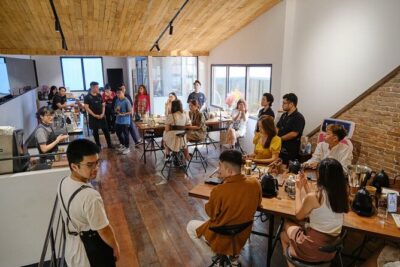
Fun & Easy Vietnamese Coffee Workshop in Hồ Chí Minh City
Read our review →
Vietnamese Coffee & Culture Exploration in Hồ Chí Minh City
Read our review →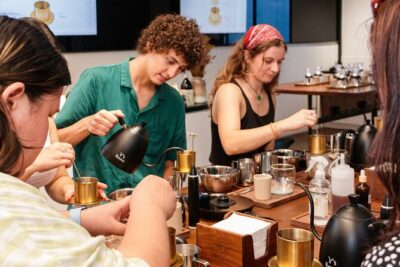
Decadent Vietnamese “Egg Coffee” Workshop in Hồ Chí Minh City
Read our review →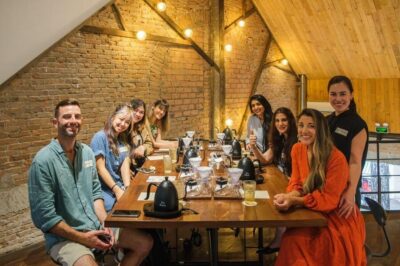


Coffee Workshop in Ho Chi Minh City: Discover the art of coffee
Read our review →
Historic Grounds: A Music City History and Coffee Morning Tour
Read our review →Browse the lists this tour appears in