
Review · COFFEE TOURS
Cph Contast walk with Coffee, Cake & Culture
Copenhagen’s best moments often arrive between the famous sights. This three-hour walk links Nyhavn, Christianshavn, Christiania, and Operaparken, using canals, bridges, old military buildings, and quiet lanes to show you how the city’s past fits with daily life today.
I like the small-scale feel and the way coffee and cake are part of the route rather than an afterthought. I also like the practical local advice from guides Michael and Otto, which can help you find a good neighborhood meal after the tour.
The main consideration is the pace. You cover a fair stretch of Copenhagen in about three hours, and the outing calls for moderate fitness. The Church of Our Saviour tower and other interiors are viewed from outside, with admission not included.
Key points to know before booking
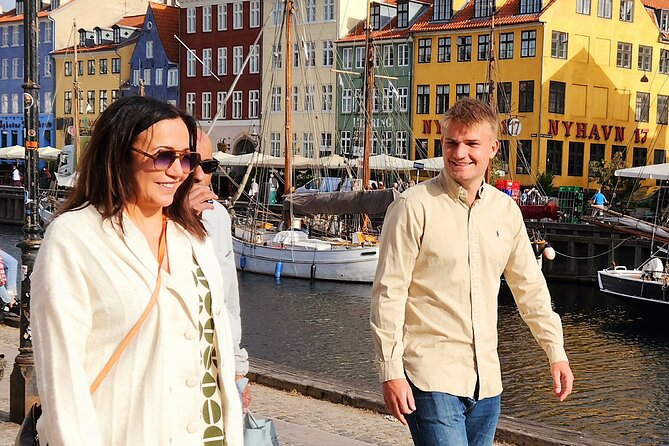
- Start at Nyhavn and finish beside the Opera House: The route crosses from the famous waterfront into Christianshavn and ends at Restaurant Væksthuset in Operaparken.
- Coffee, smørrebrød, and cake shape the experience: Café Båden provides a coffee break, while a slice of cake is included at the finish.
- Christiania is approached through quieter paths: You get a gentle look at the alternative neighborhood without focusing on its busiest sections.
- Michael and Otto lead with local stories: Their commentary covers Danish culture, architecture, food, and the city’s working past.
- The walk costs about $80.83 per person: That is a fair price if you value a small group, personal guidance, and included refreshments.
- Allow for a moderate amount of walking: The route crosses bridges, canalside paths, ramparts, and city streets over roughly three hours.
Why this Copenhagen walk feels different
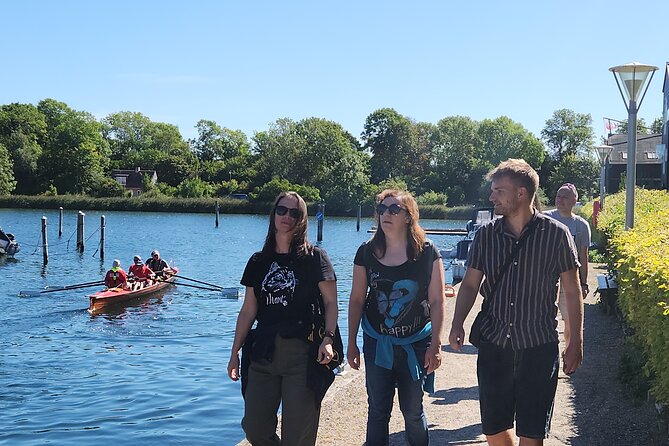
Many first-time visits to Copenhagen circle around Nyhavn, Tivoli Gardens, and the royal center. Those places deserve attention, but they can leave you with a postcard view of the city. This walk adds the quieter pieces: houseboats, old warehouses, creative workshops, military buildings, green ramparts, and a café stop where you can sit and talk.
The route also gives you a useful sense of scale. Copenhagen is compact enough to cross on foot, yet each neighborhood has its own character. You begin beside the polished canal front of Nyhavn, move into the more personal streets and waterways of Christianshavn, then finish in a modern park built beside the Opera House.
Michael and Otto are important to the experience. The strongest praise has focused on their warm manner, clear storytelling, and ability to connect small details with larger parts of Copenhagen’s past. Otto’s background in history is especially useful if you enjoy learning why a place looks and feels the way it does.
The walk is offered in English. It is described as a private activity where only your group takes part, while the booking information also refers to group tours and discounts. If group size matters to you, confirm the format for your chosen date. One earlier description places the maximum at six people, which would make the outing feel personal rather than like a large city march.
More Dessert Tours in the world:
- 4×4 Dominican Adventure with Chocolate and Coffee Tasting
★ 5.0 · 2,920 reviews - 4×4 ATV Experience, Water Cave, Chocolate and Coffee Tasting
★ 5.0 · 1,430 reviews - Buggy Adventure Tour with Chocolate and Coffee in Punta Cana
★ 5.0 · 953 reviews
From Nyhavn’s bright façades to the Kissing Bridge
Meet at the Memorial Anchor near Nyhavn 1F. This is an easy place to find, but give yourself enough time to reach the waterfront, since Nyhavn can be busy and crowded around its restaurants and canal edge.
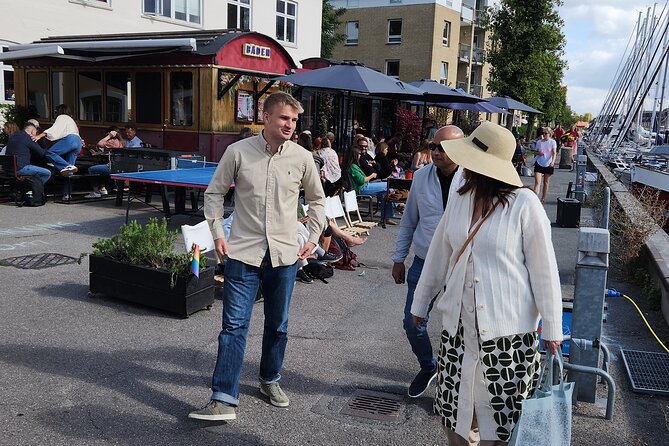
The first stop is short, about 10 minutes. You see the rows of painted townhouses, old wooden ships, and canalfront cafés that make Nyhavn Copenhagen’s most recognizable address. The guide adds useful context: this was once a working harbor filled with sailors, merchants, and taverns, not simply a pretty place for photographs.
Hans Christian Andersen lived in several Nyhavn houses while writing some of his best-known fairytales. That detail helps turn the colorful façades into real city history. You will not spend long here, which is sensible if you have already explored the waterfront on your own.
From Nyhavn, the walk heads toward the Kissing Bridge, officially opened in 2016. Its sliding sections move apart for passing boats, creating the unusual image that gives the bridge its nickname. From the crossing, you can look back toward Nyhavn, across to the Opera House, and toward Paper Island.
This is a good early example of the tour’s main idea: Copenhagen does not treat its old waterfront and modern design as separate worlds. The bridge is practical, sculptural, and part of a working harbor.
Coffee, canals, and Christianshavn at Wilders Plads

The first substantial pause comes at Café Båden on Wilders Plads. You have about 20 minutes here for coffee and a piece of traditional smørrebrød. The supplied inclusions list coffee and tea, while the stop description also mentions smørrebrød, so it is sensible to view the open-faced sandwich as part of the café experience rather than assume a full meal.
This pause matters because it changes the rhythm. Instead of hearing a long stretch of commentary while walking, you can sit, take in the canals, and ask questions. The setting combines maritime character with the Danish idea of hygge, a word often translated as coziness but better understood as comfortable, unhurried time with other people.
The guide explains how Christianshavn began as part of Christian IV’s plans for a trading district. Today, the same waterways are lined with houseboats and older warehouses. You get a look at a neighborhood shaped first by commerce and defense, then by homes, cafés, and creative work.
After the café, the route passes Broens Gadekøkken, an outdoor food market created with culinary figure Claus Meyer. The stop itself is listed as only two minutes, so do not expect a full tasting session here. Instead, you get a quick look at a place where international street food meets Danish interest in quality, local produce, and sustainability.
A quieter side of Christianshavn
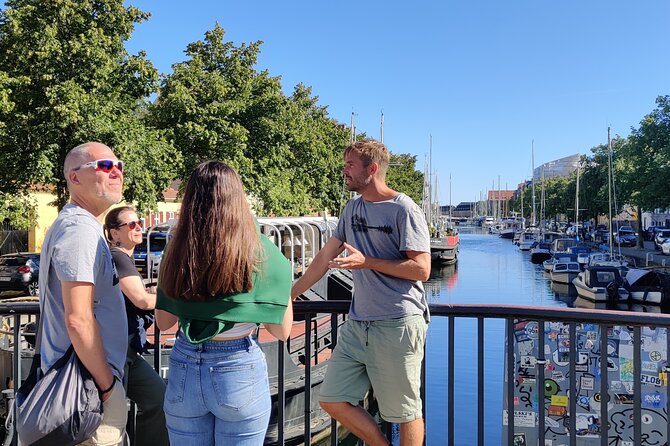
One of the most pleasant sections comes at Snorrebro, a smaller bridge away from the main tourist flow. From here, you can look toward the spiral tower of Our Saviour’s Church and see houseboats along the canal.
The bridge offers a useful pause in the scenery. Copenhagen can feel carefully designed around its major sights, but Snorrebro shows a slower neighborhood scale. You see how water, homes, and small crossings shape everyday movement through Christianshavn.
There is also a practical lesson here. If you want photographs without the constant activity around Nyhavn, quieter canal corners such as this are worth remembering for a later walk. The guide’s local recommendations are one of the experience’s strongest benefits, especially if you have another day in the city.
More Walking Tours in the world:
- Dresden: Guided City Walk with a Cup of Coffee
★ 4.7 · 1,568 reviews - Hamburg: Speicherstadt Walking Tour with Coffee Tasting
★ 4.6 · 360 reviews - Hungry in Vienna? A Food Lover’s Coffee & Market Walk
★ 4.9 · 276 reviews - Private Walking Tour, Food Tasting and Bosnian Coffee in Sarajevo
★ 5.0 · 255 reviews
Our Saviour’s Church and the golden spiral
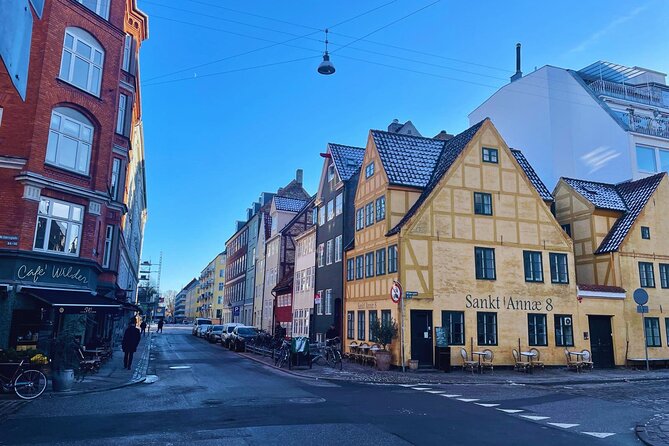
Our Saviour’s Church is one of Copenhagen’s most striking buildings. Its Baroque exterior is easy to recognize, but the famous feature is the golden spiral tower, completed in 1752. Around 400 steps lead to the top.
The tour allows about five minutes at the church, and entry is not included. That means you should think of this stop as an exterior introduction, not a tower visit. If climbing the spiral is important to you, plan a separate visit and check opening conditions for your date.
Even from ground level, the tower gives Christianshavn a strong visual center. The guide can explain how the building has served the neighborhood for more than 300 years, while the ornate exterior and grand organ point to the church’s artistic side.
The short stop is both a strength and a limitation. It keeps the walking tour moving, but it will not satisfy anyone hoping to inspect the interior or climb the tower during the same outing.
Lille Mølle and the old defensive edge
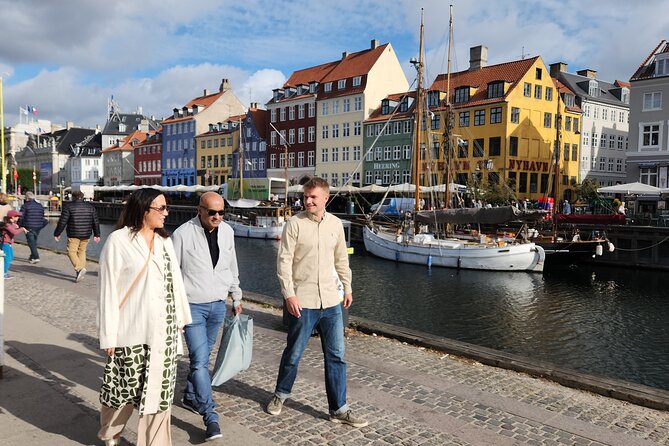
The route then reaches Lille Mølle, an old windmill on Løvens Bastion. Built in 1783, it later became a private home filled with art and antiques and is now a museum.
This stop adds a domestic angle to Copenhagen’s defenses. Instead of seeing the ramparts only as military structures, you get a sense of how people later used these unusual spaces. The surrounding canals and greenery also offer a calmer break from the city streets.
The information provided does not include a museum entrance, so expect to view the setting from outside unless your guide tells you otherwise. The value here is mainly the story and the contrast between fortifications, homes, and open space.
A respectful walk through Christiania
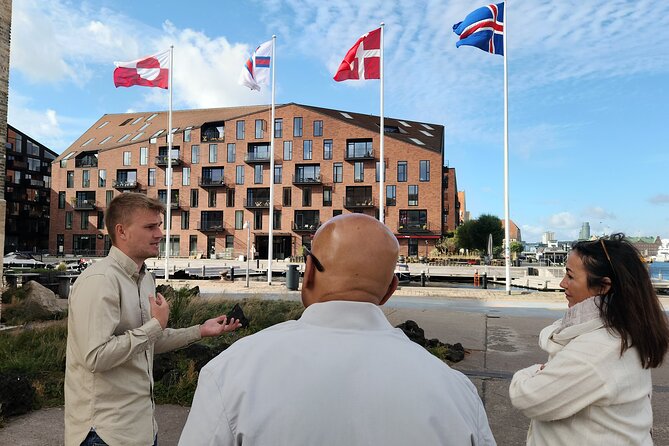
Christiania is perhaps the most distinctive neighborhood on the route. Founded in 1971, it is known for creative work, an alternative way of life, and a strong sense of independence.
The walk approaches through Christianshavns Vold, the green ramparts around the area. You then enter a quieter section rather than heading straight into the busiest parts. That choice is thoughtful. Christiania is a lived-in community, not an open-air stage, and a calm route lets you see its character without treating the neighborhood as a spectacle.
Expect colorful back lanes, unusual buildings, artistic touches, and plenty of greenery. You have about 15 minutes here, so this is an introduction rather than a full exploration. If you want to spend a long time in Christiania, return independently and give it more space.
For me, this section gives the tour an edge that standard Copenhagen walks often lack. You move from royal and commercial Copenhagen into a place built around self-expression and social independence, all within a short distance.
Gunboat sheds and Copenhagen’s maritime past
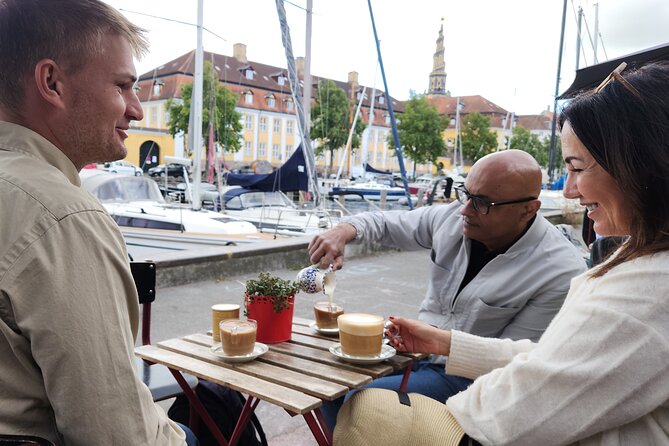
The old gunboat sheds tell a less familiar story. They were built after the British attack on Copenhagen in 1807 and housed small boats used to defend Danish waters during the Napoleonic Wars.
Today, the buildings serve as artist studios. That reuse is worth noticing. Rather than sealing the sheds away as monuments, Copenhagen has allowed them to become part of the city’s working creative life.
The stop lasts about five minutes, so you will not receive an extended military lecture. Still, it gives you a clear reminder that the waterfront was once a place of danger and defense, not just restaurants and scenic views.
The Opera House and the view across the harbor
The Copenhagen Opera House provides a sharp change of mood. Its modern design reflects the city’s newer ambitions, while its location on Holmen connects it to the area’s naval past.
The building was gifted to Copenhagen by Mærsk Mc-Kinney Møller. From the terrace, you can look toward Amalienborg Palace and the Marble Church, seeing the royal center across the water. That view links modern cultural life with Copenhagen’s royal and religious landmarks.
The tour gives you about five minutes here, and admission is not included. You will not be attending a performance or touring the interior. The stop is about architecture, urban planning, and the view across the harbor.
The Opera House is also a useful orientation point. By this stage, you have crossed from Nyhavn into districts that many first-time visitors miss, then reached one of Copenhagen’s major modern buildings.
Cake at Operaparken brings the walk home
The final stop is Operaparken, a green public space beside the water. Its gardens, waterways, and central glass greenhouse, Væksthuset, show Copenhagen’s interest in combining plants, public space, and modern design.
The tour ends at Restaurant Væksthuset, where a slice of cake is included. Coffee or tea is part of the stated inclusions, and the restaurant has views toward the canal, Opera House, Amalienborg, and Marble Church.
This ending works well because it gives you time to sit down after the walk. The route finishes about 10 to 15 minutes from the starting point on foot, so you are not left in an isolated area. You can continue exploring the Opera House area, walk back toward the center, or use the guide’s advice for the rest of your day.
The cake is not just a sweet extra. It gives the tour a social finish and brings the coffee-and-culture idea full circle. Still, you should not book this as a food tour. The refreshments support the walking and conversation, but the main value is the city orientation and personal commentary.
Price, pace, and who will enjoy it
At about $80.83 per person, this is not the cheapest way to see Copenhagen. The price makes more sense if you value a small or private format, an English-speaking guide, a carefully linked route, and included coffee, tea, and cake.
You also pay for the time saved in planning. The walk connects several districts that can seem separate on a map, and the guide supplies the context that helps them make sense. Michael’s restaurant suggestions can be particularly useful if you want to eat around locals after the tour rather than stay near the most touristy waterfront tables.
I would choose this experience early in a Copenhagen visit. The route gives you a map in your head, and the advice can shape the rest of your stay. Book it only if you are comfortable walking for three hours at a moderate level and spending much of the time outdoors.
Free cancellation is available up to 24 hours before the start time. Changes or cancellations inside that window are not accepted for a refund.
Should you book Coffee, Cake and Culture?
Book it if you want local context more than a checklist of grand interiors. The walk is especially suited to first-time visitors, couples, solo visitors, and small groups who enjoy neighborhoods, canals, design, food culture, and stories about how Copenhagen developed.
It is less suitable if you want extensive time inside churches, museums, or Christiania, or if you prefer a bus tour with little walking. The route is active, and several stops are brief.
For the best fit, book early if your dates are fixed. This experience is often reserved well ahead of time, around 65 days in advance. Pick a morning if you want the coffee and cake rhythm to feel like a relaxed start, then use Michael or Otto’s local suggestions to plan the rest of your day.
FAQ
Where does the Copenhagen walk begin?
The tour begins at the Memorial Anchor, Nyhavn 1F, 1051 København, Denmark.
Where does the experience end?
It ends at Operaparken, at Restaurant Væksthuset, Ekvipagemestervej 18, 1438 København K. The finish is about a 10 to 15 minute walk from the starting point.
How long does the tour last?
The walk lasts approximately three hours.
Is coffee or tea included?
Yes. Coffee and/or tea are included in the experience.
Is cake included?
Yes. The tour finishes with a slice of cake at Restaurant Væksthuset in Operaparken.
Is admission to the Church of Our Saviour included?
No. Admission to the church is not included. The tour includes a short stop outside the building.
What cancellation terms apply?
You can cancel up to 24 hours before the start time for a full refund. Cancellations or changes made less than 24 hours before the start time are not accepted for a refund.
Just added around the world
- Yerevan: Private Coffee Tour with 2 Café Stops★ 5.0 · 2 reviews
- Vietnamese Coffee 101 Workshop★ 5.0 · 11 reviews
- Vietnamese Coffee Making Class in Hoi An★ 5.0 · 4 reviews
- Vietnamese cooking class and coffee making with local girl★ 5.0 · 5 reviews
- Venice Delights: Coffee & Food Experience Walking Tour★ 5.0 · 2 reviews
- Private Vienna Tour: Literature Walk with Coffee House Visit★ 5.0 · 2 reviews
- Turin: Art Nouveau Walking Tour with Coffee★ 5.0 · 11 reviews
- Turkish Coffee and Traditional Turkish Dessert Cooking★ 4.6 · 8 reviews
Walking Tours, compared.
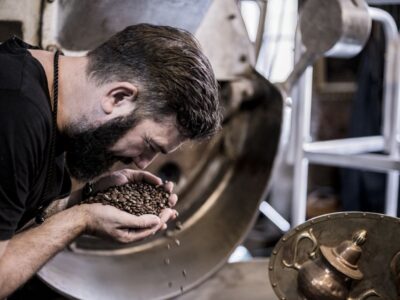

Hungry in Vienna? A Food Lover’s Coffee & Market Walk
Read our review →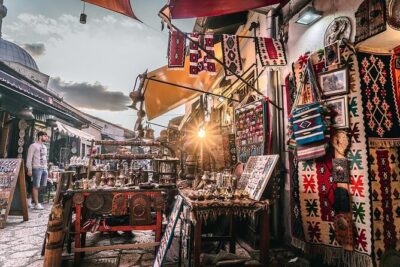
Private Walking Tour, Food Tasting and Bosnian Coffee in Sarajevo
Read our review →
Hanoi Michelin Star Walking Food Tour & Train Street
Read our review →

Vienna Eats: Private Foodie Walk with Coffee & Markets
Read our review →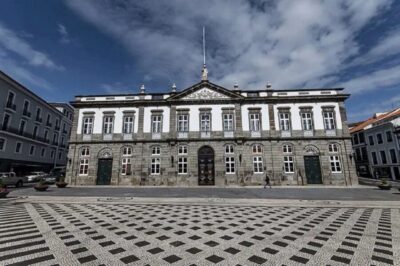
Angra do Heroísmo: Walking Tour with Local Pastry and Coffee
Read our review →
New Orleans True Crime and Coffee Walking Tour: Adults Only
Read our review →Browse the lists this tour appears in