

Review · HO CHI MINH CITY
Hands-on Discovery of Vietnamese Coffee & Culture
Vietnamese coffee is not just a strong drink served over ice. At Lacàph, you learn how the bean, the brewer, the farmer, and the daily coffee ritual fit together. The session includes two hands-on brewing methods, a small roasting demonstration, and short films that take you from Hà Nội to Đà Lạt and Chợ Lớn in Sài Gòn.
I like the practical setup. You brew Lacàph coffee yourself, then taste it with Vietnamese snacks such as mung bean cake and cocoa-coated cashews. I also like the human side of the presentation, with stories about farmers and coffee workers rather than a lesson focused only on flavor notes. The main consideration is the location: you must climb stairs to an upper-floor space, so this activity is not suitable for wheelchair users.
- Two Vietnamese brewing styles: Make filter coffee and phin coffee with simple equipment you can use again at home.
- A small roasting demonstration: Hear the beans crack and follow the aroma as Lacàph Phin Blend changes during roasting.
- Coffee with local sweets: Taste filter coffee with bánh đậu xanh, then phin coffee with cocoa-coated cashews.
- Films with a sense of place: Visit Hà Nội, Đà Lạt, and Chợ Lớn through Lacàph’s short in-house documentaries.
- Guides in two languages: Sessions are offered in English and Vietnamese, with guides such as Vi and Giao leading the workshop.
- A central but easy-to-miss address: Find the purple iron door at 220 Nguyễn Công Trứ, then climb to the upper floor and turn left.
What this 150-minute coffee session really offers
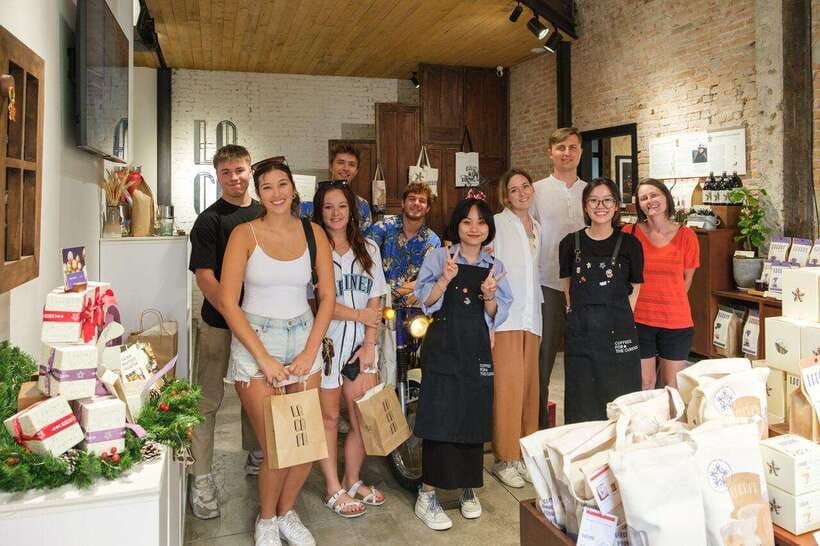
This is best understood as a workshop with a cultural story attached, not simply a coffee tasting. You spend about two and a half hours moving between explanation, video, brewing, tasting, and roasting.
The format matters. Coffee can be hard to understand when someone only lists bean varieties or tells you that one cup tastes nutty and another tastes bright. Here, you handle the brewing tools and taste the results. That gives you a clearer sense of why Vietnamese coffee has such a distinct place in daily life.
The session uses only Vietnamese coffee beans. You brew two Lacàph blends, including the Lacàph Filter Blend and Lacàph Phin Blend. The methods are intentionally simple, so you can repeat them at home instead of leaving with a lesson that requires costly equipment.
The tone is organized but not stiff. That balance came through especially well in the feedback from Germany, where the experience was described as carefully timed while still relaxed. That is useful to know if you like a clear schedule but do not want a formal classroom.
Finding Lacàph at 220 Nguyễn Công Trứ
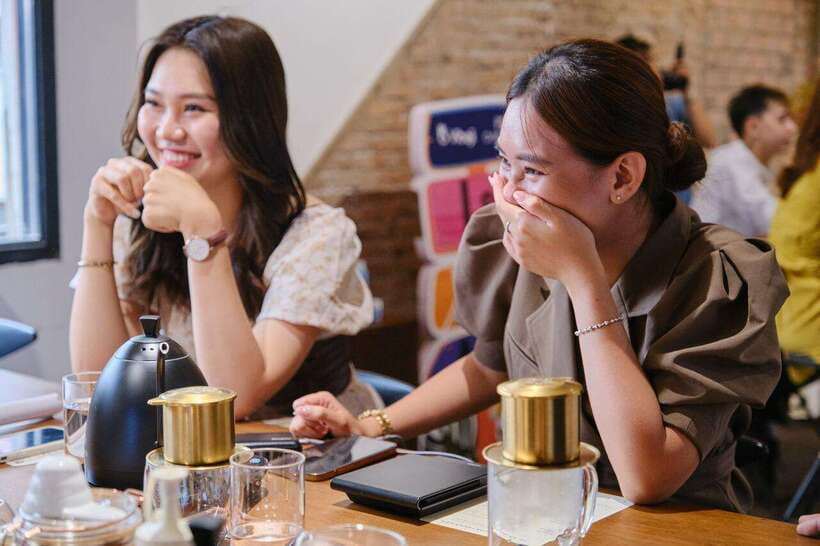
The meeting point takes a little attention. Lacàph occupies an upper floor in an old building at 220 Nguyễn Công Trứ, Nguyễn Thái Bình Ward, District 1.
Look for a small sign in front of a purple iron door. Go through the door, climb the stairs, and turn sharply left at the top. This is not the sort of place where you should rush in while checking your phone. Give yourself a few extra minutes to match the address with the doorway.
The stairs are an important practical detail. The experience is not suitable for wheelchair users, and the supplied information does not indicate an elevator or step-free route. Anyone who finds stairs difficult should take that into account before booking.
Once you arrive, the unusual entrance helps set the mood. You are not walking into a large commercial attraction with a prominent street frontage. You are heading upstairs to a dedicated coffee space where the activity can focus on tasting, conversation, and demonstration.
More Vietnamese Coffee Experiences in Ho Chi Minh City
- Fun & Easy Vietnamese Coffee Workshop in Hồ Chí Minh City
★ 5.0 · 293 reviews - Vietnamese Coffee & Culture Exploration in Hồ Chí Minh City
★ 5.0 · 202 reviews - Vietnam Coffee Journey – Make extraordinary tasty coffee yourself
★ 5.0 · 30 reviews
The opening sensory lesson
The workshop begins with a multi-sensory experiment. The purpose is to get you thinking about coffee with more than your tongue.
Coffee aroma, sound, texture, and appearance all affect how you judge a cup. This opening activity gives those senses a job before you start brewing. It also helps beginners, since you do not need a background in coffee to take part.
I appreciate this approach because coffee language can become a barrier. Terms about acidity, body, roast, and aroma may be useful later, but they mean more after you have smelled and tasted the ingredients yourself.
The first section also sets up the larger theme: Vietnamese coffee is a product of people and place, not just a café trend. The workshop connects what is in your cup with farmers, roasting, brewing habits, and the way coffee fits into life in Việt Nam.
Brewing Lacàph Filter Blend with bánh đậu xanh
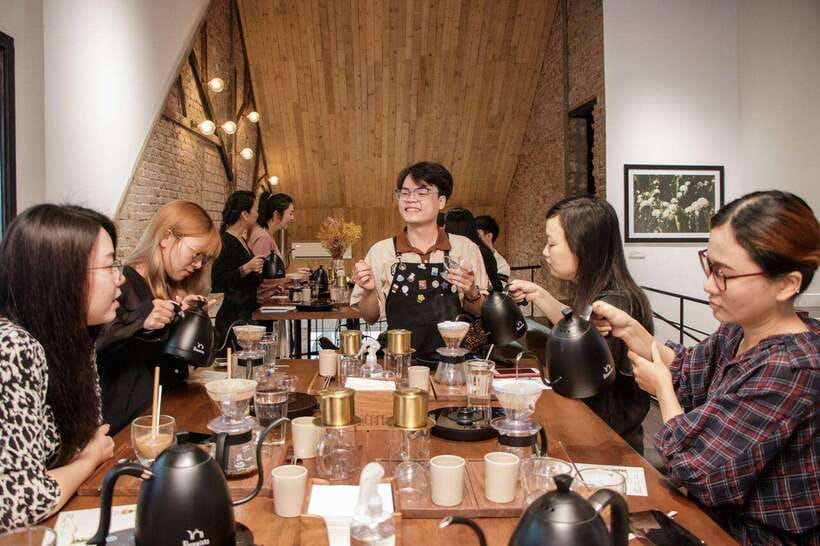
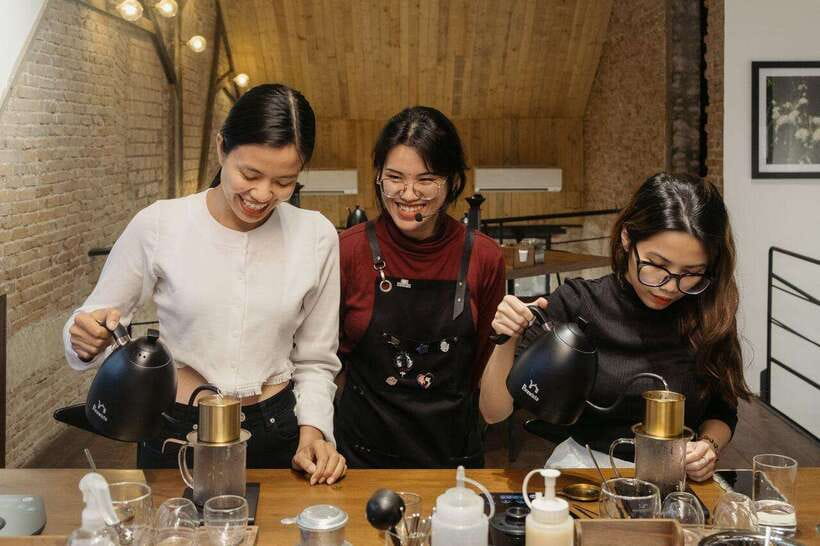
The first practical coffee stop uses Lacàph Filter Blend. You brew it with a straightforward filter method, guided step by step by the instructor.
This part is especially useful if you want a method that can be repeated in your own kitchen. The point is not to watch a specialist prepare a perfect cup while you stand back. You take part in the process and see how the grounds, water, timing, and filter work together.
The coffee is paired with bánh đậu xanh, a Vietnamese mung bean cake. The sweet adds a local food element to the tasting and gives you a way to notice how a sugary snack changes the coffee’s character.
I like this pairing because it turns the tasting into a small piece of food culture. You are not sampling coffee in isolation. You are seeing how a drink can be enjoyed alongside a familiar sweet, with the contrast between bitterness and sweetness doing part of the work.
For a complete beginner, this may be the most approachable portion of the activity. One person who had started with little coffee knowledge left with a much better grasp of the subject. That makes this workshop suitable for curious non-specialists, not only serious coffee fans.
Hearing the beans crack during small-batch roasting
Next comes a demonstration of Lacàph Phin Blend roasting. A small batch is roasted during the session, allowing you to hear the beans crack and smell the changing aromas.
The crack is not just a dramatic sound for the sake of the show. It marks a change in the beans as heat alters their structure and releases new aromas. Hearing it while watching the roast gives you a better idea of why roast level affects the final cup.
This is one of the most memorable parts for anyone who enjoys process. You can follow the coffee from bean to brewed drink instead of treating the packet on the shelf as the beginning of the story.
There is also a useful limit to keep in mind. This is a small demonstration, not a full roasting course. You will gain an introduction to the sensory side of roasting, but the workshop does not promise advanced training in roast profiles or commercial equipment.
That limited scope is reasonable for a 150-minute experience. The roasting section adds another layer without taking over the entire session.
Same place, a different way to drink it:
- Egg coffee & Course on 4 traditional types of Viet coffee
★ 4.9 · 487 reviews - Decadent Vietnamese “Egg Coffee” Workshop in Hồ Chí Minh City
★ 5.0 · 150 reviews - Ho Chi Minh City: Fun and Easy Coffee Workshop for Beginners
★ 4.9 · 121 reviews - Techniques & Secrets Behind the Famed Vietnamese Egg Coffee
★ 5.0 · 99 reviews
Making contemporary phin coffee

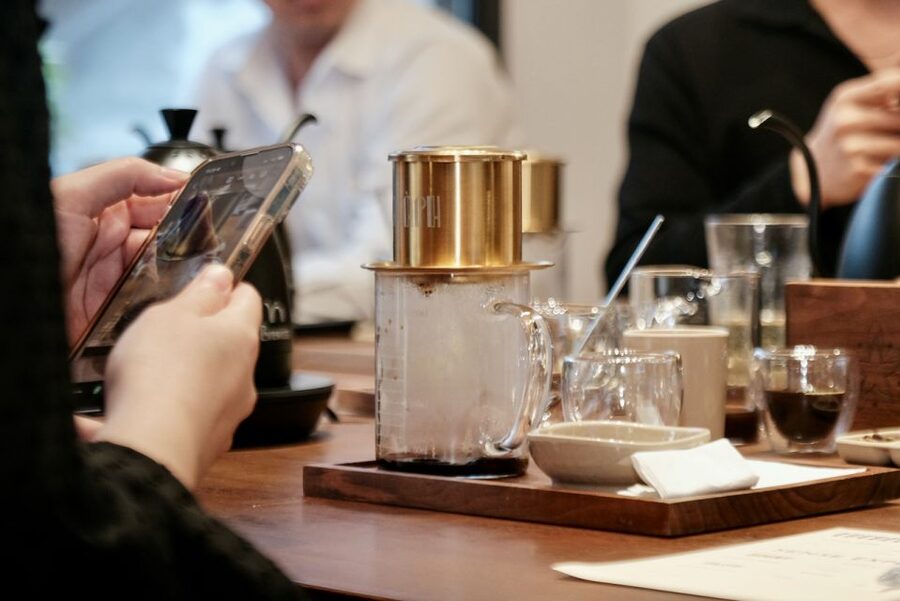
The second hands-on brew uses a Lacàph Microfilter Phin Brewer with Lacàph Phin Blend. This is the part most closely linked to the familiar Vietnamese coffee ritual.
A phin is a compact brewing device placed over the cup. Water passes slowly through the coffee, producing a concentrated brew. The method is simple to understand, but the pace is part of its appeal. You watch the coffee drip rather than rushing the process.
Lacàph presents this version with a modern microfilter phin brewer. That gives you a current take on a classic Vietnamese method and shows how traditional habits can be adjusted without losing their identity.
The coffee is paired with cocoa-coated cashews. Again, the snack is not an afterthought. It gives you a second flavor contrast and makes the phin tasting feel distinct from the filter coffee served with mung bean cake.
I like having two brewing methods in the same session. If you only taste one cup, it is easy to assume that Vietnamese coffee has one fixed style. Comparing the filter and phin preparations helps you notice how equipment and technique shape the drink.
You also get a method that is practical for home use. The tools are not presented as museum pieces. You learn how they work and why someone might choose one style over another.
Short films from Hà Nội to Đà Lạt and Chợ Lớn
The workshop moves beyond the cup through a series of in-house mini-documentaries. The films connect coffee with different parts of Việt Nam, including Hà Nội, Đà Lạt, and Chợ Lớn in Sài Gòn.
This is where the activity gains its cultural weight. Coffee has a long and complicated place in Việt Nam, but a short workshop cannot cover every period or region in detail. The films provide a visual route through different settings and personal stories while keeping the subject tied to the drink in front of you.
You hear about farmers and other people connected to coffee production. That focus gives the session a human center. Instead of treating coffee as a fashionable product, it asks you to consider who grows it, who processes it, and how the final drink reaches a café table.
The change of setting also helps break up the hands-on work. You are not brewing for 150 straight minutes. The videos create breathing room, add context, and help explain why coffee culture cannot be separated from place.
Do not expect a full documentary film festival or an academic history lecture. The films are part of a guided experience, so the information is designed to support the tasting and brewing rather than cover every detail.
Why the guide matters
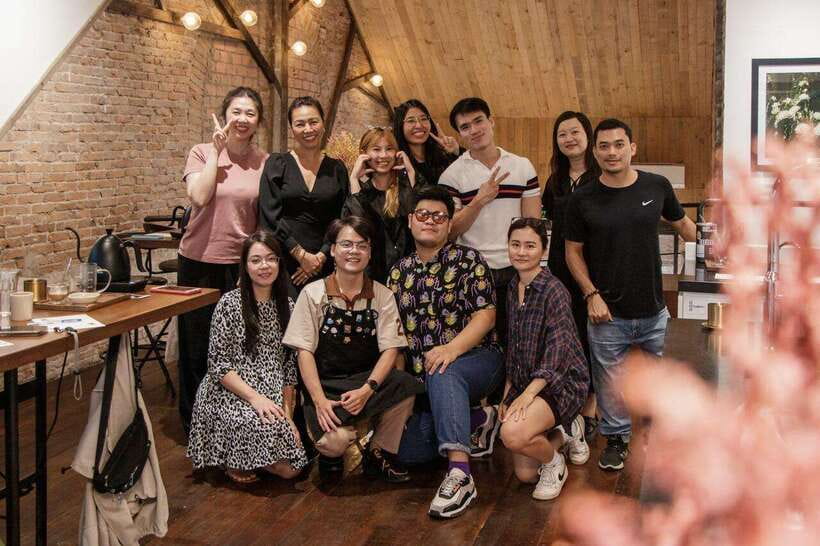
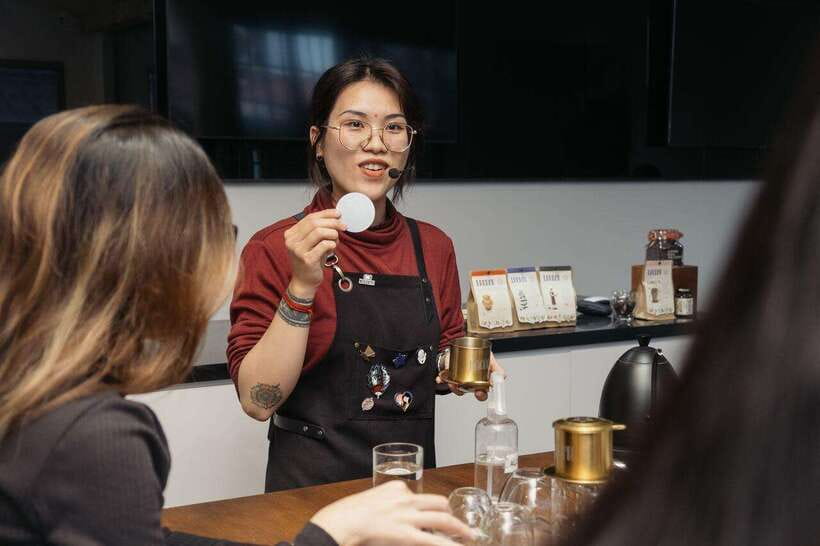
The quality of this activity depends partly on the guide’s ability to make coffee understandable. The instructors speak English and Vietnamese, and two guides specifically connected with the experience are Vi and Giao.
Vi is praised for explaining the subject clearly while keeping the workshop hands-on. Giao is described as enthusiastic and especially good at bringing energy to the session. Those details matter because a coffee workshop can easily become either too technical or too casual.
You should expect the guide to explain the brewing steps, connect the samples to Vietnamese culture, and lead the sensory and video portions. If you are new to coffee, ask questions as you go. The format is designed for participation, not silent observation.
The session is also suitable for people with different levels of interest. A coffee enthusiast can pay close attention to roasting and brewing variables. A casual drinker can focus on the cultural story, snacks, and basic techniques.
Is $30 a fair price?
At $30 per person, this is not the cheapest way to drink Vietnamese coffee. You can find a cup of coffee in Hồ Chí Minh City for far less.
The value comes from the combination of instruction, multiple tastings, food pairings, roasting, films, and nearly two and a half hours in a dedicated setting. You are paying for a structured activity, not just the ingredients.
I consider the price reasonable if you want context and participation. It is less compelling if your main goal is simply to taste a strong phin coffee and move on. A café visit will cost less and may feel more spontaneous, but it will not show you two brewing methods, a roasting demonstration, or the people behind the beans.
The included items also help justify the cost. You receive filter coffee, phin coffee, bánh đậu xanh, and cocoa-coated cashews, while the guide supplies the instruction and equipment needed during the workshop.
The reserve-now, pay-later option gives you some flexibility, and cancellation is free up to 24 hours before the activity for a full refund. Those terms are useful when you are arranging a busy city itinerary.
Who should book this workshop?
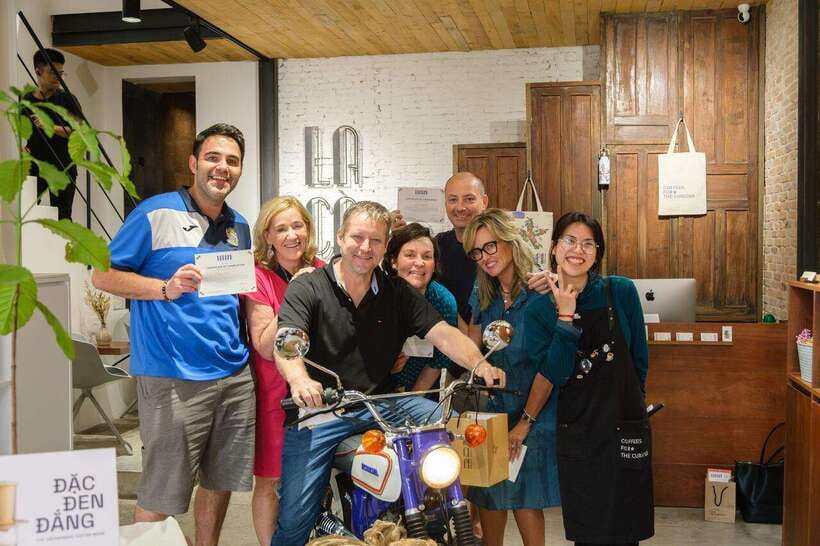
I would recommend it to first-time visitors who want a clear introduction to Vietnamese coffee culture. It is also a good match for anyone who enjoys food workshops, small production demonstrations, and activities with a strong local connection.
It suits beginners particularly well. You do not need prior coffee knowledge, and the brewing methods are explained in a way you can try again at home.
Coffee enthusiasts will find the roasting and phin sections worthwhile, though they should keep expectations realistic. This is an introduction, not a professional barista course.
Families with older children might appreciate the sensory elements and short films, though the activity is still centered on coffee, caffeine, and careful brewing. Anyone avoiding caffeine should think twice, since coffee is a central part of the session.
The workshop is less suitable if you dislike stairs, want a large-group sightseeing tour, or prefer to explore without a set timetable. The format is scheduled and guided, even though it is not described as stiff.
Should you book the Lacàph coffee experience?
Book it if you want to understand why Vietnamese coffee is more than condensed milk and a slow drip. The strongest parts are the chance to brew both filter and phin coffee, the small roasting demonstration, and the films that connect the cup to farmers and places across Việt Nam.
The main drawbacks are limited access for wheelchair users and the fact that $30 costs more than an ordinary café visit. Still, for a focused 150-minute introduction in District 1, the price is fair.
If you have time for only one coffee activity in Hồ Chí Minh City, this is a smart choice for a beginner who wants practical skills and cultural context. Arrive with time to find the purple door, wear shoes suited to stairs, and come ready to drink coffee rather than simply watch it being made.
FAQ
Where does the Vietnamese coffee experience take place?
It takes place at Lacàph, 220 Nguyễn Công Trứ, Nguyễn Thái Bình Ward, District 1, Hồ Chí Minh City. Look for the small sign near the purple iron door, enter, climb the stairs, and turn left at the top.
How long does the activity last?
The experience lasts 150 minutes, or about two and a half hours.
What languages are available?
The activity is offered in English and Vietnamese.
What types of coffee will I make?
You will make coffee using Lacàph Filter Blend and Lacàph Phin Blend. The session covers filter brewing and phin brewing.
Is coffee roasting included?
Yes. The guide demonstrates small-batch roasting with Lacàph Phin Blend. You can hear the beans crack and smell the changing aroma during the process.
What food is served with the coffee?
Filter coffee is paired with bánh đậu xanh, a Vietnamese mung bean cake. Phin coffee is paired with cocoa-coated cashews.
Is the activity suitable for wheelchair users?
No. The activity is not suitable for wheelchair users, and the meeting point requires climbing stairs to an upper-floor space.
Can I cancel for a full refund?
Yes. You can cancel up to 24 hours in advance for a full refund. You can also reserve now and pay later.
Just added around Ho Chi Minh City
- Ho Chi Minh Best Walking Tour: Food, Coffee & History★ 5.0 · 19 reviews
- Sai Gon Special Coffee At Landmark 81 & Street Food tour★ 5.0 · 3 reviews
- Saigon Special Night Coffee Landmark 81 & Food Tour★ 5.0 · 2 reviews
- Tea & Coffee Experience★ 5.0 · 10 reviews
- Private Ho Chi Minh City Tour from Port & Vietnamese Egg Coffee★ 5.0 · 6 reviews
- Hands-on making 3 Iconic Coffees of South Central North Vietnam★ 5.0 · 14 reviews
- Mastering Egg Coffee-Course on 4 traditional types of Viet coffee★ 5.0 · 16 reviews
- Discover Vietnam’s Coffee Culture.★ 5.0 · 5 reviews
Vietnamese Coffee Experiences, compared.
Vietnamese Coffee Culture and Coffee Making Class
Read our review →
Fun & Easy Vietnamese Coffee Workshop in Hồ Chí Minh City
Read our review →
Vietnamese Coffee Workshop with 6 Brews and 8 Recipes
Read our review →
Vietnamese Coffee & Culture Exploration in Hồ Chí Minh City
Read our review →
Vietnamese Coffee Making Workshop at Local Roastery
Read our review →
Hanoi Coffee Workshop: Master 6 Signature Vietnamese Coffee
Read our review →
Hands-on Vietnamese Coffee Making Class with Long
Read our review →
Six Cups of Vietnam Coffee Workshop in Hanoi with Local Barista
Read our review →Browse the lists this tour appears in