
Review · SARAJEVO
Sarajevo Old Town: Bosnian Coffee, Baklava & Panoramic Views
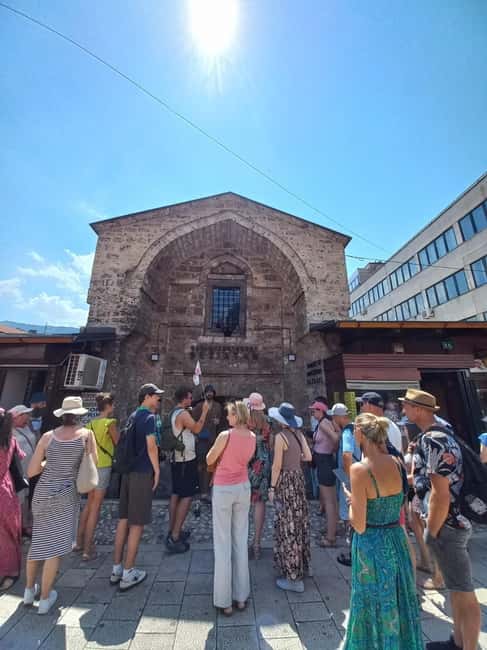
Sarajevo’s story is written in a few compact streets: Austro-Hungarian façades, Orthodox and Catholic churches, mosques, a historic market, and the bridge linked to the event that helped start World War I. This walking tour brings those pieces together, then adds Bosnian coffee, traditional sweets, copper craft, and a hilltop view.
I like the way the tour connects major sights with ordinary local customs. The coffee stop gives you a proper break, while the copper-working visit offers something more hands-on than another round of photographs. I also like that guides such as Dijana, Daniella, and Amela have been praised for answering questions about history, architecture, culture, food, and war.
The main consideration is the pace and length. The walk lasts from 150 minutes to three hours and covers many stops, some on narrow streets and sloping routes. Wear good shoes, and do not expect a quiet museum tour. This is an active introduction to Sarajevo.
Key points at a glance
- A city told through four faiths: See the Cathedral Church of the Nativity, Sacred Heart Cathedral, Emperor’s Mosque, and Gazi Husrev-beg Mosque within one walk.
- Coffee served the Bosnian way: Take a 20-minute café break for traditional Bosnian coffee and local sweets.
- A close look at copper craft: Visit Kazandžiluk, Sarajevo’s old coppersmith street, and have the chance to try the craft yourself.
- World War I and Olympic Sarajevo: Connect Latin Bridge with the assassination of Franz Ferdinand, then learn about the city’s role as host of the 1984 Winter Olympics.
- A useful final view: Finish near Sebilj after a panoramic stop overlooking Sarajevo.
- Strong local guidance: Guides including Dijana, Daniella, and Amela have been singled out for warmth, clear explanations, and personal insight.
Sarajevo in one walk, from the Eternal Flame to Baščaršija
The meeting point is the Eternal Flame, or Vječna vatra, at 10 a.m. for the regular tour. Look for a guide wearing a Sarajevo Experiences T-shirt or carrying a Sarajevo Experiences umbrella. If you book a private tour, hotel or agreed-address pickup is available.
The Eternal Flame is a fitting start. It gives you a modern city-center marker before the route moves through Sarajevo’s older layers. From here, you begin to see how the city changes as you walk east, from broad central streets toward the tighter lanes of the old market.
The route includes photo stops and guided explanations rather than inside visits to every building. That matters if you want a clear city orientation in one outing, but you should not expect long interior tours or a museum-style schedule.
A few more coffee tours around the world worth a look
- Hoi An: Vietnamese Coffee Culture and Coffee Making Class
★ 4.9 · 4,006 reviews - Hanoi Coffee Experience: 6 Brews, 9 Recipes & 3 Liquor Tastings
★ 5.0 · 2,945 reviews - 4×4 Dominican Adventure with Chocolate and Coffee Tasting
★ 5.0 · 2,920 reviews
Churches, market halls, and Sarajevo’s mixed identity
One of the tour’s best features is its simple geography. You do not have to imagine Sarajevo as a city of separate quarters. Within a manageable walk, you see religious buildings and public spaces linked to different periods and communities.
The City Market Hall introduces the market tradition and the Austro-Hungarian part of Sarajevo’s story. It is a useful contrast with the old bazaar streets later in the tour. The Cathedral Church of the Nativity of the Theotokos and the Sacred Heart Cathedral then help explain the city’s Orthodox and Catholic presence.
At the Sarajevo Meeting of Cultures marker, the guide points out a clear change in the city’s character. This is one of those small details that helps you read Sarajevo as you walk. The route does not treat culture as an abstract topic. You see the shift in architecture, street form, and religious landmarks within a short distance.
The experience is especially useful for first-time visitors who want to understand the city before exploring alone. Amela, one of the guides named in the feedback, was praised for explaining both the connections between Sarajevo’s religious communities and the pain caused by war. That combination is important here. Sarajevo’s story includes hospitality and cultural exchange, but it also includes loss and conflict.
Latin Bridge and the event that changed the world
Latin Bridge is one of the essential stops. Near here, Archduke Franz Ferdinand and his wife Sophie were assassinated in 1914. The event helped set off the chain of events that led to World War I.
A guide can give this moment the context it deserves. On your own, you might take a quick photo and move on. With an explanation, the bridge becomes a place where local streets connect to a major turning point in world history.
The stop is not presented as a detached history lesson. Sarajevo lived through the consequences of the event, and the wider route keeps returning to the city’s own experience. If you enjoy history, this section is likely to be one of the tour’s strongest points. If your main goal is food and scenery, it still provides a short, memorable explanation without taking over the entire walk.
Mosques, courtyards, and the old Ottoman quarter
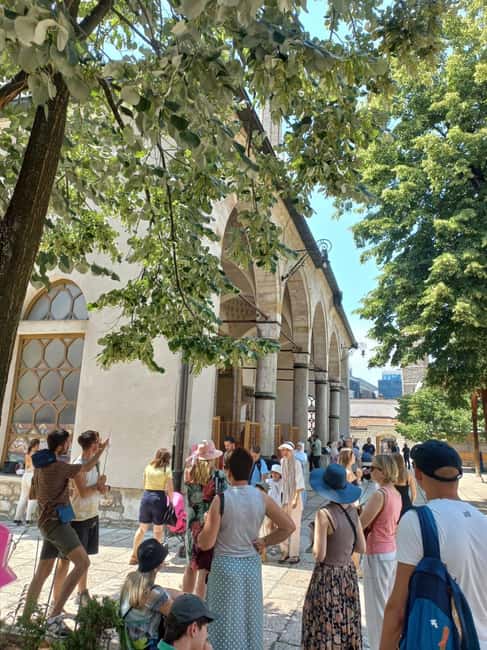
The route continues to the Emperor’s Mosque and Gazi Husrev-beg Mosque. These landmarks introduce Sarajevo’s Ottoman heritage and its Muslim traditions. The guide explains the places as part of the city’s living culture, not just as old buildings to photograph.
Gazi Husrev-beg Mosque is especially important within the old town, and the nearby streets lead you toward the commercial heart of Baščaršija. You will also pass Morića Han, a historic inn associated with the old trading district. Together, the mosque, han, market lanes, and craft streets show how Sarajevo functioned as a place of trade and meeting.
The walk then reaches Sarajevo City Hall, one of the city’s best-known buildings. Its presence adds another architectural change to the route. You move from Ottoman-era streets to a grander civic structure, seeing how Sarajevo’s past was built in layers rather than replaced all at once.
Expect a lot of looking up, crossing streets, and pausing while the guide speaks. Comfortable shoes are not a minor suggestion. The tour is wheelchair accessible, but the route includes narrow old-town streets and a viewpoint section, so it is sensible to ask about the exact private or group route when booking if access is a major concern.
Same place, a different way to drink it:
- Rome Morning Vespa Sidecar Tour in Rome with Cappuccino
★ 5.0 · 1,771 reviews - Giethoorn: Village & National Park Canal Cruise with Coffee
★ 4.6 · 1,596 reviews - Dresden: Guided City Walk with a Cup of Coffee
★ 4.7 · 1,568 reviews - 4×4 ATV Experience, Water Cave, Chocolate and Coffee Tasting
★ 5.0 · 1,430 reviews
Kazandžiluk and the sound of copper work
Kazandžiluk is one of the most distinctive parts of the experience. This is the old coppersmith area, linked to around 500 years of copper-crafting tradition.
You do not just hear that the craft exists. The experience includes the chance to try it yourself. That gives the stop more value than a simple shop visit. You see the work as a skilled trade and gain a better sense of the time and care behind the decorated copper objects sold in the old town.
This is also where the tour feels most connected to local daily life. The craft is part of Sarajevo’s identity, and the narrow streets around Kazandžiluk make the setting part of the lesson. If you want to buy something, use your own judgment and ask about prices before purchasing. The tour provides an introduction, not a shopping guarantee or a crafts-market bargaining lesson.
Baščaršija, Sebilj, and the coffee pause
Baščaršija is the center of the old bazaar district and one of the places where Sarajevo’s Ottoman character is easiest to feel. The route brings you here after the religious and historical stops, so the streets have more meaning than they would at the start of a self-guided stroll.
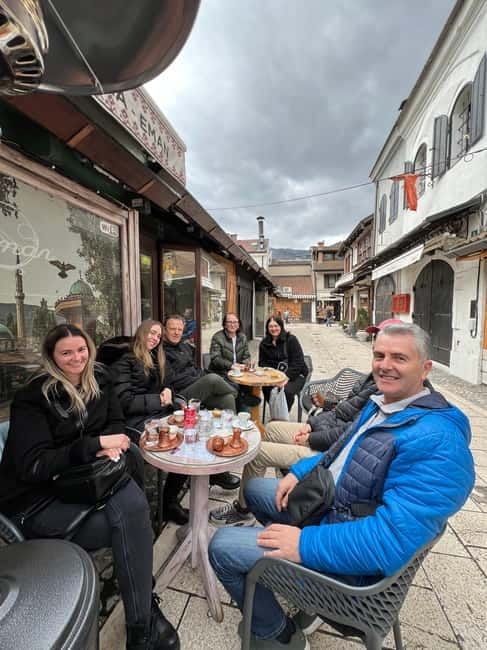
Sebilj, the famous wooden fountain, is both a photo stop and the finish point. The tour also pauses at a local café for about 20 minutes. This is a welcome break after the walking and a chance to taste Bosnian coffee prepared and served in the traditional way.
Bosnian coffee is not simply a fast cup served in a paper container. The traditional presentation is part of the experience, and the guide can explain how it fits into local hospitality. The tour also features authentic traditional sweets, including baklava in the experience’s title. Since the listed inclusions specifically name the coffee but not every sweet, you may want to confirm exactly what is covered when booking.
I like this pause because it gives the tour a human rhythm. Sarajevo is not only monuments and dates. It is also sitting down, sharing coffee, and taking time with conversation. The short break may feel especially valuable if you have been walking since morning.
The 1984 Olympics and Sarajevo’s modern story
The tour also explains Sarajevo as an Olympic city. In 1984, it hosted the XIV Winter Olympic Games, an important part of the city’s modern identity.
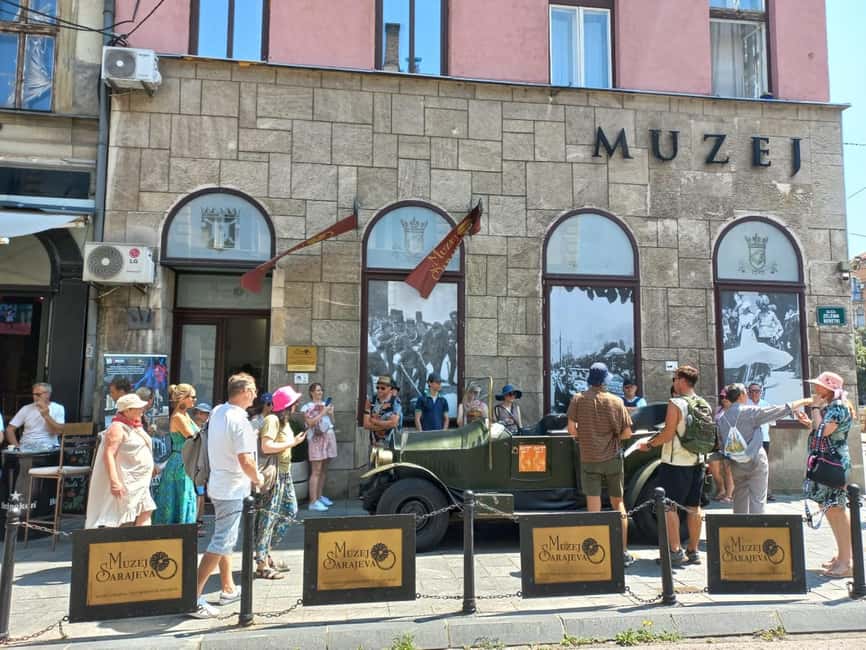
This subject gives you a different way to think about Sarajevo. The city is not defined only by Ottoman architecture, the 1914 assassination, or the war of the 1990s. The Olympic chapter shows a city presenting itself to the world through sport and international attention.
The supplied information does not specify a separate Olympic venue visit, so expect the guide to discuss this history during the city walk rather than take you to the ski sites. That is still useful on a first visit, especially if you plan to explore Sarajevo’s wider area later.
The final viewpoint over Sarajevo
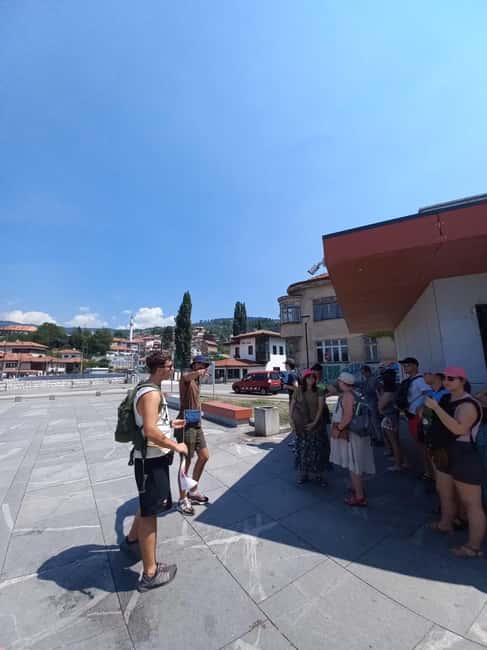
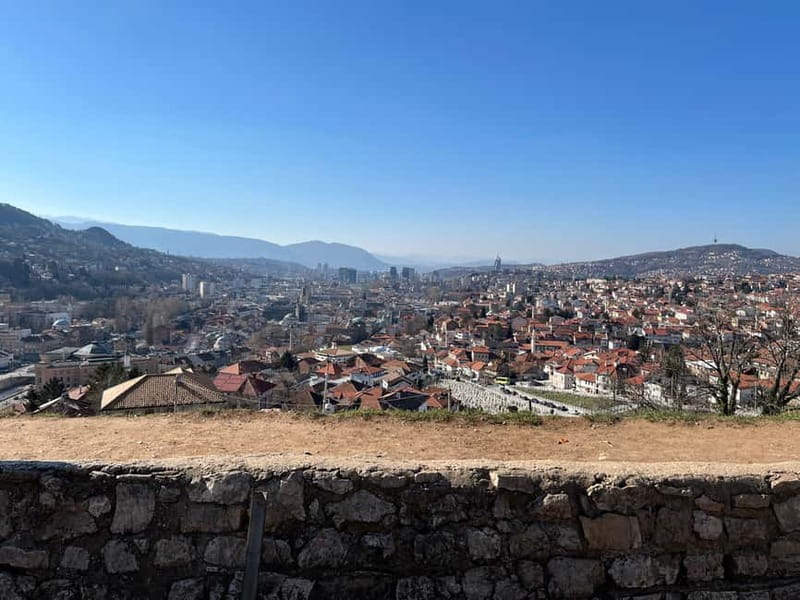
Near the end, the guide takes you to a special viewpoint with a broad panorama of Sarajevo. The exact viewpoint is not named, but it is planned as a 15-minute scenic stop.
This is a smart finish. After seeing the city street by street, you get a chance to understand its setting from above. The view helps tie together the old town, central districts, and surrounding hills. Bring your camera, but give yourself time to listen too. The guide can point out parts of the city that were hard to place from street level.
The route finishes back at Sebilj. That makes the ending convenient for further exploring in Baščaršija, finding lunch, or returning to a place you passed earlier.
What the $20 price gets you
At $20 per person, this is a strong-value introduction to Sarajevo if you want an active orientation rather than a private car tour. The price includes a guided walking tour, an English-speaking local guide, Bosnian coffee, and the panoramic view.
You are also paying for interpretation. A good guide turns a sequence of monuments into a connected story and can answer questions about architecture, customs, food, and conflict. The feedback gives useful clues here. Dijana was praised for answering questions across history, architecture, culture, customs, and gastronomy. Daniella was described as friendly, helpful, and informative. Amela was praised for explaining both unity between religions and the city’s experience of war, including personal experience of the most recent conflict.
The rating is based on only three verified bookings, so I would not treat it as a large statistical record. Still, all three ratings were five out of five, and the comments point to the same strengths: personal guidance, warmth, and clear explanations.
The main value depends on how much you want to walk. If you only want coffee and a viewpoint, $20 may not be the best fit. If you want the coffee to make sense, the craft to have context, and the old town to fit into a larger story, the price is reasonable.
Timing, comfort, and who should book
The stated duration ranges from 150 minutes to three hours. That variation may depend on the group, questions, walking pace, and private-tour arrangements. Set aside at least three hours so you are not rushing to your next plan.
Wear comfortable shoes and check the weather before leaving. The tour runs through streets and squares, includes a moderate amount of walking, and ends with a viewpoint stop. Dress for the forecast rather than relying on the idea that an old-town walk will be easy.
This experience suits you best if:
- You are visiting Sarajevo for the first time.
- You want history, food, craft, and city views in one outing.
- You prefer a local guide to a large, impersonal group.
- You enjoy asking questions about culture and recent history.
- You want an easy way to decide what to revisit later on your own.
It may be less suitable if you dislike walking, want extended time inside religious buildings, or prefer a tour focused only on food. The route has many stops, but the central purpose is to understand Sarajevo as a whole.
Languages include English, Croatian, Serbian, Serbo-Croatian, and Bosnian. Private groups are available. Regular tours meet every day at 10 a.m., while private bookings can include pickup at your hotel or another agreed address. Free cancellation is available up to 24 hours before the tour, and you can reserve now and pay later.
Should you book this Sarajevo walking tour?
Book it if you want your first hours in Sarajevo to include the city’s main sights, a proper coffee break, a traditional craft, and a clear explanation of its difficult past. The most valuable part is the guide’s ability to connect small details, from a copper street to a religious building, with the larger story of the city.
I would especially choose it early in a Sarajevo visit. You will leave knowing where Baščaršija, Latin Bridge, the mosques, churches, market hall, City Hall, and Sebilj fit together. You also get practical local tips for what to see next.
Skip it only if you want a very short, food-only activity or if moderate walking is a problem. For most first-time visitors, $20 is a sensible way to get your bearings and meet Sarajevo through its streets, coffee culture, craft, and human stories.
FAQ
Where does the tour start?
The regular tour starts at the Eternal Flame monument, also called Vječna vatra, at 10 a.m.
Where does the tour finish?
The tour finishes at Sebilj in Baščaršija.
How long does the tour last?
The stated duration is between 150 minutes and three hours. Check the available time when booking.
What is included in the price?
The price includes a guided walking tour, an English-speaking local-expert guide, Bosnian coffee, and a panoramic view of Sarajevo.
Is Bosnian coffee included?
Yes. Bosnian coffee is listed as an inclusion, and the café break lasts about 20 minutes.
Does the tour include traditional sweets?
The experience includes a stop to try authentic traditional sweets and is presented with baklava as a highlight. The listed inclusions specifically name Bosnian coffee, so confirm the exact sweet arrangement when booking.
Which languages are available?
The available languages are Croatian, English, Serbian, Serbo-Croatian, and Bosnian.
Is the tour wheelchair accessible?
Yes, the activity is listed as wheelchair accessible. Because the route includes old-town streets and a viewpoint, confirm the precise route when arranging a private booking.
Can I book a private group?
Yes. Private groups are available, and a private booking can include free pickup from your hotel or an agreed address.
What happens if I need to cancel?
You can cancel up to 24 hours in advance for a full refund. You can also reserve now and pay later.
Just added around the world
- Yerevan: Private Coffee Tour with 2 Café Stops★ 5.0 · 2 reviews
- Vietnamese Coffee 101 Workshop★ 5.0 · 11 reviews
- Vietnamese Coffee Making Class in Hoi An★ 5.0 · 4 reviews
- Vietnamese cooking class and coffee making with local girl★ 5.0 · 5 reviews
- Venice Delights: Coffee & Food Experience Walking Tour★ 5.0 · 2 reviews
- Private Vienna Tour: Literature Walk with Coffee House Visit★ 5.0 · 2 reviews
- Turin: Art Nouveau Walking Tour with Coffee★ 5.0 · 11 reviews
- Turkish Coffee and Traditional Turkish Dessert Cooking★ 4.6 · 8 reviews
Sarajevo Coffee Tours, compared.
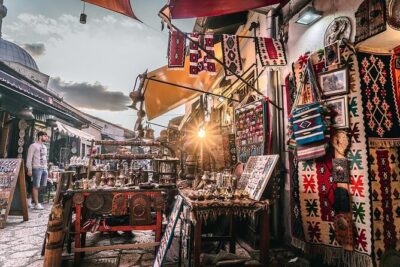
Private Walking Tour, Food Tasting and Bosnian Coffee in Sarajevo
Read our review →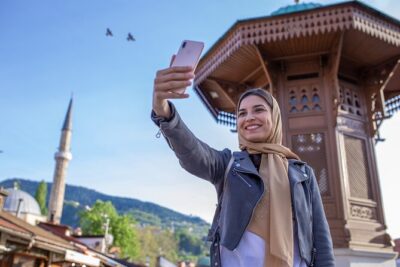
Sarajevo Uncovered: Old Town Tour with Coffee and Food Tasting
Read our review →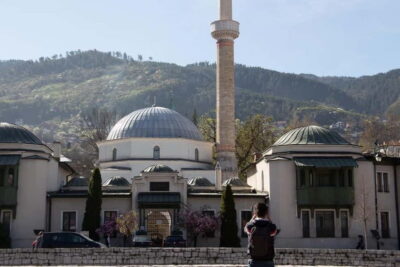
Browse the lists this tour appears in