
Review · RWANDA
Tea and coffee tours
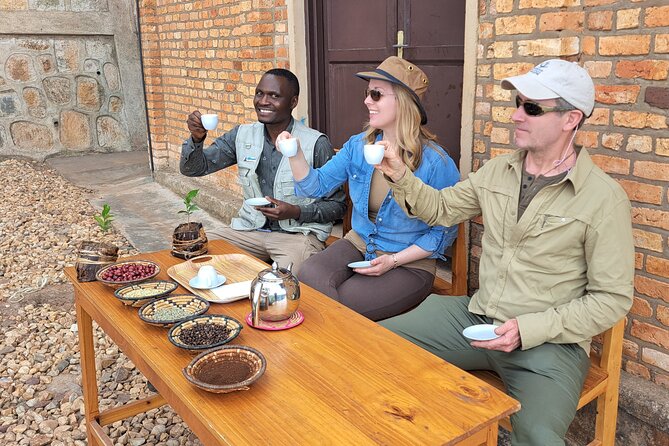
Rwanda’s coffee story begins well before the beans reach your cup. On this three-hour outing from Gisenyi, you get a look at local farming and processing, with Lake Kivu providing a striking setting along the way. I like the small group limit of eight, and I like that the experience connects coffee and tea to the people who produce them. The visit to Kinunu Coffee Washing Station may also include a boat ride from the Gisenyi area.
The main thing to check before booking is the exact route. The advertised plan mentions a coffee farm and Lake Kivu, while the detailed experiences include a tea visit and Kinunu. Private transportation is not included, so confirm your pickup point, transport arrangement, and whether the boat transfer is part of your departure plan.
Key points to know
- Kinunu Coffee Washing Station: A possible highlight is a guided visit to this working coffee facility, where you can follow coffee from harvest through processing.
- Lake Kivu setting: The route takes place around one of Africa’s Great Lakes, on Rwanda’s border with the Democratic Republic of the Congo.
- Tea and coffee in one outing: The experience can add useful context to Rwanda’s farming economy, not just a tasting stop.
- Three-hour schedule: The outing fits neatly into a morning, with an advertised 8:00 am start and return to the meeting point.
- Lunch and bottled water included: These small inclusions make the price easier to assess, especially during a short morning excursion.
- Small-group format: A maximum of eight people should make questions and conversation easier than on a large coach tour.
Coffee country beside Lake Kivu
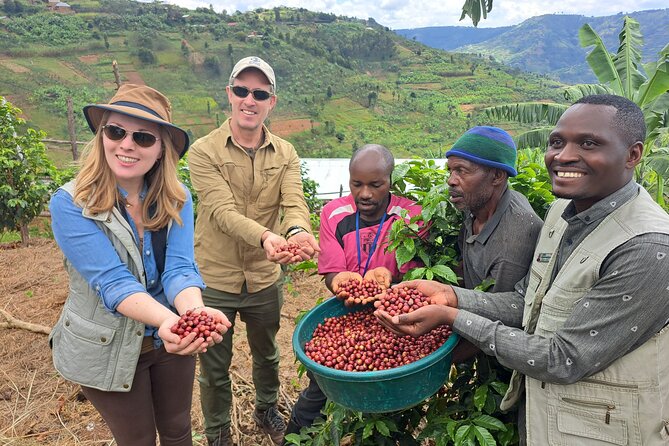
Coffee is one of the most familiar drinks in the world, but the work behind a cup is easy to miss. In Rwanda, a farm visit gives you a more grounded view of how coffee is grown, collected, washed, and prepared for later stages of production.
This experience takes place from Rubavu, the Rwandan town commonly known to visitors as Gisenyi. The setting matters. Lake Kivu lies along the border between Rwanda and the Democratic Republic of the Congo, and its waters eventually flow through the Ruzizi River toward Lake Tanganyika.
You are not simply being taken to a café to hear a short explanation. The purpose is to see how local farms operate and to meet people connected to the production process. That makes the outing useful for anyone who wants more than scenic photographs from the Gisenyi area.
The exact farm or processing stop should be confirmed before you go. The available details describe a coffee farm experience, while the recorded outings include Kinunu Coffee Washing Station and a tea visit. That does not make the experience less worthwhile, but it does mean you should ask what is running on your chosen date.
A few more coffee tours around the world worth a look
- Hoi An: Vietnamese Coffee Culture and Coffee Making Class
★ 4.9 · 4,006 reviews - Hanoi Coffee Experience: 6 Brews, 9 Recipes & 3 Liquor Tastings
★ 5.0 · 2,945 reviews - 4×4 Dominican Adventure with Chocolate and Coffee Tasting
★ 5.0 · 2,920 reviews
An 8:00 am start from Rubavu
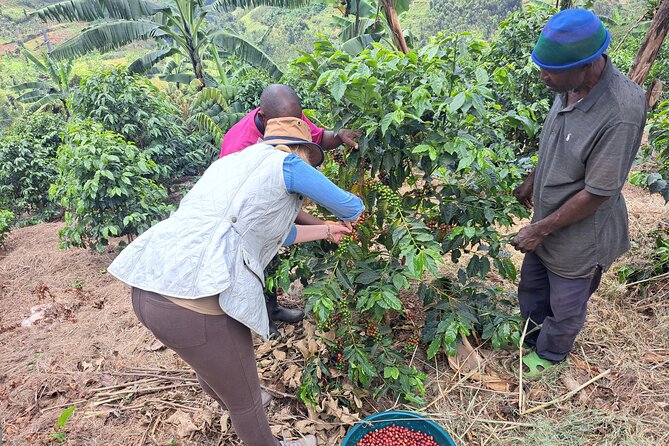
The activity begins at 8:00 am in Rubavu and finishes back at the meeting point. Pickup is offered, but private transportation is listed as an extra rather than an included feature.
That distinction is important. If you are staying in Gisenyi, ask the operator if pickup applies to your accommodation and where the actual meeting point will be. If you are staying farther away, do not assume that a private vehicle is covered by the $80.70 price.
A morning start makes sense for this kind of outing. You have time to see the farming or processing operation, stop for lunch, and return with much of the day still free. It also leaves room to pair the experience with another Gisenyi activity, provided you allow for delays and confirm the return time.
The group cap is eight people. I like this number for a farm visit because it should be easier to hear the guide, ask about the production process, and move around without getting in the way of the workers. The supplied information does not name the guides, so you should not expect to choose a particular guide when booking.
Following coffee from harvest to washing
The strongest part of the experience is its focus on the full coffee process. A visit can help you understand the gap between picking coffee cherries and drinking a finished brew.
At a washing station, the beans are handled after harvest. The available account of the Kinunu visit describes a guided tour with an explanation of the coffee process. You should expect the guide to explain how coffee moves through the station, rather than treating the stop as a quick photo opportunity.
This is also where the experience gains its local value. A coffee washing station links individual growers with the larger chain that prepares coffee for sale. You see a practical part of Rwanda’s agricultural economy and gain a better sense of the labor behind a product that often seems simple at the breakfast table.
The wording of the experience does not promise a full coffee tasting, a roasting lesson, or a chance to buy beans. If those details matter to you, ask before paying. The clear promise is a visit connected to coffee farming and processing, not a specialist barista class.
You may also find that the station is active in a different way depending on the season. The provided information does not give harvest dates or operating hours, so the look of the facility may vary. A working agricultural site can be less polished than a purpose-built visitor center. For me, that is part of the appeal, but people seeking a polished museum-style tour should set their expectations accordingly.
What the tea visit adds
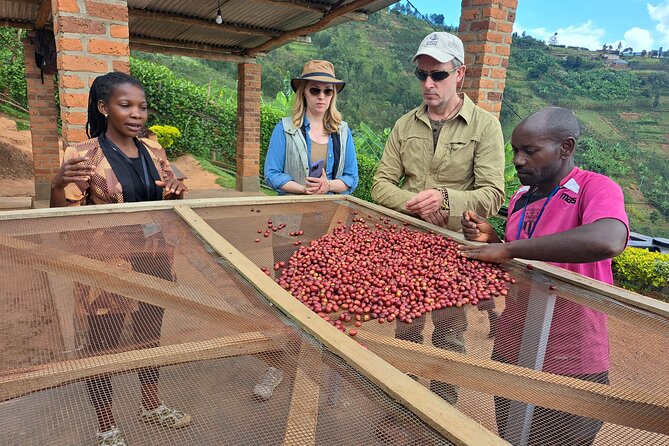
The experience is marketed around both tea and coffee, and the available details include a tea outing where the process was explained from harvesting through packaging. That wider view is useful because tea and coffee are not interchangeable experiences.
A tea visit can show you how leaves are collected and prepared before they reach the final package. You may get a clearer sense of the steps involved, the importance of local labor, and the difference between a crop in the field and a product ready for sale.
The tea portion is not described as a separate fixed stop on every departure. It may be part of the operator’s wider program rather than guaranteed on this exact booking. Ask whether your date includes tea, coffee, or both.
That question is especially useful if you have a strong preference. A coffee enthusiast may want the washing station and farm visit. Someone interested in everyday food production may prefer the tea process from harvest to packaging. The operator should be able to tell you how the morning is organized.
Same place, a different way to drink it:
- Rome Morning Vespa Sidecar Tour in Rome with Cappuccino
★ 5.0 · 1,771 reviews - Giethoorn: Village & National Park Canal Cruise with Coffee
★ 4.6 · 1,596 reviews - Dresden: Guided City Walk with a Cup of Coffee
★ 4.7 · 1,568 reviews - 4×4 ATV Experience, Water Cave, Chocolate and Coffee Tasting
★ 5.0 · 1,430 reviews
Lake Kivu gives the outing its sense of place
Lake Kivu is not just a backdrop. It helps place the farm visit within the wider region. The lake is one of Africa’s Great Lakes and lies in the Albertine Rift, the western branch of the East African Rift.
Its position between Rwanda and the Democratic Republic of the Congo gives the Gisenyi area a clear regional identity. The lake drains through the Ruzizi River, which runs south toward Lake Tanganyika. You do not need a geology lesson to enjoy the water, but knowing this makes the setting more meaningful.
One recorded outing to Kinunu included pickup by boat from a lodge in the Kigufi or Gisenyi area. The boat journey made the transfer part of the experience rather than a routine drive. Still, a boat pickup is not expressly guaranteed in the basic details, so confirm this before you plan around it.
If a boat is included on your date, allow extra flexibility for weather and timing. The activity requires good weather, and poor conditions can lead to a different date or a full refund. Lake conditions can affect transport plans, so this is one reason not to schedule an important connection immediately afterward.
What the $80.70 price covers
At $80.70 per person, this is not the cheapest way to fill a morning in Gisenyi. Its value depends on how much you want the local access, guide, transport arrangement, and included meal.
The price includes bottled water and lunch. Those are practical additions, especially if the outing takes you away from town for several hours. You are not left to arrange food during the activity, and the water is useful in a warm outdoor setting.
The price does not include private transportation. That is the main cost question to settle before booking. Pickup may be offered, but the supplied details do not say that a private car is included, and they do not specify whether any boat transfer carries a separate charge.
I would consider the price reasonable for someone who values a guided agricultural visit and a possible lake transfer. It is less compelling for someone who only wants a short coffee tasting or a scenic ride. The experience earns its cost through access and context, not through luxury.
A maximum of eight people also helps the value. You are paying for a small-group outing rather than a large excursion, and that can make the explanations more useful. But because there are only three ratings and the available details do not give a full breakdown of transport, you should confirm the exact inclusions before making a final decision.
Lunch, timing, and the practical details
Lunch is included, but the type of meal is not specified. Do not assume a particular menu, dietary option, or restaurant setting. If you have food restrictions, tell Beyond the Gorillas Experience when you book and ask what can be arranged.
Bottled water is included, which is a welcome basic. You should still dress for an outdoor farm visit and bring any personal items you need for the morning. The provided information does not list a dress code or equipment requirements, so there is no stated need for special gear.
The activity lasts about three hours. That is long enough for a useful visit but short enough to fit into a larger Gisenyi plan. Since the outing returns to the meeting point, you can use the rest of the day for your own plans, assuming the tour runs on schedule.
Mobile tickets are available, and confirmation is received at booking. Most people can participate. The operator does not provide detailed accessibility information, so anyone with mobility concerns should ask about the farm surface, boat access, and vehicle arrangements before booking.
The small-group feel and the human side
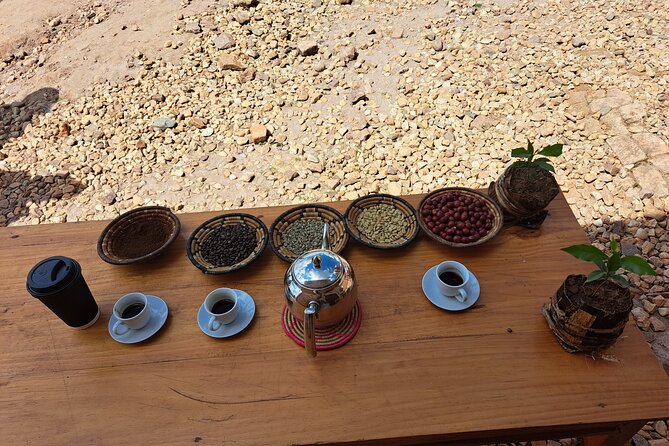
The best reason to choose this outing is the chance to learn directly from people connected to tea and coffee production. The available accounts describe guides as kind, patient, and passionate, with clear explanations of the work involved.
That human contact matters more than a long list of stops. A good guide can help you notice the difference between a farm, a washing station, and a packaging operation. You can also ask questions that a standard sightseeing route would not cover.
The small group should help here. With no more than eight people, you have a better chance of hearing the answers and getting a moment to ask about farming, processing, and local life. The operator has not supplied guide names, so the quality of your morning will depend on the guide assigned that day.
The experience also has a useful sense of patience. One account describes time spent learning about the process from harvesting to packaging, rather than being rushed through a single viewpoint. You should still remember that the exact schedule may change based on the farm, station, weather, and transport used on your date.
Who should book this experience
I would recommend this outing to you if you enjoy seeing how everyday products are made. It suits people who want a local activity near Gisenyi, prefer a small group, and like having a guide explain the work rather than simply pointing out a view.
It is also a good choice if Lake Kivu is already part of your plan. The possible boat transfer to Kinunu can make the journey feel more connected to the region, though you must confirm whether it is included.
Families and mixed-age groups may find the three-hour length manageable, since most people can participate and lunch is included. The activity is also a sensible choice for visitors with only one free morning in Gisenyi.
I would be more cautious if you need a fixed, highly detailed schedule. The information leaves some uncertainty about whether the day includes tea, a coffee farm, Kinunu Coffee Washing Station, or a boat ride. It is also not the best match if you want a formal tasting, roasting workshop, or a guaranteed private vehicle.
Should you book the Gisenyi tea and coffee tour?
Book it if you want a practical look at Rwandan coffee and tea production, enjoy meeting local people, and like the idea of pairing farm knowledge with Lake Kivu scenery. The small group, lunch, bottled water, and possible Kinunu boat transfer give the $80.70 price a fair case.
Before booking, ask three direct questions: What exact stops are planned on your date? Is pickup included from your accommodation? Is the boat transfer part of the price? If the answers match what you want, this is a thoughtful way to spend a morning in Gisenyi.
Free cancellation is available if you cancel at least 24 hours before the 8:00 am start. Cancellations within 24 hours are not refunded, and poor weather may lead to a new date or a full refund.
FAQ
Where does the tour start?
The activity starts in Rubavu, Rwanda, in the Gisenyi area.
What time does the tour begin?
The scheduled start time is 8:00 am.
How long does the experience last?
The experience lasts approximately three hours.
Where does the tour finish?
The activity finishes back at the meeting point.
Is pickup available?
Pickup is offered, but you should confirm the exact pickup arrangement for your accommodation.
Is private transportation included?
No. Private transportation is not included in the stated price.
What is included in the price?
Bottled water and lunch are included.
How many people can join the tour?
The maximum group size is eight people.
Is Lake Kivu part of the experience?
Lake Kivu is part of the tour information and may be included in the route or setting. The lake lies between Rwanda and the Democratic Republic of the Congo.
What is the cancellation policy?
You can cancel at least 24 hours before the start time for a full refund. Cancellations or changes made less than 24 hours before the start time are not refunded or accepted. If poor weather causes the operator to cancel, you can choose another date or receive a full refund.
Just added around the world
- Yerevan: Private Coffee Tour with 2 Café Stops★ 5.0 · 2 reviews
- Vietnamese Coffee 101 Workshop★ 5.0 · 11 reviews
- Vietnamese Coffee Making Class in Hoi An★ 5.0 · 4 reviews
- Vietnamese cooking class and coffee making with local girl★ 5.0 · 5 reviews
- Venice Delights: Coffee & Food Experience Walking Tour★ 5.0 · 2 reviews
- Private Vienna Tour: Literature Walk with Coffee House Visit★ 5.0 · 2 reviews
- Ubud: Waterfall, Holy Water Temple,Swing&coffee plantation★ 5.0 · 9 reviews
- Turin: Art Nouveau Walking Tour with Coffee★ 5.0 · 11 reviews
Rwanda Coffee Tours, compared.



Full Day Shared Akagera Safari Tour with Lunch and Coffee
Read our review →

Local Community Tour(Cultural, Coffee,Village walk,Local food)
Read our review →Browse the lists this tour appears in